

Collectors: Protect Your Watch’s Finish Without Overpolishing
The best way to protect a watch finish is to combine routine gentle cleaning with selective, limited polishing for light scratches, and reserve deeper repairs for professional restoration. This approach follows manufacturer care guidance and the hands-on experience that author Raymond Jenkins brings to everyday watch maintenance. Done consistently, it preserves both the look and the resale value of a luxury piece.
TL;DR:
- Clean metal cases and bracelets only after confirming water resistance and securing the crown; brands differ on soap, so use water alone when unsure.
- Cartier recommends no more than two or three lifetime polishings for gold watches; treat polishing as occasional correction, not routine cleaning.
- Send watches with deep gouges, displaced metal, warped cases, or major loss of brushed pattern to a restorer; vintage and limited pieces warrant extra restraint.
- Keep leather straps dry and away from perfumes, cosmetics, and oils; wipe them with a soft, dry cloth instead of household cleaners.
- Have a mechanical watch fully serviced every 3 to 5 years so a watchmaker can remove dried lubricant and residue before they cause movement wear.
Table of Contents
- At-a-Glance Checklist to Protect Watch Finish
- How to Clean and Preserve Metal Cases and Bracelets
- Polishing Technique and the Real Limits of Home Restoration
- Protecting Leather, Rubber and Fabric Straps
- Home Kit or Professional Restoration: How to Decide
- Service Intervals and Realistic Polishing Limits
- Raymond Jenkins: Preserving Character, Not Erasing It
- ChronoCare Products Built for Each Stage of Finish Care
- FAQ
- Sources
At-a-Glance Checklist to Protect Watch Finish
Before you reach for any product, a few habits do most of the work of keeping a case and bracelet looking sharp.
- Wipe the case and bracelet with a microfiber cloth daily to remove oils and grime before they settle into the finish.
- Inspect the crystal and bracelet links weekly for dust buildup, which acts like sandpaper under pressure.
- Clean metal bracelets with lightly soapy water only when the crown is screwed down and the watch is rated water resistant.
- Skip household soaps, solvents and perfumes on leather straps or watches without confirmed water resistance.
- Avoid abrasive polishes and limit polishing sessions. Removing metal too often thins the case over time.
- Send the watch to a professional when you see deep gouges, warping, or damage that a soft cloth and cream cannot touch.
When in doubt, clean less rather than more. Finishes wear down faster from over-handling than from normal daily use.
How to Clean and Preserve Metal Cases and Bracelets
Routine cleaning is the single biggest factor in protecting watch finish, and the steps are simple once you know the order.
- Confirm the crown is pushed in and screwed down if your watch has a screw-down crown, so moisture cannot reach the movement.
- Fill a bowl with warm water and, for water-resistant watches, a small amount of mild soap.
- Dip a soft-bristled brush, such as a baby toothbrush, and work gently around the case back, lugs and bracelet links.
- Rinse thoroughly under running water to clear soap residue, which can otherwise sit in crevices.
- Dry immediately with a microfiber cloth, then let the watch air out for a few minutes before wearing it again.
Guidance on soap varies by brand. IWC recommends minimal intervention, favoring a microfiber cloth and water alone, and warns that soap molecules can lodge in small crevices rather than rinse away cleanly. Other manufacturers, including Audemars Piguet’s care guidance, describe a toothbrush with soapy tap water for water-resistant cases. Choose based on your watch’s water-resistance rating and err toward the gentler method if you’re unsure.
On brushed or satin cases, always clean and buff in the direction of the grain. Cleaning across the brush pattern creates fine cross-scratches that catch light differently and are difficult to blend out later. A non-abrasive polishing cream, applied sparingly with a microfiber cloth, can lift light surface marks without altering the grain, while a finishing sponge works well for tight spots between lugs.
Pro Tip: Keep one microfiber cloth reserved only for watches, since lint or grit from general use can scratch a polished bezel.
For a full walkthrough of tools and timing, our step-by-step cleaning guide covers routine care for collectors in more detail.
Polishing Technique and the Real Limits of Home Restoration
Polishing can remove light scratches, but it works by taking away a microscopic layer of metal, not by filling the scratch in. That distinction shapes every rule below.
- Test any polishing cream on a small, hidden area first, such as the case back edge, to see how the finish responds.
- Work in small sections with light pressure and a soft cloth or applicator rather than pressing hard in one spot.
- Match the original finish pattern: brushed surfaces need light strokes in the grain direction, while polished surfaces need a circular motion.
- Stop as soon as the scratch fades rather than trying to erase it completely, since repeated passes remove more metal each time.
Cartier’s own guidance explains that polishing removes a fine layer of metal and recommends very limited lifetime polishings for gold watches, often no more than two or three times over the life of the piece. That’s a useful reminder that polishing is a finite resource, not routine maintenance. Deep gouges, case deformation or heavy brushed-pattern loss are signs the job belongs with a professional restorer rather than a home kit.
Pro Tip: Photograph the scratch before polishing so you can judge progress accurately instead of relying on memory.

A guide on how watch care restores appearance walks through realistic before-and-after expectations for home polishing.
Protecting Leather, Rubber and Fabric Straps
Straps age differently than metal cases, and most damage comes from moisture, chemicals or heat rather than scratches.
- Keep leather straps dry and away from water, perfumes, lotions and solvents, which break down the fibers and dull the finish.
- Wipe leather with a soft, dry cloth after wear rather than using household leather cleaners, which can strip dye or finish.
- Use a strap-specific conditioner only occasionally, and replace a strap that’s cracking or delaminating rather than forcing more cleaning onto it.
- Rinse rubber or fabric straps with fresh water, spot clean with a damp cloth, and air dry away from direct heat or sunlight.
- Store watches in a dry, stable-temperature case or box rather than a humid bathroom or a sunlit windowsill.
Omega’s strap care guidance specifically lists perfumes, cosmetics and oily substances as things to keep away from leather, and suggests routing strap issues through an authorized retailer rather than DIY chemical cleaners. If a strap has already taken on water, our guide to fixing a wet leather strap covers the 24-hour window that matters most, and our conditioning instructions explain how often conditioning actually helps versus when it’s better to let a strap be.
Home Kit or Professional Restoration: How to Decide
Not every mark on a case calls for the same fix, and getting this call right protects both the finish and the watch’s value.
- Light surface scratches and general dullness respond well to a non-abrasive polishing cream and a careful hand.
- Deep gouges, visible metal displacement, or a warped case back signal damage beyond what a home kit can safely correct.
- Professional restoration often involves welding or adding metal to fill deep dents, re-profiling the case to restore original lines, and hand-finishing to recreate the brushed or polished grain, as documented in Hodinkee’s restoration of a Doxa 300T. That level of work is labor-intensive and can permanently alter the case, so it’s worth treating as a last resort rather than a routine fix.
- For vintage or limited pieces, lean conservative. Manufacturers’ own polishing limits exist partly to protect long-term value, and a restorer familiar with the original case shape will get closer to it than aggressive home polishing.
- Photograph the watch from several angles before any polishing or restoration work, so you have a clear record if something looks different afterward.
A guide on removing deep scratches breaks down exactly where that line sits for common case materials.
Service Intervals and Realistic Polishing Limits
A finish looks good for years only if the mechanism underneath stays healthy, which is why service intervals matter alongside surface care. A full mechanical service every 3 to 5 years allows a watchmaker to clean dried lubricant and abrasive residue out of the movement before it causes wear, based on the restoration process described by horological conservators. That service typically includes disassembly, multi-bath cleaning and precise lubrication with watch-grade oils.
Never substitute household oils, including sewing machine oil or general-purpose lubricants, for the specific viscosity watch oils a movement needs. The wrong oil can gum up pivots or fail to protect them at all.
On the polishing side, treat it as an occasional correction, not a cleaning step. Keep a simple log of when and where you’ve polished a case, since that record helps you and any future restorer avoid over-thinning the metal.

Raymond Jenkins: Preserving Character, Not Erasing It
The instinct with any mark on a case is to polish it away immediately, but I’d rather see collectors slow down. A watch that’s been worn and loved carries some texture, and chasing a factory-fresh look on every scratch often does more harm than the scratch itself. My approach, and what we try to reflect across the ChronoCare blog, favors cleaning first, polishing sparingly, and treating restoration as a deliberate decision rather than a reflex.
— Raymond Jenkins
ChronoCare Products Built for Each Stage of Finish Care
A product lineup can support the sequence outlined above: clean first, polish only when needed, and provide tools for those tasks.
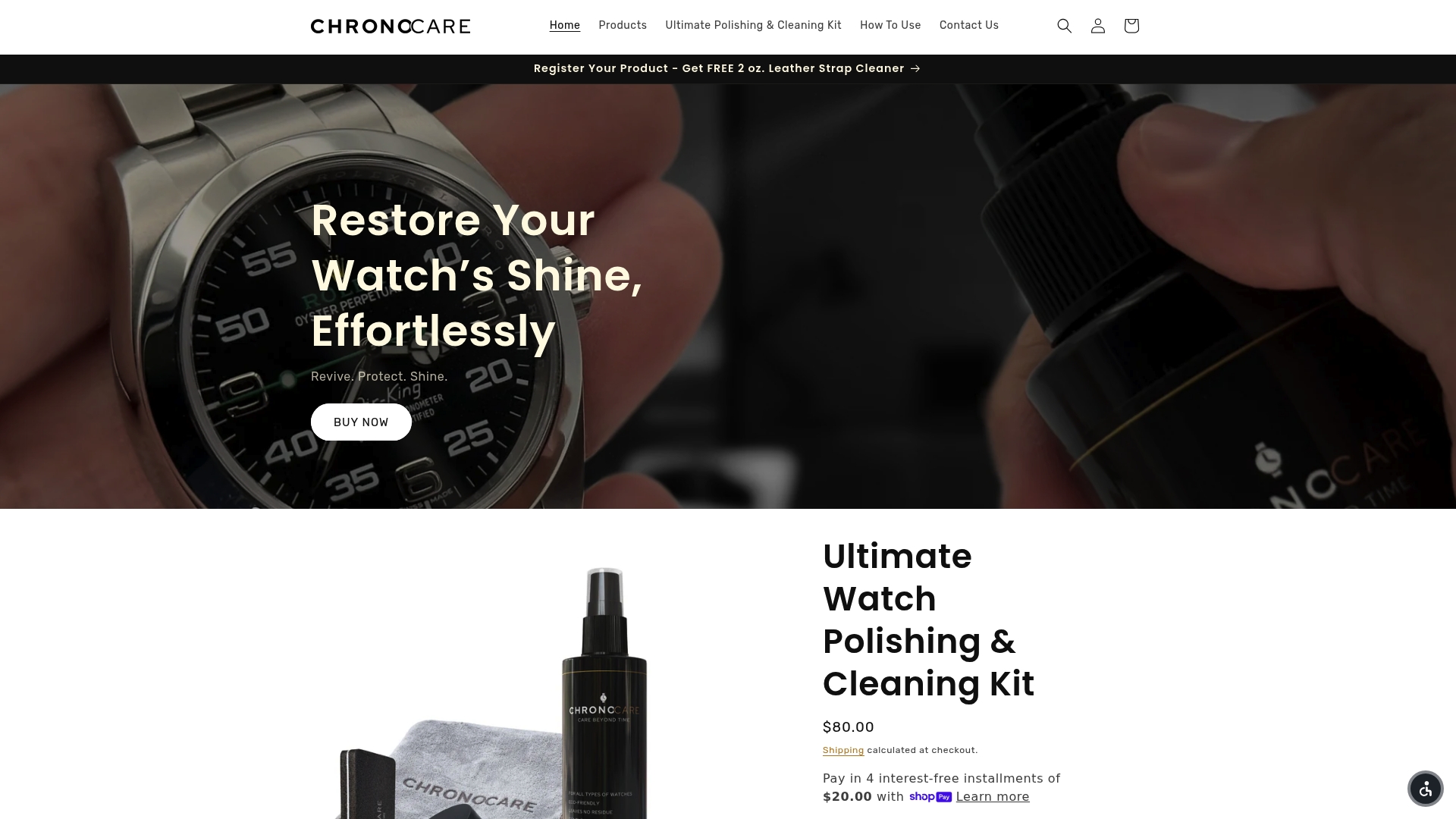
For routine upkeep, our Ultimate Watch Cleaning Kit handles cases and bracelets without the guesswork of mixing your own soap solution. When light scratches or dullness show up, our Ultimate Watch Polishing & Cleaning Kit combines cleaning and controlled polishing in one set, matched to the technique described above. If you just need a focused fix for a dull or lightly scratched surface, our Watch Polishing Cream is formulated specifically to restore shine without aggressive abrasives.
| Task | Recommended product |
|---|---|
| Routine cleaning of cases and bracelets | Ultimate Watch Cleaning Kit |
| Light scratch removal and finishing | Ultimate Watch Polishing & Cleaning Kit |
| Spot shine restoration | Watch Polishing Cream |
- Browse the full lineup on our shop homepage to find the right kit for your watch’s material and condition.
FAQ
How often should I polish my watch to protect the finish?
Polishing removes a thin layer of metal each time, so it should be done sparingly rather than on a regular schedule. Cartier’s guidance recommends as few as two to three lifetime polishings for gold watches, and that conservative approach applies broadly to precious metal cases.
Is it safe to use soap when cleaning a metal watch bracelet?
It depends on the watch and the brand’s own guidance. IWC advises against soap for routine cleaning since it can trap particles in crevices, while other manufacturers permit a mild soapy solution for water-resistant cases followed by a thorough rinse.
How do I clean a leather watch strap without damaging it?
Keep leather dry and wipe it with a soft, dry cloth rather than applying water, solvents or perfumes directly to it. Omega’s strap care page specifically warns against oily substances and cosmetics, which break down leather fibers over time.
When should I send a watch for professional restoration instead of polishing it at home?
Deep gouges, case deformation or significant loss of the brushed finish pattern are signs that home polishing won’t fix the problem correctly. Professional restoration, as shown in Hodinkee’s case study on a Doxa 300T, can involve welding and hand-finishing to rebuild the case properly.
How often does a mechanical watch need professional servicing?
Most watchmakers recommend a full service every 3 to 5 years to clean out dried lubricant and residue before it causes wear inside the movement, according to horological restoration guidance. Regular servicing also gives a technician the chance to check the case and crystal for issues before they worsen.
Sources
- Ten Tips for Watch care | IWC Schaffhausen
- Preserve your OMEGA® Watch | OMEGA CH®
- Cartier watch polishing guidance (FAQ)
- The inside and outside restoration of a Doxa 300T ‘Searambler’ | Hodinkee