

Watch Cleaning for Collectors: Safe, Step-by-Step Care
Most watches rated at 5 bar (50 meters) or higher can be cleaned safely at home using one drop of pH-neutral mild dish soap dissolved in lukewarm water, a soft-bristle brush, a fresh-water rinse, and a lint-free microfiber cloth to dry. That combination handles the vast majority of routine grime without touching the movement or degrading the seals. If your watch is vintage, has an unknown service history, or shows any crown damage, skip the water entirely and see a watchmaker first.
Before you start:
- Check that the crown is fully pushed in or screwed down
- Confirm your water-resistance rating (case back, manual, or manufacturer website)
- Do not press the crown, pushers, or any buttons during cleaning
- Avoid hot water, steam, and any solvent-based cleaner
- When in doubt, keep the watch dry
How to clean a watch recommends confirming a minimum rating of at least 5 bar (50 meters) before rinsing under even a gentle, low-pressure stream. Anything below that threshold calls for a barely damp cloth rather than immersion or running water.
Table of Contents
- How to clean a sound, water-resistant watch at home
- How do you clean a metal bracelet without damaging the finish?
- How should you care for different strap materials?
- What should you never use when cleaning a watch?
- Why do vintage and gem-set watches need special handling?
- How often should you clean and service a watch?
- What tools and supplies are safe for at-home watch care?
- Why do watch-specific cleaners outperform household alternatives?
- Key Takeaways
- The case for conservative cleaning over cosmetic fixes
- ChronoCare specialty kits for safe at-home cleaning
- Useful sources and manufacturer guidance
How to clean a sound, water-resistant watch at home
For a watch that passes the inspection above, the process is straightforward. The goal is to dissolve skin oils, salt, and debris without pressurizing the case or stressing the seals.
What you need: A small bowl, lukewarm water, one drop of pH-neutral mild dish soap, a soft-bristle brush (a clean, soft toothbrush works), and a lint-free microfiber cloth.
- Prepare the solution. Fill a small bowl with lukewarm water and add one drop of pH-neutral dish soap. The water should feel neutral on your wrist, not warm.
- Secure the crown. Confirm it is pushed in or screwed down. Do this again, even if you checked during inspection.
- Remove the strap if possible. Metal bracelets clean better detached. Leather, fabric, and rubber straps should almost always come off before any water contact.
- Brush the case gently. Dip the brush in the soapy solution and work around the lugs, bezel, and case back with light circular strokes. Do not scrub.
- Rinse with fresh lukewarm water. Hold the watch under a gentle, low-pressure stream or dip it briefly in a second bowl of clean water. No hot water. No high pressure.
- Dry immediately and thoroughly. Pat dry with a microfiber cloth, then leave the watch face-up on a dry cloth for several minutes. Use the brush dry to push water out from between lugs.
Salt and chlorine exposure: If the watch has been in the ocean or a chlorinated pool, rinse it promptly in fresh water as soon as possible, provided its water-resistance rating is current and confirmed. Salt crystals left to dry on a case can abrade the finish and work into gaps over time.
Troubleshooting:
- Fogging under the crystal after cleaning: Stop. This means water entered the case. Take the watch to a watchmaker immediately. Do not try to dry it out with heat.
- Trapped salt or debris in lug gaps: Soak the brush in the soapy solution and work the bristles into the gap slowly. Rinse and repeat rather than pressing harder.
Pro Tip: If you’re not comfortable removing the bracelet yourself, leave it attached and clean conservatively. Forced spring-bar removal by a novice causes more scratches than a dirty bracelet ever would.
How do you clean a metal bracelet without damaging the finish?
Metal bracelets collect more grime than the case. Skin oils, salt, and dead skin cells pack into the gaps between links and around the clasp, and that buildup accelerates pin wear and finish degradation over time.
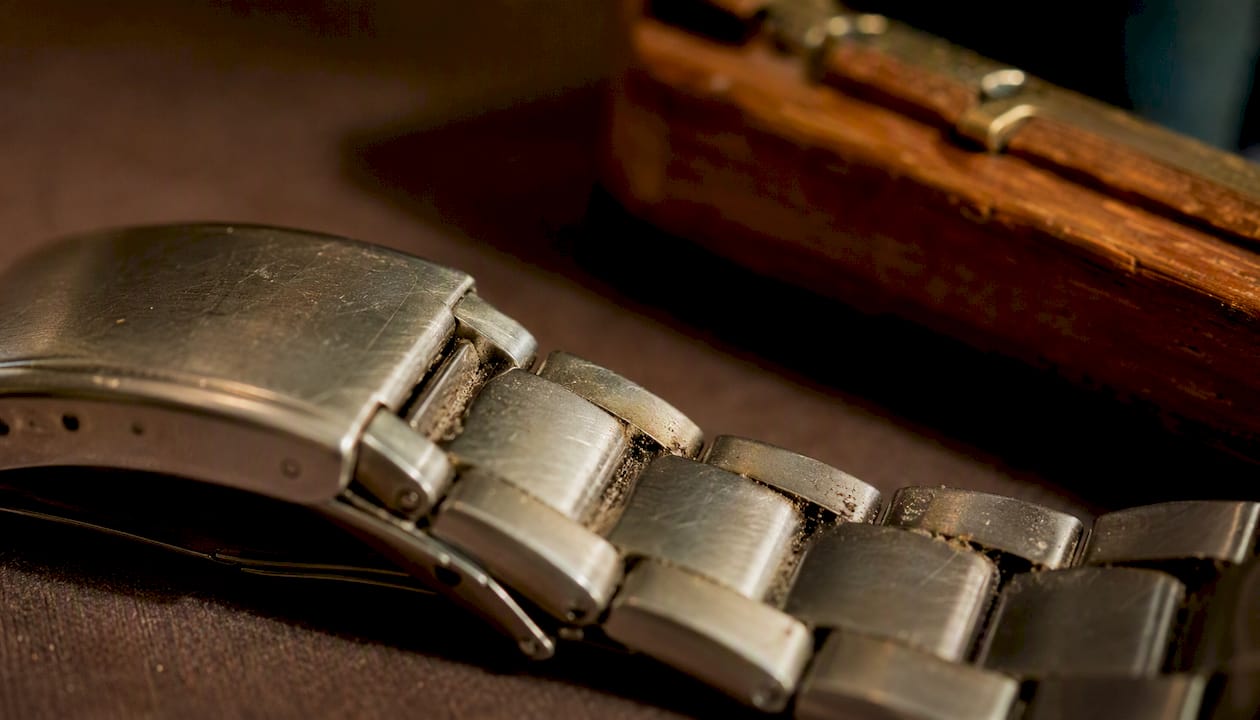
For bracelets still attached to the watch, use the same soapy solution from the cleaning steps above. Work the soft brush between each link row, moving along the length of the bracelet rather than across it. Pay extra attention to the clasp mechanism, where debris concentrates.
Detaching the bracelet for a separate soak is the better approach when you’re comfortable with it. A detached bracelet can be submerged in the soapy solution for two to three minutes, brushed thoroughly, rinsed under running water, and dried completely before reattachment. The ChronoCare bracelet link cleaning guide covers safe techniques for steel, titanium, gold, and mixed-metal bracelets in detail.
Precious metals and gem-set bracelets: Yellow gold, rose gold, and platinum bracelets scratch more easily than steel. Gem-set bracelets carry the additional risk of loosening prong settings during brushing. When in doubt, leave these to a professional.
Pro Tip: While the bracelet is off, inspect the pins and end links for stretch. A bracelet that has grown noticeably longer than when new has worn pins. A watchmaker can replace them before a link separates unexpectedly.
For a professional-level finish on a steel or titanium bracelet, the professional bracelet finishing guide at ChronoCare explains how to restore brushed and polished surfaces without removing metal unevenly.
How should you care for different strap materials?
The strap takes more abuse than the case, and the right care depends entirely on what it’s made of.
Leather
Keep leather mostly dry. Blot sweat after wear with a dry cloth and let it air-dry away from direct heat or sunlight. Avoid saddle soaps and generic leather conditioners unless the manufacturer explicitly approves them for watch straps. Most watch-grade leathers are thin and treated differently from shoe leather. Rotating between two or three straps extends each one’s life considerably. For maker-approved treatment, a purpose-formulated leather strap cleaner is safer than a general conditioner. Quality full-grain leather straps and storage options from Grainmark are worth considering for collectors who want durable, well-finished alternatives.
Rubber and silicone
- Rinse after swimming in salt water or chlorinated pools
- Inspect the strap near the lugs and buckle holes for cracks, which appear first at stress points
- Avoid prolonged UV exposure and contact with sunscreen or oils, which degrade silicone faster than water does.
- Clean with the same mild soapy solution used on the case; rinse and dry fully
Fabric and NATO
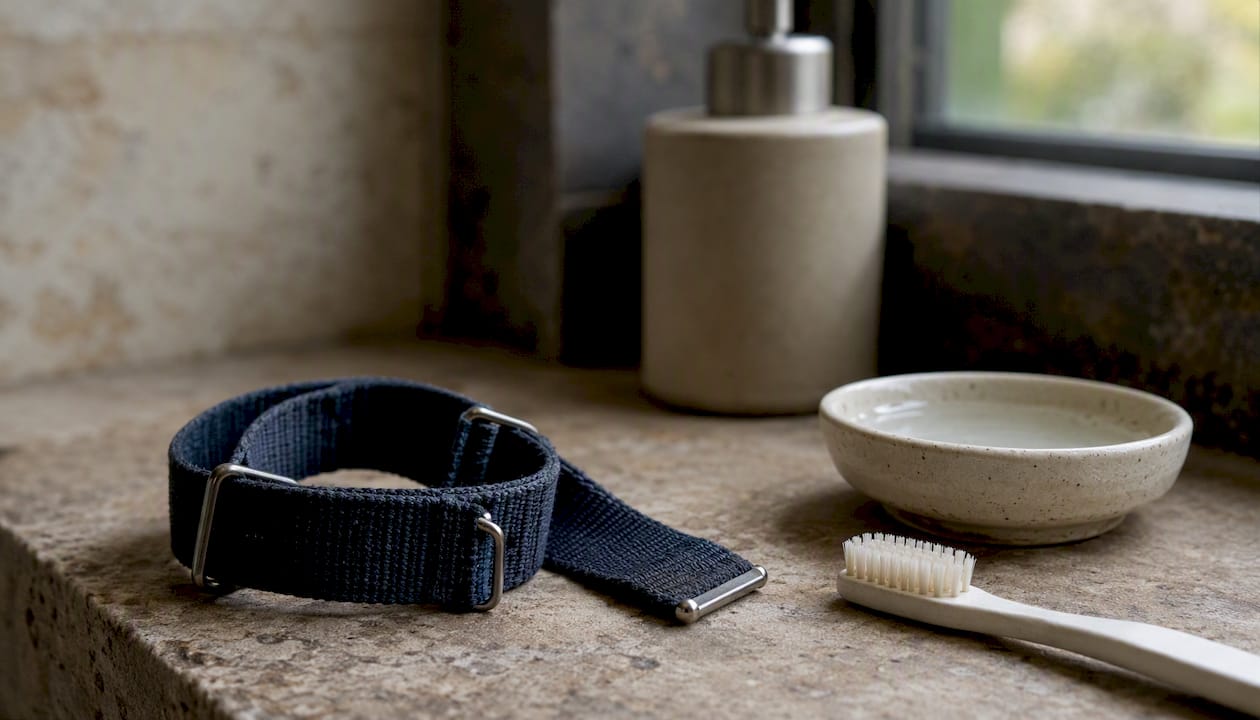
Many fabric straps are machine-washable, but check for leather backing or dyed sections first. A dyed NATO strap can bleed color onto a pale dial if it gets wet while attached. Remove the strap before washing, follow the maker’s instructions, and dry completely before reattaching. A damp strap held against a case back for hours is a moisture risk.
Ceramic
Ceramic resists scratches well but chips under impact. Clean gently with a damp cloth and mild soap. Avoid hard knocks against edges during cleaning, and never use abrasive cloths on a ceramic bracelet.
Pro Tip: Store straps flat or loosely coiled in a cool, dry drawer. Hanging a leather strap by the buckle hole for months stretches the leather at the pin point and shortens its usable life.
What should you never use when cleaning a watch?
Some of the most common household cleaning products cause irreversible damage to watch finishes and seals. The list below is not theoretical.
The core rule: If a product is not specifically formulated for watches or fine jewelry, assume it is unsafe until confirmed otherwise. Gaskets, lacquered dials, and gem settings are far less forgiving than the surfaces these products were designed for.
Never use:
- Harsh solvents (acetone, paint thinner, mineral spirits): degrade rubber gaskets and lacquered surfaces on contact
- Household detergents and dish soaps with degreasers or citrus additives: pH levels vary widely and many contain abrasive particles
- Isopropyl alcohol on finished metal or lacquered surfaces: strips protective coatings and can cloud acrylic crystals
- Steam cleaners: high heat and pressure force moisture past seals that would otherwise hold under gentle rinsing
- Compressed air: the pressure spike can push debris into gaps and stress seals; moisture in compressed air canisters is a secondary risk
- Hot water: accelerates gasket degradation and can cause thermal shock on crystals
- Abrasive polishing cloths: Hodinkee’s cleaning guide is explicit on this point. Cloths impregnated with abrasives remove microscopic layers of metal with each pass, permanently altering brushed versus polished finishes over time.
- Home ultrasonic cleaners on assembled watches: professional ultrasonic protocols require full disassembly of the movement, case, and bracelet before any ultrasonic treatment. Running an assembled watch through a home ultrasonic cleaner can loosen stones, stress seals, and damage the movement. The role of ultrasonic cleaning in professional watch care explains why this is strictly a workshop process.
Why do vintage and gem-set watches need special handling?
Vintage watches and gem-set pieces share one critical vulnerability: you cannot assume anything about their current condition from their original specifications.
A watch rated at 3 bar when new may have gaskets that have never been replaced. A crystal that looks intact may have a hairline crack invisible to the naked eye. A prong setting that held a diamond securely for twenty years may have a micro-fracture that a brush stroke would expose.
The conservative rule for vintage pieces: Unless a qualified watchmaker has recently inspected the case, tested water resistance, and confirmed the gaskets are serviceable, treat every vintage watch as non-water-resistant. A barely damp microfiber cloth is the maximum safe intervention.
For gem-set watches, Jewelry Unlimited’s guide on diamond watch care is clear: ultrasonic cleaning and harsh brushing methods can dislodge stones. Even a gentle brush stroke across a loose prong setting can shift a stone. If there is any visible buildup around settings, take the watch to a jeweler or authorized service center rather than attempting home cleaning.
Pro Tip: If you own a vintage piece with its original leather strap, archive the worn strap rather than discarding it. Provenance documentation, including original straps and boxes, affects resale value. Photograph the watch and strap condition before any professional intervention.
How often should you clean and service a watch?
The right schedule depends on how the watch is worn, not just how it looks.
- After every wear: wipe the case and bracelet with a dry microfiber cloth. Remove before applying perfume, sunscreen, or cologne. Romans Jewelry’s maintenance guide lists this as the single most effective daily habit for extending a watch’s appearance.
A collector’s luxury watch care routine at ChronoCare covers rotation schedules and storage practices in more depth for those managing multiple pieces.
What tools and supplies are safe for at-home watch care?
The short list of safe supplies is shorter than most people expect.
- Watch-specific leather cleaner: — only where the maker permits leather treatment. Generic conditioners are not substitutes.
The case for watch-specific cleaners over household alternatives comes down to formulation. A product designed for watch surfaces is pH-neutral, non-abrasive, and tested against the materials it will contact. ChronoCare’s professional degreaser guide explains the chemistry differences between watch-safe formulations and general-purpose cleaners.
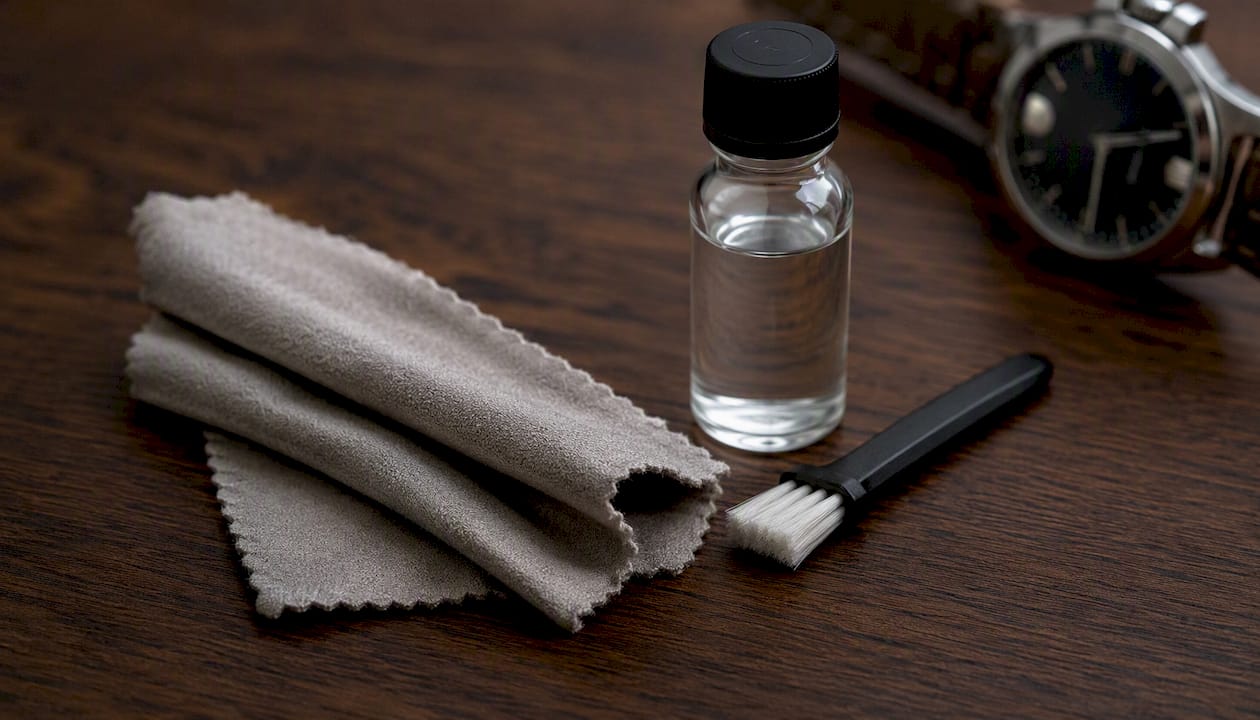
Pro Tip: ChronoCare’s all-in-one cleaning kit includes a microfiber cloth, a soft brush, and a formulated cleaning solution calibrated for metal and finished surfaces. It maps directly to the steps in this guide and removes the guesswork of sourcing individual components.
Why do watch-specific cleaners outperform household alternatives?
A watch-safe cleaner is not just a mild soap. It is a formulation tested against the specific materials found on luxury timepieces: sapphire and mineral crystals, PVD coatings, brushed and polished steel, lacquered dials, and rubber gaskets.
The critical properties are pH neutrality, non-abrasive particle content, and chemical compatibility with gasket materials. A household cleaner that scores well on two of those three can still degrade a gasket or cloud a coating over repeated use.
The practical test: if a cleaning product’s label does not specify compatibility with watch seals and finished metal surfaces, it has not been tested for them. That is not a reason to assume it is safe.
ChronoCare’s products are formulated in the US with these requirements in mind. The cleaning sprays and polishing creams are designed for the specific surface types found on luxury watches, including gem-set cases where chemical compatibility with prong settings matters.
Pro Tip: Match the kit to the watch type. A bracelet-heavy steel sports watch benefits most from a cleaning kit with a strong degreasing component. A leather-strap dress watch needs a strap cleaner and a gentle case spray. ChronoCare’s product range covers both scenarios.
Key Takeaways
Proper watch cleaning starts with a dry inspection and ends with thorough drying. Skipping either step is where most at-home damage occurs.
| Point | Details |
|---|---|
| Inspect before any moisture contact | Confirm water-resistance rating, crown condition, and crystal integrity before using any liquid. |
| Safe at-home method | One drop of pH-neutral soap in lukewarm water, soft brush, fresh-water rinse, microfiber dry. |
| Material-specific strap care | Leather stays mostly dry; rubber rinses after water exposure; fabric dries fully before reattachment. |
| When to call a professional | Fogging, loose stones, operational issues, or any watch rated below 5 bar require a watchmaker. |
| ChronoCare kits for home care | ChronoCare’s all-in-one and polishing kits provide watch-safe, US-formulated components that match each step in this guide. |
The case for conservative cleaning over cosmetic fixes
The watch community has a complicated relationship with polishing. A freshly polished case looks better in photographs and worse to a serious collector. Every pass of a polishing wheel removes metal. Do it often enough and the crisp edges that define a Nautilus or a Royal Oak become soft and rounded. That loss is permanent and, to a knowledgeable buyer, immediately visible.
The same logic applies to cleaning. The goal of routine wrist watch maintenance is not to make a watch look new. It is to remove the substances that cause long-term damage: salt, skin oils, chlorine, and debris that work into gaps and accelerate wear. A clean watch that shows honest patina is more valuable than an over-polished one that looks like it was refinished last month.
Where collectors consistently underestimate risk is in the movement. The exterior of a watch can absorb a surprising amount of casual care without permanent damage. The movement cannot. Water ingress, even a small amount, corrodes components that cost more to replace than the watch is worth. That is the actual argument for conservative cleaning: not aesthetics, but movement integrity.
Document condition before any professional intervention. Photograph the watch from multiple angles, note any existing scratches or patina, and keep records of service history. A watch with documented provenance and original parts commands a premium that a refinished one rarely recovers.
ChronoCare specialty kits for safe at-home cleaning
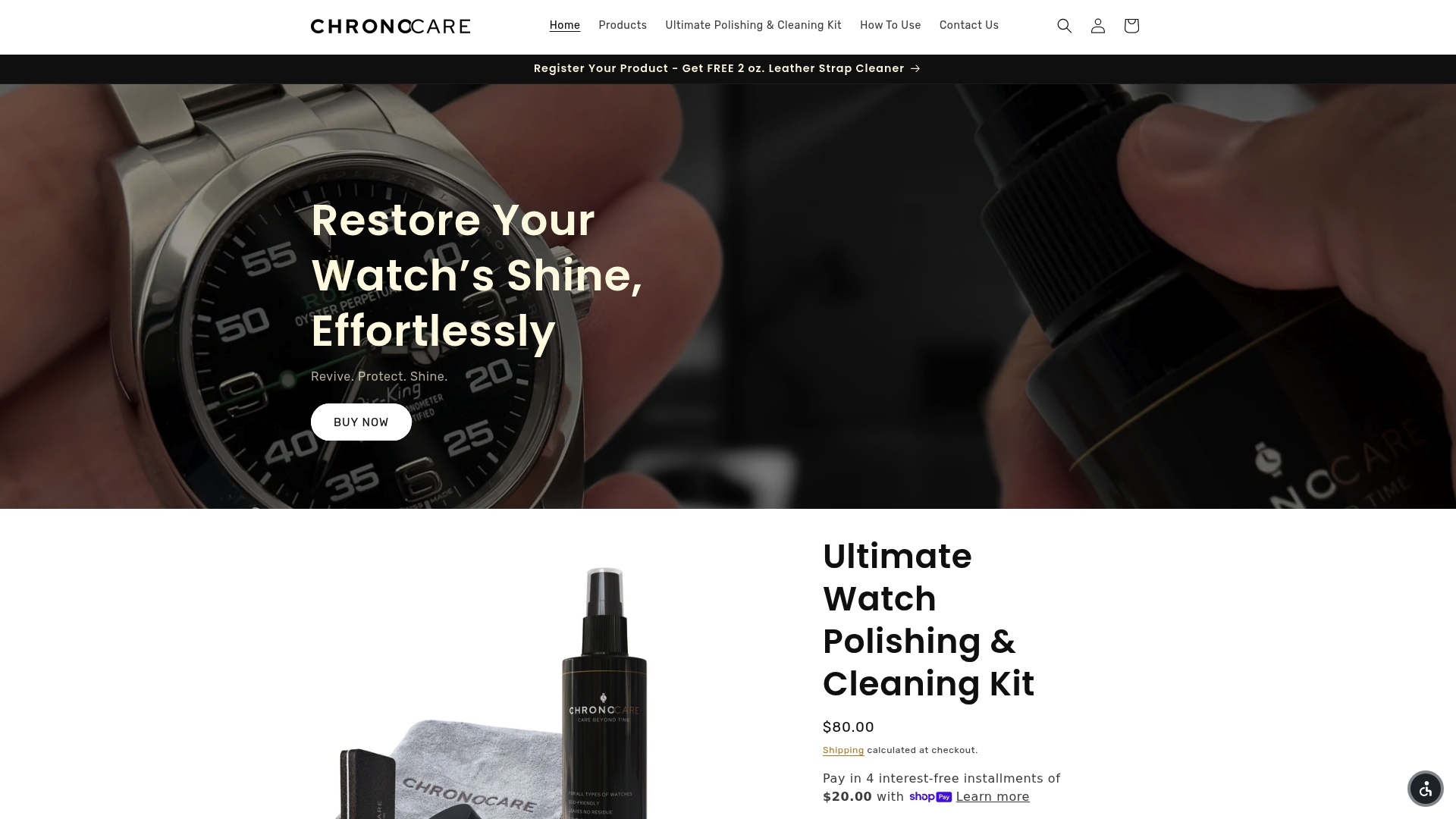
For collectors who want to clean at home without sourcing individual components or second-guessing formulations, ChronoCare offers three practical options.
The Ultimate Watch Cleaning Kit is the right starting point for most metal-bracelet watches. It includes a cleaning solution, a soft brush, and a microfiber cloth calibrated for the step-by-step process in this guide. The Ultimate Watch Polishing & Cleaning Kit adds a polishing component for collectors who want to address light surface scratches conservatively, without the risk of thinning metal through repeated professional polishing. For leather strap owners, the Watch Leather Strap Cleaner Spray is formulated specifically for watch-grade leather and is safe where the manufacturer permits strap treatment.
Run the inspection checklist from this guide before using any kit. If the watch passes, these products give you everything needed for a thorough, safe clean at home. Browse the full range at ChronoCare and choose the kit that fits your watch type.
Useful sources and manufacturer guidance
The most reliable cleaning guidance for any specific watch comes from the manufacturer, not a general guide. Use these resources before proceeding:
- How to clean a watch
- How to Clean and Maintain a Luxury Watch
- How to Service Your Watch: Complete Maintenance Guide - The Watchology
- How to clean your Apple Watch
- Watch Cleaning Guide | Frank Adams Jewelers
- Watch Maintenance Guide | How to Care for Your Timepiece – Romans Jewelry
- How to Clean and Maintain Diamond Watches for Men: Expert Tips
- How to clean your watch
Manufacturer manuals are authoritative. A generic depth rating on the case back is not a substitute for model-specific guidance, and the maker’s recommended service schedule takes precedence over any general interval.