

What Is a Luxury Watch Care Routine for Collectors
Most people assume that because a Rolex or Patek Philippe costs thousands of dollars, it can take care of itself. That assumption is exactly what leads to cracked seals, degraded leather straps, and costly service bills. A luxury watch care routine, also known in the industry as a watch maintenance protocol, is the set of daily, periodic, and annual practices that protect your timepiece’s mechanical integrity, appearance, and long-term value. This guide covers everything from the 10-second daily habit that prevents seal damage to the professional servicing timeline your watchmaker won’t remind you about until it’s too late.
Table of Contents
- Key takeaways
- What is a luxury watch care routine: the daily habits that matter most
- Luxury watch cleaning methods that are safe for home use
- Winding and storage best practices
- Professional servicing explained
- Environmental risks most collectors overlook
- My honest take on long-term watch care
- Protect your investment with ChronoCare
- FAQ
Key takeaways
| Point | Details |
|---|---|
| Daily wiping matters | A quick wipe with a microfiber cloth after each wear removes oils that degrade seals over time. |
| Crown position is critical | Always confirm the crown is fully screwed down before any moisture exposure to maintain water resistance. |
| Clean safely at home | Use mild soap, lukewarm water, and a soft brush only on water-resistant models, and skip harsh chemicals entirely. |
| Store in stable conditions | Keep watches in 40 to 50% humidity, away from sunlight, magnets, and temperature swings. |
| Service on schedule | Plan for professional servicing every 3 to 10 years depending on brand, model, and use frequency. |
What is a luxury watch care routine: the daily habits that matter most
The foundation of any good maintenance protocol is what you do every single day. Not once a month. Not before a special occasion. Every day.
After you take your watch off, give it a 10-second wipe with a lint-free microfiber cloth. This removes sweat, skin oils, and environmental grime before they have a chance to work into gaskets and bracelet links. It sounds almost too simple to matter, but sweat and grime buildup can degrade water resistance and corrode metal surfaces over months, not years.
Beyond wiping, daily care breaks down by strap type:
- Metal bracelets: Wipe along the links, paying attention to the clasp where sweat collects most aggressively.
- Leather straps: Wipe the underside after each wear and let the strap air out. Moisture trapped between leather and skin causes cracking and odor far faster than most owners expect.
- Rubber and NATO straps: These are more forgiving, but still benefit from a quick wipe to prevent discoloration from sunscreens and lotions.
One habit that separates attentive collectors from careless owners: checking the crown. Water resistance is conditional. Even watches rated to 100 meters can flood if the crown is left unscrewed before a shower or a swim. Make it a reflex to confirm the crown is fully pushed in or screwed down before any water exposure.
Pro Tip: Avoid touching the crystal and bezel with bare fingers during handling. Fingerprints on a sapphire crystal attract more grit than you’d expect, and repeated contact with the bezel edge on dress watches can dull brushed finishes faster than light wearing does. The ChronoCare guide on removing fingerprints safely covers how to restore the glass without risking scratches.
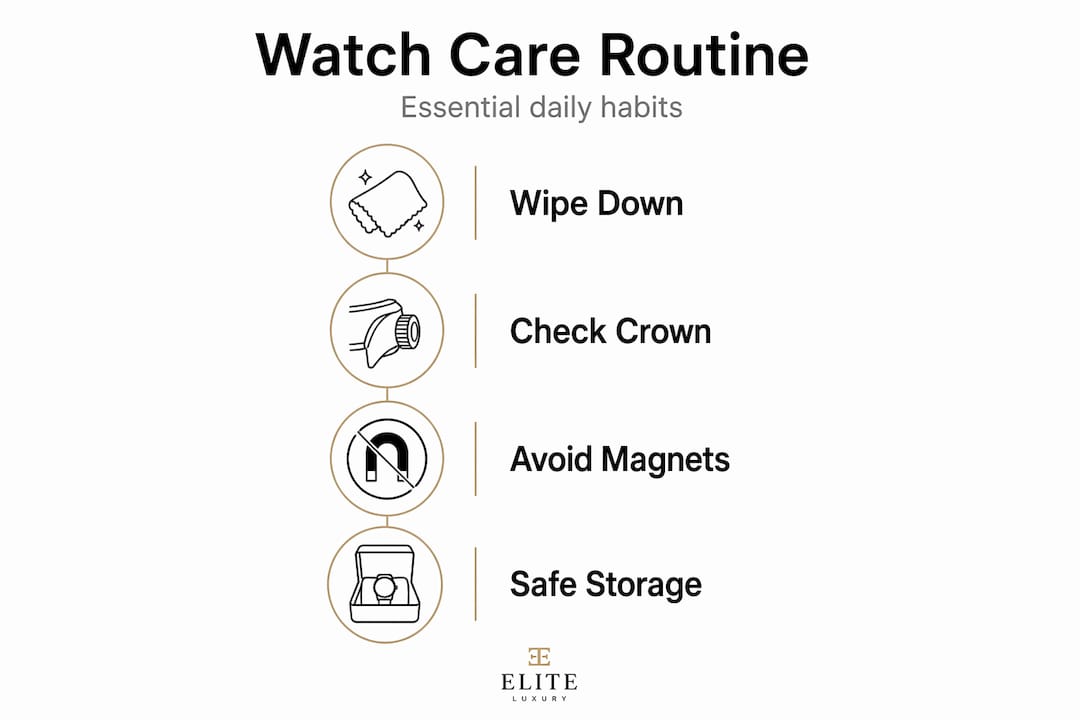
Keep your watch away from magnetic fields. Speakers, smartphones, laptop speakers, and bag closures with strong magnets are all common culprits. Keeping watches 5 to 10 cm away from electronic devices reduces the risk of magnetization, which causes mechanical movements to run erratically fast.
Luxury watch cleaning methods that are safe for home use
Cleaning is where many well-meaning collectors do the most damage. Using the wrong product or skipping a water resistance check first can turn a routine touch-up into an expensive repair.
Here is a step-by-step approach that works safely for most water-resistant luxury watches:
- Confirm water resistance. Check your model’s specifications. If it’s rated 30 meters or less, or you’re unsure, stick to a dry microfiber cloth only. Do not run it under water.
- Prepare a cleaning solution. Mix a few drops of mild dish soap with lukewarm water in a small bowl. Temperature matters. Hot water can affect gaskets.
- Clean the case and bracelet. Dip a soft-bristled toothbrush into the solution and gently scrub the case, lugs, and between bracelet links. Use light pressure. You are not scrubbing a tile floor.
- Rinse carefully. For water-resistant models, a brief rinse under lukewarm running water is fine. For lower-resistance watches, use a damp cloth to wipe away the soap.
- Dry thoroughly. Pat dry with a clean microfiber cloth, then allow the watch to air dry in a well-ventilated spot before storing. Never use a hairdryer or direct heat.
- Polish if needed. A purpose-built polishing cream restores luster to the case without the micro-scratches that metal-on-metal contact causes. See the ChronoCare guide on polishing a watch case for the correct technique.
Pro Tip: Never use ultrasonic cleaners on an assembled watch. These devices vibrate at frequencies that dislodge lubrication inside the movement, forcing a full service long before it was due.
Here is a quick comparison of cleaning approaches by watch type:
| Watch type | Recommended method | What to avoid |
|---|---|---|
| Water-resistant (100m+) | Mild soap, soft brush, lukewarm rinse | Ultrasonic cleaners, hot water, harsh sprays |
| Water-resistant (30 to 50m) | Damp microfiber cloth, light brush on bracelet | Submerging, pressurized water |
| Non-water-resistant or vintage | Dry microfiber cloth only | Any liquid near the case |
| Leather strap (any case) | Dry wipe on strap; standard case cleaning | Soaking strap, soaps on leather |
Long-term value preservation depends on gentle, consistent cleaning rather than occasional deep scrubbing. Aggressive polishing in particular removes metal and can erase the factory finish on brushed surfaces permanently.

Winding and storage best practices
Mechanical health is not just about the outside of the watch. How you wind it and where you keep it when you’re not wearing it matters just as much.
Manual winding: Wind your manual watch at the same time each day, ideally in the morning before putting it on. Use gentle, steady turns until you feel light resistance. Stop there. Forcing the crown past that point stresses the mainspring and can cause breakage over time. Never wind a manual watch while it’s on your wrist since the angle puts lateral pressure on the crown stem.
Automatic watches and winders: Automatic movements wind themselves through wrist motion, but if you rotate between several watches, a winder keeps the complications set correctly. The key detail most owners miss: watch winders must be configured to the correct turns per day (TPD) for your specific movement. Too many rotations causes over-winding and accelerates wear on the rotor bearing.
For storage, the environment is everything:
- Keep humidity between 40 and 50%. Silica gel packets inside a storage case work well in humid climates.
- Avoid storing watches in bathrooms. Steam from showers raises ambient humidity and accelerates gasket degradation faster than most people realize.
- Keep watches out of direct sunlight. UV exposure fades dials, especially those with lacquer or enamel finishes, and weakens leather straps in as little as a few months.
- Store away from speakers, stereo equipment, and any large magnetic appliances.
| Storage factor | Ideal condition | Risk if ignored |
|---|---|---|
| Humidity | 40 to 50% | Gasket corrosion, metal tarnish |
| Light exposure | No direct sunlight | Dial fading, strap cracking |
| Magnetic proximity | Away from electronics | Movement magnetization |
| Temperature | Stable room temperature | Lubricant breakdown in extreme heat or cold |
A dedicated watch box with individual cushioned compartments is the minimum standard. Travel cases with foam-padded slots protect against impact as well as environmental exposure.
Professional servicing explained
No matter how diligent your home care routine is, a luxury watch needs professional attention on a regular schedule. Think of it like car maintenance. You change the oil yourself, but you still take it to a mechanic for a full inspection.
Service intervals typically run 3 to 10 years, depending on the brand, movement complexity, and how frequently the watch is worn. A daily-wear Omega will need service closer to the 5-year mark. A display piece worn twice a year can stretch toward 8 to 10 years.
A full service at an authorized center involves:
- Complete disassembly of the movement, case, and bracelet
- Ultrasonic cleaning of individual components (not the assembled watch)
- Inspection and replacement of worn parts including the mainspring and click springs
- Fresh lubrication of every gear, jewel, and pivot point
- Gasket replacement to restore water resistance
- Regulation for accurate timekeeping within manufacturer tolerances
- Water resistance pressure testing before reassembly is considered complete
The process typically takes 4 to 6 weeks at an authorized service center. Collectors often balk at the timeline, but rushing this process is how movements get returned with residual debris or improper lubrication.
Watch for these signs that service is overdue: the watch is running more than 10 seconds fast or slow per day, the crown feels stiff or gritty, the watch stops unexpectedly on a full wind, or you notice moisture condensation under the crystal. Annual water resistance testing is worth the cost for any watch you regularly wear near water, even if a full service isn’t yet needed.
Environmental risks most collectors overlook
Most damage to luxury watches doesn’t happen in dramatic moments. It accumulates quietly. Understanding the hidden risks is a core part of best practices for watch care.
Magnetism is the most underestimated threat. A magnetized hairspring causes a movement to gain 30 to 60 seconds per day overnight. Demagnetization at a watchmaker takes about five minutes and costs almost nothing, but prevention is obviously better. Keep your watch off the bedside table if your phone charger is nearby.
Temperature extremes matter too. Leaving a watch in a car on a hot day can thin lubricants inside the movement, reducing their effectiveness long before the next service is due. Cold temperatures cause lubricants to thicken temporarily, which increases wear on pivots during the first few minutes of operation.
Chemical exposure is one of the most common sources of accelerated watch damage. Perfumes, colognes, sunscreen, and household cleaners contain compounds that attack gaskets, corrode case metals, and bleach leather straps within weeks of regular contact.
UV exposure deserves specific attention for watches with colored dials. Matte and lacquered dials lose their depth under sustained light. Even indirect sunlight through a window is enough to cause noticeable fading over a year. If you display your watches, use UV-filtering cases.
Finally, keep your documentation current. A watch with original papers, service records, and box commands a significantly higher resale value than an identical piece without provenance. Update your insurance annually, especially as the pre-owned market continues to push values higher.
My honest take on long-term watch care
I’ve worked in the watch care space long enough to see the same mistake repeated constantly. Collectors spend months researching which watch to buy and zero time researching how to own it properly.
The daily wipe. The crown check. The storage environment. These aren’t glamorous. Nobody puts them on Instagram. But in my experience, the collectors whose watches hold their value and look genuinely sharp after a decade are the ones who treat these basics as non-negotiable, not as optional.
What surprises most people is how much the crown check actually matters. I’ve seen water damage on watches rated to 50 meters because the crown was half a turn loose during a heavy rainstorm. Water resistance is not permanent and it degrades with every passing season whether you test it or not.
My practical advice: build your care habits around the watch care routine basics before you buy your next piece. The investment in good products and consistent habits costs a fraction of a single service bill. And the watches that get the most attention tend to be the ones people actually wear more, which is the whole point.
Ownership should be enjoyable. The care routine is what makes that enjoyment sustainable over decades.
— Raymond Jenkins
Protect your investment with ChronoCare
Everything covered in this guide requires the right tools to execute properly. Wiping with a rough cloth, using the wrong cleaning agent, or polishing with an abrasive product undoes every good habit instantly.
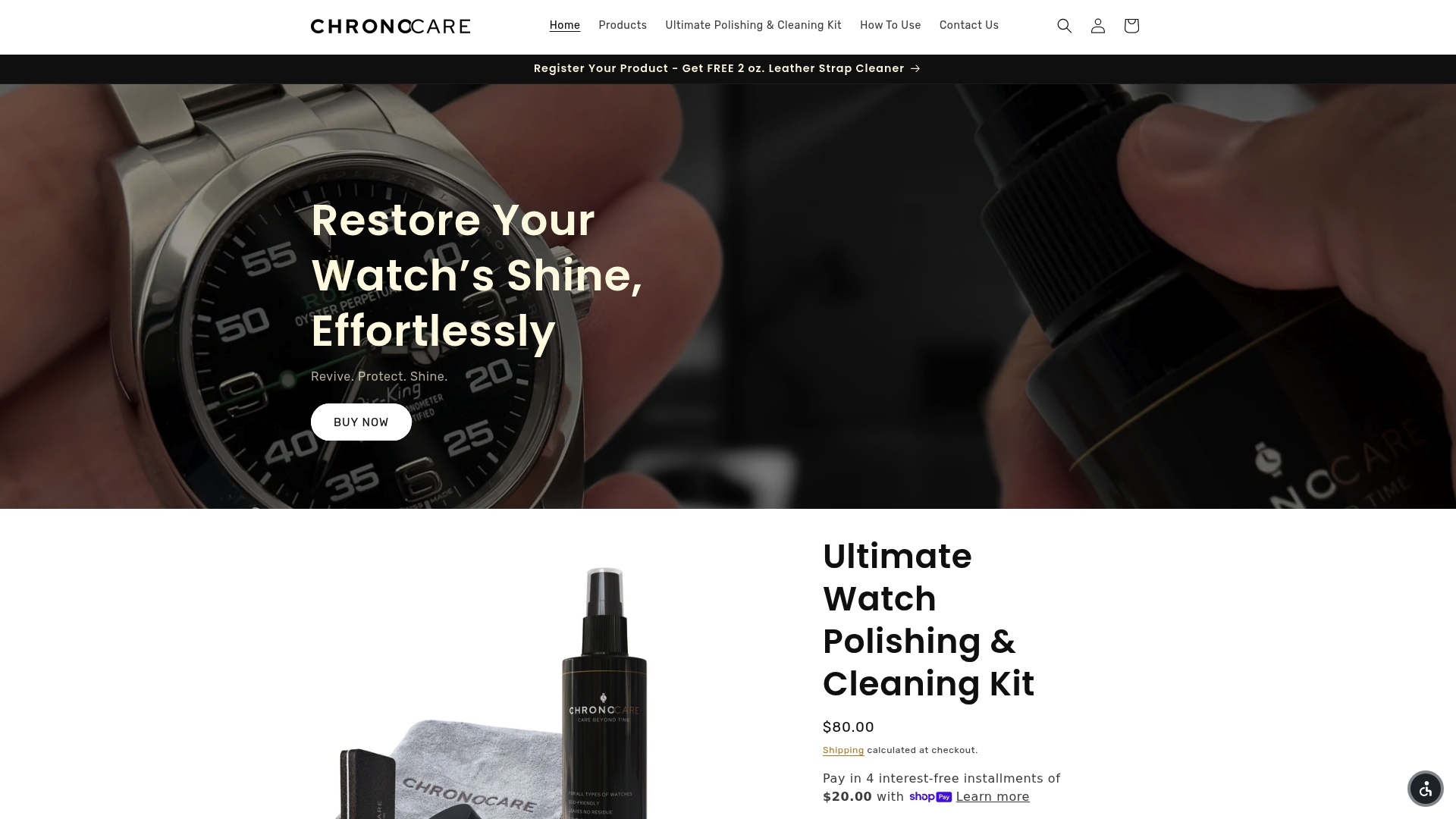
ChronoCare formulates its products specifically for luxury timepieces. The Ultimate Watch Cleaning Kit includes a professional-grade microfiber cloth, gentle cleaning solution, and a soft detailing brush designed to reach bracelet links without scratching case surfaces. For deeper cleaning sessions, the watch cleaner spray lifts grime without affecting gaskets or metal finishes. And for restoring your case to factory-level shine, the polishing and cleaning kit covers the full process safely at home. Every product is formulated in the US with collectors in mind.
FAQ
What does a luxury watch care routine include?
A luxury watch care routine includes daily wiping with a microfiber cloth, periodic cleaning with mild soap and water, proper winding and storage in controlled humidity, and professional servicing every 3 to 10 years depending on the model.
How often should you clean a luxury watch at home?
A light wipe after each wear is the minimum. A more thorough clean using mild soap and a soft brush can be done weekly or monthly for water-resistant models, always confirming the crown is fully secured first.
How do you store a luxury watch properly?
Store your watch in a cushioned watch box in a stable environment with 40 to 50% humidity, away from direct sunlight, magnetic fields, and temperature extremes. Avoid bathrooms due to steam and moisture exposure.
When does a luxury watch need professional servicing?
Most manufacturers recommend professional servicing every 3 to 10 years. Signs that service is needed sooner include timekeeping inaccuracies, a stiff crown, unexpected stopping on a full wind, or visible moisture under the crystal.
Can magnetism damage a luxury watch?
Yes. Exposure to magnetic fields from electronics can magnetize the hairspring and cause the watch to gain significant time per day. Keeping the watch at least 5 to 10 cm from devices reduces this risk, and demagnetization at a watchmaker corrects it quickly.