

How to Dry Polish a Watch Case Without Losing Value
Knowing how to properly dry polish a watch case is one of the most useful skills a collector can develop, and one of the most misunderstood. That hazy, oxidized look creeping across your stainless steel Rolex or Omega is not a death sentence for your watch’s appearance. But grab the wrong cloth, apply too much pressure, or move in the wrong direction, and you can permanently soften edges and reduce resale value in under five minutes. This guide walks you through the right tools, the right technique, and the moments when you should put the cloth down and call a professional.
Table of Contents
- Key takeaways
- Tools you actually need for dry polishing a watch case
- Step-by-step dry polish technique
- Common mistakes and how to spot them
- Aftercare and maintenance to protect your work
- My honest take on DIY polishing
- Gear up with the right products
- FAQ
Key takeaways
| Point | Details |
|---|---|
| Use the right cloth | Cape Cod polishing cloths are designed for metal surfaces; avoid products like Polywatch, which is formulated for acrylic crystals only. |
| Prep before you polish | Clean the case thoroughly before any polishing to prevent grit from creating new scratches during the process. |
| Follow the grain | Use straight, controlled strokes that follow the metal’s grain direction to prevent swirl marks and uneven shine. |
| Stop before scratches vanish | Edges soften before scratches fully disappear, so stopping early preserves case geometry and collector value. |
| Maintain between polishes | Cleaning every two to three months with gentle products reduces how often you need to polish at all. |
Tools you actually need for dry polishing a watch case
Before you touch your watch, get the right materials together. Using the wrong product is the number one cause of DIY polishing disasters, and the damage is often irreversible.
Here is what belongs on your workbench:
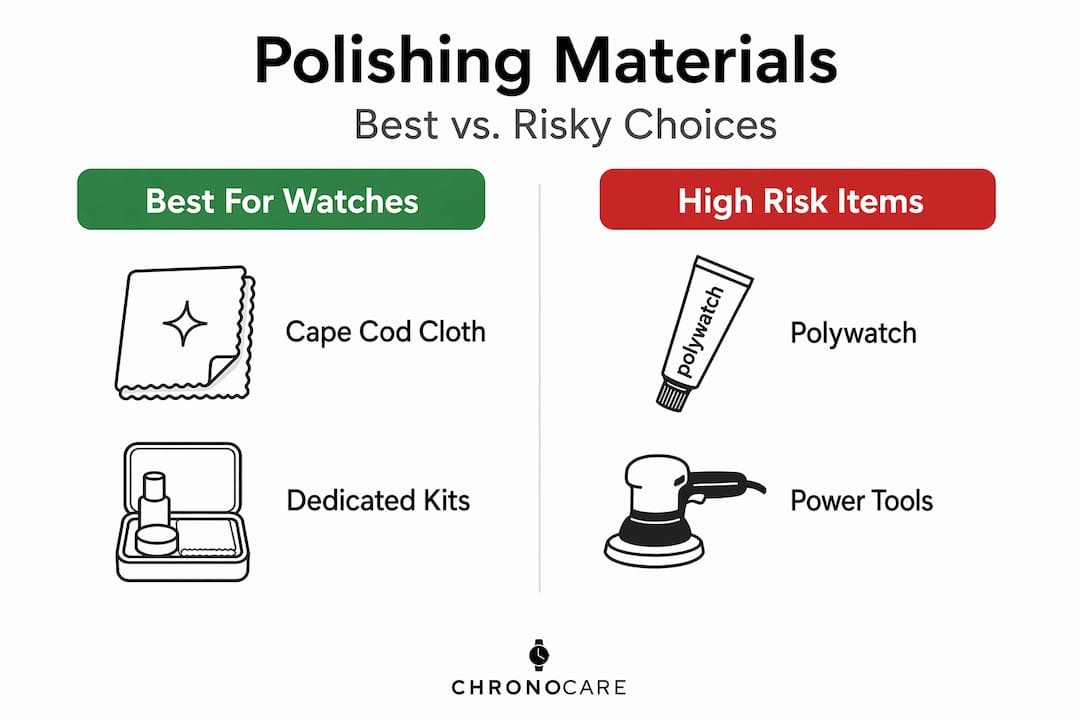
- Cape Cod polishing cloth: The gold standard for metal watch cases. It contains a mild abrasive compound embedded in the cloth itself, which means you apply no additional product. Cape Cod cloths are designed for metal specifically, unlike other polishing products that collectors sometimes confuse for metal-safe options.
- Microfiber cloths: Use these for the initial wipe-down and for buffing after polishing. They lift oils and dust without scratching.
- Soft-bristle brush: A clean toothbrush or dedicated watch brush clears debris from lugs and case edges before polishing begins.
- Low-tack masking tape: Protects the bezel, crystal edges, and any brushed surfaces you do not want to accidentally polish.
- Watchmaker’s loupe or magnifying glass: Lets you inspect your progress closely without guessing.
One product that does not belong on this list is Polywatch. It is a common mistake because Polywatch is widely sold in watch accessory stores. Polywatch is formulated for acrylic crystals, not metal cases. Using it on stainless steel or gold will leave a hazy, ineffective residue at best, and at worst it will create surface inconsistencies that are difficult to correct.
| Polishing Material | Best For | Risk Level |
|---|---|---|
| Cape Cod polishing cloth | Stainless steel, gold, titanium cases | Low |
| Microfiber cloth only | Final buffing, fingerprint removal | Very Low |
| Polishing cream (metal-grade) | Light scratch blending on polished surfaces | Medium |
| Generic abrasive compound | Not recommended for watches | High |
| Polywatch | Acrylic crystals only | High (on metal) |
Pro Tip: Investing in a dedicated polishing kit built specifically for luxury watch cases removes the guesswork entirely. Generic jewelry polishing kits often include compounds that are too aggressive for watch case geometry.
Step-by-step dry polish technique
Preparation is not optional. Skipping it turns a cosmetic touch-up into a scratch-creating session. Here is how to do this correctly from start to finish.
-
Assess water resistance first. Water-resistant watches can be cleaned with mild soap and a soft brush before polishing. Non-water-resistant watches should only be wiped with a dry or very slightly damp microfiber cloth. Never submerge a watch unless you are certain of its current seal integrity.
-
Clean the case thoroughly. Use a soft brush to dislodge any grit from the lugs, crown area, and case back. Any particle left on the surface will act like sandpaper during polishing. For water-resistant cases, a watch cleaner spray applied with a microfiber cloth works well here.
-
Tape off protected zones. Apply low-tack masking tape over the bezel, crystal, crown, and any brushed surfaces adjacent to the area you are polishing. Brushed and polished finishes require completely different techniques. Accidentally polishing a brushed lug will create an inconsistent, shiny patch that is very difficult to reverse without professional equipment.
-
Work in straight strokes following the grain. This is the most critical mechanical step. Use minimal pressure in straight, controlled strokes following the metal grain direction. On a polished surface, the grain runs in a consistent direction you can see under good lighting. Never use circular motions. Circular strokes create swirl marks that scatter light unevenly and are immediately visible.
-
Apply compound sparingly. If you are using a Cape Cod cloth, the compound is already embedded. If you are using a separate watch polishing cream, apply a tiny amount, smaller than a pea, to your cloth rather than directly to the case. Direct application concentrates product in one spot and makes even coverage nearly impossible.
-
Check progress frequently. After every few strokes, wipe the area clean with a dry microfiber cloth and inspect under a light source. Tilt the watch to see how light reflects off the surface. You are looking for the scratch to become less visible, not for it to disappear entirely.
-
Buff to finish. Once satisfied, use a clean microfiber cloth to buff the area gently. Remove all compound residue before removing the tape.
At-home polishing should always be manual, mild, and minimal. Rotary buffers and power tools remove metal far too quickly and unevenly for watch case work. Even experienced watchmakers use them with extreme caution on specialized equipment.
Pro Tip: Stop the moment scratches visually lessen rather than waiting for them to disappear completely. Edges soften before scratches fully disappear, and once you round a sharp chamfer, no amount of careful polishing will restore it at home.
Common mistakes and how to spot them
Even collectors who understand the theory make these errors in practice. Knowing what to look for lets you catch problems early.
- Polishing across the grain on brushed surfaces. A brushed finish has directional lines created by abrasive strokes during manufacturing. Polishing perpendicular to those lines destroys the texture and creates a blotchy, inconsistent appearance that stands out immediately.
- Using too much pressure near edges. The corners and chamfers of a watch case are the first casualties of over-polishing. Over-polished watches show rounded edges and inconsistent bevel widths, and experienced collectors can spot this immediately when examining a watch for purchase.
- Confusing scratch blending with scratch removal. The goal of a DIY dry polish is to reduce the visual prominence of light scratches, not to eliminate them. Chasing complete removal means removing more metal than necessary, which accelerates edge softening.
- Skipping the cleaning step. Any grit or debris left on the case before polishing gets dragged across the surface with your cloth. The result is new scratches added on top of the ones you were trying to fix.
“Polishing is always a compromise. Returning a watch case to brand-new condition is impossible, and aggressive polishing risks permanent value loss.” — Nicholas Hacko, Watchmaker
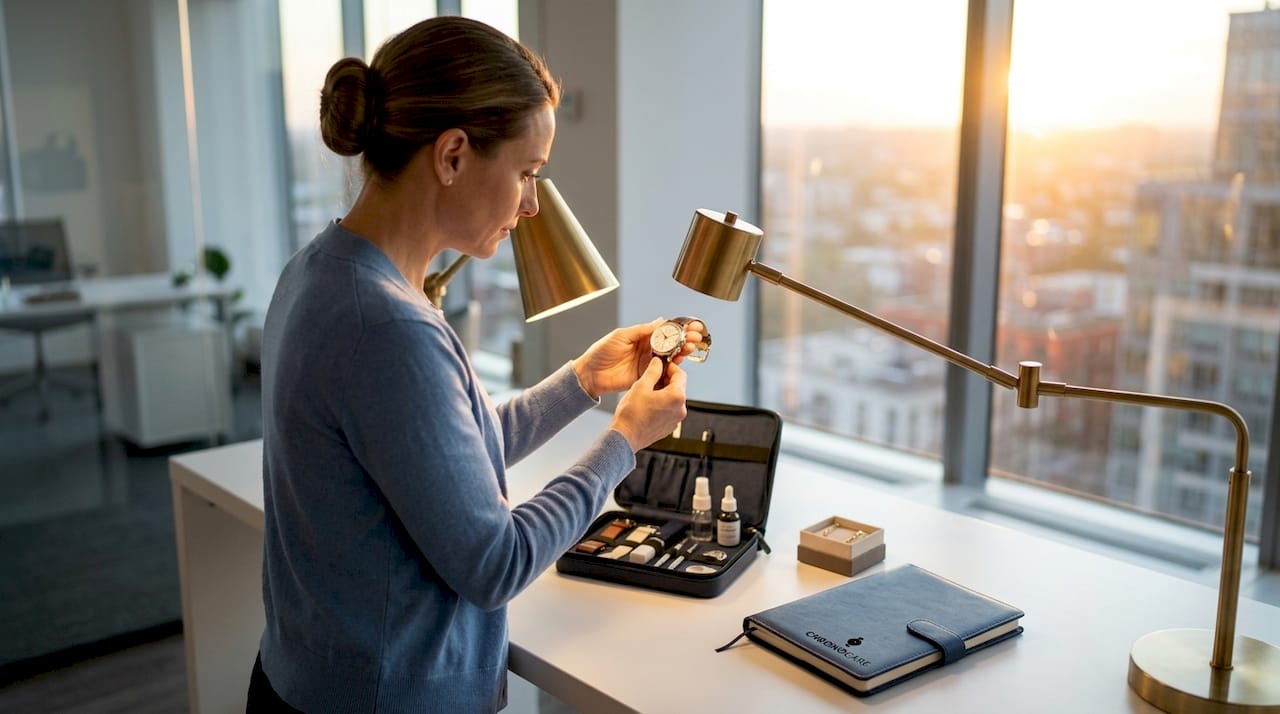
To verify your results, hold the watch under a single directional light source, like a desk lamp, and tilt it slowly. A properly polished surface reflects light consistently and evenly. Examining lug symmetry and bevel width consistency tells you whether the case geometry has been compromised. If you notice asymmetry or uneven reflections, stop and consult a professional before continuing.
When should you stop entirely and seek professional refinishing? If the watch has deep gouges, if it is a vintage piece with original factory chamfers, or if the case has complex geometry with multiple finish types, professional refinishing is the right call. Specialized equipment like machine lapping produces uniform surfaces that preserve sharp edges in ways hand polishing simply cannot replicate.
Aftercare and maintenance to protect your work
Getting a good result from dry polishing is satisfying. Keeping that result for as long as possible requires a consistent maintenance routine.
- Clean regularly, not reactively. Cleaning every two to three months with gentle products prevents the buildup of oils, sweat, and environmental grime that accelerates surface oxidation and dulling. Regular cleaning also means you will need to polish far less often.
- Use products formulated for luxury metal finishes. Generic household cleaners, alcohol wipes, and abrasive sprays strip protective coatings and can pit softer metals like gold. Stick to cleaning sprays designed for watch cases and avoid anything with bleach, ammonia, or acetone.
- Store your watch properly. Humidity accelerates oxidation on steel cases and can cause spotting on polished surfaces. A watch box or roll with a dry environment is far better than leaving your watch on a bathroom counter where moisture exposure is constant.
- Address fingerprints promptly. Skin oils are mildly acidic and will dull a polished finish over time if left sitting. A quick wipe with a clean microfiber cloth after wearing keeps the surface looking sharp between deeper cleanings. For tips on this, see ChronoCare’s guide on removing fingerprints from luxury watches.
- Reserve polishing for genuine need. Light touch-up polishing is appropriate for surface haze and minor scratches after normal wear. Full polishing sessions should be infrequent. If you are polishing more than once or twice a year, your storage or daily wear habits are the real problem to address.
Pro Tip: A dedicated watch cleaning kit formulated for luxury metal finishes gives you everything you need for routine maintenance without the risk of reaching for the wrong product under your sink.
My honest take on DIY polishing
I have handled a lot of watches over the years, and the ones that make me wince are not the scratched ones. They are the over-polished ones. A Rolex Submariner with a few honest scratches from years of daily wear tells a story. The same watch with rounded lugs, softened bevels, and a mirror finish where there should be brushing tells a different story. It tells you someone tried too hard.
The uncomfortable truth about DIY dry polishing is that the risk is asymmetric. A cautious, minimal approach gets you 70 to 80 percent of the visual improvement with almost no downside. Pushing for that last 20 percent is where collectors permanently compromise their watches.
What I have learned from watching people make this mistake is that the instinct to “finish the job” is the enemy. You see a scratch still faintly visible, and you want it gone. That impulse is exactly when you need to stop. A lightly polished watch can look cleaner and be more wearable, but heavy polishing softens edges and reduces collector desirability in ways that cannot be undone at home.
My advice: embrace minor imperfections as part of the watch’s history. Polish only what genuinely bothers you, use the lightest touch possible, and know that a watchmaker with proper equipment will always do a better job than you can by hand. The goal of DIY maintenance is not perfection. It is preservation.
— Eduardo
Gear up with the right products
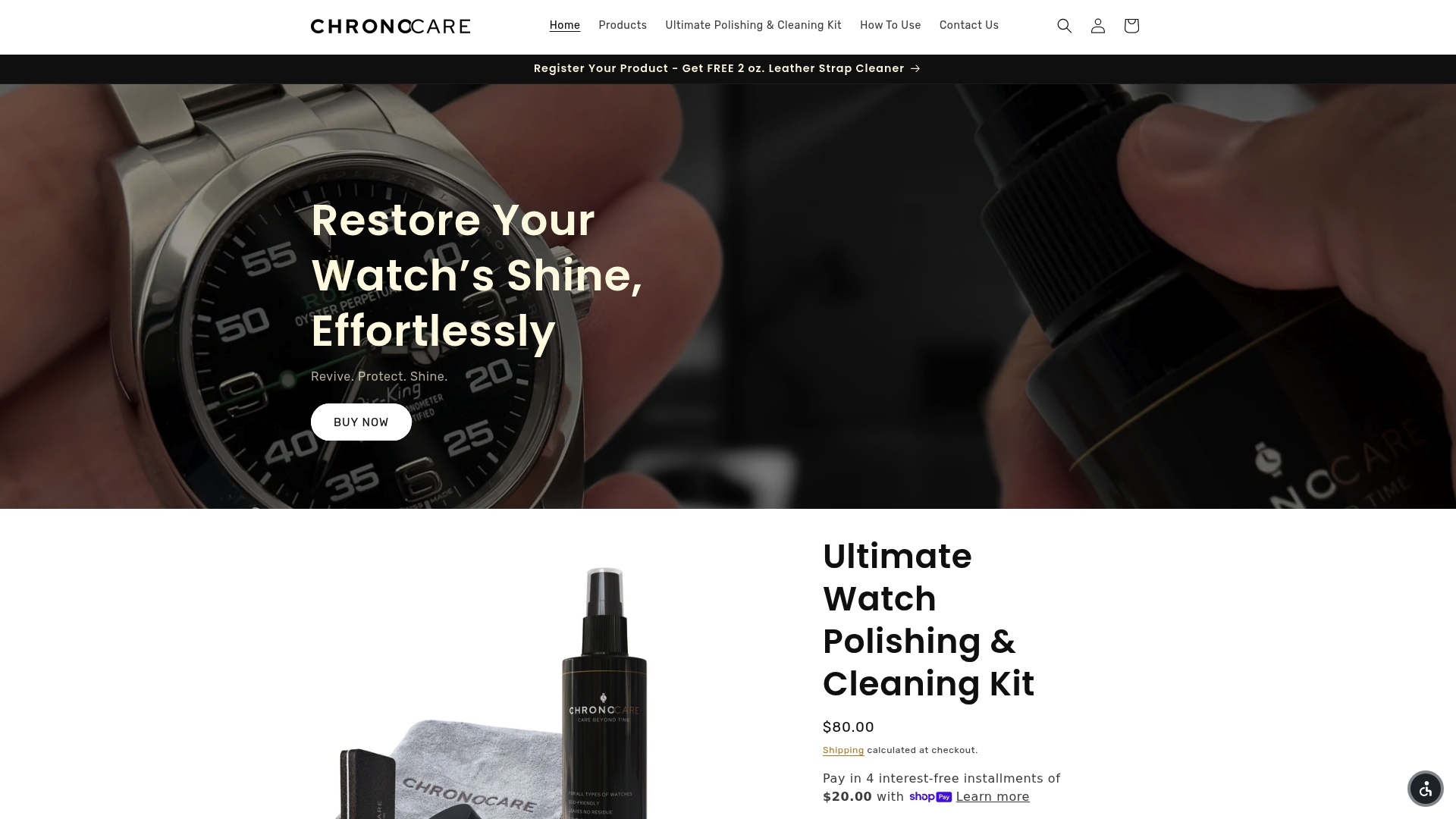
If you are serious about maintaining your watches at home, the products you use matter as much as the technique. ChronoCare’s polishing and cleaning kits are formulated specifically for luxury watch cases, with materials selected to minimize risk to delicate finishes and sharp case geometry. The watch polishing cream handles light scratch removal on metal surfaces with precision, while the microfiber cloths included in the kits are safe for both polished and brushed finishes. For holistic care, the leather strap cleaner keeps straps in condition without exposing the case to harsh chemicals. Browse the full range at ChronoCare and find the right kit for your collection.
FAQ
What does “dry polish” mean for a watch case?
Dry polishing refers to polishing a watch case using a cloth with an embedded or lightly applied compound, without submerging or wetting the watch. It is the safest method for at-home cosmetic maintenance on luxury timepieces.
Can I use Polywatch to polish a metal watch case?
No. Polywatch is formulated for acrylic watch crystals, not metal surfaces. Using it on a stainless steel or gold case will be ineffective and may cause surface hazing.
How often should I polish my watch case at home?
Light touch-up polishing should be infrequent, no more than once or twice a year for most collectors. Regular cleaning every two to three months reduces the need to polish at all.
How do I know if I have over-polished my watch?
Hold the watch under a directional light and look for rounded edges, uneven bevel widths, or inconsistent reflections between surfaces. These are the clearest signs that too much metal has been removed.
When should I take my watch to a professional instead of polishing it myself?
Seek professional refinishing for deep scratches, vintage watches with original factory chamfers, or any case with complex geometry involving multiple finish types. DIY polishing should be limited to light cosmetic touch-ups only.