

The Role of Watch Cleaning Spray Ingredients Explained
Most watch owners assume any spray cleaner will do the job. That assumption has cost collectors dearly. The role of watch cleaning spray ingredients goes far beyond simply making a surface look shiny. Each chemical component in a quality formula serves a specific function: dissolving oils, protecting metal coatings, preventing corrosion, and preserving delicate finishes that took craftsmen hours to perfect. Grab the wrong product and you can strip a brushed finish, crack a rubber gasket, or introduce moisture near a crown seal. Understanding what’s actually inside your cleaning spray is the foundation of smart watch maintenance.
Table of Contents
- Key takeaways
- The role of watch cleaning spray ingredients in luxury care
- How ingredients interact with different watch materials
- Risks of using the wrong cleaning ingredients
- How watch cleaning sprays work in practice
- My honest take on ingredient literacy for collectors
- Protect your watch with the right products
- FAQ
Key takeaways
| Point | Details |
|---|---|
| pH-neutral formulas protect finishes | Acidic or alkaline cleaners can corrode metal and strip coatings on luxury watch surfaces. |
| Surfactants do the real cleaning work | Plant-derived surfactants lift oils and grime at the molecular level without mechanical scrubbing. |
| Harsh chemicals destroy seals | Ammonia, bleach, and alcohol-based cleaners degrade rubber gaskets and accelerate moisture ingress. |
| Material compatibility matters | Different watch components require different ingredient tolerances; one formula does not fit all surfaces. |
| Light, frequent care beats aggressive cleaning | Regular use of safe sprays prevents buildup far better than occasional harsh cleaning sessions. |
The role of watch cleaning spray ingredients in luxury care
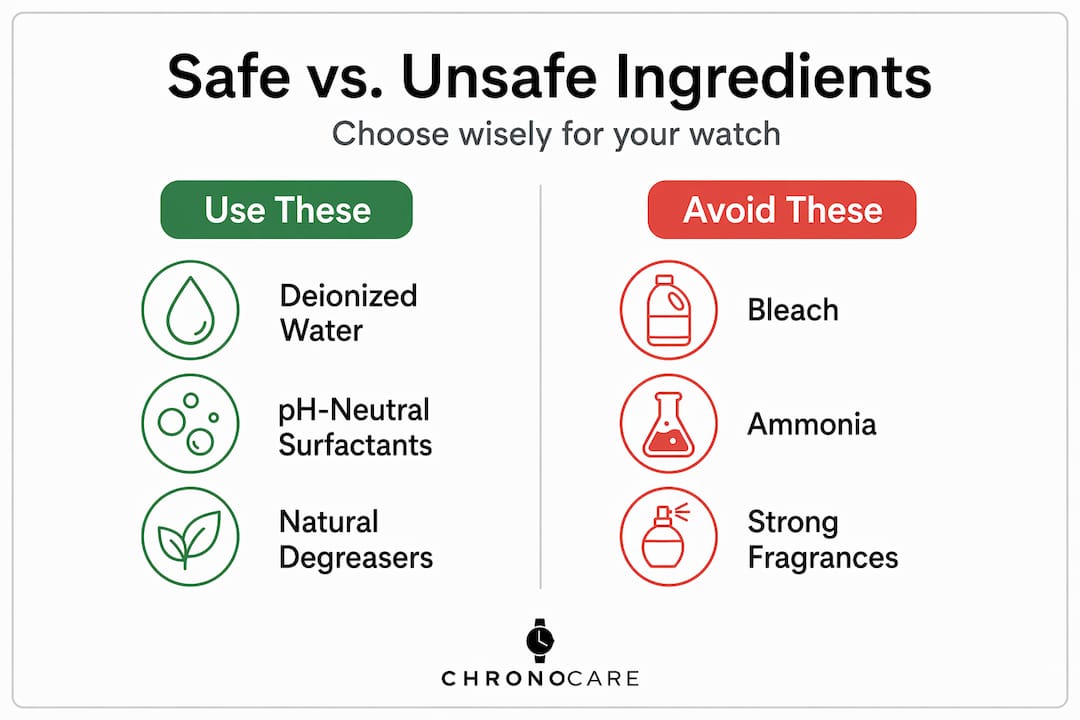
Not all cleaning sprays share the same chemistry. The best formulas are built around a handful of core ingredients, each chosen for a specific protective or cleaning function.
Deionized water is the base ingredient in most quality watch cleaning solutions. Unlike tap water, deionized water contains no dissolved minerals that leave spots or residue on polished surfaces. It’s a neutral carrier that lets active ingredients do their work without introducing new contaminants.
pH-neutral formulas are non-negotiable for luxury timepieces. A formula that sits too far toward acidic or alkaline on the pH scale will attack metal oxides, degrade PVD coatings, and dull polished finishes over time. pH-neutral formulas with deionized water and sodium citrate safely remove grime without triggering corrosion reactions.
Here’s what the key ingredient categories actually do:
- Plant-based surfactants: These molecules have a water-attracting head and an oil-attracting tail. They surround oil and grime particles, pulling them away from the watch surface and into the cleaning solution. Plant-based surfactants break down oils at the molecular level, enabling gentle cleaning without mechanical abrasion.
- Natural degreasers: Derived from citrus or corn, these ingredients target the heavier grease deposits that accumulate in bracelet links and around pushers. They work faster than surfactants alone but remain gentle enough to avoid stripping factory coatings.
- Corrosion inhibitors: These compounds form a thin protective layer on metal surfaces after cleaning, slowing oxidation between cleaning sessions. They’re especially valuable on stainless steel and titanium cases exposed to sweat and humidity.
- Sodium citrate: A mild chelating agent that binds to mineral deposits and lifts them without scratching. It’s what gives premium sprays their ability to clean without leaving water marks.
Pro Tip: Always check that a cleaning spray explicitly lists “pH-neutral” on the label before applying it to any watch with a PVD or DLC coating. Those coatings are thinner than they look, and even mild acidity will dull them over months of use.
What you want to avoid is equally telling. Household cleaners with bleach, ammonia, or strong fragrances damage seals, leave residues, and attract more dirt. Alcohol strips protective oils from leather straps and softens rubber gaskets. These aren’t theoretical risks. They’re the reasons watchmakers see preventable damage every week.
How ingredients interact with different watch materials
A formula that’s safe for stainless steel isn’t automatically safe for every surface on your watch. Luxury timepieces combine materials with very different chemical tolerances, and understanding those differences changes how you approach cleaning.
| Material | Safe ingredients | Ingredients to avoid |
|---|---|---|
| Polished stainless steel | Deionized water, pH-neutral surfactants, sodium citrate | Ammonia, bleach, abrasive compounds |
| Brushed metal finish | pH-neutral surfactants, soft application | Alcohol, strong degreasers, abrasive pads |
| Ceramic bezel | Mild surfactants, deionized water | Acidic formulas, harsh solvents |
| Sapphire crystal | pH-neutral water-based sprays | Ammonia-based cleaners, acetone |
| Rubber or silicone strap | Gentle surfactants, water-based formulas | UV-degrading solvents, petroleum-based cleaners |
| Leather strap | Specialized leather-safe surfactants | Alcohol, water-based sprays, strong degreasers |
Polished surfaces are particularly unforgiving. Brushed metal finishes require brushing along the grain, and the wrong chemical combined with improper technique creates micro-scratches that dull the factory finish permanently. Even a well-formulated spray can cause damage if paired with the wrong application method.
Ceramic bezels on watches like the Rolex Submariner or Omega Seamaster Planet Ocean are harder than steel but surprisingly vulnerable to acidic formulas. Acids etch the surface at a microscopic level, creating a haze that’s nearly impossible to reverse without professional refinishing.
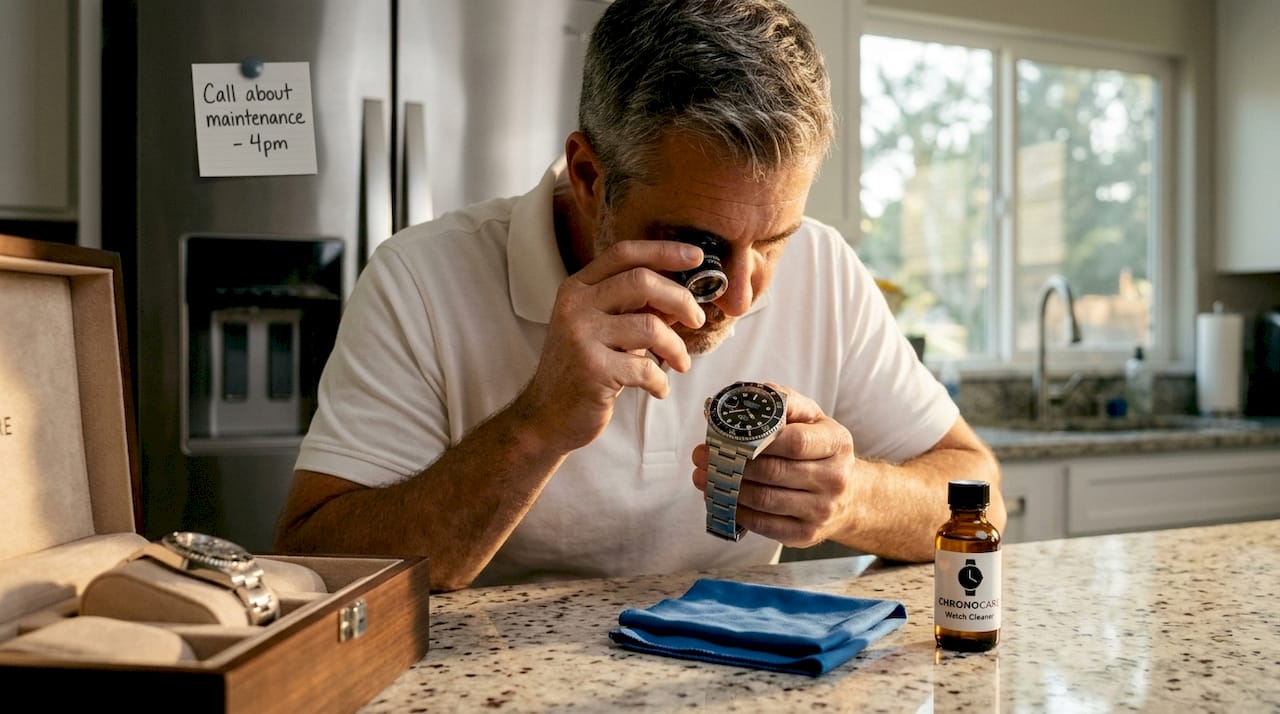
Rubber and silicone straps present a different challenge. Certain solvents accelerate UV degradation in these materials, making them brittle and prone to cracking. A spray that’s perfectly safe on the case can destroy a rubber strap within months if it contains petroleum-based compounds. For leather straps, the concern shifts to oil stripping. Leather needs its natural oils to stay supple. Water-based sprays and alcohol both pull those oils out, causing cracking. pH-neutral, all-natural formulas safe for leather are specifically designed to clean without dehydrating the material.
Pro Tip: For leather straps, use a product specifically formulated for leather rather than applying your case cleaning spray to the strap. ChronoCare’s leather strap cleaner is designed with ingredients that clean without stripping the oils that keep leather flexible.
Risks of using the wrong cleaning ingredients
This is where the damage actually happens. Most watch owners don’t realize they’ve made a mistake until the finish is already compromised.
The biggest offenders are common household products that seem harmless:
- Ammonia-based glass cleaners: Widely used on windows, these products attack rubber gaskets and seals. Ammonia can dissolve metal components and damage watch appearance with repeated exposure. One application might not show immediate damage, but the degradation is cumulative.
- Bleach: Corrodes metal, destroys gasket integrity, and leaves chemical residues that attract grime. Never appropriate for any watch surface.
- Isopropyl alcohol: Strips protective coatings, dries out rubber seals, and causes leather to crack. Some collectors use it on crystals, but it’s not worth the risk near any seal or strap material.
- Dish soap: Seems gentle, but many formulas contain fragrances, dyes, and surfactants far too aggressive for watch finishes. Residue left in bracelet links also attracts dirt faster than before cleaning.
“Excessive cleaning or use of harsh chemicals accelerates corrosion; maintenance should be about protecting gaskets and preserving finishes, not aggressive removal.” — Ultrasonic watch cleaning explained
The misconception that longer cleaning equals better results is particularly dangerous. Leaving any cleaning agent on a watch surface longer than recommended increases chemical exposure time, which raises the risk of coating degradation and gasket softening. Professional-grade solutions use controlled exposure times precisely because timing matters as much as formula.
Spraying liquid directly onto the watch face is another common mistake. Applying solution to the watch head directly risks moisture ingress near the crown and caseback seals. Even a water-resistant watch isn’t immune to this kind of targeted exposure, especially if the seals are aging.
How watch cleaning sprays work in practice
Understanding the chemistry is one thing. Knowing how to apply it correctly is where the knowledge pays off. Here’s a practical sequence that aligns ingredient function with technique:
- Spray onto the cloth or brush, not the watch. Apply a small amount of cleaning spray to a soft-bristle brush or microfiber cloth first. This controls the amount of liquid making contact with the watch and keeps solution away from crown and caseback seals.
- Work in sections. Clean the case, bracelet, and bezel separately. This lets you adjust pressure and technique for each material without cross-contaminating surfaces.
- Let the chemistry work. Cleaning typically takes 2 to 4 minutes for a thorough clean. Don’t scrub harder to compensate for a formula that needs time to emulsify oils. Pressure creates scratches. Chemistry does the work.
- Use the right brush for each surface. A soft-bristle brush for the bracelet links, a microfiber cloth for polished surfaces, and nothing abrasive on crystals or ceramic. The brush type amplifies or undermines what the cleaning spray can do.
- Wipe down after every wear. A quick 10-second wipe-down after wearing prevents oils and sweat from bonding to the surface. This single habit reduces how much chemical work your spray needs to do during a full clean.
- Know when to go professional. Consumer sprays maintain external surfaces safely but cannot replicate the multi-stage chemical baths and temperature-controlled rinses of professional ultrasonic cleaning. If your watch has significant buildup inside bracelet links or hasn’t been serviced in years, a professional clean is the right call.
Pro Tip: Pair your cleaning spray with a dedicated soft-bristle brush designed for watch use. Generic brushes often have bristle stiffness that’s too aggressive for polished surfaces, even when the chemistry is perfect.
Sprays that chemically emulsify oils lead to safer cleaning than relying on mechanical scrubbing. This is the core principle behind every quality watch cleaning formula. The ingredients do the lifting. You just guide the process.
My honest take on ingredient literacy for collectors
I’ve watched collectors spend thousands on a watch and then reach for a bottle of glass cleaner to maintain it. That disconnect used to frustrate me. Now I understand it. Nobody teaches you this stuff when you buy a watch.
What changed my own approach was seeing a Rolex Datejust with a completely hazed sapphire crystal. The owner had been using an ammonia-based cleaner for two years, convinced it was safe because it was gentle enough for eyeglasses. It wasn’t. The crystal looked fine at first glance and destroyed under a loupe.
That experience pushed me toward understanding what’s actually in cleaning products rather than trusting marketing language. Words like “gentle” and “safe” mean nothing without knowing the pH, the surfactant type, and what the formula does to rubber over time. Regular light care with safe ingredients is more effective at keeping watches fresh than infrequent aggressive cleans that risk damage. That’s not just good advice. It’s the difference between a watch that holds its value and one that needs a costly refinish.
My recommendation is to treat ingredient knowledge the same way you treat movement knowledge. You don’t need to be a chemist, but you should know what’s in your spray and why it’s there. That understanding is what separates collectors who maintain watches from collectors who accidentally damage them.
— Eduardo
Protect your watch with the right products
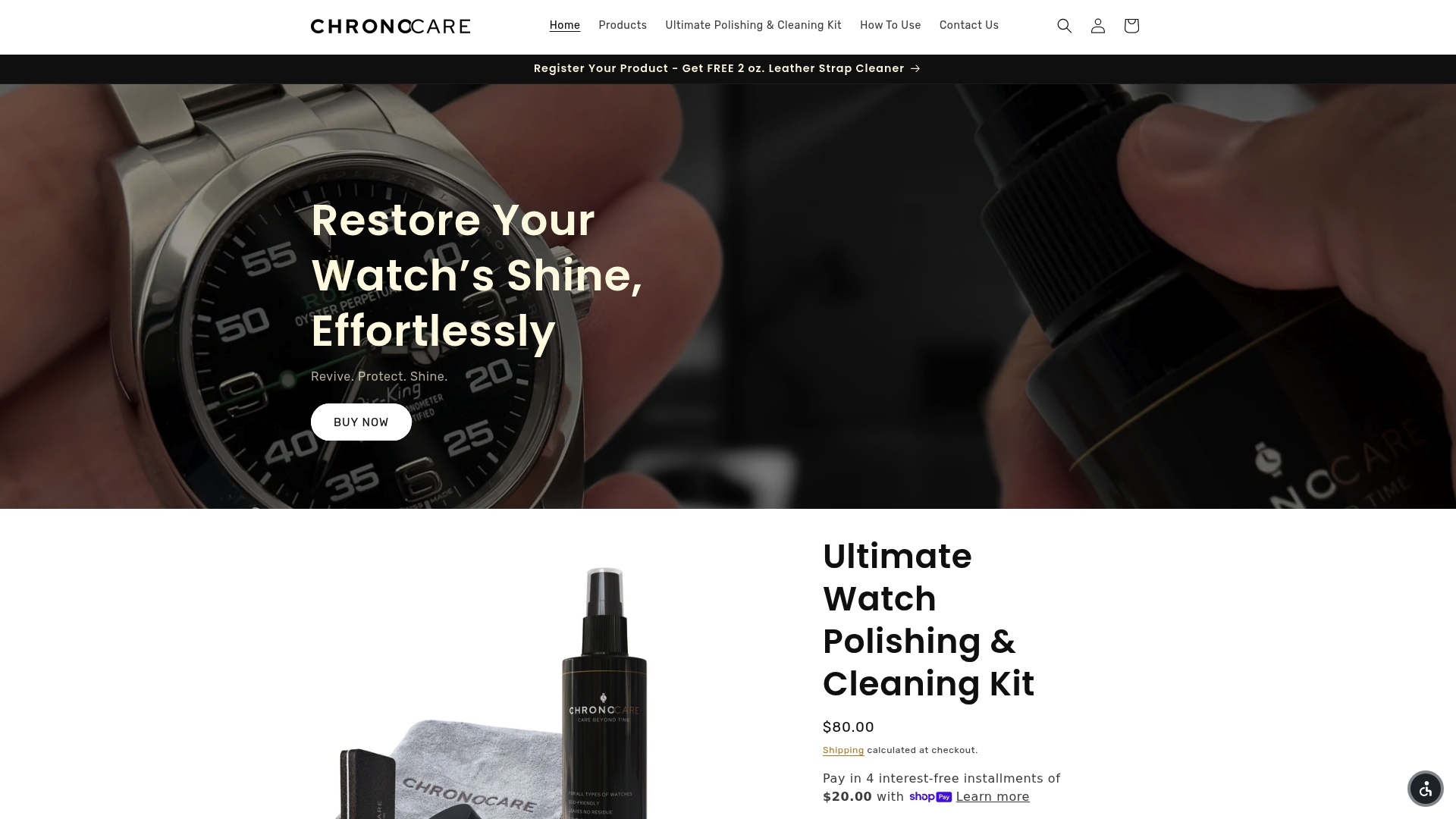
ChronoCare builds its cleaning sprays specifically around the ingredient principles covered in this article. Every formula is pH-neutral, plant-derived, and tested for compatibility with stainless steel, gold, titanium, ceramic, sapphire, rubber, and leather. The Ultimate Watch Cleaning Kit pairs the spray with soft-bristle brushes and microfiber cloths matched to the formula’s chemistry, so every tool works with the ingredients rather than against them. For collectors who want the full picture on premium watch care, ChronoCare’s product line is formulated in the US with both locally and globally sourced ingredients, backed by watchmaker expertise. Your timepiece deserves a cleaning routine built on science, not guesswork.
FAQ
What ingredients should a safe watch cleaning spray contain?
A safe watch cleaning spray should contain deionized water, pH-neutral surfactants, and natural degreasers like sodium citrate. These ingredients clean effectively without corroding metals, stripping coatings, or degrading rubber seals.
Why can’t I use household glass cleaner on my watch?
Household glass cleaners typically contain ammonia, which degrades rubber gaskets and can dissolve metal coatings with repeated exposure. Specialized watch cleaning solutions use controlled pH formulas that protect seals and finishes.
How often should I clean my luxury watch with a spray?
A quick wipe-down after every wear prevents oil and sweat buildup, while a full spray cleaning every two to four weeks is sufficient for most collectors. Overcleaning with any product increases chemical exposure and raises the risk of long-term finish damage.
Can one cleaning spray work on all watch materials?
Most quality pH-neutral sprays are safe for steel, gold, ceramic, sapphire, and rubber. Leather straps require a dedicated leather-safe formula, as standard watch cleaning sprays can strip the natural oils that keep leather supple and crack-resistant.
When should I choose professional cleaning over a consumer spray?
Consumer sprays are effective for external surface maintenance but cannot replicate the multi-stage chemical baths used in professional ultrasonic cleaning. If your watch has heavy buildup inside bracelet links or hasn’t been serviced in several years, professional cleaning is the appropriate choice.