

Watch Bracelet Link Cleaning Checklist for Luxury Watches
A watch bracelet link cleaning checklist is a structured sequence of steps designed to remove grime, oils, and moisture from metal bracelet links without scratching polished surfaces or exposing the watch movement to water damage. The industry term for this practice is bracelet maintenance, and it covers everything from detaching the bracelet with a spring bar tool to the final air-dry before reattachment. The core tools you need are a spring bar tool, mild phosphate-free dish soap, an extra-soft natural bristle brush, and at least two microfiber cloths. Skip any one of these steps and you risk corrosion, micro-scratches, or grime that acts like sandpaper on your bracelet’s moving parts over time.
1. Watch bracelet link cleaning checklist: start by detaching the bracelet
Removing the bracelet before any cleaning is the single most protective step in the entire process. Detaching the bracelet with a spring bar tool keeps water away from the watch case and movement, which is especially critical for older pieces where seals may have degraded. A watch over 20 years old has reduced water resistance due to aging gaskets, making this step non-negotiable rather than optional.
To remove the bracelet correctly:
- Hold the watch case steady on a soft cloth or watch cushion to prevent scratching.
- Insert the forked end of the spring bar tool into the lug gap and compress the spring bar inward.
- Ease the bracelet end link off the lug slowly. Never pry or force it.
- Set spring bars aside in a small dish so they do not roll away or get lost.
- Inspect spring bars for rust or deformation before reinstalling them after cleaning.
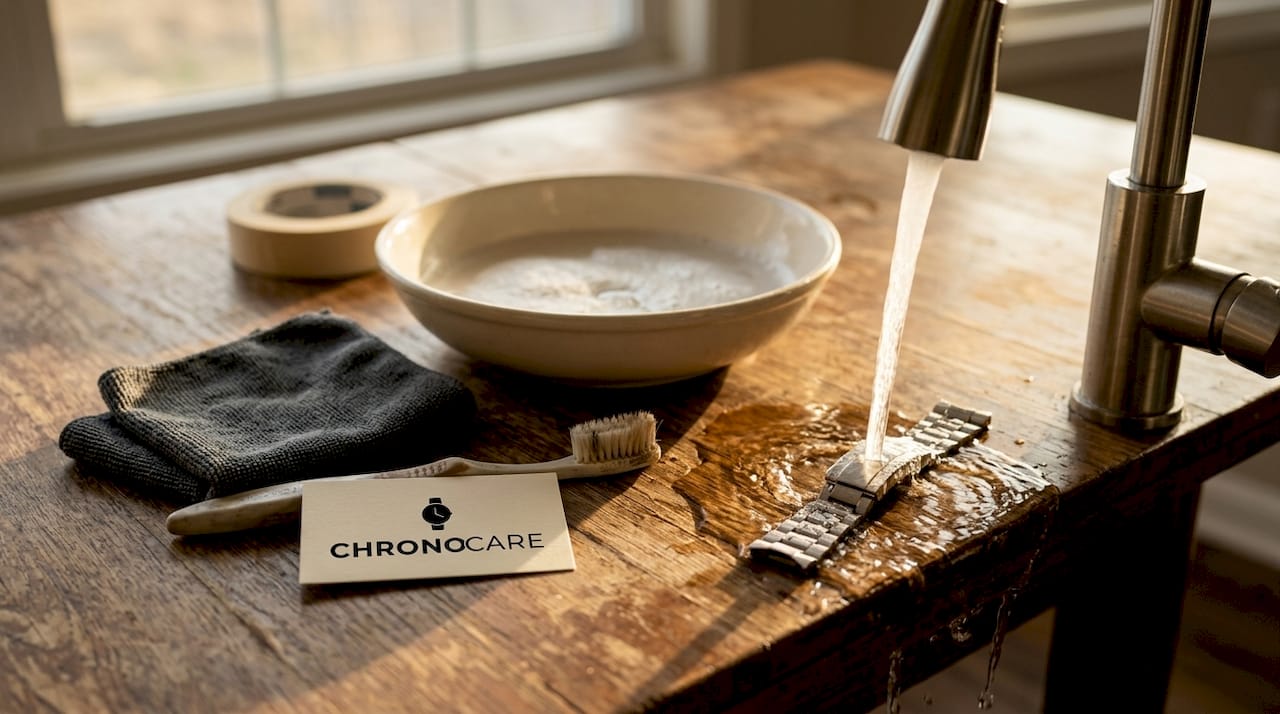
Pro Tip: Place a strip of painter’s tape over each lug before using the spring bar tool. The tape absorbs any accidental slips and prevents tool marks on the case.
If detaching is not possible on your specific model, wrap the watch head tightly in plastic wrap secured with a rubber band, and keep the case completely out of any water during cleaning.
2. Choosing the right cleaning solutions and tools
The cleaning agent you choose determines whether your bracelet comes out looking better or worse. Mild, phosphate-free dish soap diluted in lukewarm distilled water is the standard recommendation for metal bracelets. Avoid bleach, ammonia, and harsh chemicals entirely. These substances attack protective coatings, degrade gaskets, and can permanently dull polished link surfaces.
Your tool selection matters just as much as your cleaning solution. Dedicated watch cleaning brushes or natural boar bristle brushes are the correct choice. Even brushes labeled “soft” toothbrushes can cause micro-scratches on high-polish link surfaces that only become visible once the bracelet dries. For clasp mechanisms and tight link gaps, a small detailing brush with fine natural bristles reaches where larger brushes cannot.
Assemble the following before you begin:
- One small bowl of lukewarm distilled water mixed with two drops of mild dish soap.
- One small bowl of clean lukewarm water for rinsing.
- One extra-soft natural bristle watch brush or a dedicated double-head cleaning brush for different link sizes.
- Two lint-free microfiber cloths: one for patting dry, one for final buffing.
- A dust blower or a hairdryer set to cool air for expelling moisture from link joints.
Pro Tip: Use distilled water rather than tap water. Tap water contains minerals that leave white residue in link crevices after drying, which defeats the purpose of cleaning.
3. The initial wipe-down before soaking
Before the bracelet enters any water, wipe it down with a dry microfiber cloth to remove loose dust, skin oils, and surface debris. This step prevents contaminating your soapy water immediately and gives you a clearer view of where grime has concentrated. Pay attention to the clasp area and the inner surface of the bracelet, where sweat and dead skin cells accumulate fastest. A quick pass with a dry brush through the link gaps at this stage also dislodges dry particles that would otherwise turn into muddy residue once wet.
4. Soaking the bracelet to loosen deep grime
Submerge the detached bracelet in your prepared soapy water and let it soak for 10 to 15 minutes. This duration is enough to soften compacted grime in link joints without risking damage to most metal bracelets. For plated or PVD-coated bracelets, limit soaking time to five minutes and skip any abrasive scrubbing to protect the surface layer.
During soaking, gently flex the bracelet back and forth every few minutes. This articulation opens the gaps between links and allows soapy water to penetrate areas that would otherwise stay sealed. The clasp should be opened and closed several times during the soak as well, since the deployment mechanism and micro-adjustment slots trap grime that soaking alone will not reach.
5. Brushing between every link and clasp
This is the most time-intensive step in the bracelet link upkeep process, and it is where most people cut corners. Work the brush in small circular motions along each link, then switch to back-and-forth strokes along the link gaps. Bend the bracelet at different angles as you brush. Bending exposes the inner hinge surfaces that remain hidden when the bracelet lies flat, and those surfaces carry the most concentrated buildup.
The clasp deserves its own focused attention. Brush the clasp carefully, including the deployment mechanism, locking levers, and any micro-adjustment slots. Grime in these areas affects how smoothly the clasp opens and closes over time. A small pointed brush works well for the adjustment slots specifically.
Pro Tip: Hold the bracelet under a bright lamp or flashlight after brushing each section. Remaining grime shows up clearly under direct light, letting you target exactly where more brushing is needed before rinsing.
6. Rinsing thoroughly under cool running water
Rinse the bracelet under cool to lukewarm running water, not hot. Hot water risks warping softer metal alloys and can loosen adhesive inserts on certain bracelet styles. As you rinse, articulate every link and open and close the clasp repeatedly to flush soap residue from all joints. Soap left behind in link gaps dries into a dull, filmy residue that is harder to remove than the original grime.
Hold the bracelet at multiple angles under the water stream to cover all surfaces. The inner bracelet surface, which sits against your wrist, typically holds the most soap residue and needs the longest rinse time. A thorough rinse takes at least 60 seconds for a standard three-link metal bracelet.
7. Drying completely to prevent corrosion
Drying is where many cleaning routines fail. Pat the bracelet dry with a lint-free microfiber cloth immediately after rinsing, pressing gently into the link gaps to absorb surface moisture. Then use a dust blower or a hairdryer set to cool air to expel water from the hinge crevices and clasp mechanism. Trapped moisture in link joints causes corrosion and dullness over time, even on stainless steel bracelets.
After the mechanical drying step, lay the bracelet flat on a clean microfiber cloth and allow it to air-dry for at least one hour before reattaching it to the watch. Rushing this step and reattaching a damp bracelet traps moisture between the end links and the lugs, which is exactly the environment where rust starts. Spring bars are particularly vulnerable to rust if reinstalled while still damp, so inspect them carefully before reattachment.
8. Common mistakes that damage bracelet finishes
Knowing what not to do is as important as following the correct steps. These are the errors that cause the most damage:
- Using a standard toothbrush instead of a dedicated watch brush, which leaves micro-scratches on polished surfaces.
- Soaking plated or coated bracelets for longer than five minutes, which accelerates wear on the protective layer.
- Skipping the drying step or patting once and considering it done, which leaves moisture in joints.
- Using boiling or very hot water, which risks warping metal and damaging adhesive inserts.
- Leaving the bracelet attached to the watch during soaking, which exposes the movement to moisture.
- Applying polishing compounds during or after cleaning without checking whether the bracelet has a brushed or satin finish that abrasives will destroy.
- Ignoring the condition of spring bars during cleaning. Worn or corroded spring bars are a safety risk and should be replaced immediately.
Ultrasonic cleaners are sometimes used for deep cleaning, but they carry real risks for coated or plated bracelets and should only be used when you have confirmed the bracelet material is compatible.
9. How often to clean your watch bracelet links
The right cleaning frequency depends on how often you wear the watch and what conditions it is exposed to. A practical watch band maintenance schedule looks like this:
- Daily wear watches: Wipe down with a dry microfiber cloth each evening to remove skin oils and dust.
- Weekly: Perform a full soap and brush clean for watches worn every day.
- Monthly: Inspect the clasp mechanism, spring bars, and link pins for wear or corrosion.
- Plated or coated bracelets: Clean no more than once every two weeks with minimal soaking to protect the surface layer.
- Vintage watches: Clean less frequently and with extra caution. Consult a watchmaker before soaking any bracelet from a watch more than 20 years old.
Signs that a professional cleaning or service is overdue include a stiff or sticky clasp, visible rust in link joints, or a bracelet that no longer lies flat. Home cleaning handles surface grime well, but a watchmaker’s ultrasonic service and bracelet polishing restore what home methods cannot.
Key takeaways
A proper watch bracelet link cleaning checklist requires detaching the bracelet, soaking in mild soapy water, brushing every link and clasp, rinsing thoroughly, and drying completely to prevent corrosion and preserve finish.
| Point | Details |
|---|---|
| Detach before cleaning | Always remove the bracelet with a spring bar tool to protect the watch movement from water. |
| Use the right brush | Only extra-soft natural bristle or dedicated watch brushes prevent micro-scratches on polished links. |
| Soak time matters | Limit soaking to 10 to 15 minutes for metal bracelets and five minutes for plated or coated finishes. |
| Dry completely | Pat dry with microfiber, use a dust blower on joints, and air-dry for one hour before reattaching. |
| Clean on a schedule | Daily wipe-downs and weekly deep cleans for everyday watches maintain appearance without over-cleaning. |
Why I treat bracelet cleaning as seriously as a service interval
I have handled enough luxury watches to know that the bracelet is almost always the first part to show neglect. Owners polish the case, protect the crystal, and store the watch carefully, but the bracelet gets worn through gym sessions, meals, and everything in between without a single cleaning. By the time the grime is visible, it has already been grinding against the link hinges for months.
The step I see skipped most often is complete drying. People pat the bracelet once and reattach it. Two months later, there is a rust bloom in the link joints of a watch that cost more than a used car. A dust blower costs almost nothing. Using it for 30 seconds after patting dry is the difference between a bracelet that lasts decades and one that needs professional restoration in two years.
My other firm position is on brushes. I have seen the results of someone using a “soft” toothbrush on a Rolex Jubilee bracelet. The micro-scratches are subtle at first, but under light they scatter reflections across what should be a mirror-polished surface. A dedicated watch brush from a reputable supplier is not an optional upgrade. It is the minimum standard for anyone who cares about preserving what they paid for.
Professional servicing every three to five years complements home cleaning but does not replace it. Home cleaning handles the weekly accumulation that would otherwise become permanent damage. Knowing how bracelet links wear over time makes the case for consistent maintenance better than any before-and-after photo.
— Raymond Jenkins
Keep your bracelet looking its best with ChronoCare
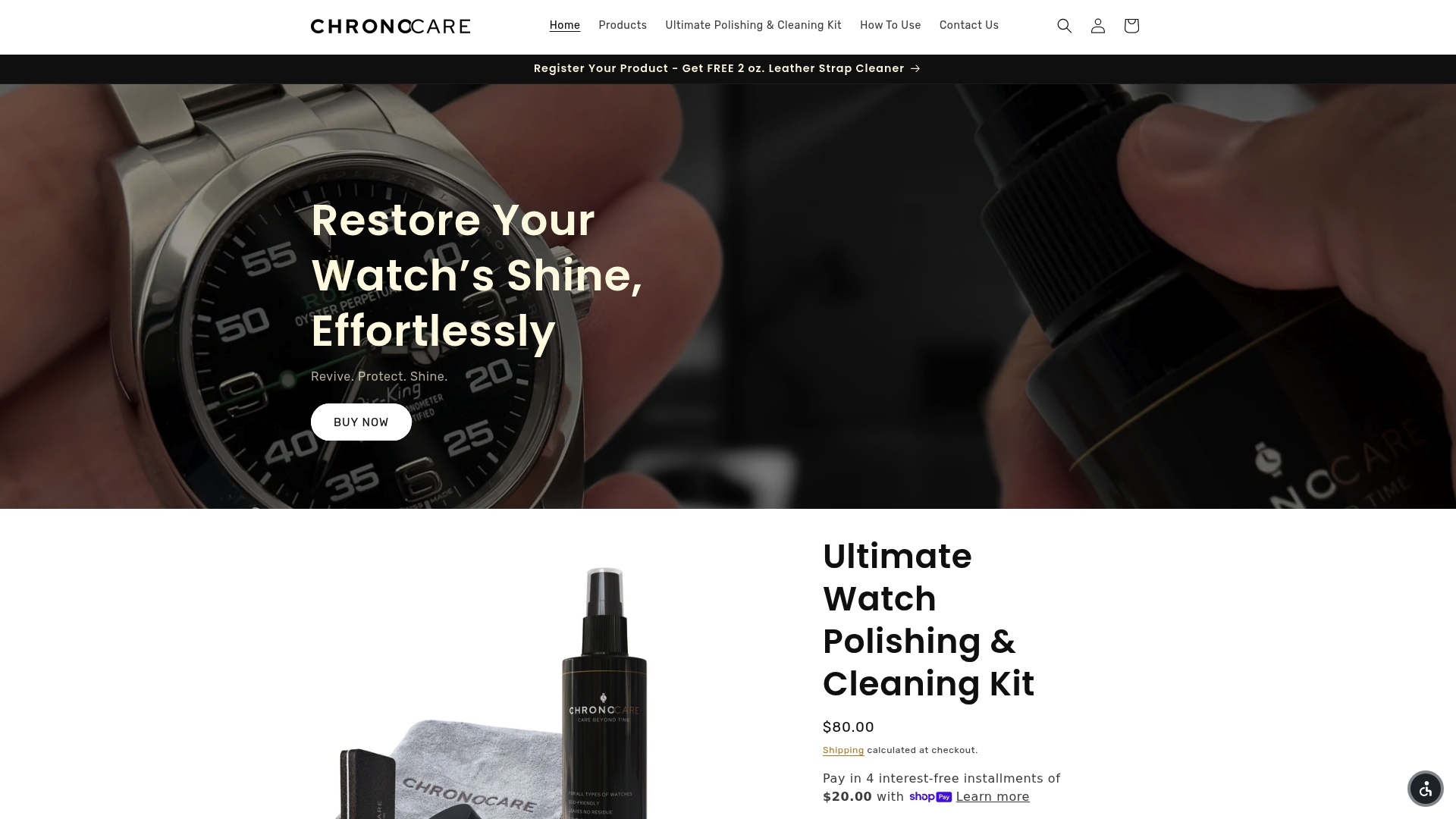
ChronoCare’s Ultimate Watch Cleaning Kit gives you everything covered in this checklist in a single kit. It includes extra-soft cleaning brushes sized for link gaps and clasp mechanisms, lint-free microfiber cloths, and a cleaning spray formulated in the US specifically for luxury metal bracelet finishes. The formula is safe for polished, brushed, and satin surfaces without stripping protective coatings. For collectors who want to go further, the Watch Polishing Cream removes light surface scratches and restores mirror shine to metal links between professional service intervals. You can also explore ChronoCare’s full range of watch care routines to build a complete maintenance program for every watch in your collection.
FAQ
What is the best way to clean between watch bracelet links?
The best way to clean between watch bracelet links is to soak the detached bracelet in lukewarm soapy water for 10 to 15 minutes, then work an extra-soft natural bristle brush in circular motions through each link gap while bending the bracelet to expose inner hinge surfaces.
Can I clean my watch bracelet without removing it?
Cleaning with the bracelet attached risks exposing the watch movement to moisture, particularly on watches over 20 years old where water resistance seals have degraded. If removal is not possible, wrap the watch head in plastic wrap and keep it completely out of water during the cleaning process.
How often should I clean my metal watch bracelet?
Daily wear watches benefit from a dry microfiber wipe each evening and a full soap and brush clean once per week. Plated or coated bracelets should be cleaned no more than every two weeks with minimal soaking to protect the surface layer.
What cleaning products are safe for luxury watch bracelets?
Mild, phosphate-free dish soap diluted in lukewarm distilled water is the standard safe cleaning solution for metal watch bracelets. Bleach, ammonia, and abrasive cleansers damage coatings, degrade gaskets, and can permanently dull polished surfaces.
When should I take my watch bracelet to a professional?
Take the bracelet to a professional watchmaker when you notice a stiff or sticky clasp, visible rust in link joints, or a bracelet that no longer lies flat. Home cleaning handles surface grime, but a watchmaker’s service restores mechanical function and finish quality that home methods cannot replicate.