

Luxury Timepiece Maintenance Checklist for Collectors
A luxury timepiece maintenance checklist is the structured set of care, cleaning, and servicing tasks that keeps a mechanical or quartz watch accurate, protected, and financially sound over its lifetime. Rolex, Patek Philippe, and Audemars Piguet all publish care guidelines, yet most owners follow none of them consistently. The result is preventable damage: corroded seals, magnetized movements, and scratched cases that quietly erode both function and resale value. This checklist covers every layer of care, from daily habits you can complete in under two minutes to professional servicing decisions that protect a five-figure investment.
1. The luxury timepiece maintenance checklist: daily inspection habits
The foundation of any luxury watch upkeep routine is a 60-second daily inspection before you put the watch on your wrist. Check that the crown is fully pushed in and screwed down on models like the Rolex Submariner or Omega Seamaster, because a partially open crown is the single most common entry point for moisture. Examine the crystal for new chips or micro-scratches under natural light, and run a fingertip along the case to feel for grit that could scratch the surface during wear.
Wipe the case and bracelet with a dry microfiber cloth after each wear to remove skin oils, sweat, and dust before they settle into crevices. For metal bracelets, pay attention to the bracelet link gaps, where debris accumulates fastest and causes the most visible discoloration over time. Leather straps need a different approach: never wet them during daily wipe-downs, and allow them to dry completely between wears to prevent cracking and odor.
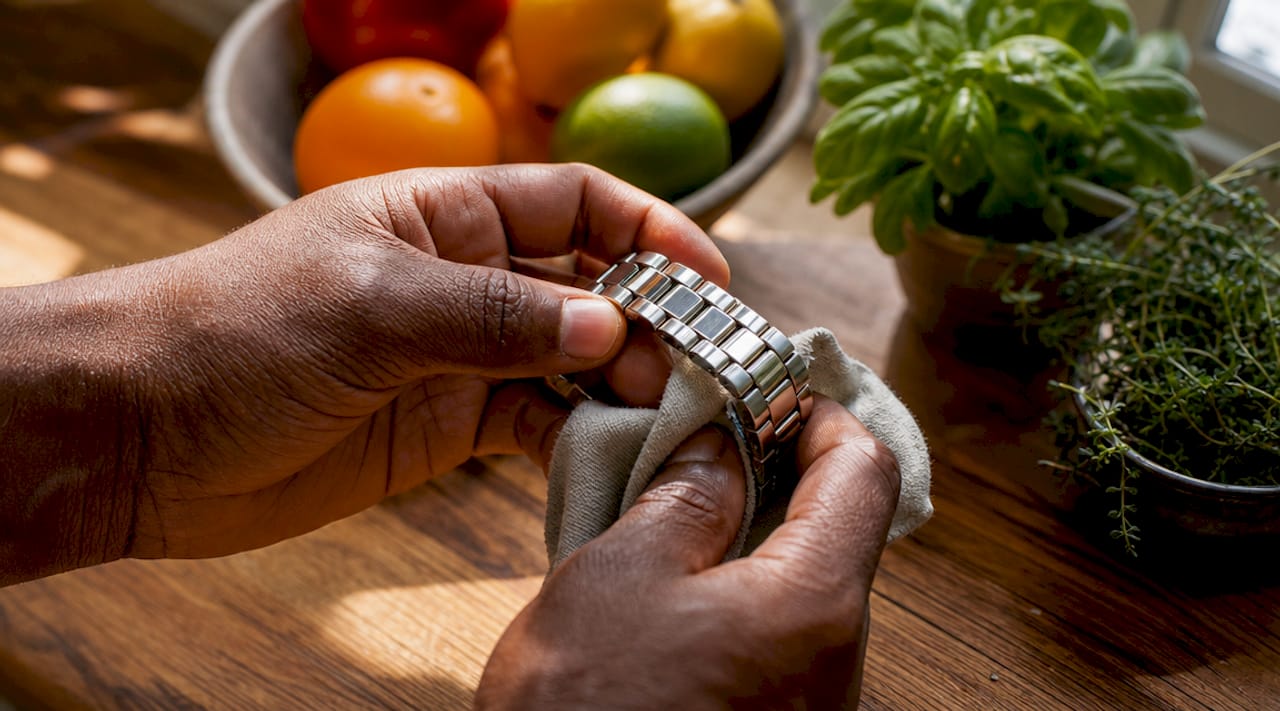
Pro Tip: Rotate between two or more watches daily. This balances wear on each movement and gives leather straps 24 hours to recover their shape.
2. Safe at-home cleaning techniques
Safe at-home cleaning means using soft microfiber cloths and lukewarm water only, and never applying bleach, ammonia-based jewelry cleaners, or ultrasonic devices without professional guidance. Those chemicals degrade rubber gaskets and strip lacquer from dials. For watches rated above 50 meters water resistance, a brief rinse under lukewarm running water with a soft brush removes salt and chlorine residue after swimming. Watches below that rating should never be wetted intentionally.
Fingerprints on sapphire crystals and polished bezels are best addressed with a purpose-formulated watch cleaning spray rather than household glass cleaner. The ingredients matter: alcohol-free, pH-neutral formulas protect anti-reflective coatings that cost hundreds of dollars to replace. For a detailed walkthrough of removing smudges without risk, ChronoCare’s guide on removing fingerprints safely covers surface-specific techniques for sapphire, acrylic, and mineral crystals.
One cleaning mistake that permanently reduces value is unnecessary polishing. Every polish strips metal from the case, softens sharp edges, and alters the original geometry that collectors and auction houses use to assess originality. Reserve polishing for deep scratches only, and always use a product designed for watch-grade stainless steel or gold rather than generic metal polish.
3. Winding and crown operation best practices
Automatic watches should be hand-wound before wearing them after a rest period of more than 24 hours. Wind the crown clockwise 20 to 30 turns with the watch off your wrist to avoid lateral stress on the winding stem. A watch winder is a practical solution for watches worn less than three days per week, but set the rotations per day (RPD) to the manufacturer’s specification. Rolex movements typically require 650 to 800 RPD, while Patek Philippe calibers often specify lower figures.
The date-setting rule is one of the most overlooked items on any high-end watch maintenance list. Never change the date between 9 PM and 3 AM on traditional movements, because the date-change mechanism is actively engaged during that window and manual interference can snap delicate gear teeth. Modern movements with “date-safe” technology are exceptions, but unless you have confirmed your specific caliber qualifies, treat the rule as absolute.
4. Protecting your watch from environmental hazards
Magnetism is a leading cause of timekeeping inaccuracy in mechanical watches, and most owners never identify it as the source of the problem. Keep watches at least 20 cm from smartphones, laptop speakers, magnetic bag clasps, and induction cooktops. A magnetized hairspring causes the movement to run fast by 30 seconds or more per day, and the fix requires a watchmaker’s demagnetizer.
Water resistance ratings are frequently misunderstood. A 30-meter rating does not mean the watch is safe for swimming. It means it can withstand brief splashes. More critically, water resistance degrades over time as gaskets dry out and compress, regardless of how carefully you treat the watch. Annual dry pressure tests at a service center confirm seal integrity before damage occurs.
Steam is more dangerous than liquid water for any watch. Hot showers and saunas force steam molecules through seals that liquid water cannot penetrate, causing internal condensation and rapid movement rust. Remove your watch before every shower, regardless of its water resistance rating.
Physical impact is the other major hazard. Avoid wearing a dress watch during sports, yard work, or any activity involving vibration. The shock absorbers in movements like the Rolex Parachrom hairspring or the Patek Philippe Gyromax balance wheel provide some protection, but they are not designed for repeated blunt force.
5. Professional servicing intervals by brand and movement type
Service intervals vary significantly by manufacturer and movement complexity. Modern Rolex watches require servicing every 7 to 10 years, while Patek Philippe and older vintage movements need attention every 3 to 5 years due to tighter tolerances and older lubricant formulations. Audemars Piguet recommends servicing every 5 to 8 years depending on the caliber.
Do not wait for the calendar alone to trigger a service visit. Performance problems like losing more than 10 to 15 seconds per day, a noticeably weak power reserve, or gritty resistance during winding all indicate the movement needs attention immediately. These symptoms signal that lubricants have dried or degraded, and continued wear accelerates internal wear exponentially.
A full professional service includes complete disassembly, ultrasonic cleaning of every component, replacement of all gaskets and seals, fresh lubrication of the escapement and gear train, reassembly, and a multi-day timing test across multiple positions. Full services typically take 4 to 8 weeks and cost $800 to $1,500 for standard models, rising to $2,000 or more for complicated movements with perpetual calendars or tourbillons. That cost is significant, but it is a fraction of the repair bill for a seized movement.
Pro Tip: Always use a manufacturer-authorized service center or a certified independent watchmaker with documented experience on your specific brand. Keep every service receipt and timing certificate in a dedicated folder. This documentation adds measurable resale value and proves provenance to future buyers.
| Service task | Recommended frequency |
|---|---|
| Full movement service | Every 3 to 10 years depending on brand |
| Gasket and seal replacement | At every service or after water exposure incident |
| Dry pressure test | Annually |
| Timing accuracy check | Every 6 months or when deviation exceeds 10 sec/day |
| Case and bracelet polish | Only when deep scratches require it |
6. Storage and long-term care for watches not in regular rotation
Ideal storage conditions for a luxury watch are a stable temperature between 59°F and 77°F, relative humidity between 40% and 60%, and complete protection from direct sunlight. UV exposure fades dials, particularly on vintage pieces with tritium or cream-colored lume plots. A quality watch box or roll with individual cushioned compartments prevents case-to-case contact that causes scratching.
For collectors with more than three watches, a dedicated watch cabinet with a humidity control insert is a practical investment. Silica gel packets placed inside a sealed storage box absorb excess moisture, but they require replacement every three to six months to remain effective. Avoid storing watches near radiators, air conditioning vents, or exterior walls where temperature fluctuates.
Long-term care also means documentation. Maintain a log for each watch that records:
- Purchase date, price, and retailer
- Serial number and reference number
- All service dates, service center names, and work performed
- Any modifications, strap changes, or damage incidents
- Current insurance valuation and appraisal date
This log functions as the watch’s provenance record. At auction, a Rolex Daytona or Patek Philippe Nautilus with complete service history commands a meaningfully higher price than an identical reference without documentation. Travel with watches in a hard-shell case, and confirm your homeowner’s or renter’s insurance policy covers jewelry and watches at full replacement value.
Key takeaways
A luxury timepiece maintenance checklist works because consistent daily habits, correct environmental precautions, and performance-based professional servicing together prevent the compounding damage that destroys both function and value.
| Point | Details |
|---|---|
| Daily inspection is non-negotiable | Check crown security, crystal condition, and wipe the case after every wear. |
| Chemicals and steam destroy seals | Use only microfiber and pH-neutral cleaners; remove your watch before every shower. |
| Service by performance, not just calendar | Losing over 15 sec/day or gritty winding means service is needed now, regardless of schedule. |
| Polishing reduces value permanently | Reserve case polishing for deep scratches only; every pass removes metal and softens edges. |
| Documentation multiplies resale value | Keep all service records, receipts, and timing certificates in a dedicated provenance file. |
What I’ve learned after years of watching collectors get this wrong
Most watch damage I’ve seen is not dramatic. It’s not a dropped Patek Philippe or a flooded Submariner. It’s the slow accumulation of small neglects: a crown left unscrewed for weeks, a watch stored in a bathroom cabinet where steam cycles daily, a movement serviced once in 15 years because it “still runs fine.” Fine is not the same as well.
The single most valuable shift a collector can make is moving from calendar-based servicing to performance-based servicing. If your movement is losing more than 10 seconds per day, that is a signal, not a schedule. Waiting until the five-year mark to address it is like ignoring an oil warning light because your car’s last oil change was only two years ago.
I’m also direct about polishing: stop doing it unless you have a specific, deep scratch that genuinely bothers you. I’ve seen Rolex Daytonas lose 15% of their secondary market value because a previous owner had them polished at every service. The sharp bevels and brushed surfaces on a watch like the Audemars Piguet Royal Oak are part of its identity. Rounding them off is not maintenance. It’s damage with good intentions.
The habits that actually extend watch life are boring: wipe it down, store it properly, keep records, and pay attention to how it feels and sounds when you wind it. A consistent care routine built around those four behaviors will do more for your watch’s longevity than any single product or service visit.
— Raymond Jenkins
Keep your watch performing at its best with ChronoCare
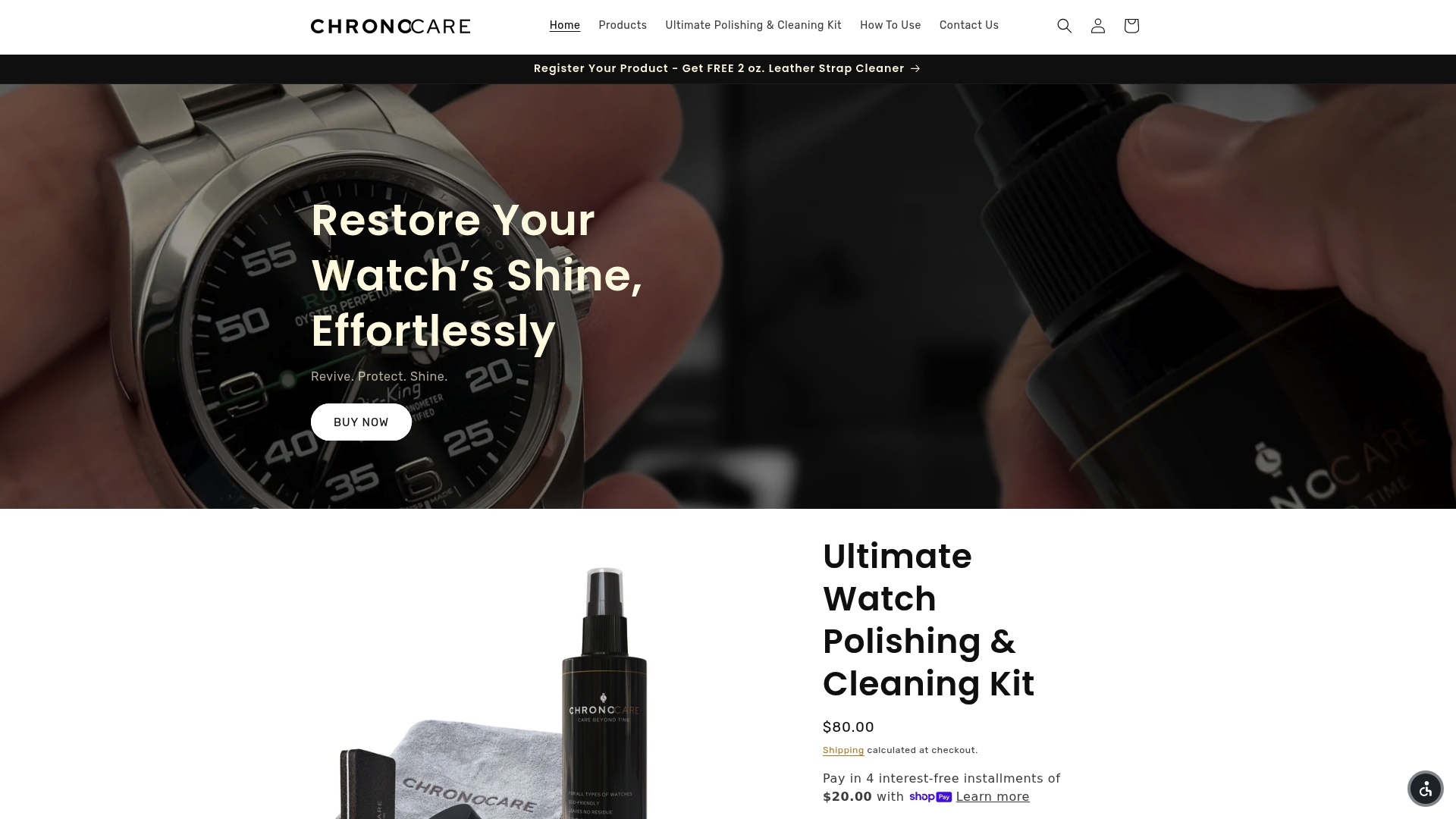
ChronoCare formulates every product in its lineup specifically for luxury watch surfaces, not general jewelry or household metals. The watch cleaning kit includes a pH-neutral spray, a precision microfiber cloth, and a soft detailing brush sized for bracelet links and lug gaps. For collectors dealing with light surface scratches on stainless steel or gold cases, the polishing and cleaning kit delivers controlled results without the metal removal risk of generic polishes. Every formula is developed and tested in the US to meet the standards that luxury timepieces demand.
FAQ
How often should a luxury watch be professionally serviced?
Modern Rolex movements require service every 7 to 10 years, while Patek Philippe and older movements need attention every 3 to 5 years. Always service sooner if the watch shows performance issues like time loss exceeding 15 seconds per day.
Can I clean my luxury watch at home?
Yes, using a soft microfiber cloth and lukewarm water is safe for most watches rated above 50 meters water resistance. Avoid all chemical cleaners, bleach, and ultrasonic devices, which degrade gaskets and dial coatings.
What does a full watch service cost?
Full professional services typically cost $800 to $1,500 for standard models and $2,000 or more for complicated movements, with turnaround times of 4 to 8 weeks at authorized service centers.
Is it safe to wear a luxury watch in the shower?
No. Steam penetrates gaskets that liquid water cannot, causing internal condensation and rust even on water-resistant models. Remove your watch before every shower and sauna without exception.
How do I know if my watch has been magnetized?
A magnetized movement typically runs significantly fast, often gaining 30 seconds or more per day without any other change in conditions. A watchmaker can confirm and reverse magnetization in minutes using a demagnetizer.