

The Role of Watch Care Between Wearings for Collectors
Watch care between wearings is the practice of actively protecting a luxury timepiece during every period it spends off your wrist, covering storage, cleaning, winding, and inspection. Most collectors focus on what happens during wear. The real damage accumulates when the watch sits untouched in a drawer, exposed to humidity, dust, and temperature swings, with lubricants quietly aging inside the movement. Brands like Banks Lyon, PrimeTimepiece, and Rare Watches all confirm that proactive between-wear maintenance is what separates a watch that holds its value from one that quietly deteriorates. This guide covers exactly what that maintenance looks like, and why it matters more than most owners realize.
What is the role of watch care between wearings?
Watch care between wearings is defined as the set of deliberate maintenance habits applied to a timepiece during off-wrist storage to prevent mechanical degradation, physical damage, and environmental harm. The industry term for this broader discipline is watch preservation, and it encompasses everything from where you set the watch down to how you wind it before returning it to the box.
The core insight is this: lubricants in mechanical watches age even when the watch is unworn. A Rolex Submariner sitting in a drawer for six months is still accumulating wear at the molecular level inside its movement. This is not a theoretical risk. Banks Lyon ties oil drying and gasket failure directly to long-term value loss, and recommends servicing mechanical watches every three to five years regardless of how often they are worn.
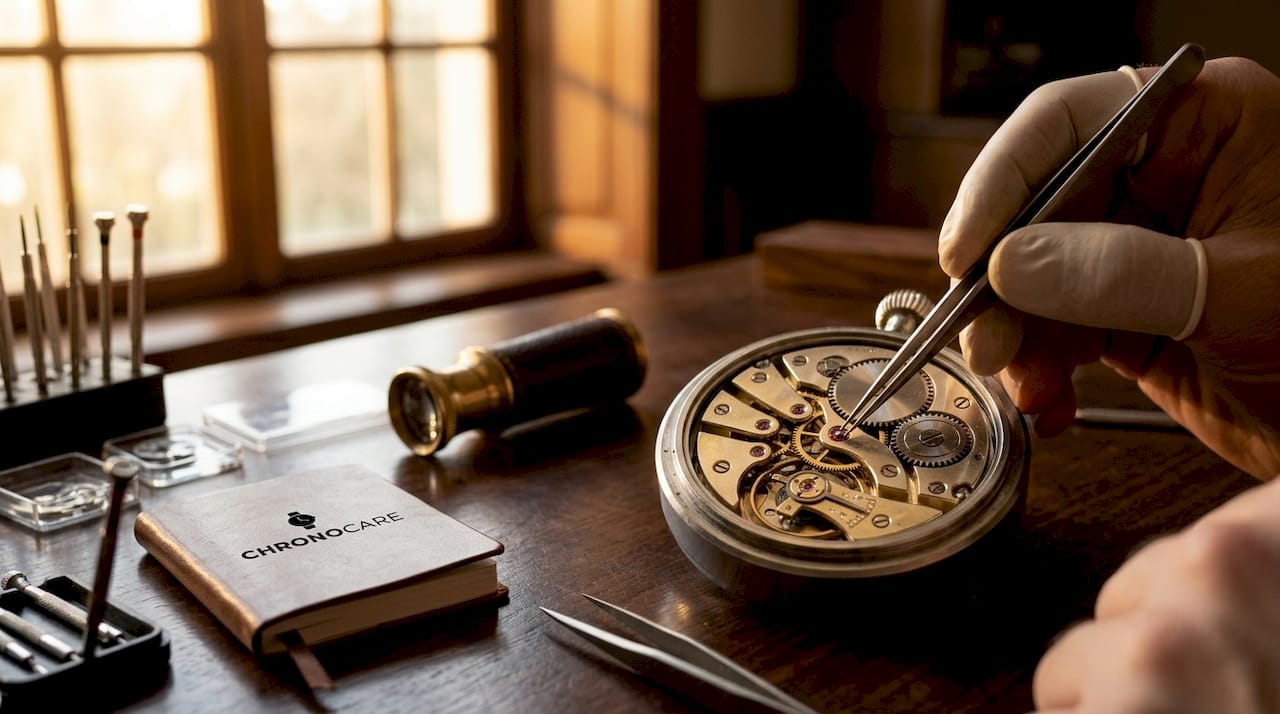
Three named threats drive most between-wear damage. First, moisture ingress through degraded gaskets. Second, lubricant desiccation from temperature fluctuations. Third, magnetization from proximity to electronics. Each of these operates silently, with no visible symptom until the watch is running slow, fogging under the crystal, or requiring an emergency service that costs far more than a routine one.
What common risks does proper watch care between uses prevent?
Proper watch care between uses prevents five categories of damage that collectors consistently underestimate: moisture ingress, lubricant failure, physical abrasion, magnetic interference, and UV-driven dial fading.
| Threat | Mechanism | Preventative measure |
|---|---|---|
| Moisture ingress | Degraded gaskets allow humidity to reach the movement | Store in a cool, dry environment with silica gel packets |
| Lubricant drying | Temperature swings accelerate oil evaporation | Maintain stable storage temperature, away from heat sources |
| Scratches and abrasion | Contact with hard surfaces or other watches | Use a watch box with individual soft-lined compartments |
| Magnetic exposure | Proximity to speakers, phones, and laptop magnets | Store away from electronics; use anti-magnetic watch rolls |
| UV dial fading | Direct sunlight bleaches lacquered and painted dials | Keep watches out of direct light during storage |
Moisture is the most insidious threat. Gasket deterioration is a key risk during off-wrist storage because seals degrade over time whether or not the watch is used. A Patek Philippe Aquanaut rated to 120 meters of water resistance loses that rating the moment its gaskets begin to fail, and you will not know until condensation appears under the sapphire crystal.
Magnetic exposure is the most overlooked risk. A Jaeger-LeCoultre Reverso left on a nightstand next to a smartphone can accumulate enough magnetic charge to cause the balance wheel to run erratically. The fix is a demagnetizer, but the better approach is prevention through proper storage placement.
Pro Tip: Place a small rare-earth magnet detector inside your watch box. Several affordable options exist that alert you if the storage environment becomes magnetically active, which can happen when you rearrange electronics nearby.
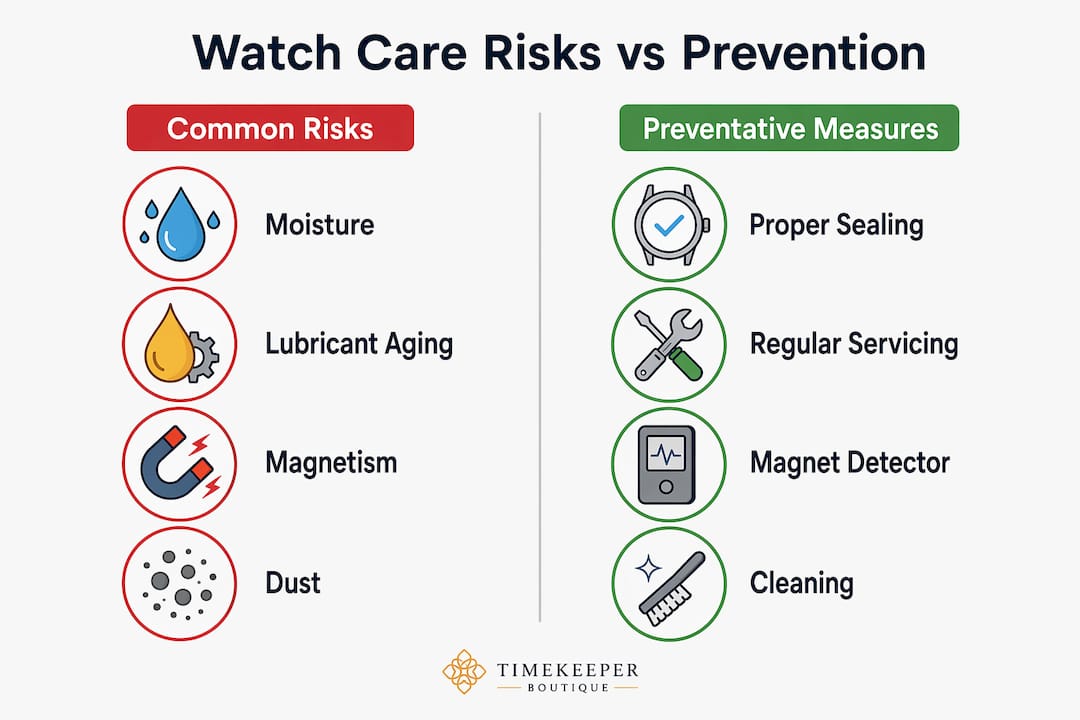
Dust accumulation on the case and bracelet is a lower-stakes but cumulative problem. Abrasive particles settle into the bracelet links and act like sandpaper during the next wearing. A quick wipe with a microfiber cloth before storage removes this risk entirely and takes under thirty seconds.
How should luxury watches be stored and maintained between wearings?
Proper watch storage follows a clear hierarchy: environment first, container second, position third. Get the environment wrong and no watch box will save the movement.
The recommended storage environment is cool, dry, and dark. PrimeTimepiece advises keeping watches in dedicated boxes with soft linings, away from sunlight and electronics, with silica gel packets to control ambient moisture. A consistent temperature between 50°F and 77°F is the practical target for most collectors. Avoid storing watches near exterior walls in climates with extreme seasonal swings, as those walls conduct temperature changes directly into the storage space.
Cleaning before storage
Cleaning a watch before returning it to the box is not optional for serious collectors. Skin oils, sweat, and environmental residue left on the case and bracelet accelerate metal oxidation and strap deterioration. The correct method depends on the material:
- Metal bracelets and cases: Wipe with a lint-free microfiber cloth. For deeper cleaning, use a specialized watch cleaning spray formulated for metal surfaces, applied to the cloth rather than directly to the watch.
- Leather straps: Wipe dry immediately after any moisture exposure. Apply a leather conditioner every few months to prevent cracking. The ChronoCare guide on strap deterioration causes explains how improper storage accelerates this process significantly.
- Rubber and NATO straps: Rinse with fresh water if exposed to salt or chlorine, then dry fully before storage.
Pro Tip: Never store a watch with a damp strap. Even a slightly moist leather strap sealed inside a watch box creates a micro-humid environment that accelerates gasket degradation and promotes mold growth on the strap itself.
Inspection habits that catch problems early
Before placing a watch in storage, run a thirty-second inspection. Check that the crown is fully pushed in and screwed down on screw-down crown models. Banks Lyon specifically emphasizes winding manual watches gently and checking crown position as a pre-storage habit. Examine the crystal for micro-scratches that may have appeared during the last wearing. Look at the dial for any signs of moisture or discoloration. These checks take less than a minute and can catch a failing gasket before it becomes a flooded movement.
What is the role and correct use of watch winders between wears?
A watch winder is a motorized device that rotates an automatic watch at controlled intervals to keep the mainspring wound and the lubricants distributed throughout the movement. The key word is controlled. A poorly configured winder causes more harm than simply letting the watch stop.
The critical variable is TPD, or turns per day. Every automatic movement has a specific TPD requirement, and correct TPD settings combined with proper rotate/stop/resume cycles are what make a winder beneficial rather than damaging. A Rolex Datejust typically requires 650 to 800 TPD. An Omega Seamaster Planet Ocean requires around 650 TPD. Running either watch at 1,800 TPD continuously forces energy into a fully wound mainspring, creating unnecessary stress on the movement’s slipping clutch mechanism.
The correct setup process for a watch winder follows this sequence:
- Identify the specific TPD requirement for your movement. The manufacturer’s service manual or the watchmaker’s database at MyWatchMatic provides this data for most calibers.
- Set the winder to alternate rotation directions if the movement winds bidirectionally. Unidirectional winders waste half their cycles on a bidirectional movement.
- Program a rest cycle. Winding in natural cycles protects delicate movement components by mimicking wrist movement rather than forcing continuous rotation.
- Confirm the winder is positioned away from speakers, subwoofers, and other magnetic sources. The winder’s motor itself can generate a low magnetic field.
- Check that the watch sits securely on the pillow without pressure on the crown or pushers.
Monthly winder maintenance is a separate discipline. Enigwatch prescribes a 10-minute monthly routine that covers checking leather pillows for wear, inspecting hinges, clearing interior dust, and verifying that the motor and electronics function correctly. This routine extends the winder’s service life and prevents the winder itself from becoming a source of damage to the watches it holds.
Pro Tip: If you own more than three automatic watches and only one winder, rotate which watch uses the winder each month. Watches benefit from occasional rest periods, and this approach also forces you to inspect each piece regularly.
How do collectors integrate watch care into long-term preservation?
Serious collectors treat watches as functional artworks. The stewardship mindset that Rare Watches advocates goes beyond cleaning and storage. It involves humidity monitoring, rotation schedules, and wear logs that document every service, inspection, and notable event in a watch’s history.
A wear log is one of the most underused tools in watch preservation. Recording the date worn, any observations about timekeeping accuracy, and the next scheduled service date creates a maintenance history that directly supports resale value. A Vacheron Constantin with a documented service history commands a measurably higher price than an identical reference without paperwork. Rare Watches recommends photo documentation alongside written logs to capture the condition of the dial, case, and bracelet at each inspection point.
Rotation schedules serve two purposes. They distribute wear evenly across a collection, and they force regular handling of every piece, which is when most early-stage problems get noticed. A collector who rotates through ten watches on a monthly schedule will catch a developing moisture issue or a loose crown far sooner than one who wears the same watch daily and leaves the others untouched for months.
“The difference between a collector and an owner is that a collector treats every watch as if it will outlive them. The care habits between wearings are where that difference becomes visible.” — Rare Watches
Environmental tracking adds another layer of protection. A small digital hygrometer placed inside a watch cabinet costs under $20 and provides continuous humidity readings. The target range for watch storage is 40% to 60% relative humidity. Above 60%, gasket degradation accelerates. Below 40%, leather straps and wooden watch box components begin to dry and crack.
Travel protocols deserve specific attention. A comprehensive watch care routine includes travel-specific steps: using a hard-shell watch roll rather than a soft pouch, removing watches before airport security to avoid X-ray exposure, and keeping watches in carry-on luggage rather than checked bags where temperature and pressure fluctuations are more extreme.
Key takeaways
Consistent watch care between wearings requires proper storage, regular cleaning, correct winding, and systematic inspection to prevent mechanical degradation and preserve long-term value.
| Point | Details |
|---|---|
| Storage environment matters most | Store watches in cool, dry, dark conditions with silica gel and away from electronics. |
| Lubricants age off the wrist | Mechanical watch oils degrade even when unworn; schedule service every three to five years regardless of use. |
| Winder settings must match the movement | Use correct TPD settings and rotate/stop cycles to protect movement components from excess stress. |
| Inspection catches problems early | Check crown position, crystal condition, and dial appearance before every storage period. |
| Logs and rotation protect value | Wear logs and rotation schedules reduce service emergencies and support resale documentation. |
Why between-wear discipline is the most underrated skill in collecting
I have handled enough watches over the years to say with confidence that the condition gap between two identical references almost always traces back to what happened when the watch was not being worn. Collectors spend hours researching which watch to buy and almost no time building the habits that protect it afterward.
The mistake I see most often is treating storage as passive. You set the watch down, close the box, and assume nothing is happening. Something is always happening. Oils are migrating. Gaskets are compressing. Dust is settling into bracelet links. The watch is not resting. It is aging, and the rate at which it ages is entirely within your control.
The second mistake is over-relying on watch winders as a substitute for care. A winder keeps the mainspring wound, but it does not clean the case, inspect the crown seal, or catch a developing moisture issue. Winders are one tool in a system, not the system itself.
What actually works is a repeatable workflow that takes under five minutes per watch per wearing cycle. Wipe before storage. Check the crown. Note anything unusual. Rotate the collection on a schedule. Log the service dates. These habits compound over years into a collection that holds its condition and its value in ways that sporadic deep-cleaning sessions never will. The fingerprint removal guide from ChronoCare is a good example of the kind of specific, repeatable technique that belongs in every collector’s routine.
— Raymond Jenkins
Start your watch care routine with the right tools
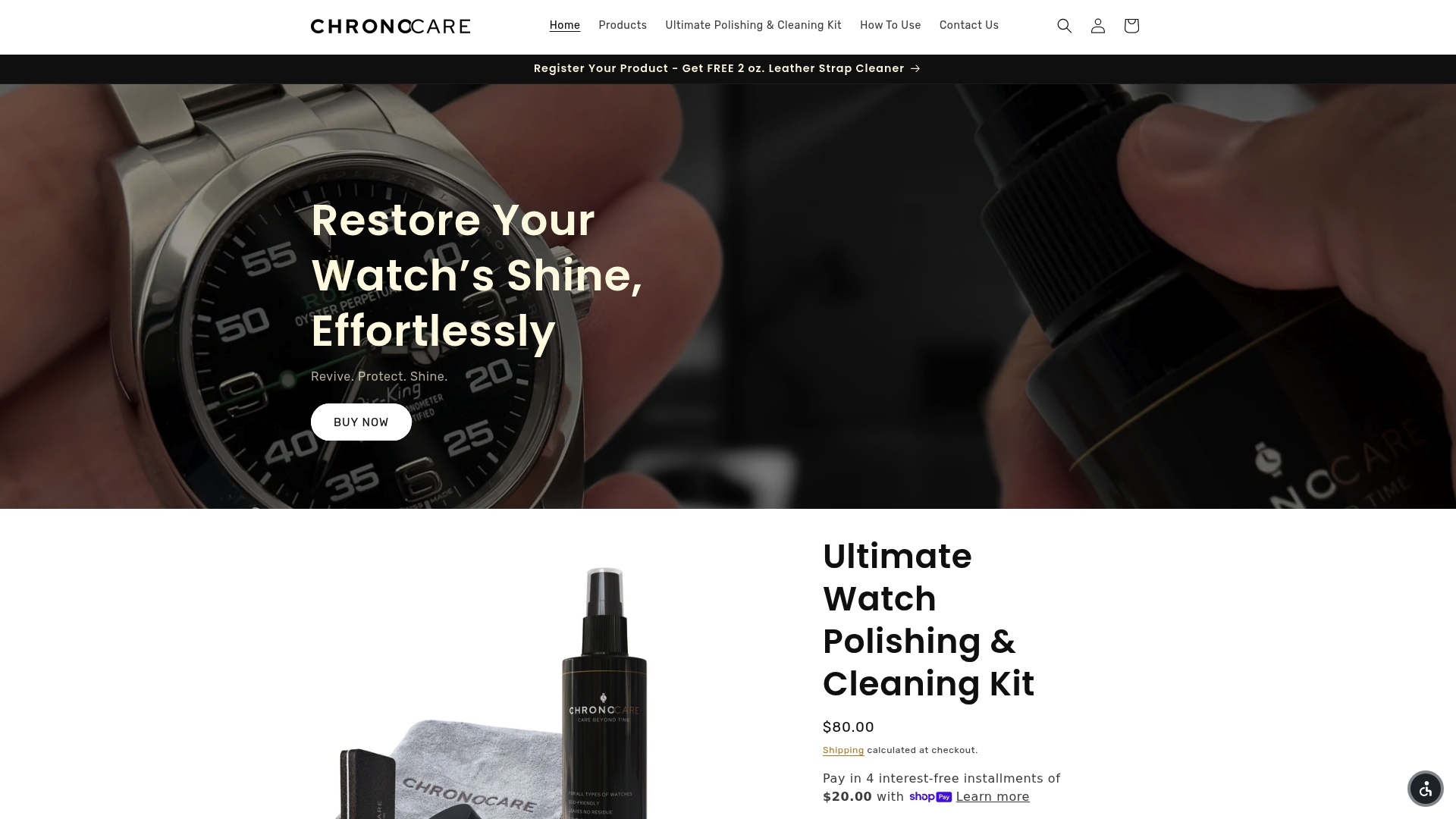
The habits described in this article only work as well as the products supporting them. ChronoCare designs its cleaning and polishing kits specifically for luxury timepieces, using formulations that are safe for sapphire crystals, metal cases, and finished dials. The luxury watch cleaning kit covers the core between-wear cleaning routine with everything needed to remove oils, dust, and fingerprints without risking the finish. For collectors dealing with light surface scratches on metal cases or bracelets, the watch polishing cream restores metal surfaces safely between professional services. Using premium care products is not an indulgence for collectors. It is the practical foundation of a preservation strategy that protects five-figure and six-figure investments.
FAQ
What does watch care between wearings actually involve?
Watch care between wearings covers storage in a controlled environment, cleaning before and after each wearing, winding or winder management for automatic movements, and a brief inspection of the crown, crystal, and dial. These steps prevent moisture ingress, lubricant failure, and physical damage during off-wrist periods.
How often should a mechanical watch be serviced if worn infrequently?
Banks Lyon recommends servicing mechanical watches every three to five years regardless of how often they are worn, because lubricants degrade and gaskets deteriorate over time even when the watch sits unworn in storage.
Are watch winders safe for all automatic watches?
Watch winders are safe when configured with the correct TPD setting and a rotate/stop/resume cycle that matches the specific movement. Continuous rotation at the wrong TPD forces unnecessary stress onto the mainspring and slipping clutch, which accelerates wear rather than preventing it.
What humidity level is best for storing luxury watches?
The target range for watch storage is 40% to 60% relative humidity. Above 60%, gasket degradation accelerates and moisture risk increases. A digital hygrometer placed inside the watch cabinet provides continuous monitoring for under $20.
Does storing a watch in its original box provide enough protection?
Original manufacturer boxes provide physical protection and prestige, but most lack humidity control and magnetic shielding. Adding silica gel packets and storing the box away from electronics and direct sunlight significantly improves the protection level for long-term storage.