

Watch Display Polishing Protocol: What Collectors Must Know
Most watch collectors assume polishing a luxury timepiece always makes it look better. That belief drives some of the most costly, irreversible mistakes in watch care. Understanding what is watch display polishing protocol means recognizing that this is a precise, multi-step process built around preservation first and cosmetic improvement second. Done correctly, it restores brilliance without compromising the geometry, finish contrast, or collector value that defines a great watch. Done carelessly, even once, it can permanently round edges, erase logos, and strip away the very characteristics that make a luxury piece worth owning.
Table of Contents
- Key Takeaways
- What is watch display polishing protocol, step by step
- Techniques for different finishes and materials
- The real cost of over-polishing
- Practical maintenance that protects your display
- My take: polish less, preserve more
- Protect your watch’s finish with ChronoCare
- FAQ
Key Takeaways
| Point | Details |
|---|---|
| Protocol requires full disassembly | Movement, crystal, and straps must be removed before any polishing begins to prevent heat and vibration damage. |
| Finish type dictates technique | Polished, brushed, and satin surfaces each demand different tools and pressure to preserve original texture. |
| Over-polishing destroys value | Aggressive or repeated polishing can reduce auction resale value by approximately 25% and erode case geometry permanently. |
| Gentle maintenance extends intervals | Regular cleaning with proper creams and cloths delays the need for professional refinishing significantly. |
| Know when to stop | Most gold cases tolerate only 2 to 3 polishes and steel cases 3 to 4 before integrity begins to degrade. |
What is watch display polishing protocol, step by step
The full refinishing workflow is more involved than most enthusiasts expect. It begins long before any abrasive touches metal. Here is how professionals structure the process from start to finish.
1. Disassembly. Protecting the watch movement and internal components from heat and vibration requires full strip-down before metalwork. The strap or bracelet comes off first, followed by the crystal, dial, hands, and movement. Every delicate part gets set aside in a clean, labeled tray. Skipping this step risks warping seals, contaminating the dial, or introducing vibration that disrupts the movement’s regulation.
2. Cleaning. Before polishing begins, the case and components receive a thorough cleaning. Professional shops use ultrasonic cleaners to remove oils, debris, and oxidation from crevices that a cloth cannot reach. Manual cleaning with soft brushes and appropriate solutions follows to address areas the ultrasonic bath might miss. Starting the polishing phase on a dirty surface risks dragging particulate across the metal, creating new scratches instead of removing old ones.
3. Polishing. This stage moves through a graduated sequence of abrasive compounds, starting coarser and finishing finer. Professionals use a combination of fabric wheels, rubber wheels, and lapping compounds matched to the surface being worked. Pressure is controlled carefully throughout. Too much pressure removes metal too quickly and rounds geometry. Too little pressure fails to remove the scratches you are trying to address.
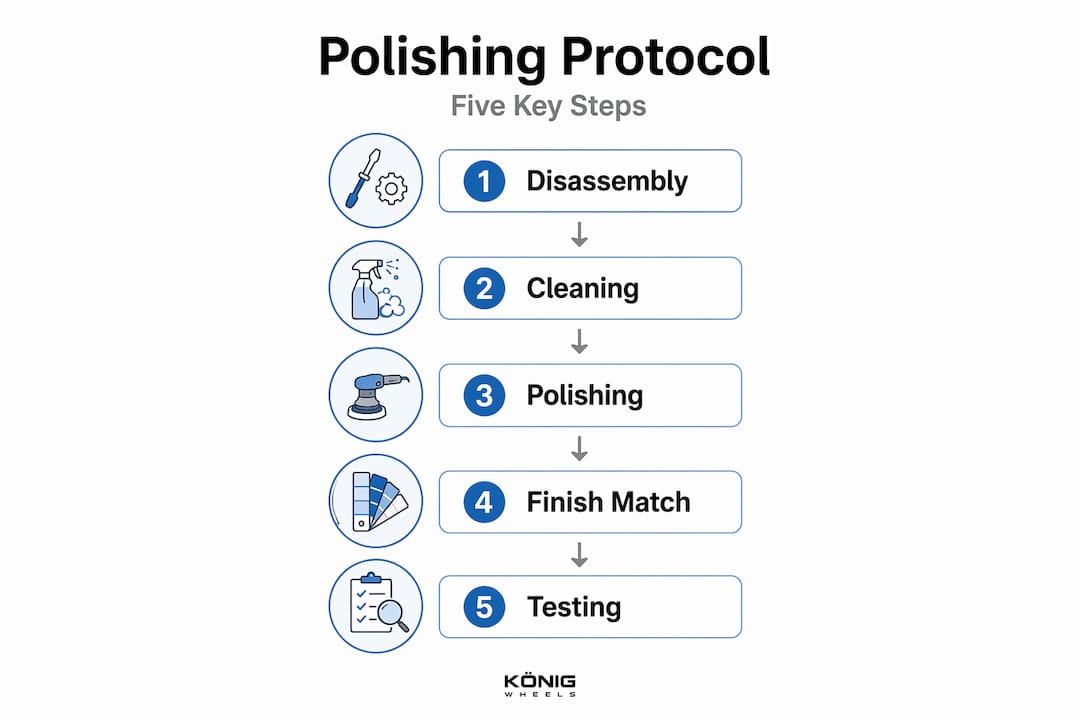
4. Finish matching. This is where many amateur polishing jobs fail. Matching the polishing method to original finish is what separates a professional result from a ruined one. Polished surfaces and brushed surfaces sit right next to each other on most luxury cases, and each requires a completely different approach. Using the wrong tool on the wrong area blurs that contrast permanently.
5. Reassembly and testing. Once polishing is complete, the watch is cleaned again to remove any compound residue, then reassembled with fresh gaskets if needed. Timing accuracy and water resistance are tested before the watch leaves the bench. This final verification step confirms that the polishing process did not introduce any mechanical or seal-related issues.
Pro Tip: Before any polishing begins, photograph the watch case from multiple angles in good lighting. Those reference images help you match the original finish geometry when making decisions mid-process.
Techniques for different finishes and materials
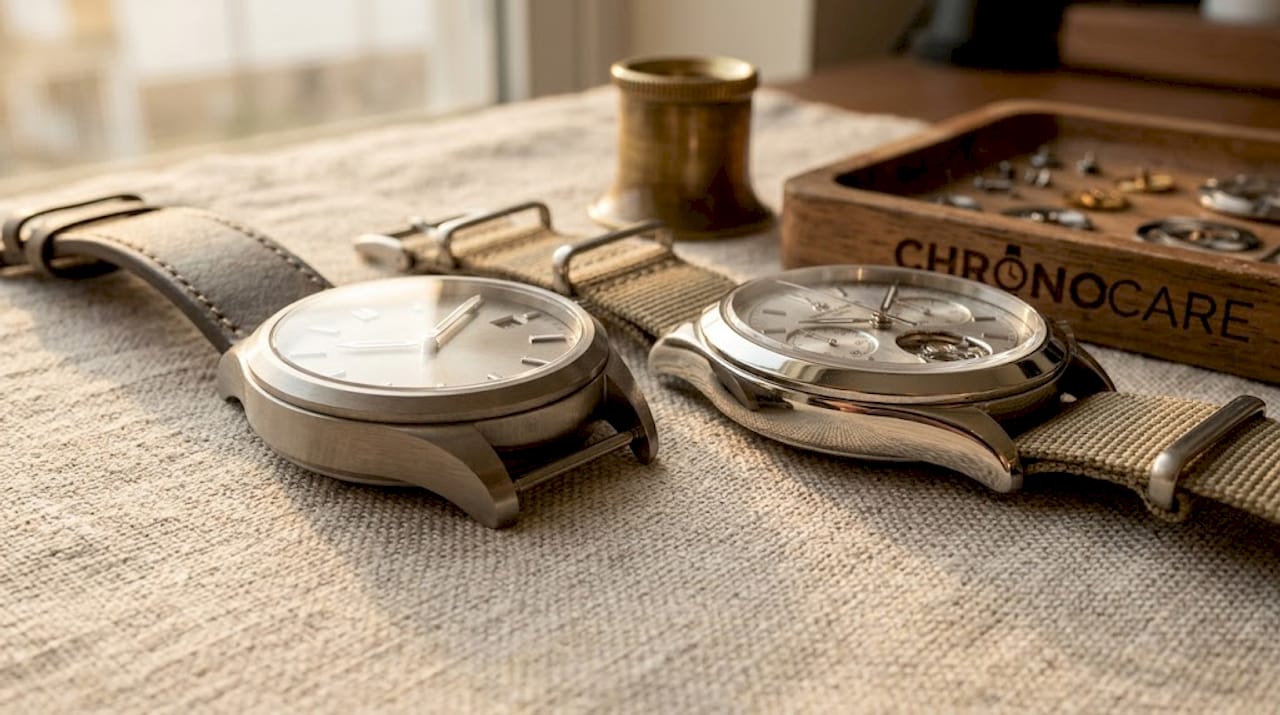
Not all watch surfaces respond the same way to polishing. Luxury watch finishes come in polished, satin, and brushed varieties, each requiring specific methods to maintain their original character.
| Finish Type | Tool | Stroke Method | Key Caution |
|---|---|---|---|
| Polished | Soft cloth or fabric wheel | Light pressure, fast straight strokes | Avoid circular motion; creates micro-swirls |
| Brushed | Non-abrasive pad | Short strokes aligned with grain direction | Never cross the grain; destroys texture |
| Satin | Grit belt or abrasive wheel | Consistent, controlled single-direction pass | Difficult to restore once altered |
| Acrylic crystal | Plastic polish compound | Gentle circular buffing | Acetone and solvents cause clouding |
Material matters as much as finish type. Steel cases are more forgiving than gold because the metal is harder and resists micro-scratching better under pad work. Gold cases, however, are softer and remove more metal per pass, which is why the safe polishing limit is lower. Acrylic crystals respond well to specialized plastic polishes and can often be restored at home with the right product. Sapphire crystals are a different story entirely. Their extreme hardness resists scratching well, but polishing scratches on watch crystals made of sapphire requires professional equipment and is rarely cost-effective for small blemishes.
Here are the most common technique mistakes to avoid:
- Applying circular motion to polished flat surfaces, which creates swirling patterns visible in direct light
- Using a metal polish designed for kitchenware on watch cases, as these contain abrasives far too aggressive for fine finishing
- Ignoring the grain direction on brushed surfaces and polishing across it, which permanently erases the linear texture
- Forgetting to protect case logos, engravings, and crown guards with masking tape during polishing
The real cost of over-polishing
Here is what most guides do not say clearly enough. Every time metal is polished, metal is removed. That removal is cumulative and permanent. The geometry that defines a luxury watch case, its sharp bevels, crisp lugs, and flat flanks, depends on that metal being exactly where the manufacturer put it.
Rolex expert John Buckley has described the erosion of sharp lines and detail with repeated polishing as one of the most damaging things done to collectible watches. The estimate of 2 to 3 safe polishes for gold cases and 3 to 4 for steel before quality degrades puts a hard ceiling on how much refinishing any watch can tolerate across its life.
“A polished watch might look beautiful in the short term, but to a knowledgeable collector, rounded edges and blurred logos are red flags that signal a piece has been over-worked and is worth substantially less.”
The value impact is real. Aggressive polishing can reduce auction resale value by about 25% because it removes original factory finishes and blurs the finish contrasts that manufacturers spent considerable effort designing. Serious collectors pay a premium for watches with honest, unpolished patina because it proves originality.
Signs a watch has been over-polished include rounded lug tips, softened case edges that appear slightly “blobby” in raking light, eroded crown logos, and a uniformly bright finish with no distinction between polished and brushed zones.
Pro Tip: When evaluating a pre-owned watch, hold it at a 45-degree angle under a single light source. Crisp shadows between polished and brushed surfaces indicate original geometry. Soft gradients indicate over-polishing.
Practical maintenance that protects your display
The best way to reduce the need for aggressive polishing is to maintain the display surface consistently between professional refinishing sessions. These watch display cleaning methods keep your watch looking sharp without removing metal.
- Remove fingerprints and oils regularly using a soft, lint-free microfiber cloth. Skin oils are mildly acidic and, over time, can etch softer metals if left in contact. The guide on safely removing fingerprints from luxury watches is worth bookmarking for routine care.
- Use polishing creams formulated for watch surfaces, not general metal polishes. Dedicated watch polishing creams contain milder abrasive compounds calibrated for delicate finishing work.
- Avoid household cleaners, ammonia-based products, and anything containing bleach. These strip protective coatings and cause oxidation on certain metals.
- Store watches in a dedicated watch box or case with soft interior lining. Contact with keys, coins, or other hard objects causes the micro-scratches that accumulate into a dull surface over time.
- Handle your watches by the case sides rather than the crystal and caseback. The caseback picks up table surface residue; the crystal picks up fingerprints from every touch.
Pro Tip: A quality watch cleaning spray applied with a soft brush works well for routine maintenance on metal bracelets and cases without requiring any abrasive contact at all.
Knowing when to call a professional is as important as knowing how to maintain at home. If a scratch has broken through the surface finish and catches your fingernail, if dents are present, or if you are approaching the safe polish count for your watch, professional refinishing using precision lapping machines and laser welding is the right call. These tools restore crisp edges by adding matching metal back to dented areas before polishing, which is the only way to avoid rounding.
My take: polish less, preserve more
I have handled enough vintage and luxury watches over the years to have strong opinions about polishing frequency. Most collectors I talk to want to polish too often. There is something psychologically satisfying about a watch returning to showroom shine, but that satisfaction comes at a real cost most people only discover when they go to sell.
The watches that fetch serious prices at auction are almost never the ones that look freshly buffed. They are the ones with original brushing still readable on the flanks, original high polish still crisp on the bevels, and honest wear that tells a coherent story. The moment you homogenize those surfaces through repeated polishing, you erase that story permanently.
What I have learned from working with vintage pieces is that the distinction between polished and brushed zones is not just decorative. It is structural information. It tells you about the watch’s history, its service record, and how the previous owners treated it. When you blur that through over-polishing, you are not just changing the appearance. You are destroying evidence.
My practical advice for serious collectors: treat professional polishing as a last resort, not a maintenance habit. Clean diligently, store carefully, and use gentle home products that remove surface contamination without any abrasive contact. That approach honors the luxury watch finishing details that make your piece genuinely valuable. Reserve the refinishing protocol for damage that genuinely requires it, and when you do, count the polishes. Each one matters.
— Eduardo
Protect your watch’s finish with ChronoCare
The protocol for watch restoration described in this guide depends heavily on using the right products at every stage. ChronoCare builds its product line specifically around these requirements. The Ultimate Watch Polishing and Cleaning Kit contains the cloths, creams, and cleaning tools that align with professional best practices for watch displays, giving collectors a complete home maintenance solution without compromising their watch’s original finish. For targeted work on light surface scratches, the Watch Polishing Cream uses a calibrated mild abrasive formula that removes blemishes without the aggressive metal removal that damages geometry. Every product is formulated in the US and designed for the collector who understands that quality maintenance is not just about shine. It is about preservation. Explore the full range at ChronoCare and find the right products for your specific timepiece and maintenance needs.
FAQ
What does a watch display polishing protocol include?
A full watch display polishing protocol includes disassembly of the case, ultrasonic and manual cleaning, graduated abrasive polishing matched to the surface finish, and final reassembly with functionality testing. The complete refinishing workflow protects both the movement and the finish integrity throughout.
How often should you polish a luxury watch?
Most gold cases can safely tolerate only 2 to 3 professional polishes across their lifetime, while steel cases allow 3 to 4 before geometry and finish quality begin to degrade. Between professional refinishing, consistent gentle cleaning extends the intervals significantly.
Does polishing a watch reduce its resale value?
Yes. Aggressive or repeated polishing can reduce auction resale value by around 25% because it removes original factory finishes and erodes the finish contrasts collectors recognize as signs of authenticity. Watches with unpolished original surfaces consistently attract stronger collector interest.
Can you polish a sapphire crystal at home?
Sapphire crystal is extremely hard and resists most scratch compounds used at home, making DIY polishing largely ineffective for anything beyond very superficial marks. Professional equipment is required for meaningful results, and for light surface haze, a proper watch display cleaning solution is the safer starting point.
What is the difference between polishing and brushing a watch surface?
Polished surfaces are reflective and smooth, restored using soft cloths or fabric wheels with light straight strokes. Brushed surfaces have a directional linear texture created with non-abrasive pads following the grain. Applying the wrong technique to either finish blurs their contrast and permanently alters the watch’s designed appearance.