

Why Watch Polishing Affects Value: 2026 Collector Guide
Watch polishing permanently removes metal from the case, altering the original geometry that collectors prize above almost everything else. This is why watch polishing affects value so directly: once material is gone, no service can restore it. The industry term for this concern is “case integrity,” and it sits at the center of every serious resale conversation. Whether you own a vintage Rolex Daytona, a Patek Philippe Nautilus, or an Omega Speedmaster, understanding what polishing does to your watch’s structure is the difference between preserving wealth and quietly destroying it.
Why watch polishing affects value at the physical level
Polishing works by abrading the surface of the watch case. Each pass of a polishing wheel or cloth removes a thin layer of metal. That sounds minor, but the cumulative effect on a watch’s geometry is permanent and visible to any trained eye.
The specific structural changes that matter most to collectors are:
- Lug thinning: The lugs (the projections that hold the strap) become measurably thinner after repeated polishing. Thin lugs signal heavy use of abrasives and reduce structural integrity.
- Loss of chamfers and bevels: High-end watches like the Audemars Piguet Royal Oak feature precisely machined bevels between brushed and polished surfaces. Polishing blurs or eliminates these transitions entirely.
- Rounded edges: Collectors identify over-polishing by rounding of lugs, loss of sharp chamfers, and thinning crown guards. These changes are irreversible.
- Blurred finish contrasts: Most luxury watches combine matte (brushed) and mirror (polished) surfaces. Aggressive polishing converts brushed areas to a uniform shine, erasing the original design intent.
- Crown guard erosion: On sports models like the Rolex Submariner, the crown guards protect the winding crown. Polishing wears these down, which affects both function and originality.
The word collectors use most often for an over-polished case is “melted.” That single word captures exactly what happens: sharp, intentional geometry softens into an indistinct shape that no longer matches the manufacturer’s original design.
Pro Tip: Before any polishing, photograph your watch under raking light (light from a sharp angle). This captures edge definition and finish contrasts so you have a documented baseline to compare against.
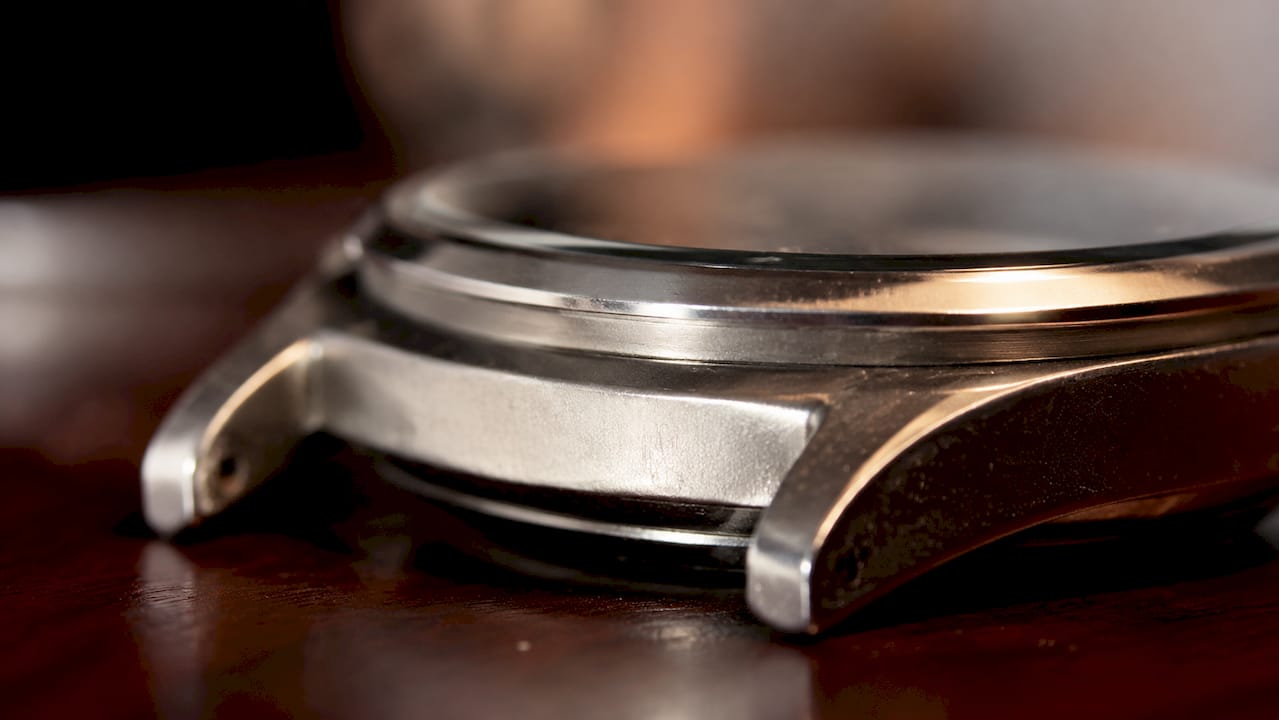
The irreversibility of metal removal is what separates polishing from other forms of wear. A scratched crystal can be replaced. A dented case back can sometimes be straightened. Metal removed from a lug is gone permanently. That finality is why the effects of polishing on watches carry such weight in collector circles.
How does polishing impact value across different watch types?
The impact of watch polishing is not uniform. Age, brand, and model complexity all determine how severely value drops after polishing.
| Watch Model | Estimated Value Loss After Heavy Polishing |
|---|---|
| Vintage Rolex Daytona | 35%–50% |
| Audemars Piguet Royal Oak | 25%–40% |
| Patek Philippe Nautilus | 20%–30% |
| Omega Speedmaster | 10%–15% |
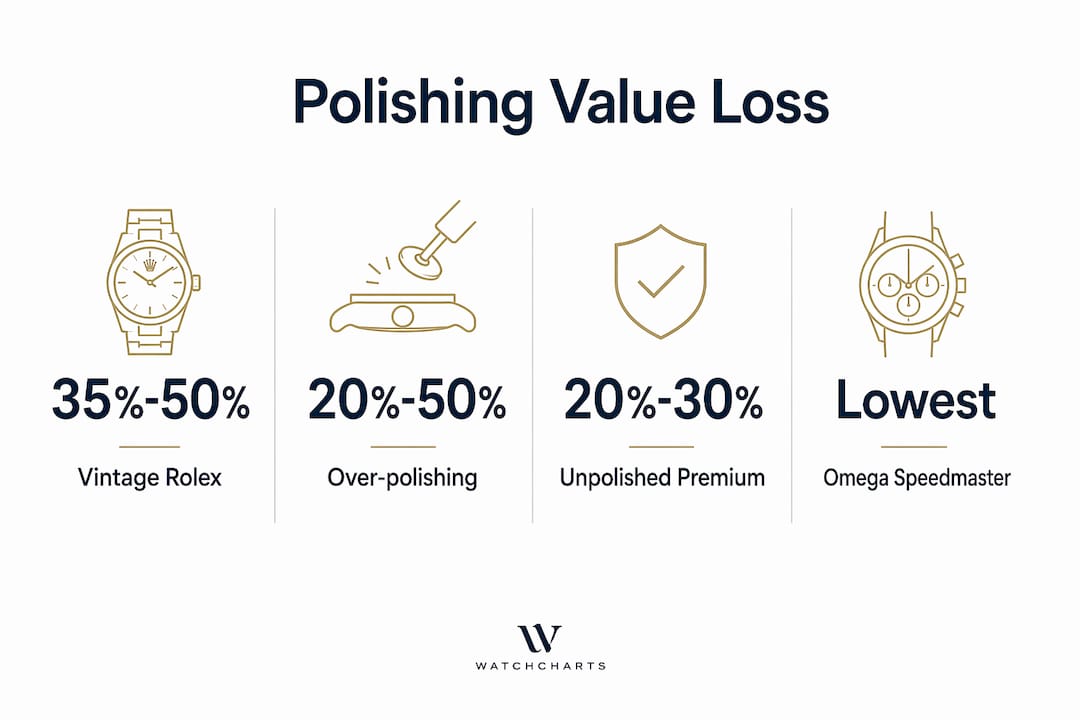
Heavy over-polishing reduces resale value by 20% to 50%, with vintage watches suffering the largest losses. The Rolex Daytona figures are particularly striking because a single polishing session at the wrong hands can erase tens of thousands of dollars in collector premium.
Vintage watches manufactured before 2000 face the steepest penalties for two reasons. First, replacement parts are scarce, so any alteration to the original case is essentially permanent at the market level. Second, the collector community for vintage pieces is deeply educated. Buyers at auction houses like Phillips or Christie’s routinely reject watches described as “excellent condition” once they spot softened edges under a loupe.
Modern integrated-bracelet sports watches, such as the Royal Oak or Nautilus, sit in a middle category. Their complex finishing requires specialist knowledge to replicate correctly. Proper finishing matters greatly; incorrect polishing can devalue a watch even if the total metal removed is minimal. An expert can spot improper finishing faster than they can spot metal loss, because the surface texture tells its own story.
Unpolished vintage watches command a 20%–30% premium over refinished counterparts. That premium reflects genuine scarcity. Most vintage watches have been serviced multiple times over decades, and each service carries polishing risk. A truly unpolished example with sharp edges and original patina is rare, and rarity drives price.
The Omega Speedmaster shows the lowest value loss in the table above, partly because its case design is less complex and partly because the Speedmaster market is broader and more forgiving of light wear. Still, a 10%–15% loss on a $10,000 watch is $1,000–$1,500 left on the table.
Over-polishing vs. light polishing: what collectors actually think
The collector community does not treat all polishing as equal. The distinction between damaging over-polishing and acceptable light polishing is real, and understanding it changes how you should approach watch condition and resale value.
Over-polishing is viewed as structural damage. It signals that someone prioritized appearance over originality, which is the opposite of what serious collectors value. Collectors often mistake scratches for defects needing correction, but in the collector’s eye, softened edges tell a story of aggressive intervention and reduced value. Natural wear, including honest scratches and dings, is considered part of a watch’s history. Removing that history through abrasion is the problem.
Light, sympathetic polishing occupies a different position. A purpose-first view on polishing holds that light historic polishing is normal and not inherently damaging if original geometry is preserved. The key phrase is “if original geometry is preserved.” A single careful pass to remove a deep scratch on a modern daily wearer, done by a technician who understands the original finish, is categorically different from a full case buff at a generic jewelry shop.
Three factors determine whether light polishing is acceptable in the market:
- Geometry preservation: Sharp edges and bevels must remain intact after any polishing work.
- Correct finishing: Brushed areas must stay brushed. Polished areas must stay polished. Mixing the two is an immediate red flag for buyers.
- Transparency: Transparency about prior polishing and providing clear photos increases buyer trust and improves resale outcomes. Sellers who disclose polishing honestly consistently achieve better prices than those who obscure it.
Pro Tip: When listing a watch for resale, include macro photos of the lugs and case edges under natural light. Buyers who can see the condition clearly are far more likely to pay asking price without negotiating.
Over-polishing reduces liquidity as well as price. It takes longer to sell an over-polished watch, and buyers use the condition as leverage to push prices down. Value depreciation after polishing is not just a one-time hit. It compounds through slower sales and lower final prices.
What steps should watch owners take to protect value?
Protecting watch condition and resale value requires deliberate decisions at every stage of ownership. The following steps reflect what experienced collectors and dealers consistently recommend.
-
Avoid polishing vintage watches manufactured before 2000 unless absolutely necessary. The value premium for unpolished examples is too significant to risk. If a vintage piece needs cleaning, use non-abrasive methods only.
-
Opt out of polishing during manufacturer service. Manufacturer service centers often automatically polish watches unless explicitly declined. Put your request in writing before dropping off the watch. Ask for confirmation that the case will not be touched.
-
Use specialized polishing products carefully and sparingly. Products designed for watch polishing cream applications differ significantly from generic metal polishes. Watch-specific formulations remove far less material and are designed to work on small surface areas without affecting adjacent finishes.
-
Work only with technicians who understand original geometry. Ask any watchmaker or service center to show you examples of their case finishing work before committing. A technician who cannot explain the difference between brushed and polished surfaces on your specific model is not the right choice.
-
Prioritize non-invasive cleaning for routine maintenance. Removing fingerprints, dust, and light grime does not require abrasives. A safe fingerprint removal routine using appropriate sprays and microfiber cloths keeps a watch looking sharp without touching the metal.
-
Document condition before any service. Photograph every angle of the case, lugs, and bracelet before handing a watch to anyone. This creates a record that protects you if polishing occurs without consent.
The core principle across all six steps is the same: the less metal removed, the more value retained. Every decision about polishing should start with that fact.
Key takeaways
Watch polishing permanently removes metal and alters case geometry, which is the direct cause of value depreciation after polishing across all luxury watch categories.
| Point | Details |
|---|---|
| Metal removal is permanent | Polishing cannot be reversed; lost geometry reduces collector value immediately and irreversibly. |
| Vintage watches lose the most | Heavy polishing costs vintage Rolex Daytona owners 35%–50% of resale value. |
| Unpolished examples command premiums | Unpolished vintage watches sell for 20%–30% more than refinished counterparts. |
| Opt out of service polishing | Always instruct service centers in writing to skip case polishing before any service. |
| Transparency improves resale | Disclosing polishing history with clear photos builds buyer trust and supports stronger sale prices. |
The part of this conversation most collectors get wrong
Polishing is not the enemy. Ignorance about polishing is. I have handled hundreds of watches over the years, and the most common mistake I see is not aggressive polishing. It is passive polishing: owners who hand a watch to a service center without instructions, or who use a generic metal polish from a hardware store because it “worked on the faucet.”
The watches that hold value best are not necessarily the ones that have never been touched. They are the ones whose owners made conscious, informed decisions at every step. A Patek Philippe that has been lightly cleaned with the right products and never buffed will outperform a “mint” example that went through a careless service twice.
What I find most underappreciated is the role of finish contrast. Collectors do not just look at whether a watch is scratched. They look at whether the brushed surfaces are still brushed and whether the polished surfaces are still crisp. When those contrasts disappear, the watch loses its visual identity, not just its monetary value. That is a harder loss to quantify, but experienced buyers feel it immediately.
My honest advice: treat polishing as a surgical decision, not a cosmetic habit. Understand what your specific model’s original finishing looks like. Read the watch restoration guidance available to collectors before touching anything. And when in doubt, clean without abrasion and leave the geometry alone.
— Raymond Jenkins
Protect your watch’s value with the right tools
Maintaining a luxury watch’s appearance does not require aggressive polishing. ChronoCare’s Ultimate Watch Polishing & Cleaning Kit is formulated specifically for luxury timepieces, designed to clean surfaces and address minor blemishes without the metal removal that damages collector value.
ChronoCare products are developed in the US with formulations that respect original case finishes. The kit includes targeted polishing compounds, microfiber applicators, and a cleaning spray calibrated for high-end metals and coatings. For collectors who want to maintain their watches between professional services without risking geometry or finish integrity, this is the responsible choice. Every product in the ChronoCare line is built around one principle: your watch should look better without becoming worth less.
FAQ
Does polishing a watch always reduce its value?
Not always, but the risk is significant. Light polishing that preserves original geometry and finish contrasts can be tolerated, especially on modern daily wearers, while heavy or improper polishing causes irreversible value loss.
How much value can a vintage watch lose from polishing?
Heavy over-polishing reduces resale value by 20%–50% on vintage pieces. A vintage Rolex Daytona can lose 35%–50% of its collector value after aggressive case buffing.
Can i ask a service center not to polish my watch?
Yes, and you should. Manufacturer service centers often polish automatically unless the owner explicitly declines in writing before the service begins.
What do collectors look for to detect over-polishing?
Collectors check for rounded lugs, missing chamfers, blurred finish contrasts between brushed and polished surfaces, and thinned crown guards. These markers are visible under a loupe and are considered irreversible structural changes.
Is an unpolished watch always worth more?
In the vintage market, yes. Unpolished vintage watches command a 20%–30% premium over refinished examples. In the modern watch market, the gap is smaller but still present for complex finishing models like the Audemars Piguet Royal Oak and Patek Philippe Nautilus.