

What Does Watch Restoration Mean for Collectors?
Watch restoration is defined as the comprehensive process of returning a severely aged or damaged timepiece to its original mechanical and cosmetic condition using authentic methods and materials. The industry term is “horological restoration,” and it goes far beyond routine servicing. Where a standard service keeps a running watch running, restoration corrects years of neglect, wear, and damage. For luxury watch owners, understanding this distinction is the difference between protecting a significant investment and accidentally destroying it.
What does watch restoration mean vs. repair and service?
Restoration is a comprehensive, corrective process that returns a severely aged or damaged watch to showroom condition. Repair and service are narrower in scope, and confusing the three leads to costly mistakes.
Repair addresses a single, isolated fault. A broken mainspring, a cracked crystal, or a stripped crown thread are all repair jobs. The watchmaker fixes the specific problem and returns the watch. Nothing else changes.
Service is routine, preventive maintenance performed every 3–5 years on a functioning watch. The movement is disassembled, cleaned in an ultrasonic bath, lubricated with fresh oils, and tested for accuracy. A service keeps a healthy watch healthy.
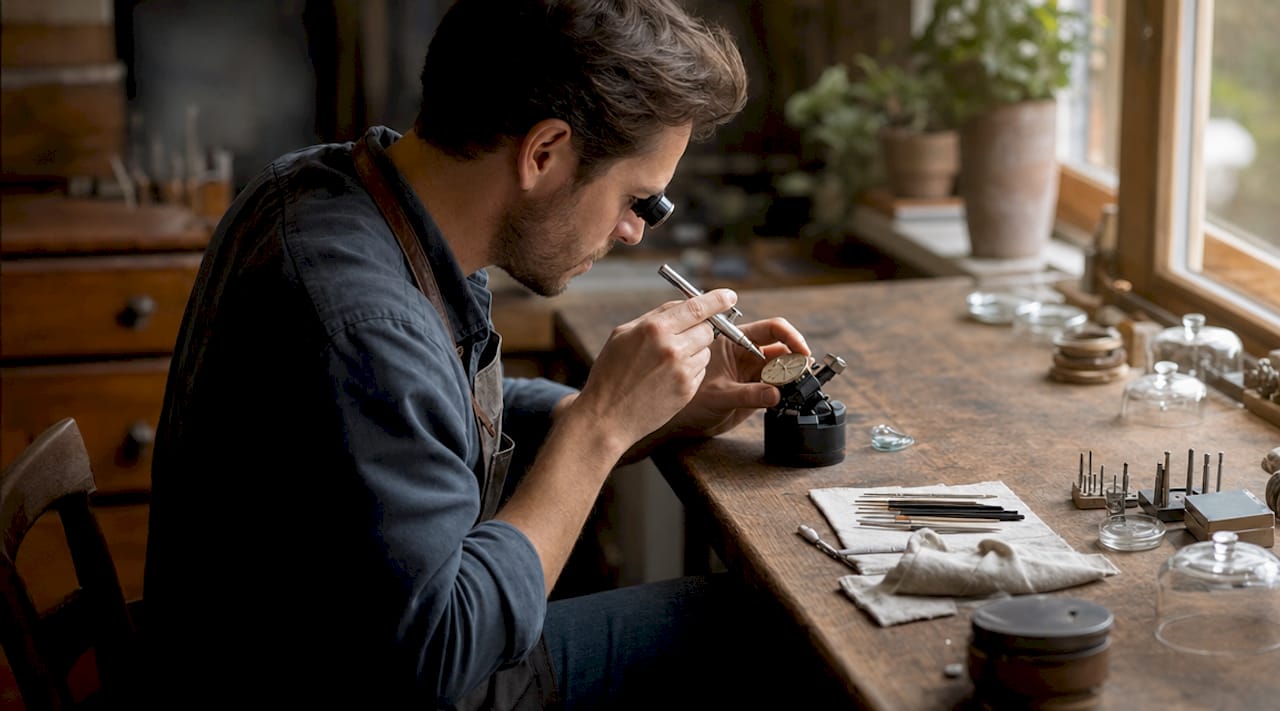
Restoration is transformative. It combines corrective mechanical work with full cosmetic renewal. Dial refinishing, movement overhaul, authentic part sourcing, and case polishing all happen under one project. Restorations typically require 4–8 weeks because specialist craftsmen may need to hand-fabricate obsolete components. That timeline reflects the depth of work involved.
| Process | Scope | Typical Duration | Best For |
|---|---|---|---|
| Repair | Single fault correction | 1–2 weeks | Specific mechanical failure |
| Service | Preventive maintenance | 2–3 weeks | Regularly worn watches |
| Restoration | Full mechanical and cosmetic renewal | 4–8 weeks | Aged, damaged, or neglected pieces |
Pro Tip: If your watch runs but looks worn, that is a service or cosmetic restoration question. If it has stopped or runs erratically alongside visible damage, you likely need full restoration.
How does the watch restoration process work?
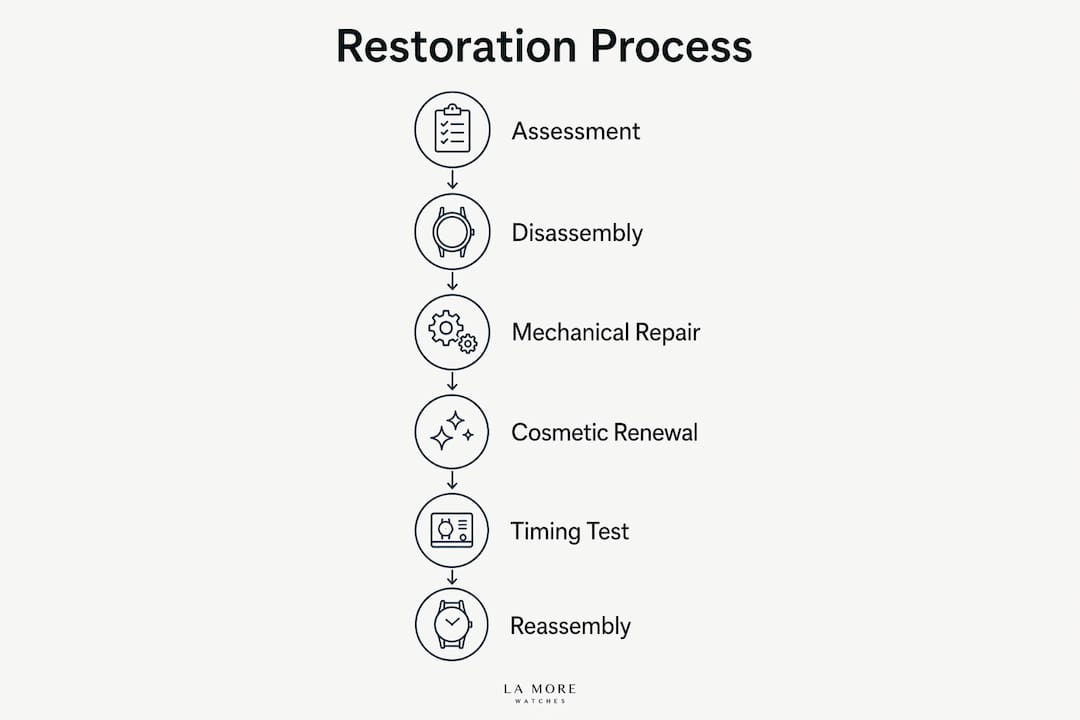
The watch restoration process follows a defined sequence. Each stage builds on the last, and skipping any step compromises the final result.
-
Initial assessment and diagnosis. The watchmaker examines the watch under magnification, documents all damage, and identifies which components need repair, replacement, or fabrication. This step sets the scope and cost estimate.
-
Complete disassembly. Every component is removed, including the movement, dial, hands, crown, case, and bracelet. Restoration teams disassemble watches fully and use professional cleaning solutions before component-by-component inspection.
-
Cleaning and inspection. Parts are cleaned ultrasonically or by hand with appropriate solvents. Each component is inspected for wear, corrosion, or damage. Worn jewels, bent levers, and corroded screws are flagged at this stage.
-
Part replacement or fabrication. Worn or broken parts are replaced with authentic equivalents. For vintage watches, this often means sourcing new-old-stock components or commissioning hand-crafted replacements. Authentic materials matter because substitutes affect both function and value.
-
Dial refinishing. The dial receives careful attention. Faded text is restored, damaged lacquer is repaired, and surface contamination is removed. Skilled restorers work to preserve original patina rather than strip it entirely.
-
Movement reassembly and lubrication. The movement is rebuilt component by component. Each pivot point receives the correct grade of lubricant. Modern watchmakers use synthetic oils calibrated for specific tolerances.
-
Regulation and timing. The reassembled movement is tested on a timing machine, which measures accuracy across multiple positions. The watchmaker adjusts the regulator until the watch meets manufacturer specifications.
-
Final cosmetic work. The case is polished with expert restraint. Brushed surfaces are re-brushed directionally. Polished surfaces are buffed carefully. The goal is to refresh, not reshape.
Pro Tip: Ask your watchmaker for a timing machine printout after restoration. A legitimate specialist will provide one. It proves the movement was properly regulated and gives you a performance baseline for future services.
The importance of watch maintenance at each stage cannot be overstated. A watch that looks restored but runs poorly has not been restored. It has been polished.
Why does restraint preserve value during restoration?
Restraint is the single most important quality in a watch restorer. Over-polishing and replacing original parts unnecessarily can lower collector value despite a cleaner appearance. This is the paradox that catches many owners off guard.
Here is what excessive intervention actually destroys:
- Case geometry. Polishing removes metal. Every pass of a buffing wheel rounds sharp edges and softens lugs. A Rolex Submariner or Patek Philippe Calatrava has factory geometry that defines its character. Once those edges are gone, they cannot be restored without fabricating a new case.
- Original parts. Replacing a worn but original dial, crown, or bracelet link with a reproduction reduces the watch’s originality score. Collectors and auction houses at Christie’s and Phillips pay premiums for unmodified examples.
- Natural patina. Tropical dials, aged lume plots, and faded bezels are features to collectors, not flaws. A restorer who strips patina to achieve a “clean” look has permanently reduced the watch’s desirability.
“Restoration is an act of respect for the watch’s history, not simply cosmetic renewal. It revives the piece to continue its story without sacrificing horological integrity.” Source
Collector watches with documented service histories can command 20–50% higher resale prices. That premium depends on the work being done correctly, not just done. Documented, restrained restoration adds value. Aggressive, undocumented work subtracts it.
The owner’s role here is active, not passive. Before handing over a watch, communicate clearly which parts must be retained. Put it in writing. A reputable watchmaker will welcome that conversation. One who resists it is a warning sign.
For guidance on polishing without devaluing your piece, the principles apply equally to professional and at-home care.
When should you restore a watch, and how do you prepare?
Not every worn watch needs full restoration. The decision requires honest assessment of condition, purpose, and goals.
Signs that restoration is the right call:
- The watch has not run in years and shows visible corrosion or moisture damage inside the crystal
- The dial has significant lifting, flaking, or water staining that affects legibility
- The case shows deep scratches, dents, or surface pitting beyond normal wear
- Multiple mechanical faults exist simultaneously, not just one isolated issue
- The watch has sentimental or monetary value that justifies the investment
Signs that service or repair is sufficient:
- The watch runs but loses or gains time consistently
- A single component has failed with no cosmetic damage
- The watch was last serviced fewer than five years ago
Before committing to restoration, run a simple diagnostic. The compass test identifies magnetized movements, which cause erratic timekeeping that mimics mechanical failure. Hold a compass near the movement. If the needle deflects, the watch is magnetized. Demagnetization takes minutes and costs almost nothing. Many watches are incorrectly diagnosed for full restoration when this quick fix is all they need.
Function is not the same as condition. A watch can run despite degraded lubrication. Visible issues mean internal wear has already begun. Early intervention prevents the kind of damage that turns a service into a full restoration.
When choosing a specialist, ask these questions directly:
- Do you have experience with this specific reference or brand?
- Will you retain and return all original parts you remove?
- Can you provide a written estimate and timeline before starting?
- Do you use a timing machine and can you share the results?
Clear written agreements on original part retention are critical. Lead times extend when sourcing or fabricating rare components, especially for vintage references from brands like Omega, Longines, or Universal Genève. Know this before you commit.
Balancing sentimental value, daily use, and investment goals shapes the right scope. A daily-wear tool watch may benefit from more aggressive cosmetic work. A vintage Rolex Daytona or Heuer Carrera held as a collector piece demands maximum restraint. The signs your watch needs attention are often visible before the damage becomes expensive.
Key takeaways
Watch restoration is a comprehensive, time-intensive process that requires authentic methods, expert restraint, and clear communication to preserve both mechanical function and collector value.
| Point | Details |
|---|---|
| Restoration vs. service vs. repair | Restoration is transformative and corrective; service is preventive; repair fixes a single fault. |
| Process takes 4–8 weeks | Specialist timelines reflect hand-crafted parts and meticulous multi-stage work. |
| Restraint protects value | Over-polishing and part replacement can reduce a watch’s originality and resale price significantly. |
| Documented history adds premium | Watches with verified service records command up to 50% higher resale prices at auction. |
| Diagnose before committing | The compass test and early assessment prevent unnecessary restoration costs. |
The line between restoration and erasure
I have seen more watches harmed by well-intentioned restoration than by neglect. That is not a comfortable thing to say, but it is true. A collector brings in a 1960s Omega Constellation with a beautiful gilt dial and original dauphine hands. It comes back mirror-polished, with a reproduction dial and generic hands. Technically restored. Actually ruined.
The problem is that restoration is often sold as improvement. A shinier watch feels like a better watch. But for anything with collector significance, shine is not the goal. Integrity is. The scratches on a vintage case tell a story. The aged lume on a Submariner dial is irreplaceable. Once those are gone, the watch becomes a replica of itself.
My recommendation to any collector considering restoration is this: define your limits before you walk in the door. Write them down. A good watchmaker will treat your instructions as a professional brief, not an obstacle. If a specialist pushes back on retaining original parts, walk away. The watch care and value connection is real, but only when the work respects what makes the piece worth caring for.
Restoration done right is one of the most satisfying things in this hobby. It brings a neglected piece back to life without erasing what made it worth saving. That balance is the craft.
— Raymond Jenkins
Keep your watch in restoration-ready condition
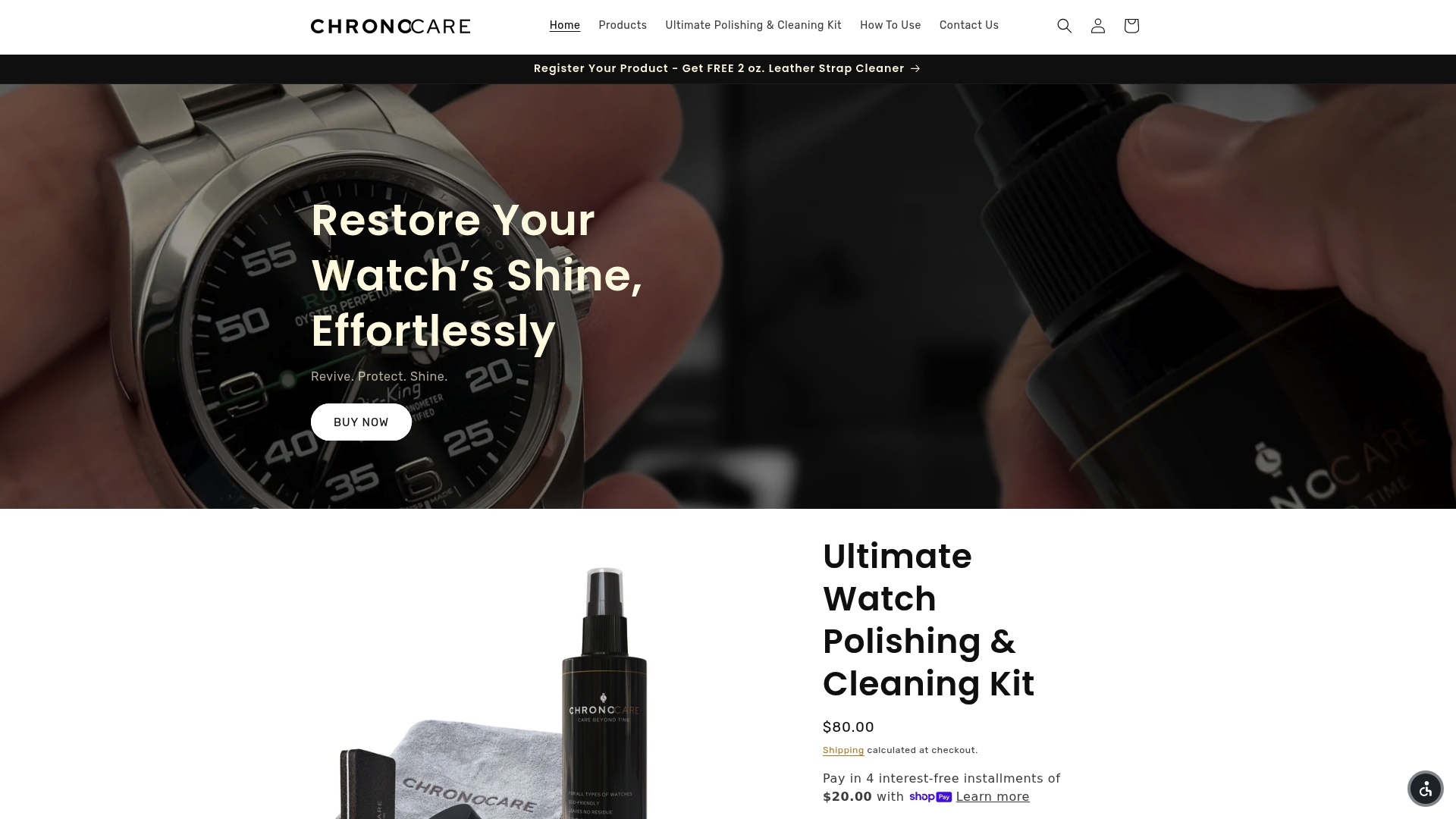
Professional restoration is a significant investment. The best way to protect it is consistent at-home care between service intervals. ChronoCare’s Ultimate Watch Cleaning Kit is formulated specifically for luxury timepieces, using materials that clean without stripping original finishes or damaging delicate surfaces. Regular cleaning removes the oils, dust, and particulates that accelerate wear on both the case and the movement gaskets. ChronoCare also offers the Ultimate Watch Polishing & Cleaning Kit, which gives collectors a professional-grade option for maintaining surface condition between restorations. Proper home care extends the intervals between professional work and keeps your watch looking and performing at its best.
FAQ
What does watch restoration mean in simple terms?
Watch restoration is the process of returning a damaged or aged timepiece to its original mechanical and cosmetic condition using authentic parts and methods. It goes beyond routine servicing by addressing both function and appearance comprehensively.
How long does a watch restoration take?
Most restorations take 4–8 weeks. Vintage watches with obsolete parts that require sourcing or fabrication extend that timeline further.
Does watch restoration increase or decrease value?
Restrained, well-documented restoration preserves or increases value. Aggressive polishing or unnecessary part replacement reduces originality and can lower resale prices significantly, particularly for collector-grade pieces.
What is the difference between watch servicing and restoration?
Servicing is routine preventive maintenance performed every 3–5 years on a functioning watch. Restoration is a corrective, comprehensive process applied to watches with significant mechanical or cosmetic damage.
How do i know if my watch needs restoration or just a service?
If the watch has multiple faults, visible cosmetic damage, or has not run in years, restoration is likely needed. If it runs but keeps poor time, a service or simple repair is usually sufficient. The compass test rules out magnetism before committing to more extensive work.