

Does Watch Care Preserve Value? What Collectors Must Know
Watch care is the practice of maintaining a timepiece’s mechanical function, physical condition, and documented history to protect its market value over time. For collectors holding a Rolex Submariner, a Patek Philippe Calatrava, or an Audemars Piguet Royal Oak, the difference between a well-maintained piece and a neglected one can represent tens of thousands of dollars at resale. The industry term for this discipline is watch preservation, and it covers everything from professional servicing intervals to storage environments to cosmetic conservation. Understanding what watch care does to preserve value is not optional knowledge for serious collectors. It is the foundation of any sound ownership strategy.
What does watch care preserve value? The core mechanics explained
Watch care preserves value by keeping three things intact: mechanical reliability, physical originality, and buyer confidence. Remove any one of those three, and the resale price drops. Documented maintenance history makes a watch easier to evaluate and less likely to raise concerns about hidden internal issues. That matters enormously in the secondary market, where buyers cannot open a movement on the spot and must rely on condition signals to justify their offer.
Mechanical watches require professional service every 4 to 7 years; quartz watches need battery and seal checks every 2 to 3 years. These are not arbitrary schedules. Movement oils degrade over time, gaskets lose their water resistance, and worn components create friction that accelerates internal damage. A watch that has missed two service cycles is not just running poorly. It is accumulating repair costs that will eventually exceed the value of the service itself.
During a professional service, a watchmaker disassembles the movement, cleans every component ultrasonically, replaces worn parts, re-lubricates the gear train, and pressure-tests the case for water resistance. For premium brands, Rolex service costs $800 to $1,500, while Audemars Piguet and Patek Philippe services run $2,000 to $5,000 or more. These figures sound steep until you consider that a neglected movement can require full reconstruction at two to three times that cost.
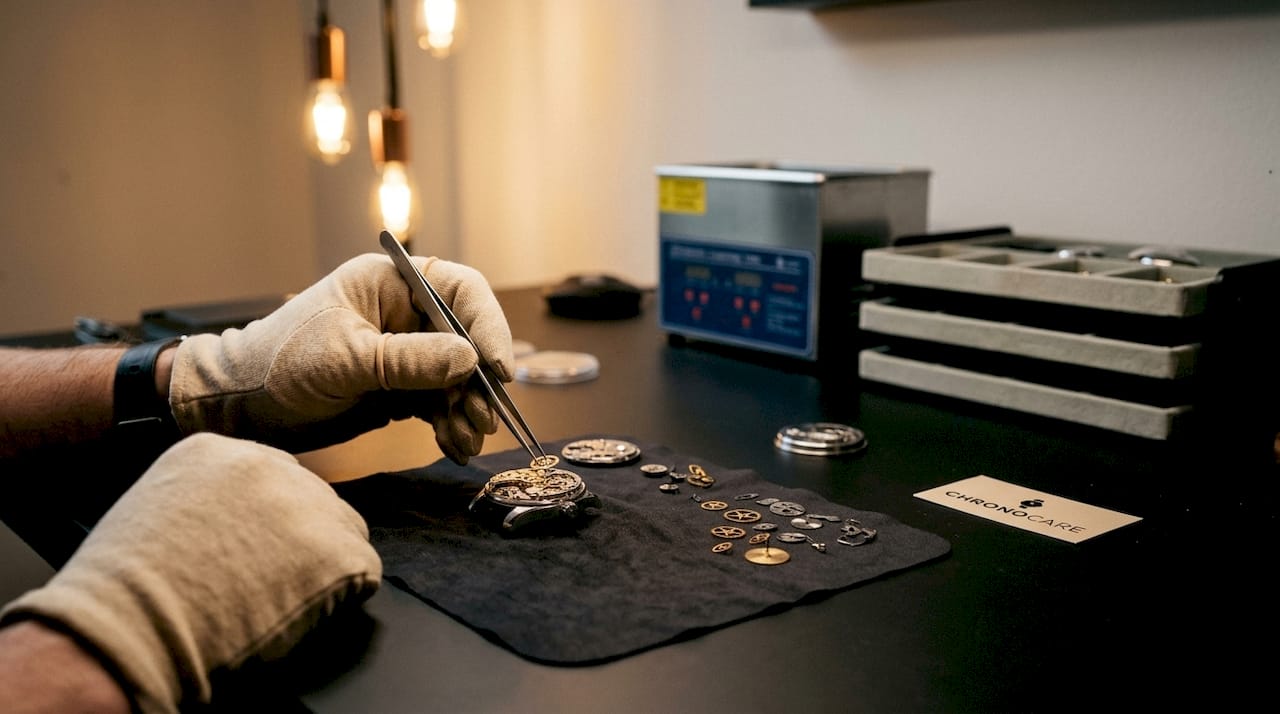
Patek Philippe recommends servicing every 3 to 5 years to maintain both reliability and repairability over a watch’s lifetime. The brand frames serviceability as a core component of long-term value, which is why their movements are engineered with replacement parts available for decades. That philosophy is worth adopting as a collector mindset: service is not maintenance overhead, it is value protection.
Pro Tip: Book a service if your watch drifts more than 5 seconds per day or if it has been over 7 years since the last service, whichever comes first.
A watch with a complete, verifiable service history commands stronger offers and faster sales. Preventive servicing reduces buyer risk by demonstrating consistent, proper care, which translates directly into pricing confidence for both parties in a transaction.
How storage and handling protect your watch between services
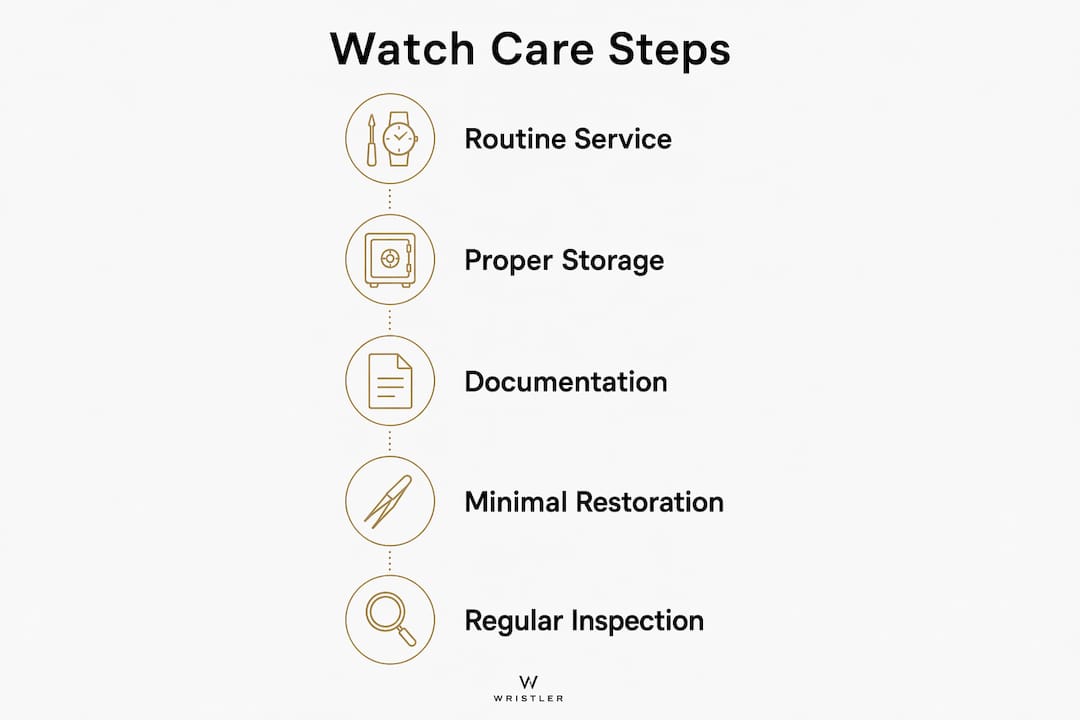
The environment a watch lives in between services determines how quickly it degrades. Optimal storage conditions sit between 40% and 60% relative humidity and a stable temperature between 60°F and 75°F. Basements, bathrooms, and window ledges violate at least one of those parameters and accelerate seal degradation, crystal fogging, and metal oxidation.
The threats are specific and worth naming. UV exposure fades dials and degrades rubber gaskets. Magnetic fields from speakers, laptop bags, and phone chargers disrupt the escapement and cause timekeeping errors. Vibration from power tools or even certain desk surfaces can stress delicate gear pivots over time. Chemicals in cologne, sunscreen, and cleaning products attack leather straps, corrode case metal, and strip protective coatings.
| Storage risk | Consequence | Solution |
|---|---|---|
| High humidity (above 60%) | Dial spotting, crown corrosion, gasket swelling | Silica gel packs or climate-controlled safe |
| UV exposure | Dial fading, rubber seal degradation | Opaque watch box or closed drawer |
| Magnetic fields | Timekeeping errors, escapement disruption | Distance from electronics; soft iron inner case |
| Chemical exposure | Strap damage, case corrosion | Remove watch before applying cologne or sunscreen |
| Vibration | Gear pivot stress, mainspring fatigue | Padded watch roll or stationary display case |
For watches held in long-term storage, pre-storage servicing is recommended, with a budget of 5 to 10% of the watch’s value allocated to that preparation. Fresh oils and tested seals prevent the internal degradation that occurs when a watch sits static for years. Periodic inspection and humidity monitoring catch early signs of damage before they become expensive repairs.
Pro Tip: For automatic watches stored long-term, wind them gently by hand every three to four months to keep the mainspring from developing a set and to circulate lubricants through the movement.
Watch boxes, padded rolls, and climate-controlled safes are not luxury accessories. They are functional tools that extend service intervals and protect cosmetics. A luxury watch care routine built around proper storage can meaningfully reduce the frequency and cost of professional servicing over a decade of ownership.
Conservation vs. restoration: why less work often means more value
The most counterintuitive truth in watch preservation is that doing less to a watch often protects its value more than doing more. Over-polishing removes metal, softens the sharp case edges that define a watch’s original geometry, and eliminates the patina that vintage collectors specifically seek. A Rolex Daytona from the 1970s with its original brushed surfaces intact is worth more than the same reference with a mirror polish applied by an overzealous owner.
The collector community draws a clear line between conservation and restoration. Conservation means cleaning, protecting, and stabilizing what exists. Restoration means returning a watch to a prior state, often at the cost of original material. For most collectible pieces, conservative maintenance favors preservation over full restoration when originality is a pricing factor.
Specific practices that protect originality include:
- Requesting that any replaced parts be returned with the watch after service, preserving provenance and giving future buyers the option to reinstall original components
- Avoiding dial restoration on vintage pieces unless the dial is actively deteriorating, since even a perfectly executed refinish reduces collector appeal
- Using targeted spot cleaning rather than full case polishing for surface marks
- Choosing a watchmaker who documents every component replaced and every procedure performed
- Asking explicitly about polishing protocols before authorizing any cosmetic work
The risk of over-restoration is not hypothetical. Auction houses and specialist dealers routinely discount watches with evidence of heavy polishing, refinished dials, or replaced hands. The market has become sophisticated enough that buyers recognize these interventions and price them accordingly. Collectors who treat their watches as objects to be preserved rather than restored consistently achieve better outcomes at resale.
How service records and documentation drive resale confidence
Service records function as a risk-reduction credential in the secondary market. Buyers who cannot inspect a movement directly rely on documentation to assess whether a watch has been properly maintained. A folder containing dated service receipts, scope-of-work descriptions, pressure test results, and parts replaced gives a buyer the confidence to make a strong offer without demanding a steep discount for uncertainty.
The practical impact is significant. Service records simplify buyer evaluation, enabling faster sales and reducing negotiation friction. A watch with a clear, consistent service history from a single trusted provider closes faster and at a higher price than an equivalent piece with a vague or fragmented care history. Dealers who specialize in pre-owned luxury watches confirm this pattern repeatedly.
“A maintenance history often results in better pricing and easier sales in the secondary market.” — TNS Diamonds
Building a documentation habit is straightforward. Keep every receipt. Note the date, the provider, the work performed, and any parts replaced. Store these records with the original box and papers, since the complete package (watch, box, papers, service history) represents the highest tier of resale presentation. Using one trusted watchmaker or authorized service center across multiple service cycles creates a coherent narrative that buyers and auction specialists find reassuring.
Incomplete or unclear care history lowers offers and complicates valuations. A watch that has clearly been serviced but lacks receipts forces buyers to assume the worst about what was done and why. That assumption costs money. Treating documentation as part of the watch itself, not as optional paperwork, is one of the highest-return habits a collector can develop.
Key takeaways
Watch care preserves value by maintaining mechanical function, physical originality, and documented service history, all three of which directly influence resale pricing and buyer confidence.
| Point | Details |
|---|---|
| Service on schedule | Mechanical watches need professional service every 4 to 7 years to prevent internal wear and preserve resale value. |
| Control the storage environment | Maintain 40% to 60% humidity and stable temperature; avoid UV, magnets, and chemicals between services. |
| Conserve, don’t restore | Avoid over-polishing and dial refinishing; original surfaces and patina protect collector value. |
| Document every service | Keep dated receipts and scope-of-work records; complete documentation reduces buyer risk and supports stronger offers. |
| Return replaced parts | Request original components back after service to preserve provenance and future resale options. |
The stewardship mindset that separates serious collectors from casual owners
I have spent years working with luxury watch collectors across every price tier, and the single biggest mistake I see is treating servicing as a reaction rather than a plan. Collectors wait until a watch stops running or starts losing significant time before booking a service. By that point, the damage is already done, and the repair bill reflects it.
The collectors who consistently achieve the best resale outcomes think of themselves as stewards, not owners. They are holding a piece for a period of time and then passing it on in better condition than they received it. That mindset changes every decision: they service on schedule, they store properly, they resist the urge to polish away every surface mark, and they keep the paperwork.
The other pattern I find worth noting is how buyer expectations have shifted. Five years ago, a clean watch with no service history could still command a fair price. Today, sophisticated buyers in the secondary market ask for documentation as a baseline. Watches without records are increasingly treated as higher-risk purchases, and the discount applied reflects that. The collectors who built documentation habits early are now sitting on assets that are genuinely easier to sell and easier to price.
My practical advice: build a care routine that fits your lifestyle rather than one that requires heroic effort. Clean the case and bracelet regularly with products designed for the purpose, store watches in a controlled environment, service on schedule, and keep every receipt. That is the entire system. It does not require obsession. It requires consistency.
— Raymond Jenkins
Protect your watch investment with ChronoCare
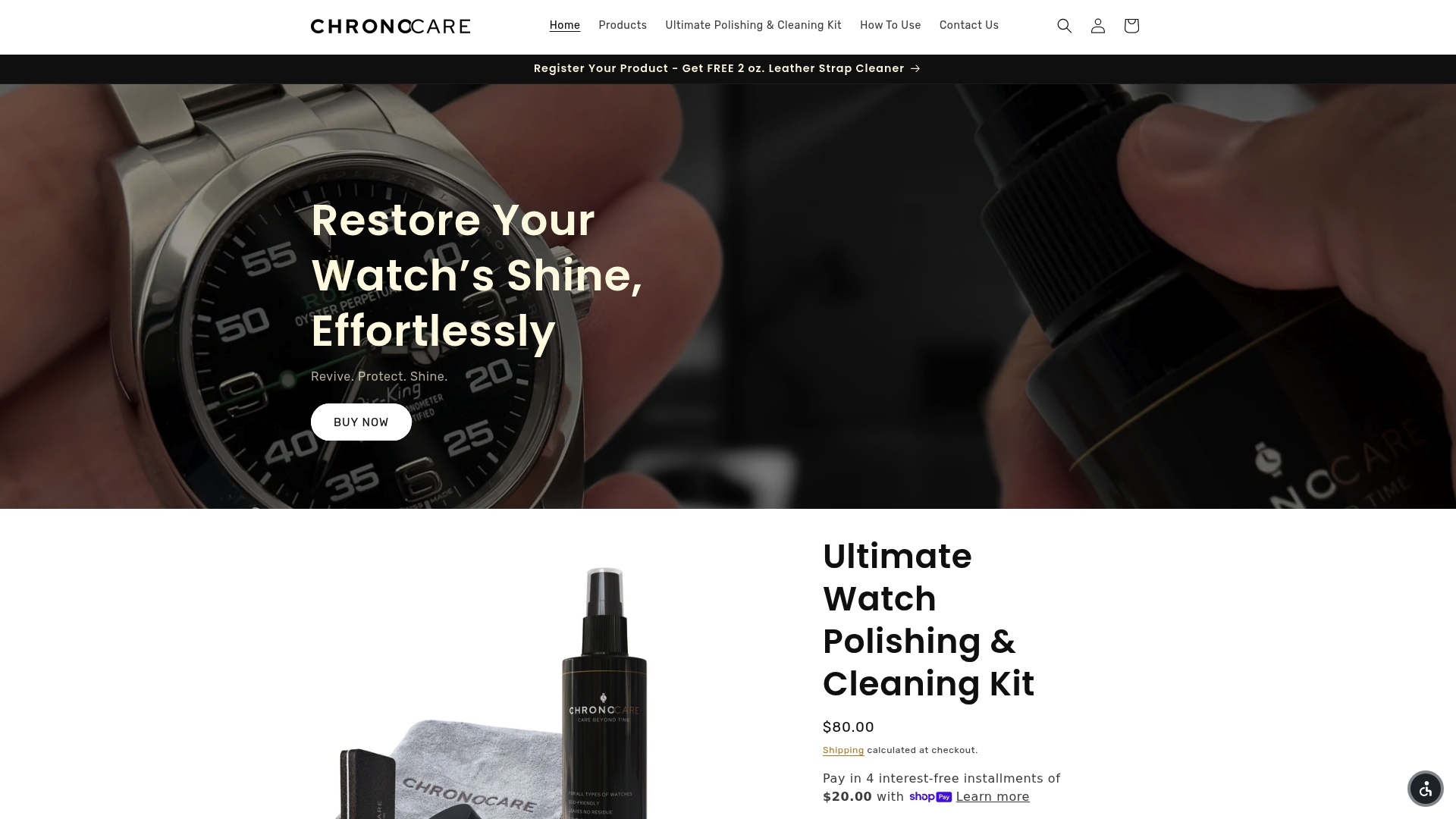
ChronoCare’s premium cleaning and polishing kits are formulated specifically for collector-grade luxury timepieces, giving you the tools to maintain your watch’s appearance between professional services without risking the originality that drives resale value. The luxury watch cleaning kit removes surface grime, fingerprints, and oxidation safely from metal cases, bracelets, and crystals. For collectors who want to address light surface scratches while preserving the original finish, the polishing and cleaning kit delivers professional-grade results at home. Every ChronoCare product is formulated in the US and designed to support the conservative, preservation-first approach that protects both aesthetics and long-term value.
FAQ
How often should a luxury watch be serviced?
Mechanical watches require professional service every 4 to 7 years; quartz watches need battery and seal checks every 2 to 3 years. Patek Philippe specifically recommends service every 3 to 5 years to maintain reliability and long-term value.
Does polishing a watch reduce its value?
Yes, in most cases. Over-polishing removes metal, softens original case edges, and eliminates patina that vintage collectors prize. Conservative cleaning is preferable to polishing for any watch where originality affects resale price.
What documents should I keep for watch resale?
Keep dated service receipts, scope-of-work descriptions, pressure test results, and a record of any parts replaced. Store these with the original box and papers to present the complete package at resale.
How should I store a luxury watch long-term?
Store watches at 40% to 60% relative humidity and a stable temperature between 60°F and 75°F, away from UV light, magnetic fields, and vibration. Service the watch before storage and inspect it periodically for early signs of damage.
Does service history actually affect resale price?
Service records function as a risk-reduction credential that gives buyers confidence to make stronger offers. Watches with clear, verifiable maintenance histories sell faster and at higher prices than equivalent pieces without documentation.