

Fix a Wet Leather Watch Strap in 24 Hours, Backed by Watchmakers
Blot excess water with a clean cloth, remove the strap if practical, and let it air-dry slowly before applying any conditioner. This approach follows guidance echoed across Tiffany & Co. care pages and repair notes from author Raymond Jenkins. Skipping these steps, especially rushing the drying, is what turns a wet strap into a ruined one.
TL;DR:
- Slow, controlled drying at room temperature is essential to prevent shrinkage and stiffness, as heat or rapid evaporation causes irreversible damage.
- Blot the water with a clean cloth and avoid rubbing, while removing the strap if possible to reduce moisture wicking into the lugs.
- Water marks can often be minimized by fully drying the strap before lightly dampening the entire surface and drying again, rather than spot-treating wet spots.
- Suede and exotic leathers require gentler handling, with specific steps like drying without brushing and calling a professional for delicate or high-value materials.
- After drying, use only strap-specific leather cleaner and conditioner, avoiding household oils or solvents that can weaken or discolor leather.
Table of Contents
- Step-by-step immediate rescue for the first 24 hours
- Drying methods: why slow, controlled drying wins and what to avoid
- Treating water marks and stains on smooth finished leather straps
- Suede, nubuck, exotic, and painted straps need different handling
- Conditioning and restoring flexibility after controlled drying
- When to repair, replace, or seek professional help
- Prevention and ongoing maintenance to reduce water damage risk
- Expert tips and product-aware guidance from ChronoCare
- Author perspective: preservation priorities for collectors
- How ChronoCare products can help finish the rescue safely
- Sources
- FAQ
Step-by-step immediate rescue for the first 24 hours
The first few hours after a strap gets wet decide whether you end up with a minor inconvenience or a stiff, cracked band. Work through these steps in order, and resist the urge to speed anything up.
- Blot, never rub. Press a clean, white, absorbent cloth flat against the leather and lift straight up. Rubbing pushes water deeper into the fibers and can smear any dye that has started to lift.
- Remove the strap where you can. Most modern bands come off with a quick-release pin or spring bar tool; if you’re not confident doing this, hold the watch case away from the wet section instead so moisture doesn’t wick into the lugs.
- Reshape it gently while it’s still pliable. Lay the strap flat, or drape it over a rounded form close to its natural curve, rather than hanging it by the buckle where its own weight can stretch the wet leather.
- Set it somewhere ventilated at room temperature. A shelf near an open window works better than a closet or a spot near a heat source.
- Run a quick diagnostic before you do anything else. Sniff for a musty smell (an early mold sign), check for layers that feel stuck together, and look for any color transfer onto your cloth.
That last step matters more than people think. A strap that smells faintly musty within the first day is telling you moisture got trapped somewhere you can’t see, usually between the top leather and its lining. Catching that early is the difference between a wipe-down and a strap you have to throw away.
Drying methods: why slow, controlled drying wins and what to avoid
Leather dries the way a sponge does: unevenly, and fast if you help it along with heat. The problem is that fast drying does real, measurable damage. Research on leather resiliency found that rapid drying methods increase shrinkage and stiffness while reducing tear strength, compared to slower, controlled drying. That’s the mechanism behind the advice you’ll hear from every watchmaker: patience preserves the fiber structure, and shortcuts break it down. Heat and direct sunlight cause a version of the same problem from a different angle. As water evaporates too quickly, the collagen fibers in the leather contract and lock into a tighter, stiffer arrangement. Once that happens, no amount of conditioning fully reverses it. The strap may look fine at first glance but crack at the fold points within weeks.
A safe drying setup is simple:
- Choose a ventilated room at normal indoor temperature, away from vents and windows with direct sun.
- Let air move around the strap indirectly rather than blowing on it.
- Place a silica desiccant packet nearby, not touching the leather, to help pull ambient moisture without concentrating heat.
- Check on it once or twice a day rather than constantly handling it.
What to never do: don’t use a hairdryer, don’t put it in an oven or near a radiator, don’t leave it on a sunny windowsill, and don’t wipe it down with rubbing alcohol or any solvent-based cleaner to “speed things along.”
Pro Tip: If you’re impatient, rotate the strap a quarter turn every few hours instead of adding heat. It dries just as evenly without the structural cost.
Treating water marks and stains on smooth finished leather straps
Once the strap is dry, you may still see a faint ring or a slightly darker patch where the water sat longest. This is the most common complaint after a spill, and it’s fixable in most cases without professional help.
- Reassess after full drying first. Many marks fade significantly once the leather is completely dry; don’t treat a strap that’s still even slightly damp.
- If a ring remains, consider even-dampening the whole panel. Tiffany’s guidance notes that evenly dampening an entire panel with plain lukewarm water can reduce a persistent ring, but this carries more risk on a narrow watch strap than on a handbag or wallet panel.
- Test on a hidden section first. Try the inside edge near the buckle, where any color change won’t be visible when worn.
- Use a barely damp cloth, not a soaked one. Wring your cloth out until it’s just cool and moist, then work in light, even strokes across the entire face rather than spot-treating the ring.
- Let it dry slowly again, using the same ventilated setup described above.
- Once fully dry, use a purpose-made leather strap cleaner to lift any residue left behind from the water itself or from handling. A dedicated leather strap cleaner formulated for straps is gentler on finish than general leather cleaners meant for furniture or car interiors.
Manufacturer care pages from Omega and Seiko both stress the same order of operations: remove moisture, dry completely, then clean, never the reverse. Cleaning a still-damp strap just pushes whatever product you’re using into fibers that are already swollen with water, which can trap residue instead of removing it.
Suede, nubuck, exotic, and painted straps need different handling
Smooth leather and suede are the same raw material treated in almost opposite ways, so a rescue method that works for one can ruin the other. Suede and nubuck have a raised nap that traps water at the surface instead of letting it bead off, which means blotting has to be even gentler and drying takes noticeably longer.
- For suede, blot first and never brush while wet. Brushing damp nap flattens and mats the fibers permanently.
- Let it dry fully, then restore the nap with a suede brush. Light, one-directional strokes lift the fibers back up once the leather is bone dry.
- A suede eraser can lift a stubborn water mark, but only after the strap is completely dry; used too early it just grinds moisture into the surface.
- Exotic skins (alligator, ostrich, lizard) and painted or lacquered finishes are higher risk. Water can lift a painted finish or dull the natural sheen on an exotic skin, and most manufacturers don’t publish DIY guidance for these materials because the margin for error is narrow.
- Watch for red flags that mean stop and call a professional: dye bleeding onto your cloth, a finish that’s flaking or peeling, or layers of the strap separating (delamination) are all signs that continuing on your own will likely make things worse.
Seiko’s service guidance specifically points toward professional assessment for specialty materials rather than at-home fixes, and that’s sound advice for any strap you’d be upset to lose. If in doubt about a rare or expensive skin, a five-minute call to a strap specialist costs a lot less than guessing wrong.
Conditioning and restoring flexibility after controlled drying
Conditioning is the last step, not a shortcut around the drying process, and it has real limits. It reintroduces oils and lubricants (called fatliquors in leather science) that keep fibers supple, but it cannot rebuild fiber structure that’s already broken down or pull dye back out of leather it has already migrated into.
- Choose a conditioner made for watch straps, not a general shoe or furniture cream, since strap-specific formulas tend to use lighter emollients that won’t overload a thin band.
- Spot test on the strap’s underside first and wait a few minutes to check for darkening before treating the visible face.
- Apply sparingly and work it into the edges, where leather dries out fastest and cracks first.
- Let the strap rest for a few hours, then reassess before deciding whether a second light application is needed.
Pro Tip: Condition the edges of the strap even when the face looks fine. Edges lose moisture faster than the flat surface and crack first.
Avoid household oils like olive or mineral oil, which can go rancid or darken leather unevenly, along with rubbing alcohol and bleach, both of which strip the natural oils leather needs and can weaken the fibers permanently.

When to repair, replace, or seek professional help
Some damage is beyond a home fix, and recognizing that early saves both the strap and the watch case underneath it.
- Holes or cracks forming at the buckle or lug attachment points signal the leather has lost enough integrity that normal wear will tear it further.
- Delamination, where the top leather separates from its lining, usually means adhesive failure that a home conditioner can’t reverse.
- A torn lining or persistent musty odor after thorough drying often points to trapped moisture or early mold that needs more than a wipe-down.
- Glued constructions and exotic leathers are best left to specialists, since re-gluing or restitching these materials without matching tools tends to look worse than the original damage.
Weigh replacement against repair by asking how replaceable the strap actually is. A standard calf leather band is cheap enough that replacement often makes more sense than a repair bill. A rare or discontinued exotic strap is worth restoring even at higher cost. When you do look for professional help, ask a strap maker or watch service center about their experience with your specific leather type and whether they can match the original stitching pattern; a shop that hesitates on either question probably isn’t the right fit for a valuable piece.
Prevention and ongoing maintenance to reduce water damage risk
Most wet-strap emergencies are avoidable with a few small habits.
- Wipe the strap down after each wear to remove sweat and surface moisture before it has a chance to soak in.
- Rotate between two or more straps so each one gets time to fully rest and dry between wears.
- Swap to a rubber or fabric strap for water-heavy activities like swimming, showering, or workouts, since Omega’s own care guidance recommends avoiding water on leather altogether rather than trying to make it water-safe.
- Store straps in a ventilated box, not folded under pressure or stacked near a heat source like a radiator or sunny shelf.
- Apply a light conditioner every few months as routine maintenance rather than waiting for signs of dryness.
- Run a seasonal check each time the weather shifts: look for stiffness, fading, or edge cracking before it becomes a bigger problem.
Expert tips and product-aware guidance from ChronoCare
A few habits separate a clean rescue from a strap that never quite looks right again.
- Remove the strap before cleaning whenever possible. Working on a clean, dry bench with the strap off the watch protects the case and lugs from any moisture or product runoff, a step Raymond Jenkins treats as standard practice in the repair notes.
- Use a light conditioner, not a heavy cream, on watch straps. Thinner leather needs less product than a belt or bag, and overloading it can leave a tacky surface.
- Reinforce loose stitching carefully rather than pulling at it. A single loose thread can often be tacked down; pulling it tends to unravel more of the seam.
- Condition the edges separately from the face for a more even, natural finish once the strap is back to full flexibility.
Author perspective: preservation priorities for collectors
Straps are consumables. That’s not a popular thing to say to someone staring at a soaked band on a strap they love, but it’s the honest framing that keeps you from overworking leather that’s already past saving. A careful rescue in the first hours protects both the strap’s appearance and its wearability, and that’s worth the patience it takes.
Know when to let go, too. Continuing to condition and manipulate a strap that’s structurally failing risks transferring damage to the case or lugs it’s attached to, and a rare exotic strap that’s flaking is better handed to a certified repairer than experimented on. If you’re replacing an exotic skin, ask where it was sourced. Responsible sourcing matters as much in a replacement strap as it did in the original.
— Raymond Jenkins
How ChronoCare products can help finish the rescue safely
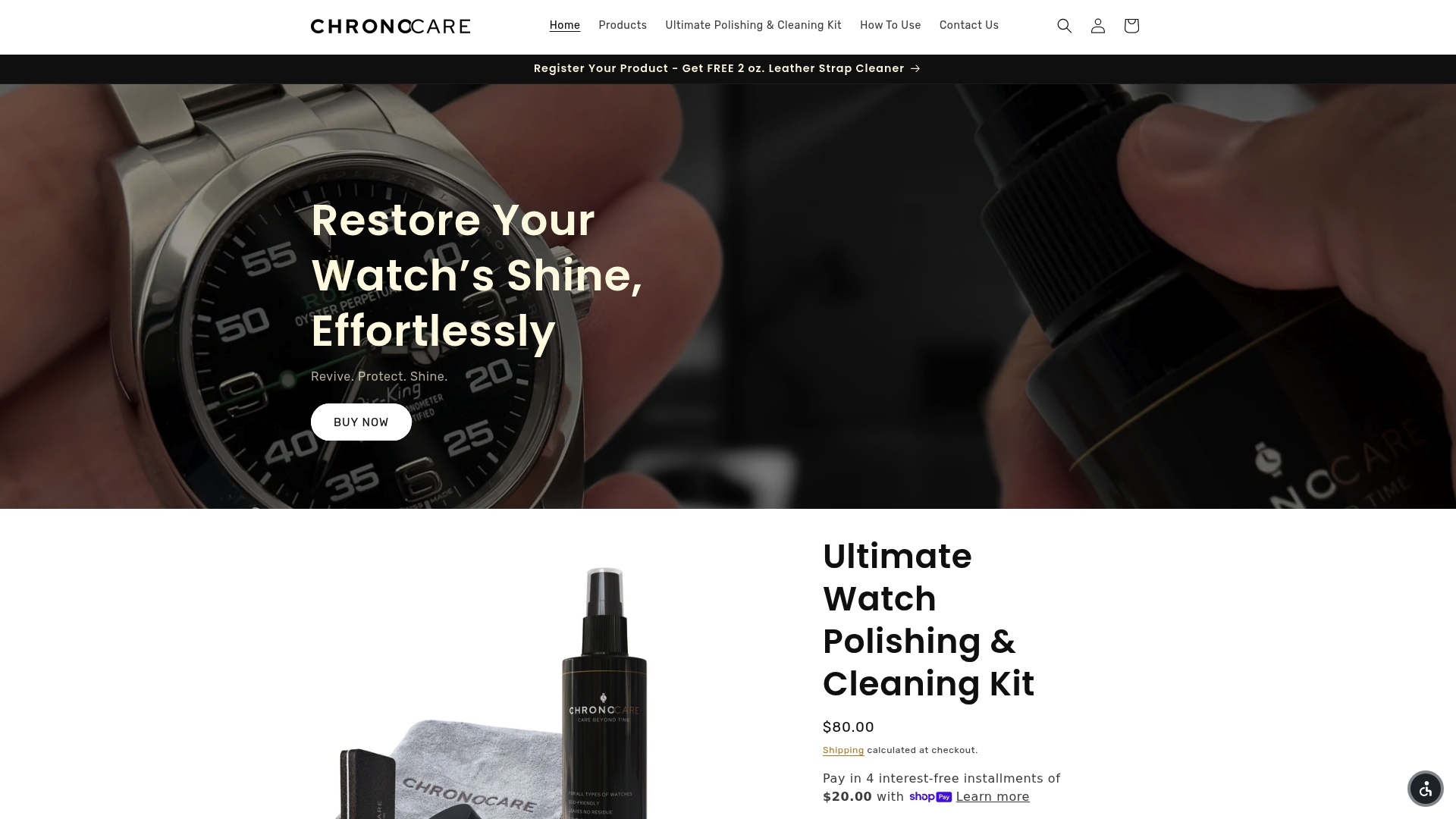
Once your strap is fully dry and any water marks are gone, the last step is restoring it to the condition it was in before the spill, and that’s where having the right product on hand saves you from improvising with whatever’s under the sink. The leather strap cleaner and conditioning products are formulated specifically for the thin, tightly stitched leather used on watch bands, not the thicker hides found in furniture or automotive care lines.
- Use a leather strap cleaner spray after the strap is completely dry to lift any residue left from the water or from handling.
- Follow with a light conditioning treatment to restore suppleness without overloading the leather.
- Always test on a hidden section first, and apply sparingly no matter how dry the strap feels.
For a full restoration pass, the Ultimate Watch Cleaning Kit covers both the strap and the case in one set, which is useful if the spill also left residue on the metal hardware. If your question involves a high-value or exotic strap, reach out to the support team before applying anything.
Sources
- How to remove water stains from leather? | Tiffany & Co. US
- Seiko service guidance (service bulletin)
- Effects of drying processes and fatliquoring on resiliency of leather (JALCA)
FAQ
Can you fix leather after it gets wet?
Yes, in most cases. Blotting the leather promptly, drying it slowly in a ventilated spot, and conditioning it once fully dry resolves the majority of water exposure without permanent damage.
What should I do if my leather watch strap gets wet?
Blot the strap with a clean absorbent cloth, remove it from the watch if you can do so safely, and let it air-dry at room temperature away from heat or direct sun. Wait until it’s completely dry before cleaning or conditioning it.
Can a leather strap be repaired?
Minor issues like water rings, mild stiffness, or loose stitching are usually repairable at home or by a strap specialist. Structural problems such as delamination, cracking at the buckle holes, or mold call for professional assessment rather than a DIY fix.
Is a leather belt ruined if it gets wet?
Not necessarily. A leather belt follows the same rescue principles as a watch strap: blot the moisture, dry it slowly away from heat, and condition it once dry to restore flexibility. Belts that develop cracking or a persistent musty smell after drying may need a professional look.