

How to Clean a Leather Watch Strap Without Ruining It
Remove the strap, then match the method to the leather: smooth or grained leather gets a barely damp microfiber cloth with one drop of pH-neutral soap, worked in gentle circles, while suede and nubuck get a dry brush or eraser and never touch water. Air-dry flat away from heat, then condition once the strap is bone dry. Longines backs this exact split between wet and dry cleaning methods, and ChronoCare’s kits are built around the same sequence. A quick caveat: delicate or heavily worn leather deserves a test patch before anything touches the visible surface.
- Smooth/grained leather: damp cloth, one drop of mild soap, air-dry
- Suede/nubuck: dry brush or eraser only, no soap or water
- Always: remove strap first, condition only after full drying
Key Takeaways
Cleaning a leather watch strap safely comes down to matching the method to the material, drying fully before conditioning, and testing every product on the underside first.
| Point | Details |
|---|---|
| Match method to material | Use damp cloth and mild soap for smooth leather; dry brush only for suede and nubuck. |
| Always test first | Apply any soap or conditioner to the underside before touching the visible strap. |
| Dry before conditioning | Never condition a damp strap; air-dry flat away from heat first. |
| Watch expected lifespan | Most leather straps last about 6 to 12 months depending on wear and climate. |
| Use purpose-built products | ChronoCare’s cleaning and conditioning kits match each step in this routine. |
Table of Contents
- What You Need Before You Clean a Leather Watch Band
- How to Clean a Smooth or Grained Leather Watch Strap
- Cleaning Suede and Nubuck Straps the Right Way
- Getting Rid of Sweat Stains and Odor
- Conditioning and Protecting the Strap After Cleaning
- Fixing Stains, Darkening, and Cracks Without Making It Worse
- How Often to Clean and Condition, and How Long a Strap Should Last
- How ChronoCare’s Kit Matches This Routine
- Raymond Jenkins on What Watch Owners Get Wrong About Leather Care
- Get the Right Tools for Ongoing Leather Strap Care
- Sources
What You Need Before You Clean a Leather Watch Band
Gather your supplies before you start so you’re not scrambling mid-clean with a half-dry strap in your hand. You don’t need much:
- Two microfiber cloths (one for cleaning, one for buffing)
- pH-neutral mild soap or saddle soap
- Soft toothbrush for stitching and holes
- Suede brush or suede eraser
- Small bowl of lukewarm water
- Baking soda for odor work
- Spring-bar tool (or your watch’s quick-release lever)
Before applying any soap or conditioner to the visible strap, test it on the underside first. A failed test shows up fast: noticeable darkening, a shiny or waxy film, or a texture change within a minute or two. If that happens, stop and rinse the spot immediately.
How to Clean a Smooth or Grained Leather Watch Strap
This is the process most owners need, since the majority of leather straps on the market use smooth or grained cowhide, calfskin, or similar finishes.
- Pop the strap off the watch case with your spring-bar tool. Working on a loose strap protects the case from moisture and lets you clean both sides properly.
- Dry-wipe the entire strap with a clean microfiber cloth to lift loose dust and surface grime.
- Dampen a second cloth, just barely, and add one drop of pH-neutral soap.
- Clean in small circular motions, paying extra attention to the underside, the buckle area, and the strap holes, where sweat and skin oils concentrate.
- Wipe the strap again with a cloth dampened in plain water to remove any soap residue.
- Pat dry with a fresh towel, then lay the strap flat on a dry surface, away from direct sun, vents, or radiators.
- Once it’s fully dry, and only then, apply conditioner.
Pro Tip: Use a soft, dry toothbrush to work along the stitching and inside the strap holes, where grime tends to hide. A few gentle strokes get into the seams without oversaturating the leather.
Resist the urge to soak the cloth. Over-wetting is the single fastest way to warp a strap or leave a permanent water ring, according to Helvetus, which recommends minimal moisture throughout the entire process.
Cleaning Suede and Nubuck Straps the Right Way
Suede and nubuck play by different rules entirely. These napped leathers absorb water instead of shedding it, and once the fibers mat down, they usually stay that way. Hodinkee is blunt about this: keep water away from suede and nubuck completely.
- Brush gently in one direction with a dedicated suede brush to lift the nap and loosen dried dirt.
- Use a suede eraser on stubborn marks, rubbing lightly rather than scrubbing.
- Skip soap, saddle soap, and any liquid cleaner. None of it belongs on these finishes.
- Let the strap air out between wears instead of trying to “deep clean” it.
Pro Tip: Brush suede straps weekly, even when they look clean. Regular brushing keeps the nap standing up and prevents the flattened, shiny patches that are hard to reverse.
If oils have soaked into the material or a water stain has already set in, home fixes usually make things worse. That’s the point to hand the strap to a professional or plan on replacing it.
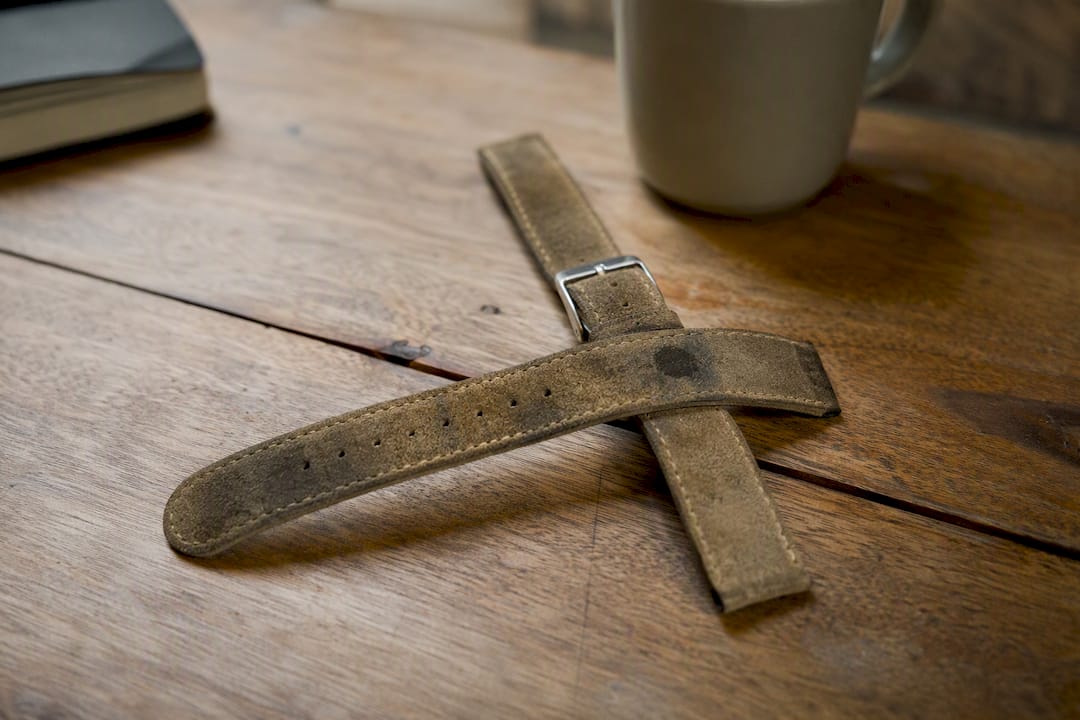
Getting Rid of Sweat Stains and Odor
A smelly strap almost never means the leather is beyond saving. It usually means sweat and oils have built up faster than your cleaning routine can keep pace with.
- Clean the strap thoroughly first, with extra attention to the underside where skin contact is constant. Skipping this step and jumping straight to deodorizing rarely works.
- Once the strap is completely dry, place it in a sealed container next to an open dish of baking soda and leave it overnight. The baking soda draws out odor molecules without ever touching the leather.
- Activated charcoal packets work as a substitute if you don’t have baking soda on hand.
- If the smell persists after a proper clean and an overnight odor treatment, the odor has likely penetrated deep into the leather fibers.
Manufacturer guidance puts typical leather-strap lifespan at about 6 to 12 months depending on wear frequency and climate. Persistent odor after correct cleaning is often a sign you’ve hit the end of that window, not a sign your cleaning routine failed.
For a deeper look at treating sweat damage specifically, see ChronoCare’s guide on removing sweat stains.
Conditioning and Protecting the Strap After Cleaning
Cleaning and conditioning are two separate jobs. Cleaning strips away grime; conditioning puts moisture and oils back into the leather. Doing them in reverse traps dirt under a layer of conditioner, according to Helvetus.
- Wait until the strap is completely dry before conditioning, not just dry to the touch.
- Choose an accessory-grade leather conditioner made for small goods, not furniture polish, car interior products, or anything with heavy oils and waxes.
- Apply a small amount to a cloth, work it in with circular motions, then buff off the excess.
- Test any new conditioner on the underside first. Some well-regarded leather conditioners darken lighter leathers or over-soften thin straps.
Pro Tip: Condition daily-wear straps every 2 to 3 months. Straps worn only occasionally need it far less often, sometimes just twice a year. For product-specific steps, ChronoCare’s guide to conditioning leather straps walks through application in more detail.
Fixing Stains, Darkening, and Cracks Without Making It Worse
Not every mark needs a full cleaning session, and not every mistake can be undone. Knowing which is which saves you from turning a small problem into a ruined strap.
- Fresh ink or liquid stains: blot immediately with a dry cloth. Never scrub, which pushes the stain deeper into the fibers.
- Old, set-in stains: these often need a professional’s attention rather than a home remedy.
- Darkening after conditioning: light darkening on light-colored leather is frequently permanent, which is exactly why the test patch matters before you condition the visible strap.
- Small surface cracks: sometimes soften with a light conditioning routine. Deep cracks that run through the grain mean it’s time to replace the strap, not repair it.
The three mistakes that ruin more straps than anything else: soaking the leather to “really get it clean,” using a hair dryer or radiator to speed up drying, and reaching for dish soap or olive oil because “it’s basically the same thing.” None of it is. Dish soap strips natural oils, and olive oil goes rancid inside the leather over time.
If cracking is a recurring issue on a particular strap, ChronoCare’s breakdown of why leather straps crack over time covers the underlying causes.
How Often to Clean and Condition, and How Long a Strap Should Last
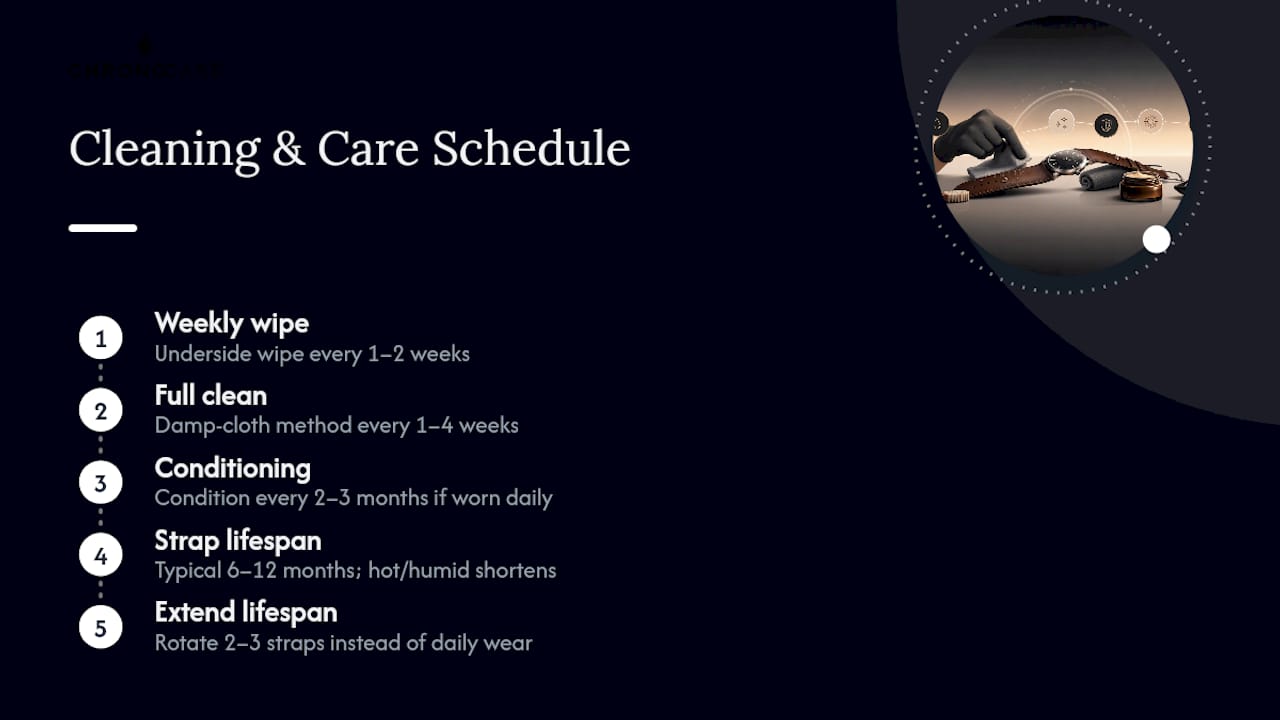
A quick underside wipe every one to two weeks keeps sweat and oils from building up on a daily-wear strap. A full clean, following the damp-cloth method above, works well every one to four weeks depending on how much you sweat and how humid your climate is.
Condition every 2 to 3 months for straps worn daily. Longines puts typical strap lifespan at roughly 6 to 12 months, and hot or humid conditions shorten that window considerably. Rotating between two or three straps, rather than wearing one every day, is one of the simplest ways to stretch that lifespan out.
How ChronoCare’s Kit Matches This Routine
Every step above maps directly onto a specific product, which is why ChronoCare built its kits around the clean, dry, condition sequence rather than a single all-purpose spray.
- A pH-neutral leather cleaner covers the damp-clean step for smooth and grained straps.
- A dedicated leather conditioner, formulated for accessories rather than furniture, handles the final step once the strap is fully dry.
- Microfiber cloths and application tools are sized for straps, not boots or bags.
The Ultimate Watch Polishing & Cleaning Kit bundles the cleaning and conditioning stages into one purchase for owners who’d rather not piece supplies together from three different stores. Author Raymond Jenkins put this routine together by cross-referencing manufacturer guidance with the material-specific rules that separate smooth leather from suede.
| What you need | ChronoCare product match |
|---|---|
| Damp-clean step | pH-neutral leather cleaner |
| Conditioning step | Accessory-grade leather conditioner |
| Application tools | Microfiber cloths, applicator pads |
Raymond Jenkins on What Watch Owners Get Wrong About Leather Care
Most of the damage I see traced back to leather straps isn’t from neglect. It’s from overcorrection. Someone notices a smell or a stain, panics, and reaches for whatever’s under the sink, olive oil, dish soap, a hair dryer set to high. Every one of those instincts makes sense in the moment and wrecks the leather within a week.
The advice that gets skipped most often isn’t the cleaning method. It’s the test patch. People will spend twenty minutes carefully wiping a strap in gentle circles and then slap an untested conditioner across the entire visible surface without checking the underside first. That’s backwards. The test patch takes thirty seconds and prevents the one mistake, unwanted darkening, that you genuinely cannot undo on light leather.
The other gap is treating suede like smooth leather with extra steps. It isn’t. It’s a different material with a different failure mode. Water doesn’t clean suede. It mats it. If you take one thing from this: match your method to your leather, test before you commit, and replace the strap once the smell survives a proper clean rather than fighting a losing battle.
— Raymond Jenkins
Get the Right Tools for Ongoing Leather Strap Care
Buying separate bottles of soap, conditioner, and cloths from three different aisles works, but it also means guessing at ratios and hoping the conditioner you grabbed wasn’t formulated for a leather couch. ChronoCare built its kits specifically for watch straps, so every product in the box is sized and formulated for this exact job.
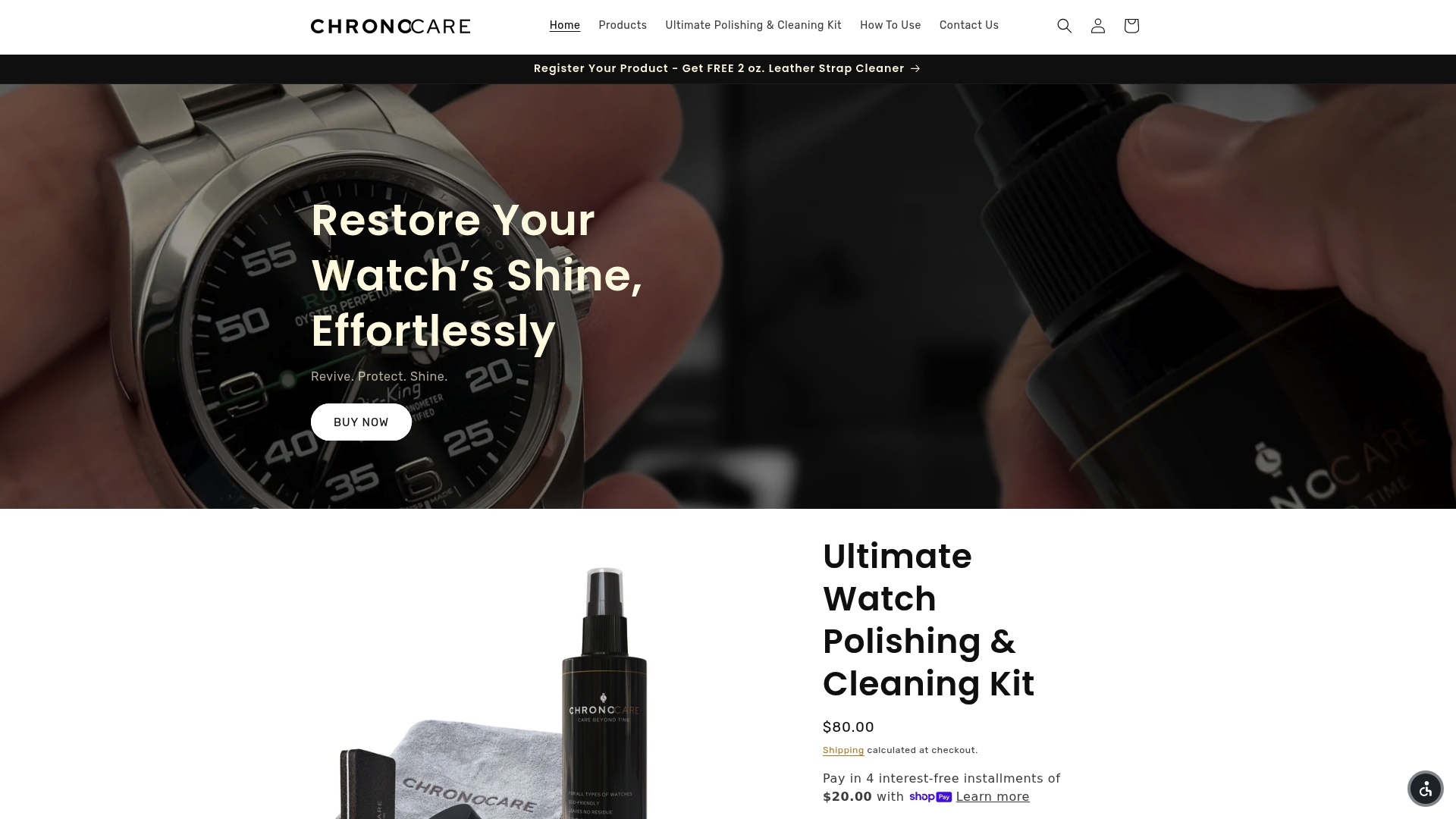
The Ultimate Watch Polishing & Cleaning Kit covers the full routine outlined above: cleaner, conditioner, and the cloths to apply both correctly. If you’re only looking to handle the cleaning stage for now, the Ultimate Watch Cleaning Kit is a lighter option built around the same pH-neutral formula. Either way, checking your current strap against the test-patch method above takes a minute, and picking the right kit for your leather type is the next step toward keeping it in shape for the long haul.
Sources
- Leather Watch Straps: care guide | LONGINES US
- How to Clean a Leather Watch Strap (Without Damaging It) | Helvetus®
- How To Clean And Care For Your Watch Straps | Hodinkee