

How to Remove Watch Strap Sweat Stains Effectively
If you wear a watch daily, you already know what sweat does to a strap over time. The white residue, the faint odor, the way the leather starts to stiffen. Learning to remove watch strap sweat stains before they become permanent is one of the most overlooked parts of watch ownership. It doesn’t matter if your strap is a $30 nylon band or a $200 calfskin leather. Sweat breaks down materials the same way. This guide covers the right tools, the right technique for each material, and the habits that keep straps looking new longer.
Table of Contents
- Key Takeaways
- What you actually need to remove watch strap sweat stains
- How to clean leather watch straps step by step
- Cleaning silicone, rubber, and nylon straps
- Common mistakes that make things worse
- Watch band hygiene tips to prevent buildup
- My honest take after years of watch strap care
- The right products make a real difference
- FAQ
Key Takeaways
| Point | Details |
|---|---|
| Material determines method | Leather, silicone, and nylon each require different cleaning tools and techniques to avoid damage. |
| Clean the underside first | Sweat accumulates on the inner surface of straps, making underside cleaning the most important step. |
| Condition leather after cleaning | Applying a conditioner post-clean prevents cracking and restores the strap’s natural suppleness. |
| Gentle and regular beats harsh and occasional | Frequent light cleaning preserves strap condition far better than aggressive scrubbing sessions. |
| Persistent odor signals replacement | If smell remains after multiple careful cleanings, bacterial contamination has likely set in. |
What you actually need to remove watch strap sweat stains
Before you touch the strap, get your supplies right. Using the wrong cleaner on the wrong material is how perfectly good straps get ruined. The good news is that most of what you need is already in your home.
Here is a summary of suitable tools and products by strap material:
| Strap material | Cleaning agents | Tools needed |
|---|---|---|
| Leather | Mild soap, diluted white vinegar, leather conditioner | Soft cloth, microfiber towel, cotton swabs |
| Silicone / Rubber | Mild dish soap, baking soda paste | Soft toothbrush, microfiber cloth |
| Nylon / Fabric | Mild laundry detergent or hand soap | Soft toothbrush, cold water rinse |
| Metal bracelet | Mild soap, warm water | Soft toothbrush, lint-free cloth |
For leather straps, a purpose-built solution like ChronoCare’s leather strap cleaner spray removes built-up sweat residue without stripping the natural oils from the leather. Generic household cleaners rarely achieve that balance.
A few non-negotiable rules apply across all materials. Never use bleach, acetone, or alcohol-based sprays directly on a strap. Avoid abrasive scrubbing pads. Do not soak leather under any circumstances. These aren’t overly cautious suggestions. They’re the difference between a clean strap and a damaged one.
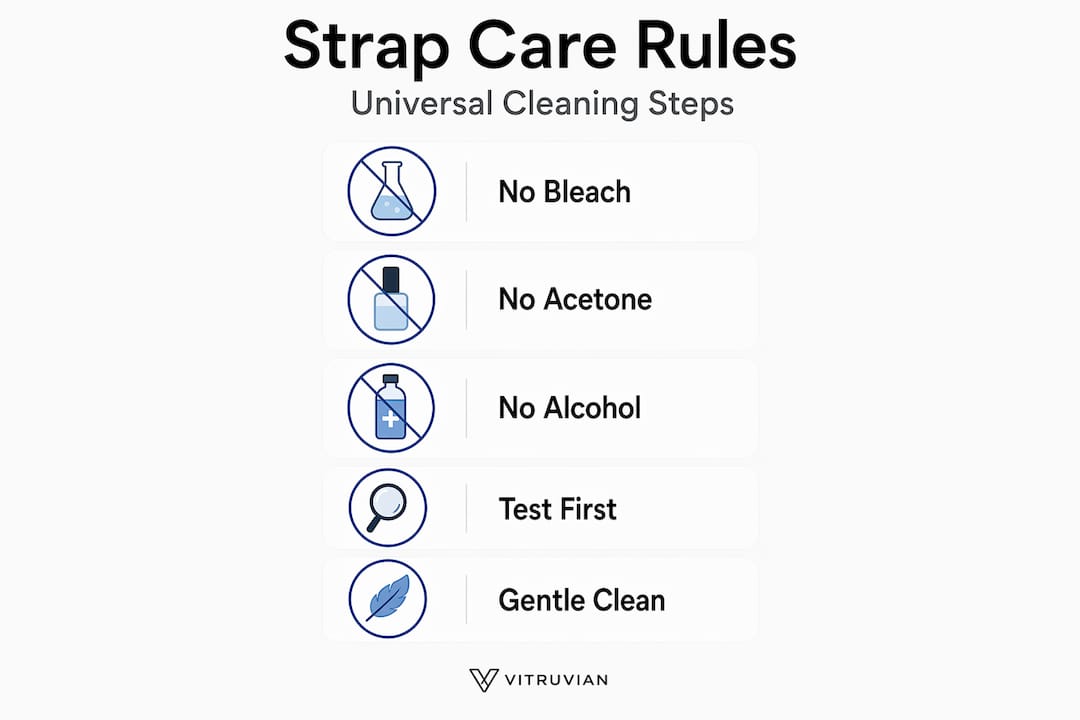
Pro Tip: Before applying any new cleaning solution to a leather strap, test it on a small inconspicuous section on the underside and wait five minutes. This confirms the product won’t lift color or cause surface damage before you commit to the full strap.
How to clean leather watch straps step by step
Leather requires the most care of any strap material. Sweat buildup breaks down leather fibers, causing dullness, cracking, and persistent odor if left untreated. Follow these steps exactly and your leather strap will come out clean and conditioned.
-
Remove the strap from the watch. Cleaning with the strap attached risks getting moisture into the case and movement. If your strap uses spring bars, a spring bar tool makes removal easy without scratching the lugs.
-
Brush away any loose debris. Use a dry soft-bristle toothbrush to gently loosen dried salt residue from the surface, especially along the edges and the buckle area.
-
Dampen a microfiber cloth with mild soapy water. Wring it out until it’s barely damp. Wipe both sides of the strap with light circular motions. Focus extra attention on the underside, where sweat and salts accumulate most and cause the most ingrained grime over time.
-
Treat stubborn white stains with diluted vinegar. Mix one part white vinegar with five parts water. Apply a small amount with a cotton swab directly onto the stained area. This spot treatment dissolves salt sweat residues without damaging the leather, provided you’ve tested the solution first and don’t overuse it.
-
Wipe off any cleaning residue with a clean damp cloth. You don’t want soap or vinegar sitting on leather as it dries. A final wipe with plain water removes any leftover cleaning agents.
-
Air dry at room temperature. Lay the strap flat on a microfiber towel away from direct sunlight and heat sources. Never use a hair dryer. Heat causes leather to shrink and crack. Give it at least two hours before the next step.
-
Apply leather conditioner. Once fully dry, work a small amount of conditioner into both sides of the strap using your fingertips or a soft cloth. This step is non-optional. Cleaning removes moisture from leather, and conditioning restores it.
Pro Tip: Cleaning the underside of your leather strap every two weeks, even when it looks clean on top, dramatically extends strap life. The underside absorbs nearly all the sweat your wrist produces, and the damage starts there long before it’s visible from the outside.
Cleaning silicone, rubber, and nylon straps
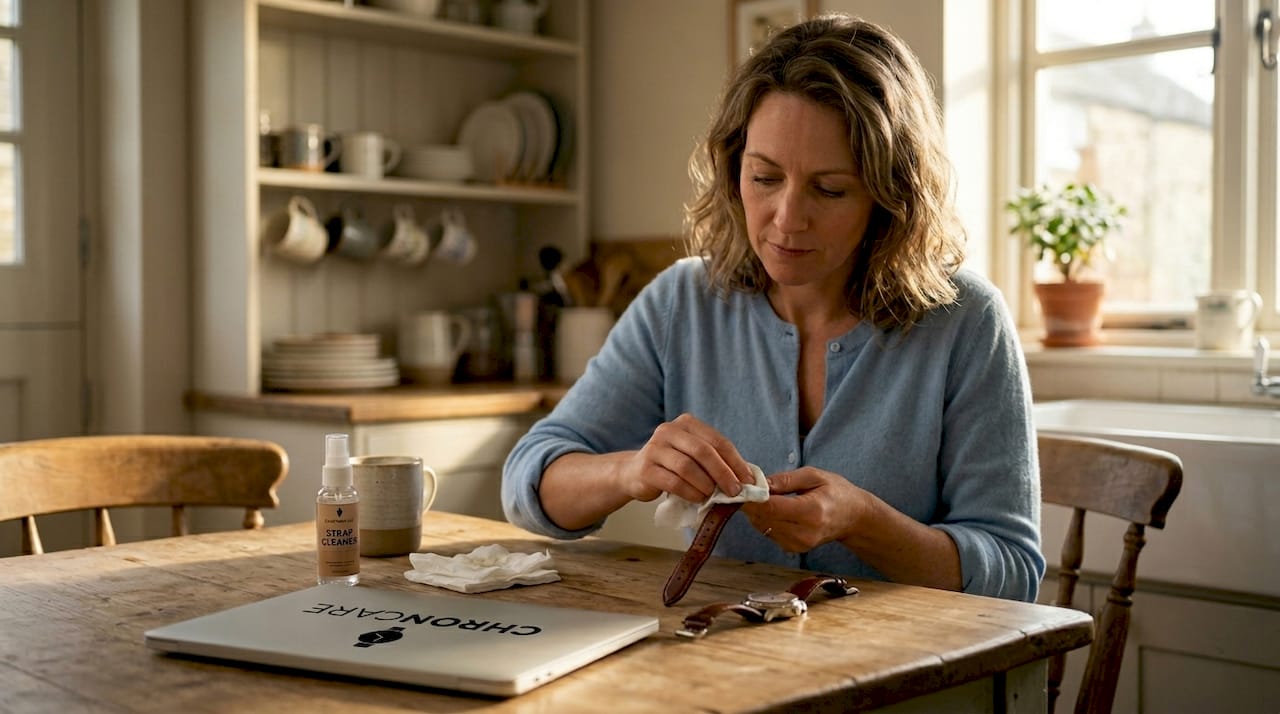
These materials are far more forgiving than leather. Most silicone, rubber, and nylon straps can tolerate water and gentle soap without issue. That said, there are still right and wrong ways to go about it.
Start by detaching the strap from the watch case. Apple’s official guidance recommends removing the band and using a nonabrasive, lint-free cloth for cleaning, which applies to any strap material. Keeping the watch attached while you scrub grooves and crevices puts unnecessary moisture near the crown and pushes debris toward the case back.
-
Rinse the strap under cool running water. This loosens surface-level sweat residue and makes the soap step more effective.
-
Apply a small drop of mild dish soap to a soft toothbrush. Work it gently into both sides of the strap, paying close attention to any textured grooves. A toothbrush gets into crevices that a cloth misses entirely, and those grooves are exactly where sweat residue and odor-causing bacteria hide.
-
For stubborn stains or odors, apply a baking soda paste. Mix baking soda with a small amount of water to form a thick paste. Apply it to the stained area, let it sit for five minutes, then scrub gently and rinse. Baking soda neutralizes odor at the source rather than masking it.
-
Rinse thoroughly. Soap residue left on silicone or rubber causes skin irritation and attracts dirt faster. Run the strap under cool water until the water runs completely clear.
-
Pat dry with a lint-free cloth and allow to air dry fully. Even materials that tolerate water can trap moisture at the buckle hardware or between layers of nylon weave. Full drying before reattaching prevents that trapped moisture from creating new odor problems.
For nylon straps, a few additional points matter:
- Avoid hot water, which can cause color fading on dyed fabrics
- Don’t wring or twist the strap aggressively during cleaning
- If washing a fabric NATO strap, running it under warm water with a toothbrush and mild soap works better than soaking it in a bowl, which just redistributes the grime
Common mistakes that make things worse
Even experienced watch wearers make cleaning mistakes that cause more damage than the sweat stains themselves. Knowing what not to do is just as useful as knowing the correct technique.
- Soaking leather straps. Water saturation warps leather, weakens stitching, and causes the material to stiffen permanently as it dries. Even a 30-second soak is too much.
- Skipping the underside. Most people clean only the visible top surface. The underside is where the actual problem lives, and ignoring it reduces cleaning effectiveness significantly. Think of it like washing only the top of your hands.
- Overusing vinegar on leather. Diluted vinegar works well as a targeted spot treatment, but excess acidic cleaners cause discoloration and surface damage to leather over time. Keep applications brief and infrequent.
- Drying with heat. Hairdryers, radiators, and direct sunlight accelerate cracking in leather and can warp rubber and silicone.
- Aggressive scrubbing. The instinct to scrub harder on a stubborn stain usually makes it worse. Multiple gentle passes over several minutes beat one forceful attempt every time.
Pro Tip: If you notice a strap developing a sour smell that returns within a day or two of cleaning, stop scrubbing and start shopping. That cycle of odor coming back quickly means bacteria have worked their way into the material itself.
When persistent odor remains after multiple cleaning cycles, bacterial contamination has likely penetrated the strap fibers deeply enough that no surface cleaning will resolve it. Replacement becomes the practical solution at that point.
Watch band hygiene tips to prevent buildup
The best way to remove watch strap sweat stains is to reduce how much sweat soaks in to begin with. These watch band hygiene tips take only seconds each day but add months to strap life.
- Wipe your strap after every workout or prolonged sweating. A quick pass with a damp cloth right after exercise removes sweat before it dries into salt crystals. Keeping bands clean and dry after workouts prevents the cumulative buildup of sweat, lotion, and sunscreen that degrades materials over time.
- Remove your watch when applying sunscreen, lotion, or perfume. These products accelerate leather breakdown and leave residue on silicone and nylon that traps dirt.
- Rotate between two straps if you can. Giving a strap 24 hours off lets any absorbed moisture fully evaporate, which slows material degradation noticeably.
- Apply a protective leather conditioner monthly. You can find detailed guidance on material-specific products and application in ChronoCare’s strap material comparison guide, which breaks down care by strap type.
- Store straps away from moisture and direct light. A simple watch box or even a small zip-lock bag keeps a spare strap in better condition than leaving it loose in a drawer.
- Keep your wrist clean. This sounds obvious, but many people forget that the condition of the skin under the watch directly affects how quickly the strap absorbs grime. Washing your wrist before putting your watch on takes ten seconds.
My honest take after years of watch strap care
I’ve cleaned hundreds of straps over the years, and the lesson that changed everything for me was learning to treat the underside as the priority surface, not the afterthought. The moment I flipped a leather strap over and saw the difference between a regularly maintained inner surface and a neglected one was genuinely surprising. The outside looked fine. The inside was a different story.
I’ve also learned to be realistic about when to stop cleaning and start replacing. There’s a temptation to keep trying to save an expensive leather strap through one more round of conditioner or a stronger cleaning solution. Regular gentle cleanings genuinely outperform occasional aggressive treatments, but even the best care routine has limits. If the leather has cracked through, or the odor comes back within 48 hours of a thorough cleaning, put your energy into finding a good replacement strap instead.
What I’ve found genuinely useful is having a dedicated leather cleaning spray rather than improvising with household products. The formulation matters. A spray designed specifically for watch straps conditions and cleans in the right balance for the thin, flexible leather that straps use, which behaves differently than furniture leather or shoe leather. It’s one of those areas where the right tool saves time and produces a better result than the clever workaround. ChronoCare’s approach to formulating products specifically for watch care reflects exactly that kind of attention to material behavior.
— Eduardo
The right products make a real difference
Knowing the technique is only half the equation. The products you use determine whether your strap comes out clean and conditioned or dried out and dull. ChronoCare has built a full lineup of watch cleaning and restoration kits formulated specifically for the materials found in luxury and everyday watch straps. That specificity matters in a way that general-purpose cleaners simply can’t match.
The Ultimate Watch Cleaning Kit covers leather and non-leather straps with everything needed for a complete clean: cleaning solution, conditioning treatment, and the right applicator cloths to keep the process gentle. For collectors managing multiple straps across different materials, the Watch Polishing and Cleaning Kit adds polishing capability for metal cases and bracelets alongside strap care. Both kits come with care instructions and are formulated in the US. If you’re serious about extending the life of your straps, starting with the right kit is the most direct path to doing it correctly.
FAQ
How do I remove sweat stains from a leather watch strap?
Use a barely damp cloth with mild soap to wipe both sides of the strap, focusing on the underside where sweat concentrates most. For stubborn white salt stains, apply diluted white vinegar (one part vinegar to five parts water) with a cotton swab, then air dry and condition the leather afterward.
Can I soak my watch strap to clean it?
You should never soak a leather strap. Silicone and nylon straps can handle water, but even those benefit more from targeted scrubbing with a toothbrush than from soaking, which can push debris deeper into textured surfaces or weave.
How often should I clean my watch strap?
Wipe the strap with a damp cloth after workouts or heavy sweating. Do a thorough cleaning with soap and conditioning every two to four weeks, depending on how much you wear the watch and how actively.
Why does my watch strap still smell after cleaning?
If odor persists after two or three careful cleaning and conditioning cycles, bacterial contamination has likely penetrated the strap material. At that point, replacement is the practical solution, particularly for leather straps that cannot be fully saturated and disinfected.
Is vinegar safe to use on watch straps?
Diluted white vinegar is safe as a spot treatment on leather when used sparingly and rinsed off promptly. However, overuse of acidic cleaners damages leather over time, so reserve vinegar for stubborn salt stains only and always test on an inconspicuous area first.