

How to Clean a Rubber Watch Strap the Right Way
Cleaning a rubber watch strap correctly takes about five minutes and requires nothing more than mild dish soap, warm water, and a soft-bristled toothbrush. These three tools handle the vast majority of dirt, sweat, and bacteria that accumulate on daily-wear straps. Skipping this routine leads to odor, discoloration, and material degradation that shortens the life of even a premium strap. Whether you wear a Garmin, an Apple Watch, or a Rolex Oysterflex, the same core method applies. The importance of regular cleaning extends beyond appearance. It directly protects the material and your skin.
What tools do you need to clean a rubber watch strap safely?
The right tools make the difference between a clean strap and a damaged one. You do not need specialty products for a standard cleaning session. What you need is simple, affordable, and likely already in your home.
The core toolkit:
- Soft-bristled toothbrush or a dedicated watch brush. Stiff bristles scratch the surface and create micro-abrasions that trap more dirt over time. A child’s toothbrush or a soft detailing brush works perfectly.
- Mild dish soap or unscented hand soap. Dawn, Seventh Generation, or any fragrance-free dish soap cuts through skin oils without attacking the rubber’s polymer structure.
- A small bowl of warm water. Warm water loosens dirt more effectively than cold. Hot water can warp certain rubber compounds, so keep it comfortable to the touch.
- A microfiber cloth or clean cotton towel. These absorb moisture without leaving lint or scratching the strap surface.
What to avoid entirely:
- Bleach, acetone, and high-alcohol sanitizers. Alcohol-based cleaners dehydrate the rubber, causing permanent loss of elasticity over repeated use.
- Vinegar. FKM rubber, used in many premium straps from brands like Rolex and Omega, resists most chemicals. However, vinegar causes gradual softening of its polymer matrix and should be avoided despite being a popular home remedy.
- Abrasive sponges or steel wool. These leave permanent surface scratches.
Pro Tip: If you are unsure whether a cleaning product is safe for your specific strap, apply a tiny amount to the underside of the strap near the buckle end and wait 10 minutes before proceeding.
How to clean your rubber watch strap step by step
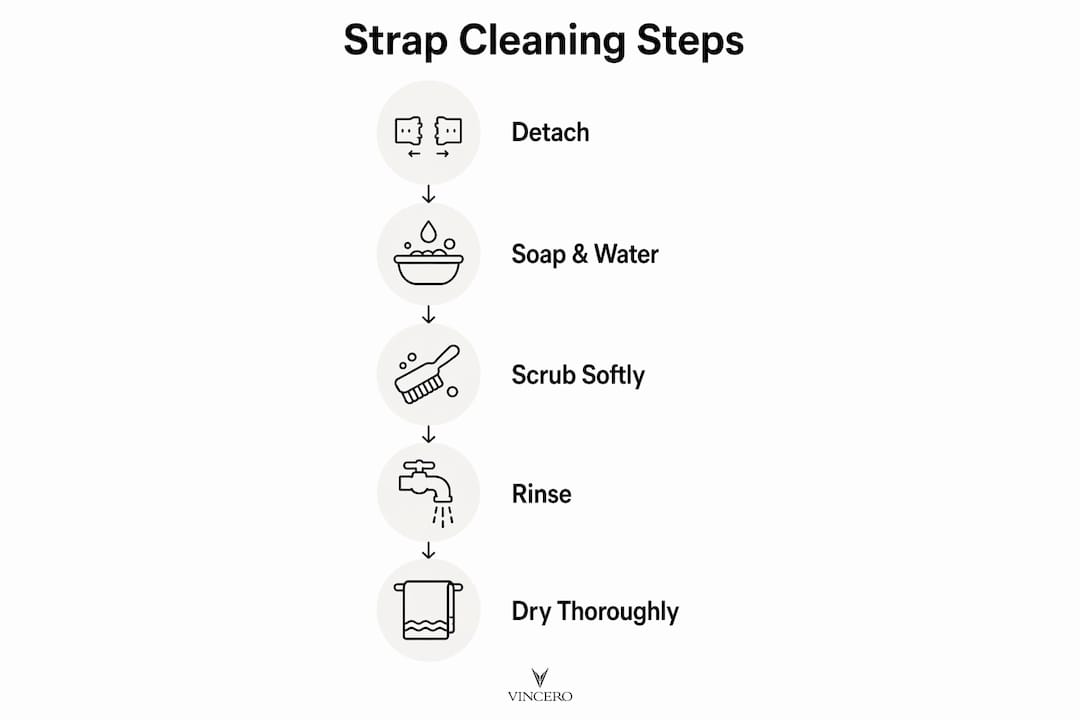
Hand cleaning with soap and a brush is more effective and safer than any machine-based method for rubber straps. Follow this sequence every time for consistent results.
- Remove the strap from the watch case. Cleaning while attached risks soapy water entering the watch seals and damaging the movement. Use a spring bar tool or your fingernail to detach the strap before you begin.
- Rinse under warm running water. Hold the strap under the tap for 20 to 30 seconds. This removes loose surface dirt and makes the scrubbing step more effective.
- Apply a small drop of mild soap to your brush. Work the brush in small circular motions across both sides of the strap, paying extra attention to the holes, buckle area, and the inner surface that contacts your skin. This inner surface collects the most bacteria.
- Rinse thoroughly. Soap residue left on rubber acts as a magnet for new dirt and creates a tacky surface that attracts grime. Rinse until the water runs completely clear and the strap feels smooth, not slippery.
- Pat dry with a microfiber cloth, then air dry completely. Do not reattach the strap to your watch until it is fully dry. Trapped moisture between the strap and case back accelerates bacterial growth and can affect water resistance seals.
Never use a hairdryer, radiator, or direct sunlight to speed up drying. Heat degrades rubber compounds and can cause warping or cracking that is impossible to reverse.
Pro Tip: Lay the strap flat on a clean microfiber cloth in a well-ventilated area for 20 to 30 minutes before reattaching. This guarantees complete drying, including the buckle hardware.
How to handle stains, discoloration, and odor
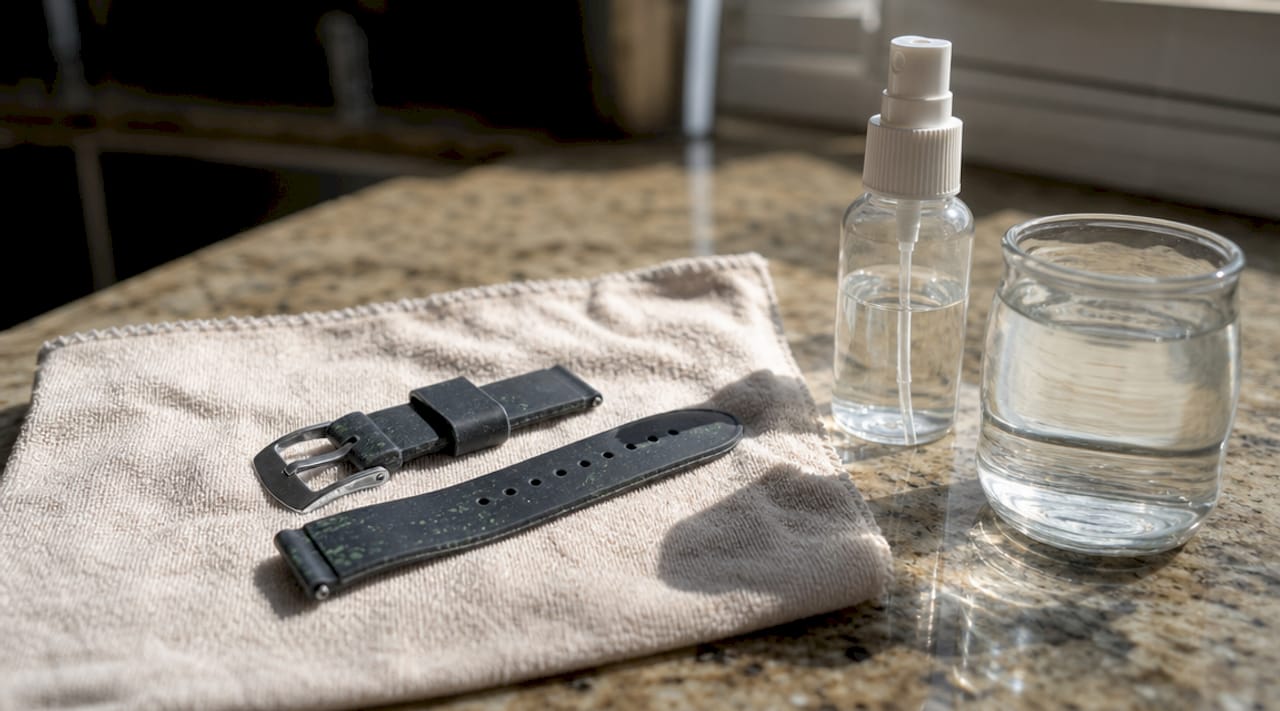
Standard soap and water handles everyday grime. Stubborn stains, yellowing, and persistent odor require targeted approaches. Each problem has a specific solution, and using the wrong one causes more damage than the original issue.
Yellowing on light-colored straps. A baking soda and water paste applied for five minutes can lift yellowing from white or light silicone straps. Apply with a soft brush, let it sit, then rinse thoroughly. Use this method cautiously on fluoroelastomer straps unless the manufacturer confirms compatibility.
Surface stains and scuffs. A melamine foam eraser (sold under the Mr. Clean Magic Eraser brand) removes surface stains without harsh chemicals. Use it dry or barely damp, and apply light pressure only. Aggressive scrubbing with a magic eraser removes the surface finish.
Persistent odor. Odor on rubber straps comes from bacteria feeding on sweat and dead skin cells. Cleaning just the strap is half the solution. Cleaning the skin contact area on your wrist prevents the smell from returning quickly. Wash your wrist thoroughly before reattaching a freshly cleaned strap.
Spot treatment for tough stains. Isopropyl alcohol at 70% concentration can treat isolated stains as a last resort. Apply with a cotton swab to the stain only, not across the entire strap. Rinse immediately after. Do not use this method repeatedly, as it will dry out the rubber over time.
| Problem | Recommended solution | What to avoid |
|---|---|---|
| Yellowing | Baking soda paste, 5-minute contact | Bleach, acetone |
| Surface scuffs | Magic eraser, light pressure | Abrasive pads |
| Persistent odor | Clean strap and wrist together | Masking with fragrance sprays |
| Tough stains | 70% isopropyl, spot treatment only | Full-strap alcohol wipe |
Pro Tip: White and light-colored rubber straps show discoloration faster than dark ones. Cleaning them every five to six days instead of weekly keeps yellowing from building up.
How often should you clean and maintain your rubber watch strap?
Frequency depends on how you use your watch. A strap worn during office work needs less attention than one worn through daily gym sessions or outdoor activities.
The recommended cleaning routine for daily-wear straps is once per week, or after every heavy exercise session. Sweat accelerates bacterial buildup, and letting it sit for days creates odor and surface degradation that becomes harder to reverse. For watches worn only occasionally, a thorough cleaning before storage and again before wearing is sufficient.
Over-cleaning is a real risk that most guides ignore. Scrubbing a rubber strap daily with soap strips its surface over time, especially if you use anything stronger than mild dish soap. The goal is consistent, gentle maintenance. Not aggressive, frequent treatment.
Between full cleanings, these habits reduce buildup:
- Wipe the strap with a damp microfiber cloth after workouts or sweaty days.
- Remove the watch before applying sunscreen, insect repellent, or perfume. These products degrade rubber compounds faster than sweat.
- Store the watch on a watch cushion or in a case rather than leaving it face-down on a hard surface, which stresses the strap.
Rotating between two straps also extends the life of each one. A strap that gets a day of rest between wears dries completely and experiences less cumulative stress. For guidance on a broader watch care routine, including case and crystal maintenance, the principles are the same: consistency beats intensity.
Common mistakes to avoid when cleaning rubber watch straps
Most strap damage comes not from neglect but from well-intentioned cleaning done incorrectly. These are the errors that cause irreversible harm.
- Using harsh chemicals. Bleach, acetone, and high-alcohol sanitizers cause micro-cracking and structural weakening of the polymer matrix. The damage is cumulative and often invisible until the strap snaps or cracks visibly.
- Scrubbing with stiff brushes or abrasive pads. Hard bristles create surface scratches that trap dirt and bacteria more effectively than a smooth strap ever would. Always use a brush rated for soft surfaces.
- Cleaning the strap while it is still attached. Water and soap entering the case back area can compromise seals on luxury watches. This is especially critical for watches with exhibition case backs or older gaskets.
- Drying with direct heat. Clouding on silicone straps often results from microscopic surface damage caused by excessive heat, and this damage is irreversible. The same principle applies to rubber. Air drying is the only safe method.
- Skipping the final rinse. Soap residue left on the strap attracts new grime and creates a tacky texture. Rinsing until the water runs clear is not optional. It is the step that determines whether the cleaning actually worked.
If your strap feels sticky after cleaning, you did not rinse it long enough. Run it under warm water for another 30 to 60 seconds and check again.
Understanding why straps crack and degrade over time connects directly to these habits. Poor cleaning practices accelerate the timeline significantly. ChronoCare’s guide on strap cracking causes explains the material science behind it in plain terms.
Key takeaways
Cleaning a rubber watch strap correctly requires warm water, mild dish soap, a soft brush, and thorough rinsing, performed weekly for daily-wear straps to prevent odor and material degradation.
| Point | Details |
|---|---|
| Detach before cleaning | Remove the strap from the watch case to protect seals and the movement. |
| Use mild soap only | Dish soap like Dawn is safe; bleach, acetone, and vinegar degrade rubber permanently. |
| Rinse completely | Soap residue left on the strap attracts dirt and creates a tacky surface. |
| Clean weekly | Daily-wear straps need cleaning once per week or after every heavy sweat session. |
| Target stains specifically | Use baking soda paste for yellowing and a magic eraser for surface scuffs. |
What I have learned from years of rubber strap care
I have cleaned hundreds of rubber and silicone straps over the years, and the single most common mistake I see is people reaching for the strongest cleaner they own. The logic makes sense. Stronger should mean cleaner. In practice, it means a degraded strap within six months.
My go-to method has not changed in years: warm water, a drop of Dawn, and a soft toothbrush. That combination handles 95% of what accumulates on a daily-wear strap. The other 5%, which is yellowing and stubborn stains, gets a baking soda paste or a careful pass with a magic eraser.
The habit I recommend most strongly is wiping the strap down with a damp cloth after every workout. It takes 10 seconds and cuts your deep-cleaning frequency in half. Most odor problems I have seen come from people who clean the strap but never clean their wrist before reattaching it. Bacteria transfer back immediately.
One thing I always do before trying any new cleaning product on a strap: test it on the underside near the buckle end. If the material reacts, you have not ruined the visible surface. This is especially worth doing with any strap made from FKM rubber, where the wrong product causes softening that is not visible until the strap loses its shape.
Rotating between two straps is the most underrated longevity tip in watch care. A strap that gets a rest day dries fully, recovers its shape, and lasts noticeably longer than one worn every single day.
— Raymond Jenkins
Keep your strap in top condition with the right tools
The cleaning methods in this guide work with tools you already own. But if you want to take your rubber watch strap maintenance to the next level, a purpose-built kit removes the guesswork entirely.
ChronoCare’s watch cleaning kit includes everything you need for a complete cleaning session: a precision brush, microfiber cloths, and a cleaning solution formulated specifically for watch materials. For collectors who also maintain the case and bracelet, the polishing and cleaning kit covers the full watch in one package. Both kits are formulated in the US and designed for the demands of luxury timepiece care.
FAQ
How do I clean a rubber watch strap at home?
Remove the strap from the watch, scrub it with a soft toothbrush and mild dish soap in warm water, rinse thoroughly until the water runs clear, then air dry completely before reattaching.
What is the best cleaner for a rubber watch strap?
Mild dish soap such as Dawn or a fragrance-free hand soap is the best cleaner for rubber watch straps. Avoid bleach, acetone, vinegar, and high-alcohol sanitizers, as these cause permanent material damage.
How often should you clean a rubber watch strap?
Clean a daily-wear rubber strap once per week, or after every heavy exercise session. Sweat accelerates bacterial buildup and odor, so frequency should match your activity level.
How do you remove odor from a rubber watch strap?
Odor comes from bacteria feeding on sweat and dead skin. Clean both the strap and the skin contact area on your wrist. Cleaning the strap alone will not prevent the smell from returning quickly.
Can you sanitize a rubber watch band without damaging it?
Yes. A spot treatment with 70% isopropyl alcohol applied with a cotton swab works for sanitizing, but rinse immediately after and limit this to occasional use. Regular sanitizing with alcohol will dry out and degrade the rubber over time.