

How to Clean a NATO Watch Strap Without Ruining It
The safest way to clean a NATO strap is a quick hand wash: mild dish soap, cool water, a soft toothbrush, a thorough rinse, and air-drying away from heat. Here are three things you can do right now:
- Remove the strap from your watch, or at minimum slide the hardware to a protected position before scrubbing.
- Mix a few drops of mild dish soap into a bowl of cool water and let the strap soak for several minutes.
- After rinsing, press it between a towel to pull out excess water, then lay it flat in the shade.
For heavier grime or set-in stains, a machine wash in a delicates bag or an Oxi-type powder soak gives you more cleaning power without risking the weave.
Key Takeaways
Hand washing with mild soap and cool water is the safest, most reliable method to clean a NATO strap without damaging the weave, dye, or hardware.
| Point | Details |
|---|---|
| Hand wash first | Use mild soap, cool water, and a soft toothbrush; rinse thoroughly and towel-compress. |
| Avoid all heat | No dryer, dishwasher, hairdryer, or hot water — heat shrinks and warps nylon. |
| Patch-test strong cleaners | Test vinegar or Oxi powder on a hidden section before a full soak on colored straps. |
| Protect hardware | Remove the strap or wrap metal parts before cleaning to prevent scratches and corrosion. |
| ChronoCare kit | The ChronoCare Ultimate Watch Cleaning Kit offers purpose-built tools for collectors and frequent cleaners. |
Table of Contents
- How to clean a NATO watch strap by hand (the go-to method)
- Can you machine-wash a NATO strap?
- Deep-clean and stain removal: soak recipes that work
- Safe drying methods and what you should never do
- How to fix frayed edges and care for metal hardware
- How often should you clean a NATO strap?
- Tools and cleaners worth having on hand
- What most cleaning guides get wrong about NATO straps
- The ChronoCare kit for collectors who want it done right
- Sources
How to clean a NATO watch strap by hand (the go-to method)
Hand washing is the recommended approach for routine cleaning of a nylon NATO strap. It gives you control over pressure, temperature, and soap concentration, which matters when you’re trying to preserve dye and weave integrity. Hodinkee recommends this method for everyday grime, sweat, and light odor, and it’s the method that carries the least risk of damage.
- Remove the strap. Pop the spring bars and set the watch head aside. If you can’t remove the strap, slide the buckle and keeper away from the area you’ll scrub.
- Brush off loose grit. A dry soft toothbrush or a lint-free cloth removes surface dust and debris before water sets it deeper into the weave.
- Prepare your soak. Fill a small bowl with cool or lukewarm water, never hot. Add two or three drops of mild dish soap.
- Soak for five minutes. Submerge the strap and let the soap penetrate. Nylon soaks up sweat, sunscreen, and water-soluble residues, so the soak does real work before you even start scrubbing.
- Scrub gently. Use a soft toothbrush in short strokes along the weave. Pay attention to the underside and the area around buckle holes, where grime concentrates.
- Rinse thoroughly. Run cool water through the strap until no soap remains. Soap residue left in the weave can stiffen the strap and irritate skin.
- Towel-compress. Roll the strap inside a clean towel and press firmly. This pulls out water faster than wringing and helps the strap hold its shape.
- Air-dry in the shade. Lay it flat or hang it away from direct sun and heat sources.
Avoid hot water, dishwashers, and hairdryers at every step. Heat is the primary threat to nylon: it can shrink the weave, warp the strap, and in extreme cases partially melt the fibers.
Pro Tip: Before scrubbing, slide any metal hardware into a small cloth pouch or wrap it in a piece of microfiber. This prevents the buckle from scratching the strap or banging against a hard bowl during cleaning.
Can you machine-wash a NATO strap?
Yes, with the right prep. Nixon documents two safe approaches for nylon straps: a cold machine wash inside a delicates bag, or a hand-soak with soft brushing. Machine washing makes sense when you have several dirty straps to clean at once, or when the strap is heavily soiled from outdoor use and hand scrubbing isn’t cutting through.
Skip the machine if the strap has vintage hardware, delicate dyes, or any sign of fraying at the edges. The agitation can worsen frays and stress corroded metal parts.
Prep before the cycle:
- Remove the strap from the watch entirely. Spring bars can catch in the drum.
- Place the strap inside a mesh delicates bag or zip it inside a pillowcase. Condor Straps recommends this step to reduce banging and tangling during the cycle.
- Use a small amount of gentle detergent. No bleach, no fabric softener.
Machine settings: cold water only, delicate or gentle cycle. Remove the strap immediately when the cycle ends and air-dry it flat. Never put a nylon strap in the dryer, even on a low setting. Hot or warm cycles are off-limits unless the strap’s manufacturer explicitly states otherwise.
Deep-clean and stain removal: soak recipes that work
Stubborn stains and persistent odors call for a longer soak. Three recipes cover most situations:
Mild soap soak works for general grime and weekly maintenance. Two to three drops of dish soap in cool water, five to ten minutes, then scrub and rinse. Low risk to color, suitable for any strap.
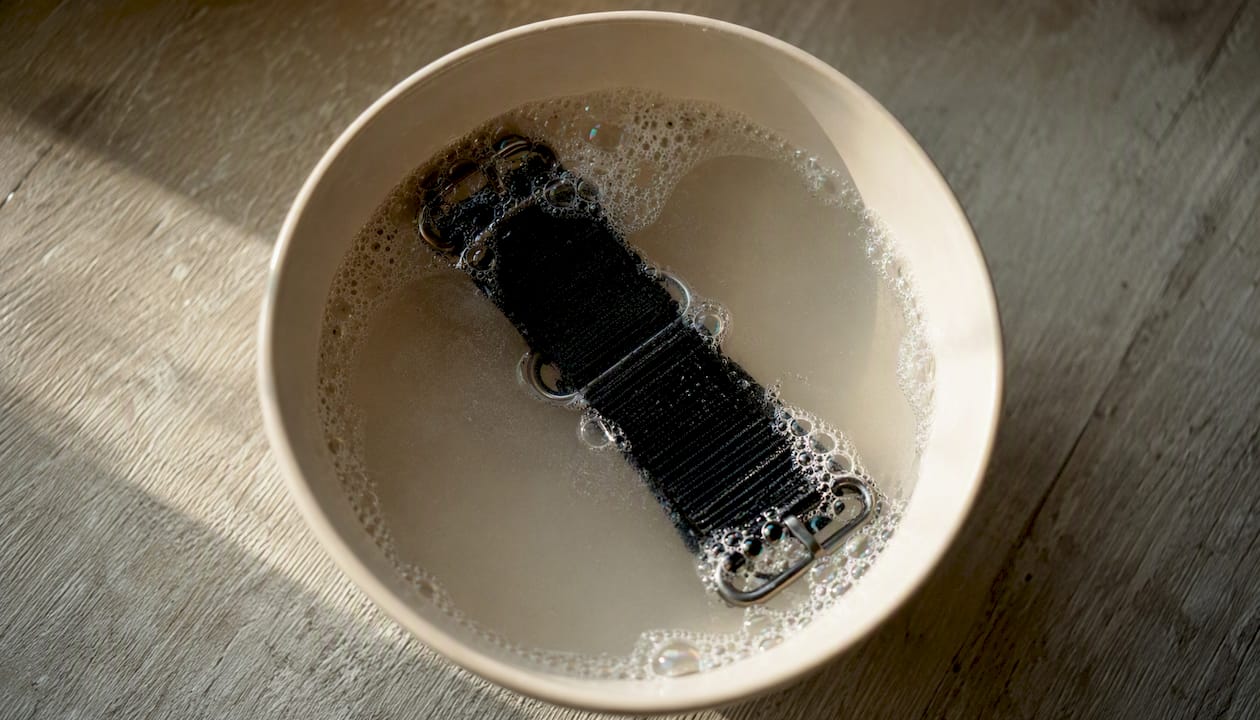
Oxi-type powder soak is the right call for set-in stains, mud, or old sweat marks. Dissolve a small amount of an oxygen-based cleaner (like OxiClean) in cool water per the product’s directions, soak for 15–30 minutes, then scrub lightly and rinse well. Oxygen-based cleaners lift stains without heat or harsh solvents, which protects the fiber structure. Avoid soaking longer than recommended; extended exposure can affect dye on brightly colored straps.
Diluted white vinegar rinse targets odors specifically. Mix one part white vinegar with three parts cool water and soak for ten minutes. BluShark notes that vinegar can neutralize odors effectively but may slightly affect dyed straps, so always patch-test on a hidden section first and rinse thoroughly afterward.
Substances to avoid in any soak: bleach, undiluted isopropyl alcohol, acetone, and strong household solvents. These strip dye, weaken nylon fibers, and can corrode metal hardware.
| Soak type | Best for | Color risk | Soak time |
|---|---|---|---|
| Mild soap | Everyday grime, sweat | Low | 5 minutes |
| Oxi-style powder | Set-in stains, mud | Low to moderate | 15–30 min |
| Diluted vinegar | Odor removal | Moderate (patch-test first) | several minutes |
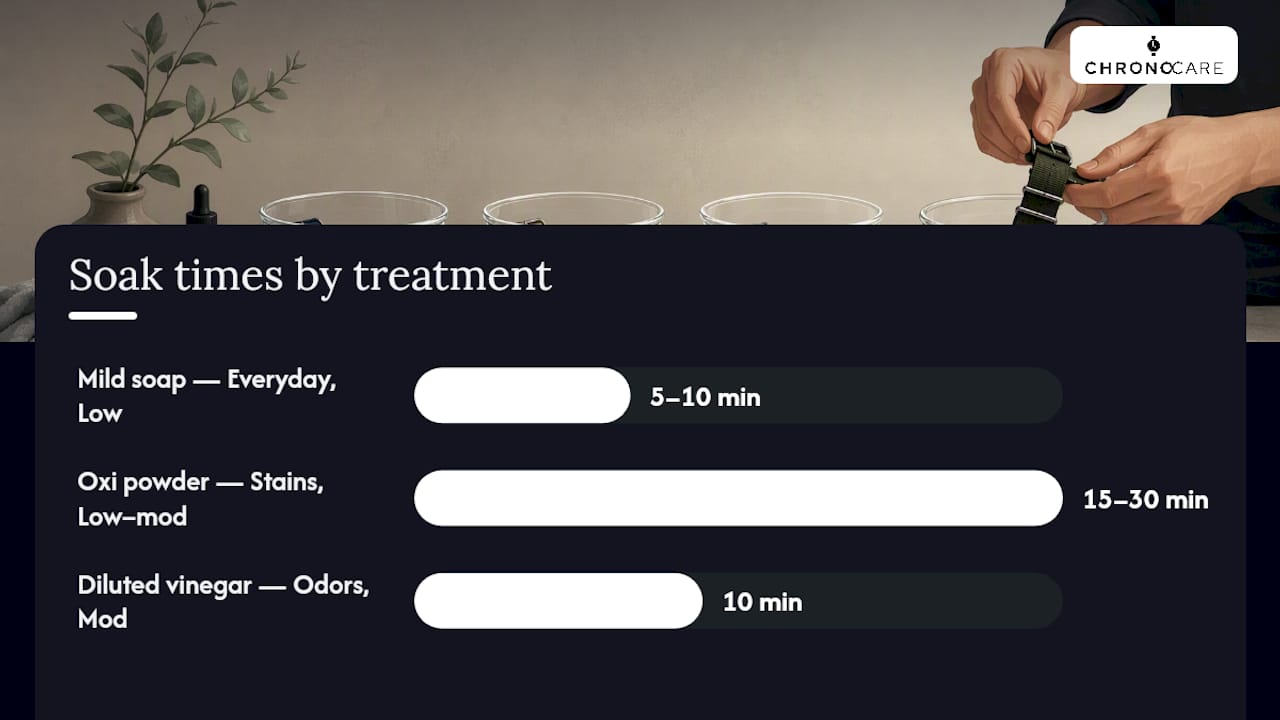
After any soak, rinse until the water runs clear, towel-compress, and air-dry flat.
Pro Tip: Run a patch-test on the inside of the strap near a buckle hole before using vinegar or Oxi powder on a colored or vintage NATO. Leave it for five minutes, rinse, and check for color change before committing to a full soak.
Safe drying methods and what you should never do
Drying is where most NATO straps get damaged. The steps are simple: towel-compress first, then lay the strap flat or hang it in a shaded spot with airflow, and wait until it’s fully dry before reattaching it to the watch. Bliss Tulle confirms that cold or lukewarm water and air-drying are safe, and explicitly warns against hot water and dryers.
What to avoid and why:
- Clothes dryer: Even a low heat setting can shrink nylon and warp the weave permanently.
- Dishwasher: Combines high heat, harsh detergent, and pressurized water. All three damage nylon.
- Hairdryer: Concentrated heat melts surface fibers and stiffens the strap.
- Direct sunlight: UV exposure fades dye and weakens the weave over time.
- Oven or open flame: Obvious, but worth stating. Nylon melts.
| Drying method | Estimated time | Risk level | Best for |
|---|---|---|---|
| Towel-compress then air-flat | 2–4 hours | Low | All straps, all situations |
| Hang in shaded airflow | 3–5 hours | Low | Humid days, thicker straps |
| Direct sun | 1–2 hours | Moderate (fading, stiffness) | Only if no other option |
Laying the strap flat rather than hanging it prevents the wet nylon from stretching under its own weight.
How to fix frayed edges and care for metal hardware
Addressing frays
Frays usually appear around buckle holes and cut edges. Catch them early and they’re a five-minute fix. Let them go and the strap unravels from the inside out.
- Trim any loose threads with small scissors, cutting as close to the weave as possible.
- After the strap is clean and fully dry, hold the frayed edge near (not in) a lighter flame for one to two seconds. The heat fuses the nylon threads without burning the fabric. Hodinkee recommends this light heat-sealing approach for loose thread ends.
- Work in a ventilated area, keep the flame moving, and never let it contact the strap directly.
- For major fraying or structural damage, take the strap to a watch repair professional rather than attempting a DIY fix.
Pro Tip: Always heat-seal after cleaning, never before. A wet or damp strap near an open flame is a safety hazard, and the heat won’t fuse cleanly until the fibers are dry.
Metal hardware care
Buckles and spring bars collect grime in their crevices. Wipe them down with a soft cloth dampened with mild soapy water, then dry immediately and thoroughly. For a deeper clean on stainless hardware, the watch bracelet cleaning checklist from ChronoCare covers crevice cleaning without risking corrosion. If you see rust forming on a buckle, replace it. Rust spreads and can stain the strap fabric.
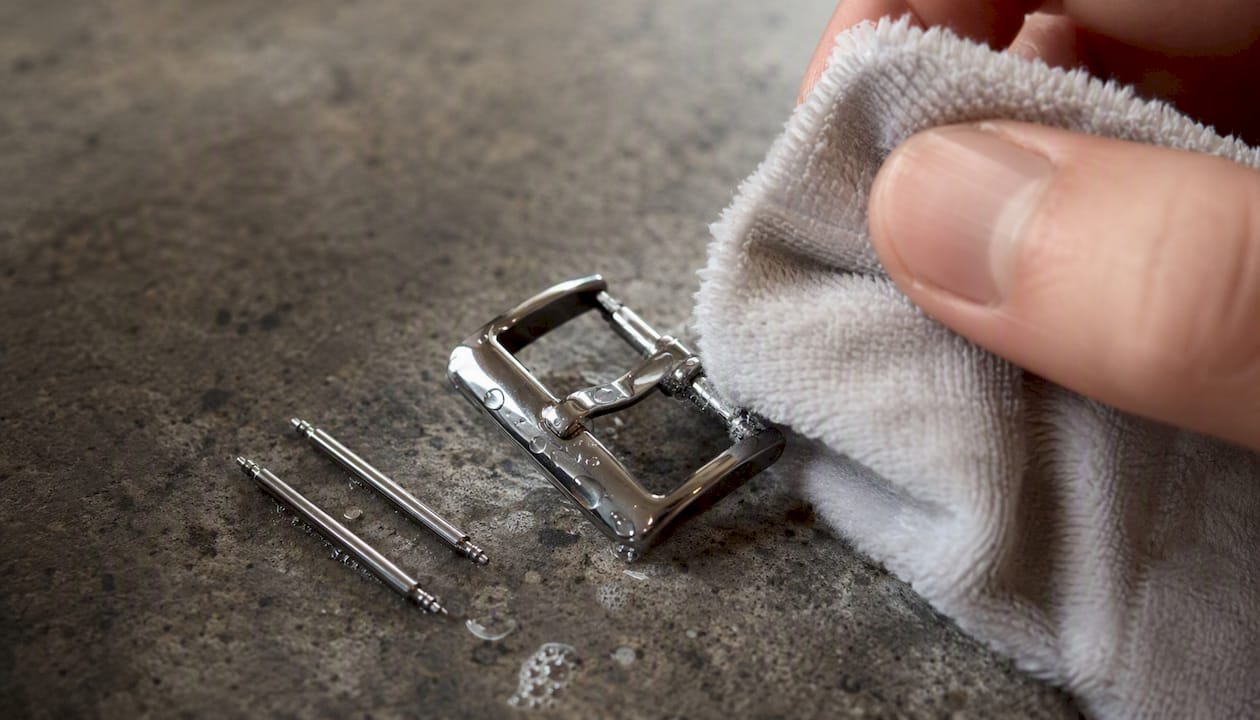
Keep the watch head away from water and cleaning chemicals during the entire strap-cleaning process.
How often should you clean a NATO strap?
The honest answer: more often than most people do. Nylon absorbs sweat and sunscreen faster than leather or rubber, and that buildup is what causes odor and discoloration long before visible dirt appears.
A practical cadence:
- After swimming or exercise: Quick rinse under cool fresh water and towel-dry immediately. Chlorine and salt accelerate dye fade and hardware corrosion if left to dry on the strap.
- Weekly (daily wearers): A light hand wash with mild soap keeps residue from setting in.
- Monthly: A deeper soak for heavy users or anyone who applies sunscreen, bug spray, or works in dusty environments.
Daily and weekly habits that extend strap life:
- Rinse the strap after any water exposure, including pools and ocean.
- Air the strap out overnight rather than leaving it on the watch in a closed drawer.
- Rotate between two or three straps so each one dries fully between wears.
- Inspect buckle holes and edges for early fraying before reattaching.
- Check spring bars for corrosion or bending after cleaning. Thrifty Gentleman notes that rinsing after chlorinated or salty water and drying promptly limits both dye and hardware damage.
Storage matters too. Keep straps flat or loosely coiled in a dry spot, away from direct sunlight. For broader collector-level storage habits, the guide on keeping your watch dust-free from ChronoCare covers rotation and storage in more detail.
Tools and cleaners worth having on hand
You don’t need much. The basics handle most cleaning jobs:
- Soft toothbrush: The single most useful tool. Gets into weave texture and buckle crevices without scratching.
- Mild dish soap: Dawn or any fragrance-free dish soap works. Avoid anything with moisturizers or antibacterial additives.
- Mesh delicates bag: Required for machine washing; useful for hand washing too if you want to protect hardware.
- Lint-free microfiber towel: For towel-compressing after rinse and for hardware wipe-downs.
- Small bowl: Dedicated to strap soaks so you control water temperature and soap concentration.
- Oxi-type powder: Optional, but worth keeping for set-in stains. OxiClean or a store-brand equivalent.
For collectors who clean multiple straps regularly, or anyone who wants a consistent, purpose-built solution, the ChronoCare Ultimate Watch Cleaning Kit packages the tools and cleaners suited for both strap and hardware care in one kit. It makes sense as a gift for a watch enthusiast, or as a permanent part of a collector’s maintenance routine.
Use-case match:
- Quick daily rinse: cool water only, no tools needed.
- Weekly hand wash: soft toothbrush and mild soap.
- Monthly deep soak: Oxi powder or diluted vinegar, plus the toothbrush and towel.
What most cleaning guides get wrong about NATO straps
Most guides treat NATO strap cleaning as a simple chore and move on. The part they underplay is the hardware. Buckles and spring bars are where real damage accumulates, and they’re also where most cleaning mistakes happen. Scrubbing a strap while the hardware is still attached means metal banging against metal, grit embedding in crevices, and moisture sitting in spring bar tubes long after the nylon has dried.
Remove the strap before cleaning whenever possible. If you can’t, at least wrap the hardware. The strap itself is replaceable for under $30. The spring bars on a vintage Rolex or a Patek are not.
The other underrated habit is rotation. A strap worn every day without a break never fully dries between wears, which means the weave stays damp, bacteria multiply, and odor builds faster than any cleaning routine can keep up with. Two straps in rotation, each getting a full dry cycle, outlast a single strap worn daily by a significant margin. That’s not a cleaning tip. It’s a math problem.
The ChronoCare kit for collectors who want it done right
Cleaning a NATO strap with household supplies works fine for most people. But if you’re maintaining several straps, working with higher-end hardware, or just want a kit that was built specifically for watch care rather than improvised from the kitchen sink, the ChronoCare Ultimate Watch Cleaning Kit is worth a look.
It includes cleaners and tools formulated for watch materials, including strap fabrics and metal hardware, so you’re not guessing at dilution ratios or worrying about whether a household cleaner is safe for your buckle finish. For collectors, frequent wearers, or anyone buying a gift for a watch enthusiast, it removes the guesswork from a routine that should be simple. Visit Shopchronocare to see what’s included and order directly.
Sources
These are the primary sources used to validate the methods, heat-avoidance guidance, soak recipes, and machine-wash best practices in this guide:
- How To Clean And Care For Your Watch Straps - Hodinkee
- NATO Watch Strap Guide - Condor Straps
- How to Clean a One Piece or Nylon Watch Strap – Nixon US
- Cleaning Nylon Military-style Watch Bands: Essential Tips – BluShark Straps
- Can Nato Straps Be Washed? - Bliss Tulle