

How to Clean Watch Dial Without Damage
Cleaning a watch dial without damage is defined as removing surface contaminants using only gentle, non-abrasive materials and minimal moisture, without opening the case or disturbing the dial’s finish. The dial is the most vulnerable surface on any luxury timepiece. Its lacquer, printed indices, and applied markers can be permanently altered by a single wrong move. The right approach relies on three principles: use the softest possible tools, apply the least possible moisture, and stop the moment any resistance appears. ChronoCare’s guidance on watch dial cleaning tips consistently reinforces that preventive care beats reactive restoration every time.
How to clean watch dial without damage: the right tools
The tools you choose determine whether your cleaning session preserves or destroys the dial. Using the wrong material, even once, can scratch a lacquered surface or lift a printed numeral that took a craftsman hours to apply.
A microfiber cloth is the non-negotiable starting point for any safe watch face cleaning. Standard cotton cloths, paper towels, and even some lens wipes contain fibers coarse enough to leave micro-scratches on mineral or sapphire crystal. Microfiber cloths trap particles rather than drag them, which is exactly the motion a dial needs.
Beyond the cloth, a soft-bristle brush handles light dust in recessed areas around the case and lugs. Rodico putty is the industry standard dust remover during professional servicing. It lifts fingerprints and fine particles from dial components without liquid, but it must be pressed and lifted, never dragged, to avoid snagging delicate indices.
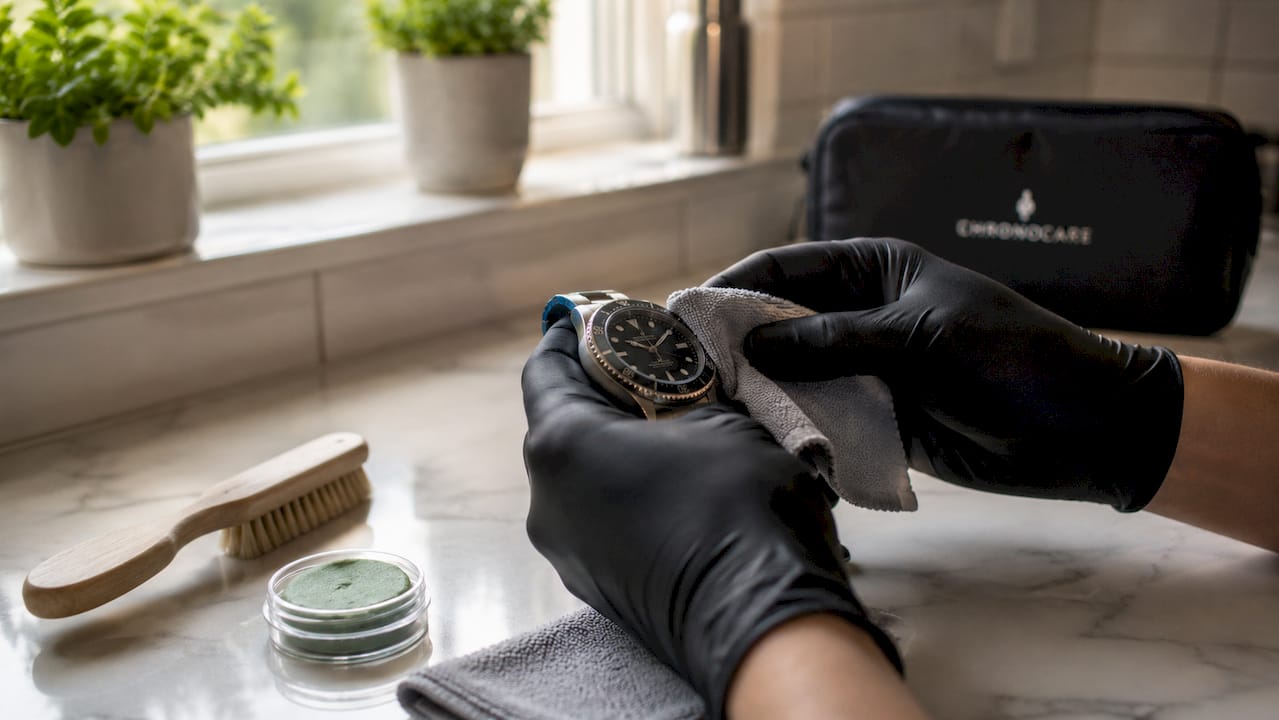
Before touching the watch at all, confirm the crown is fully screwed down or pushed in. An unsecured crown creates direct, unprotected access to the dial area, allowing moisture and contaminants inside. This single check prevents the most common cause of dial-side damage.
| Tool | Use | Safety note |
|---|---|---|
| Microfiber cloth | Surface wiping and crystal cleaning | Must be clean and lint-free before each use |
| Soft-bristle brush | Dust removal from case and lugs | Never apply to dial surface directly |
| Rodico putty | Lifting fingerprints from dial components | Press and lift only; never drag |
| Barely damp cloth | Stubborn smudges on crystal | Wring out completely; no dripping moisture |
Pro Tip: Keep a dedicated microfiber cloth sealed in a small zip bag for watch use only. A cloth that has touched a phone screen or eyeglasses carries oils and grit that transfer directly to your dial.
Step-by-step guide to gently cleaning your watch dial
The sequence matters as much as the tools. Skipping steps or reversing the order introduces risk at every stage.
- Secure the crown. Push it fully in or screw it down completely. Do not proceed until this is done.
- Fog the crystal with your breath. Exhale gently onto the crystal from about two inches away. The brief condensation loosens surface particles without introducing liquid. Immediately wipe with a dry microfiber cloth using light, circular strokes.
- Assess what remains. If the crystal is clear and the dial looks clean, stop here. Proactive maintenance is more effective and less risky than pushing further than necessary.
- Address stubborn smudges on the crystal only. Dampen a corner of your microfiber cloth with a small amount of water. Wring it until no moisture transfers when pressed against your palm. Wipe the crystal surface with light circular pressure. Never let the damp cloth contact the dial itself, the case seams, or the crown area.
- Use Rodico putty for fingerprints on exposed dial components. Press the putty gently onto the affected area and lift straight up. Repeat with a fresh section of putty if needed. Do not rub or slide.
- Use a soft brush for case and lug dust. Brush lightly around the case exterior and between the lugs. Keep the brush away from the dial surface entirely.
- Finish with a dry microfiber pass. Wipe the crystal and case one final time with a clean, dry section of cloth. Inspect under a lamp at a low angle to catch any remaining smudges.
Applying too much pressure is the most common cause of dial damage during home cleaning. If you feel any resistance, stop immediately and reassess your approach.
Pro Tip: Clean your watch under a single directional light source, like a desk lamp angled low. This reveals smudges and particles invisible under overhead lighting, so you know exactly where to focus and when to stop.
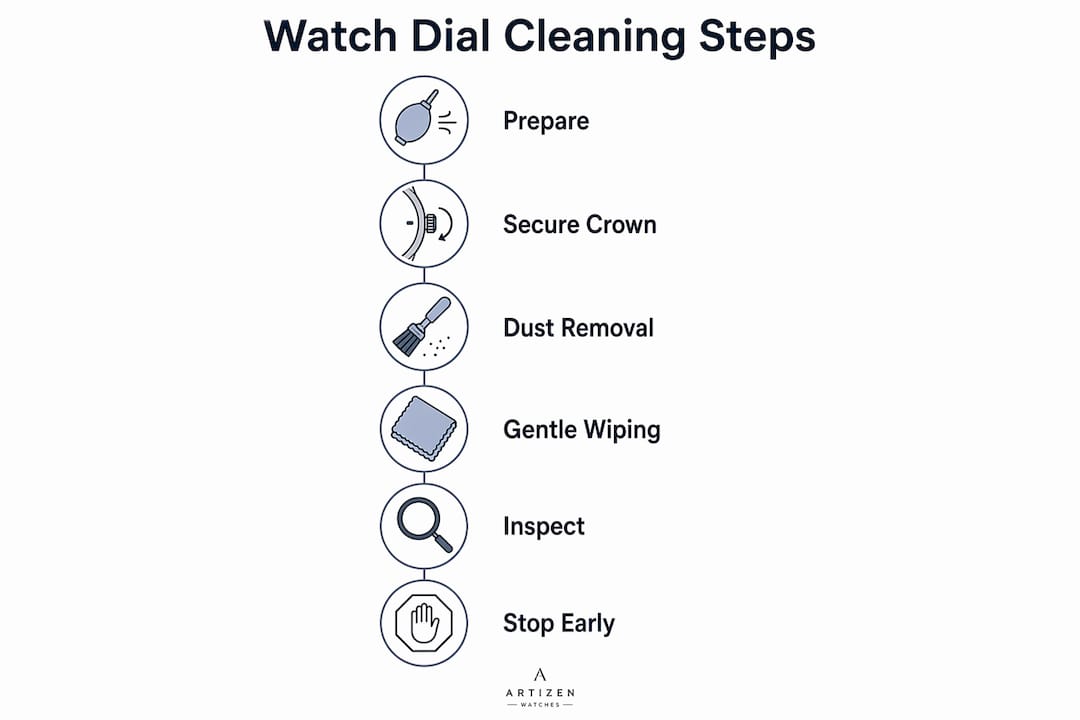
The entire process for a routine clean should take under five minutes. If it takes longer, you are likely working too hard on something that needs professional attention.
What mistakes damage watch dials most?
Most dial damage happens not from neglect but from well-intentioned cleaning attempts that use the wrong product or too much force.
Never open the watch case yourself. Opening the case destroys pressure seals and risks permanent damage to dial markers and hands. Even watchmakers who open cases routinely do so in controlled, dust-free environments with specialized tools. A home attempt almost always introduces contamination and eliminates the watch’s water resistance.
Alcohol, acetone, and household glass cleaners are equally destructive. These solvents dissolve lacquer, strip printed text, and cloud certain crystal coatings. A dial that looks merely smudged before cleaning can emerge permanently faded after a single wipe with an alcohol-based product.
Ultrasonic cleaners are another common mistake. Ultrasonic cleaners use high-frequency sound waves that cause irreparable harm to delicate dial components. They are appropriate for metal bracelets and cases only, never for the watch head or dial assembly.
Pressing too hard during cleaning is not just ineffective. It actively dislodges applied indices, bends hands, and scratches lacquer in ways that no amount of polishing can fully reverse. If force feels necessary, the cleaning method is wrong.
The following mistakes account for the majority of preventable dial damage:
- Using paper towels, tissues, or rough cloths on the crystal or case
- Spraying any liquid directly onto the watch face
- Cleaning with the crown unsecured or partially pulled out
- Applying alcohol, acetone, or ammonia-based cleaners to any part of the dial
- Using an ultrasonic cleaner on the watch head
- Scrubbing the dial surface with any tool, including soft brushes
Knowing how to safely remove fingerprints from a luxury watch is a skill that protects both the dial finish and the long-term value of the piece.
When should you call a professional for dial cleaning?
Home cleaning handles surface dust and light smudges. Anything beyond that requires a specialist.
Severe dirt buildup, oxidation, water intrusion, and aging finishes all need professional care. Professional conservation uses solvents and microfiber swabs under magnification to remove contaminants without disturbing original dial materials. This demands specialist skills and equipment that no home setup can replicate.
The distinction between surface cleaning and full dial restoration matters significantly for cost and outcome. Surface cleaning by a professional typically costs $50–$150 depending on contamination and complexity. Full dial refinishing, which involves stripping and reapplying lacquer, repainting indices, and reapplying patina, costs $300 or more. A well-executed professional refinish can remain stable for 30–50 years. Poor work may deteriorate in 5–10 years, which is why choosing a qualified specialist matters as much as the decision to seek help.
Signs that a professional is needed include:
- Visible water staining or fogging beneath the crystal
- Faded or discolored dial sections that do not respond to gentle wiping
- Loose or missing applied indices or hour markers
- Oxidation or rust spots on the dial surface
- Any cleaning attempt that has already caused visible damage
Dial restoration requires specialized equipment and years of experience. Attempting DIY restoration on a damaged dial almost always causes further permanent harm. The cost of professional correction after a failed home attempt consistently exceeds what the original professional service would have cost.
GoldsmithWorks notes that improper techniques can irreversibly alter dial lacquer and inks, directly harming the watch’s resale and collector value. For any watch worth more than a few hundred dollars, professional consultation before attempting any cleaning beyond a dry wipe is the conservative and correct choice.
Key Takeaways
The safest way to clean a watch dial is with a dry microfiber cloth, minimal moisture, and the discipline to stop before any force becomes necessary.
| Point | Details |
|---|---|
| Secure the crown first | Always confirm the crown is fully closed before any cleaning to block moisture intrusion. |
| Microfiber cloth is the baseline | Use a clean, dedicated microfiber cloth for every cleaning session; no substitutes. |
| Never open the case at home | Opening the case destroys pressure seals and risks permanent dial and movement damage. |
| Avoid ultrasonic cleaners on dials | High-frequency vibrations loosen indices and damage finishes irreparably. |
| Know when to call a professional | Water damage, oxidation, and loose markers all require specialist tools and skills. |
The case for patience over ambition in watch care
Raymond Jenkins here. After years of working with luxury timepieces and watching collectors make the same mistakes repeatedly, my strongest opinion is this: the damage almost never comes from neglect. It comes from overcleaning.
Watch owners who care deeply about their pieces tend to clean them too aggressively. They see a smudge and reach for a product. They feel a texture and apply more pressure. The dial suffers not from indifference but from enthusiasm applied without restraint.
The weekly dry wipe habit is genuinely underrated. Five seconds with a clean microfiber cloth after you take the watch off at night removes the oils that, left to harden, become the stubborn residue that tempts people into using solvents. Prevention at that level costs nothing and eliminates the need for most of the cleaning methods people worry about.
My honest observation is that most collectors need professional service far less often than they think, provided they maintain the weekly wipe discipline. And when they do need a professional, the work is faster and cheaper because the dial has not been compromised by prior DIY attempts. Patience and consistency beat any cleaning product on the market. The watch care restoration guide reinforces this point well: appearance is preserved incrementally, not recovered in a single session.
— Raymond Jenkins
ChronoCare’s products for safe watch dial care
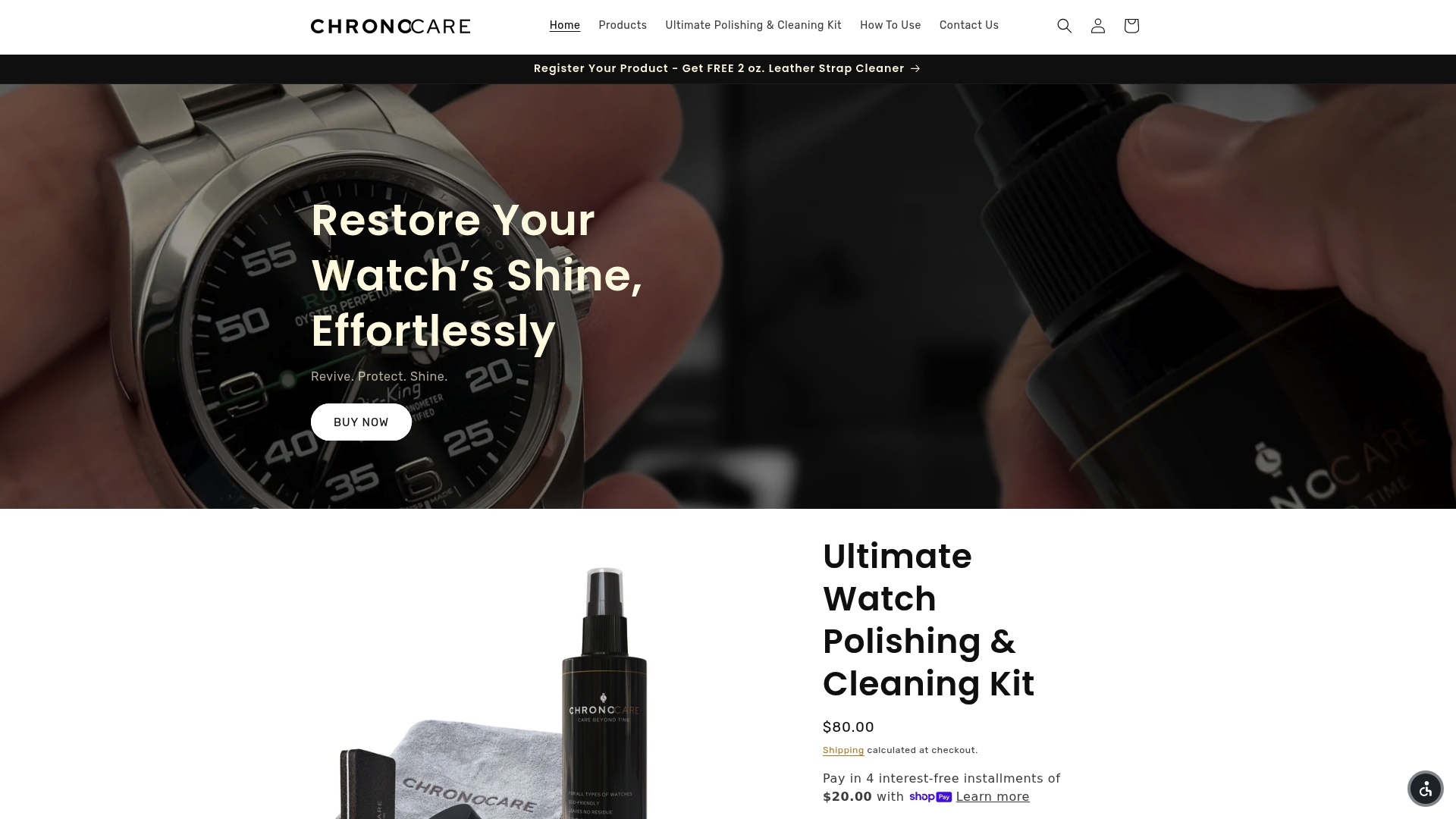
ChronoCare formulates its products specifically for luxury watch surfaces, not general-purpose cleaning. The Ultimate Watch Cleaner Spray is designed to clean safely around seals and finishes without the solvents that damage lacquer or printed dials. For collectors dealing with light surface wear on metal cases and bracelets, the Watch Polishing Cream restores shine without abrasive compounds that scratch. The Ultimate Watch Cleaning Kit bundles the tools and solutions needed for a complete, safe home maintenance routine. Every ChronoCare product is formulated in the US with luxury watch preservation as the primary design constraint.
FAQ
What is the safest way to clean a watch dial at home?
The safest method is a dry microfiber cloth used with light, circular strokes on the crystal only. Never apply liquid directly to the dial surface or open the case.
Can I use alcohol to clean my watch face?
Alcohol dissolves dial lacquer and strips printed text, making it one of the most damaging products you can use on a watch face. Use only water, applied sparingly on a wrung-out cloth, if any liquid is needed at all.
How often should I clean my watch dial?
A quick wipe with a dry microfiber cloth once a week removes oils before they harden and keeps the dial looking clean without any risk of damage.
When does a watch dial need professional cleaning?
Water staining, oxidation, faded sections, or loose indices all require professional care. Professional dial cleaning costs $50–$150 and uses magnified solvent techniques that home cleaning cannot replicate.
Is ultrasonic cleaning safe for watch dials?
Ultrasonic cleaning is not safe for watch dials or watch heads. The high-frequency vibrations loosen applied indices and damage delicate finishes. Ultrasonic cleaners are appropriate only for detached metal bracelets and cases.