

How Watch Care Restores Appearance: 2026 Guide
Watch care is defined as the combination of regular cleaning, material-specific maintenance, and periodic professional servicing that removes grime, prevents corrosion, and preserves a luxury timepiece’s original finish. Understanding how watch care restores appearance is the foundation of any serious collector’s routine. A neglected watch does not just look worn. It loses resale value, suffers accelerated material degradation, and signals a lack of attention that no amount of brand prestige can offset. ChronoCare’s approach to appearance restoration follows 2026 maintenance standards that treat every component, from sapphire crystal to leather strap, as a distinct surface requiring its own protocol.
How watch care restores appearance through cleaning and polishing
The most direct way watch care restores appearance is through systematic cleaning that removes the buildup acting as an abrasive paste against metal, rubber, and leather. Spending about 10 minutes monthly on cleaning extends watch life and preserves a showroom finish. That figure matters because most collectors underestimate how quickly skin oils and environmental debris compound into visible damage.
A standard home cleaning routine covers three steps:
- Rinse and brush. Use lukewarm water with a small amount of mild soap. Apply with a soft-bristled brush, working gently around the case, lugs, and bracelet links. Never use a stiff brush on polished surfaces.
- Wipe dry. Use only a clean microfiber cloth. Paper towels cause micro-scratches on polished cases and crystals. Even a cotton shirt carries enough texture to dull a high-polish finish over time.
- Polish lightly. A quality polishing cream applied with a microfiber cloth removes minor surface scratches and restores metal brilliance. Work in straight lines along the grain of brushed surfaces. Never polish in circles on a directional finish.
Experts recommend thorough cleaning every 2–3 months to prevent damaging buildup of oils, salt, and debris. For metal bracelets that have gone years without professional attention, ultrasonic cleaning removes deeply embedded grime that no brush can reach. That level of restoration significantly improves both bracelet appearance and the way the links feel on the wrist.
Pro Tip: Before cleaning, always confirm your watch’s water resistance rating and lock the crown fully. Even a watch rated to 100 meters can allow moisture ingress if the crown is not secured.
Sapphire crystals resist scratching far better than mineral glass, but they still collect fingerprints and smudges that dull their clarity. A single pass with a clean microfiber cloth, using light circular pressure, restores optical clarity in seconds. For guidance on daily fingerprint removal, the ChronoCare fingerprint removal guide covers safe techniques for every crystal type.
How does regular maintenance prevent long-term appearance degradation?
Appearance degradation in luxury watches follows a predictable pattern. Skin oils and salt from sweat create a mildly acidic environment on the case surface. Over weeks and months, that environment drives micro-corrosion into brushed and polished finishes, pitting metal that was once mirror-smooth. Proactive maintenance interrupts that cycle before visible damage sets in.
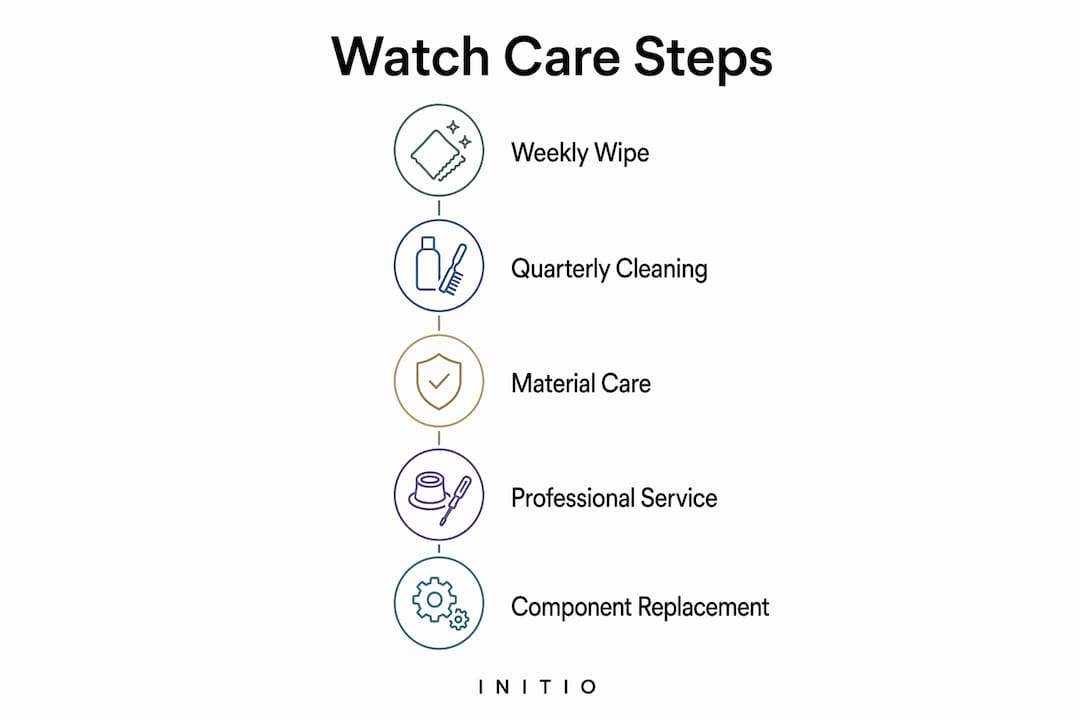
A structured maintenance schedule looks like this:
- Weekly wipe-down. Remove the watch after wearing and wipe the case, crystal, and strap with a dry microfiber cloth. This takes under two minutes and prevents salt and oil from sitting on surfaces overnight.
- Monthly bracelet cleaning. Cleaning bracelet links monthly improves hygiene and lifespan. Soap residue trapped between links acts as an abrasive and causes stiffness that accelerates wear on the pins.
- Quarterly deep clean. A full soap-and-brush session every 2–3 months addresses the buildup that weekly wiping misses.
- Annual or biennial pressure testing. Water resistance testing done annually or biennially prevents moisture ingress that corrodes internal components and stains dials from the inside out.
- Professional servicing every 4–6 years. Mechanical watches require professional servicing on this interval. Internal lubrication and gasket replacement protect movement and prevent moisture from reaching the dial.
Seal integrity and internal maintenance are as critical as external appearance for preventing costly damage. Pressure testing functions as a practical insurance policy, protecting both the functionality and the finish of a luxury timepiece.
The connection between internal servicing and external appearance is one that many collectors miss entirely. A degraded gasket allows moisture to reach the dial, causing staining, condensation, and corrosion that no amount of external polishing can fix. Protecting the inside protects the outside. A luxury timepiece maintenance checklist from ChronoCare covers both internal and external tasks in a single reference.
How to care for different watch materials to restore and preserve appearance
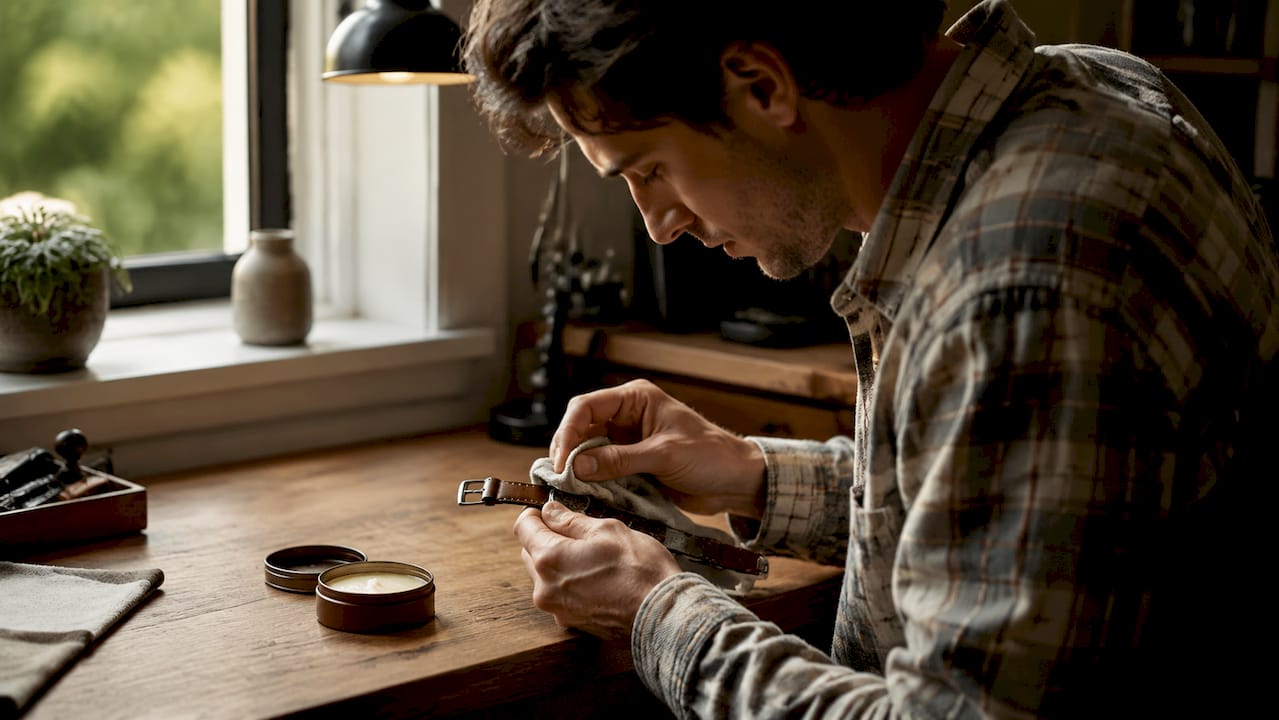
Different materials on the same watch require completely different care protocols. Treating a leather strap the same way you treat a stainless steel bracelet will destroy it within months.
| Component | Recommended care method | What to avoid |
|---|---|---|
| Stainless steel bracelet | Mild soap, soft brush, microfiber dry | Abrasive cloths, harsh chemicals |
| Leather strap | Damp cloth wipe, leather conditioner | Soap, water immersion, direct sunlight |
| Sapphire crystal | Dry microfiber cloth, light pressure | Paper towels, acetone-based cleaners |
| Polished case | Polishing cream, straight-line application | Circular polishing on directional finishes |
| Rubber or silicone strap | Mild soap and water rinse | Petroleum-based products |
Leather straps deserve particular attention. Leather requires a damp cloth and periodic conditioning. Soap and water cause cracking and odor. Proper rotation and conditioning can extend a leather strap’s life from 6–12 months up to 2–3 years, depending on use and climate. Collectors in humid environments accelerate strap degradation significantly without rotation. Rotating straps regularly is one of the most cost-effective care habits available.
Metal bracelets hold grime between links in ways that are invisible until the bracelet stiffens or develops a dull, gray cast. A dedicated bracelet link cleaning routine restores the articulation and shine that makes a metal bracelet look new. The difference before and after a proper bracelet clean is often more dramatic than any case polishing.
Pro Tip: Apply leather conditioner to a strap no more than once every 4–6 weeks. Over-conditioning saturates the leather and weakens its structure, causing the same cracking it was meant to prevent.
Signs that a component needs replacement rather than cleaning include persistent discoloration after cleaning, visible cracking or splitting in leather, and pitting in metal that does not respond to polishing. At that point, restoration shifts from maintenance to component replacement.
When should you seek professional watch restoration?
Home care handles the majority of appearance maintenance, but it has clear limits. Deep scratches in a polished case, grime embedded in movement components, and aging seals all require professional intervention. Recognizing those limits protects a watch from well-intentioned damage.
The signs that professional restoration is needed include:
- Visible scratches that polishing cream cannot remove. These require a watchmaker’s polishing wheel and material-specific compounds. Home polishing on deep scratches removes too much metal and distorts case geometry.
- Condensation or fogging under the crystal. Moisture has already entered the case. A professional must open, dry, and reseal the watch, then pressure-test before returning it to service.
- Bracelet links that remain stiff after cleaning. Worn or corroded pins need replacement, not just cleaning. A professional ultrasonic cleaning followed by pin inspection restores full bracelet function.
- Dial discoloration or staining. This almost always originates from internal moisture. External cleaning will not address it.
- A watch that has not been serviced in over six years. Dried lubricants create friction that damages movement components and, over time, causes vibrations that loosen case screws and degrade external finishing.
Professional watchmakers use ultrasonic cleaning baths, precision polishing compounds, and calibrated pressure-testing equipment that no home kit replicates. The cost of professional servicing is consistently lower than the cost of repairing damage caused by deferred maintenance. A collector’s care routine that schedules professional servicing at regular intervals avoids most of those repair costs entirely.
Key Takeaways
Consistent watch care, combining weekly wiping, quarterly deep cleaning, and professional servicing every 4–6 years, is the most effective method for restoring and preserving a luxury watch’s appearance over time.
| Point | Details |
|---|---|
| Clean every 2–3 months | Routine cleaning prevents oil and salt buildup that causes micro-corrosion and dulls finishes. |
| Use microfiber only | Paper towels and shirts cause micro-scratches; always use a clean microfiber cloth on polished surfaces. |
| Match care to material | Leather, metal, and crystal each require different products and methods to restore appearance safely. |
| Test water resistance annually | Pressure testing prevents moisture ingress that stains dials and corrodes internal components. |
| Schedule professional servicing | Every 4–6 years, professional cleaning and lubrication protect both movement and external finish. |
What I’ve learned about watch care that most guides get wrong
Raymond Jenkins
Most watch care guides focus entirely on the case and crystal. That is the wrong starting point. The single biggest threat to a watch’s appearance is not a scratch on the bezel. It is a failed gasket that lets moisture reach the dial. I have seen collectors spend hours polishing cases while wearing watches with seals that had not been tested in a decade. The dial staining that results from that oversight is irreversible without a full restoration.
The second thing most guides undervalue is strap rotation. A leather strap worn daily in a warm climate lasts six months at best. The same strap, rotated with a metal bracelet and conditioned monthly, lasts three years. That is not a minor difference. It changes the economics of collecting entirely.
Over-polishing is the mistake I see most often among enthusiastic owners. Polishing removes metal. Every session with a polishing wheel or even an aggressive cream thins the case imperceptibly. Original brushed finishes, once polished smooth, cannot be restored without a watchmaker’s intervention. The goal of home care is to maintain, not to perfect. Accept minor surface marks as part of a watch’s life. Reserve polishing for significant scratches that genuinely affect the watch’s presentation.
Build a care habit that you can sustain. Ten minutes monthly, a quarterly deep clean, and a professional service every few years. That schedule is not demanding. It is the difference between a watch that looks new at twenty years and one that looks tired at five.
— Raymond Jenkins
ChronoCare’s kits for restoring your watch’s appearance at home
Maintaining a luxury watch’s appearance at home requires the right products for each surface and material.
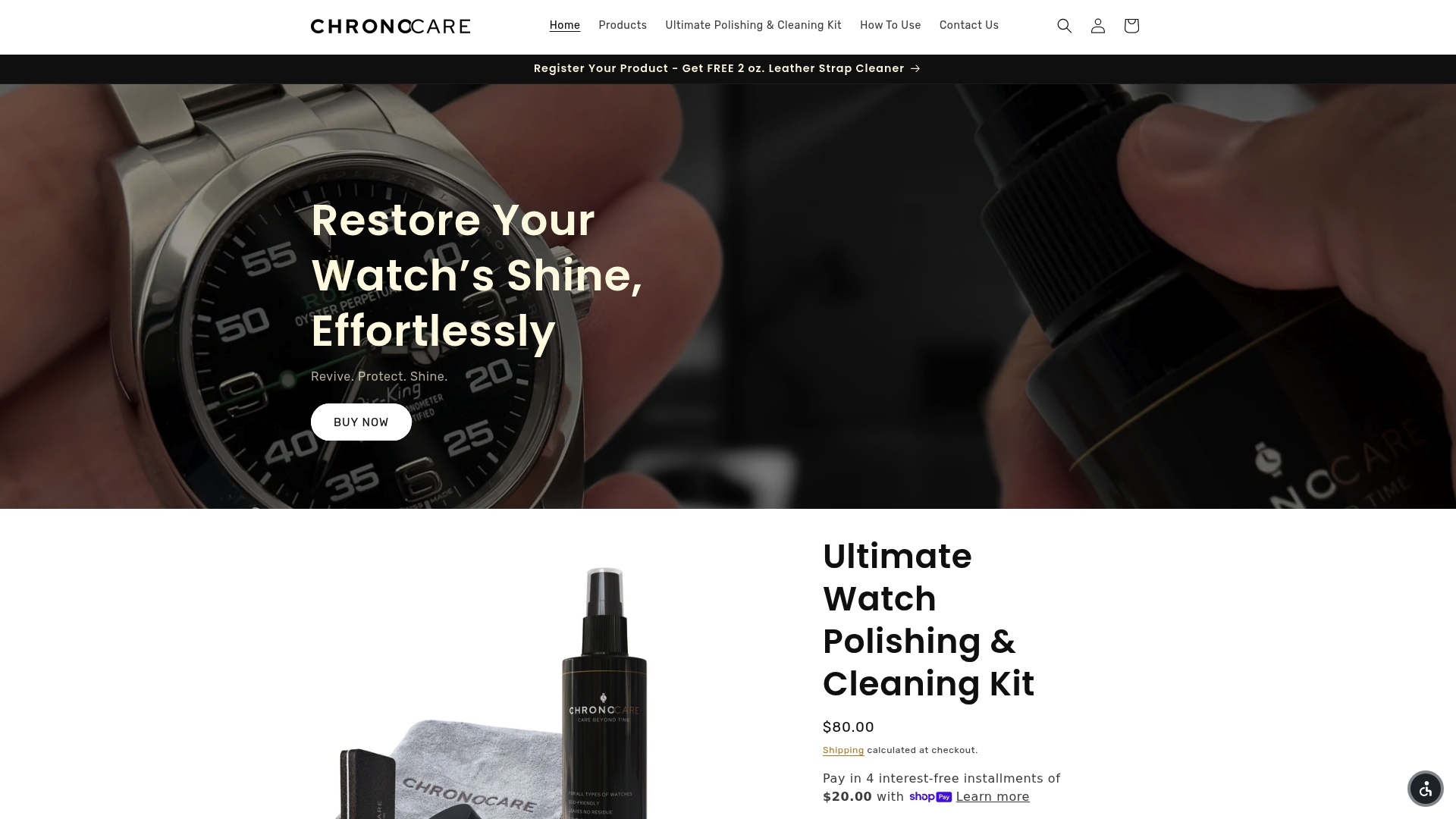
ChronoCare’s Ultimate Watch Cleaning Kit includes everything needed for a complete home cleaning session: a formulated cleaning solution, soft brushes sized for bracelet links and case edges, and professional-grade microfiber cloths. For collectors dealing with light surface scratches, the Ultimate Watch Polishing & Cleaning Kit adds a polishing cream designed to restore metal brilliance without removing excess material. Both kits are formulated in the US and built specifically for luxury timepieces. They give collectors a professional-level result without the risk of using generic household products on high-value watches.
FAQ
How often should I clean my luxury watch?
Clean your watch every 2–3 months with mild soap and a soft brush, and wipe it down weekly after wearing. Metal bracelets benefit from professional ultrasonic cleaning if they have not been serviced in several years.
Can I polish my watch at home to remove scratches?
Light surface scratches respond well to a quality polishing cream applied with a microfiber cloth in straight lines along the finish grain. Deep scratches require a professional watchmaker’s polishing wheel to avoid distorting the case geometry.
How do I care for a leather watch strap without damaging it?
Wipe leather straps with a lightly damp cloth and apply a leather conditioner every 4–6 weeks. Soap and water damage leather, causing cracking and odor. Rotating between straps significantly extends usable life.
What are the signs that my watch needs professional restoration?
Condensation under the crystal, dial staining, persistent bracelet stiffness after cleaning, and deep scratches that polishing cream cannot remove all indicate that professional servicing is needed. A watch not serviced in over six years should be assessed regardless of visible condition.
Does water resistance protect my watch during cleaning?
Water resistance ratings indicate pressure tolerance, not immunity to cleaning damage. Always confirm your watch’s rating, secure the crown fully, and avoid submerging watches rated below 50 meters. Annual pressure testing confirms that seals remain intact after regular use.