

Watch Care Between Services: Your Essential Guide
Watch care between services is the practice of cleaning, storing, and monitoring your timepiece between professional servicing appointments to preserve its accuracy, appearance, and resale value. Most mechanical and automatic watches require professional servicing every 3–5 years. What you do in between those appointments determines whether your watch arrives at the watchmaker in good shape or with preventable damage. Consistent daily habits, proper storage, and timely attention to warning signs can protect both the function and the investment value of any serious timepiece. This guide covers the full picture of preventative watch care, from daily wipe-downs to water resistance checks.
What is watch care between services, and why does it matter?
Watch care between services is the industry term for interim maintenance, the owner-performed routines that keep a watch running and looking its best without requiring a full professional overhaul. It covers everything from wiping down the case after wear to checking that the crown is fully pushed in before washing your hands.
Proper routine care can preserve a watch’s resale value by 8%–12% compared to neglected pieces. For a Rolex Submariner or an Omega Seamaster, that margin represents real money. Beyond value, consistent care prevents the kind of slow, invisible damage that turns a routine service into a costly repair.
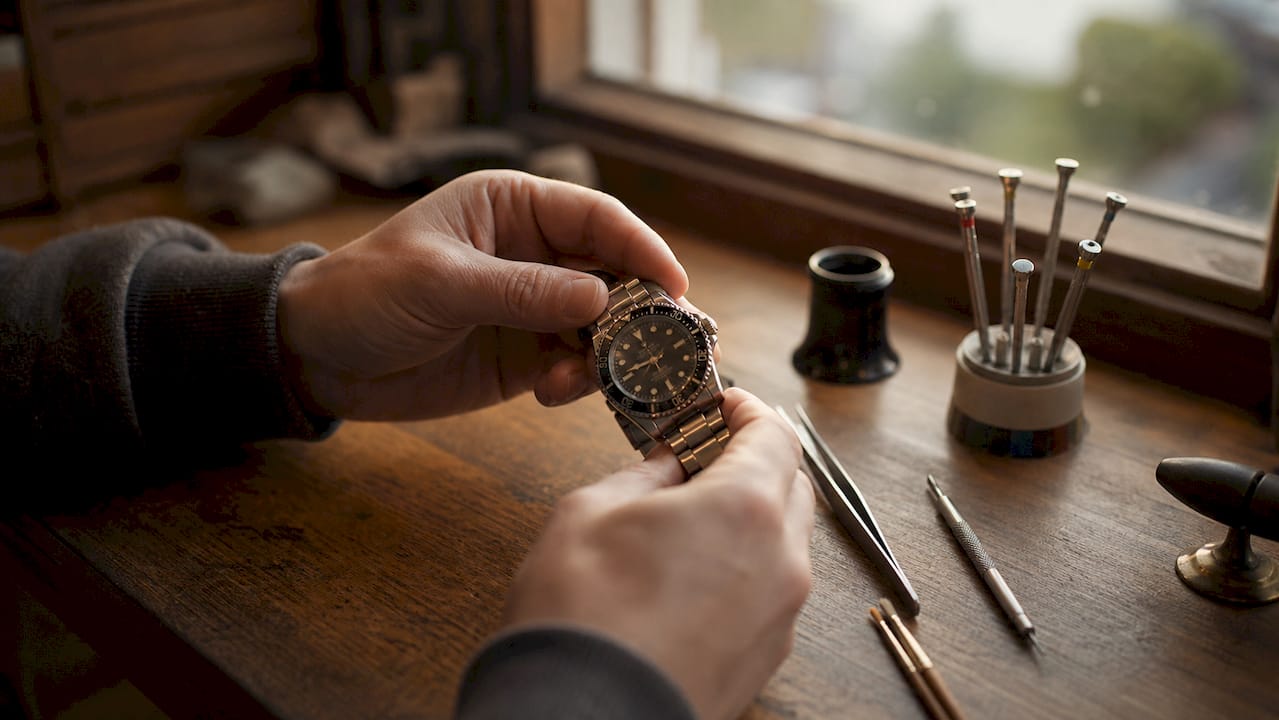
Professional servicing involves complete disassembly, ultrasonic cleaning, lubrication, reassembly, and water resistance testing. That process resets the clock on internal wear. Your job between services is to slow that wear down as much as possible.
What daily and weekly habits keep your watch in top condition?
The best watch maintenance tips are also the simplest. Daily cleaning with a microfiber cloth and proper storage in a dry environment prevent approximately 99% of common long-term watch issues. That statistic sounds dramatic until you consider how much damage skin oils, sweat, and dust cause when left on metal and leather over months.
Here are the core daily and weekly habits every watch owner should build into their routine:
- Daily wipe-down: Use a soft, lint-free microfiber cloth to remove oils, fingerprints, and moisture from the case, crystal, and bracelet after every wear. Pay attention to the lugs and crown area where grime collects.
- Crown position check: Always confirm the crown is fully pushed in and screwed down (on watches with screw-down crowns) before any water exposure. A crown left in the winding or setting position destroys water resistance instantly.
- Chemical avoidance: Keep your watch away from perfume, sunscreen, cleaning products, and chlorinated water. These degrade gaskets and finish surfaces faster than normal wear.
- Magnetic field awareness: Keep mechanical watches away from speakers, magnetic clasps on bags, and induction cooktops. Magnetization causes erratic timekeeping that looks like a mechanical fault.
- Weekly bracelet cleaning: Use a soft brush and a watch-safe cleaning solution on metal bracelets to clear debris from between links. For leather straps, a dedicated strap cleaner prevents cracking and odor buildup.
Pro Tip: Never set the date on a mechanical watch between 9 p.m. and 2 a.m. During this window, the date-change mechanism is mid-cycle and forcing it manually can strip internal parts, leading to repairs that cost far more than a standard service.
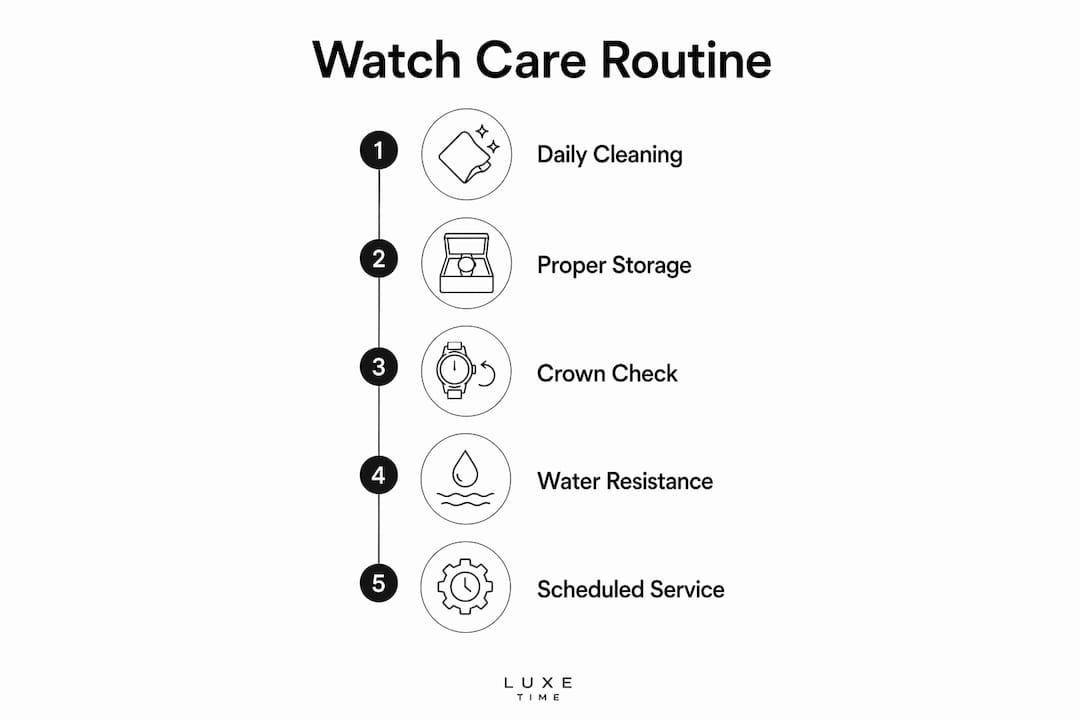
For a complete breakdown of what a structured routine looks like, ChronoCare’s guide on what a watch care routine involves is worth bookmarking.
How should you store watches between wearings?
Storage is where most collectors make their biggest mistakes. A watch sitting in a drawer face-down on a hard surface, or left in a humid bathroom, accumulates damage that no amount of cleaning will reverse.
Follow these storage best practices to protect your timepiece during downtime:
- Use a dedicated watch box or case: Fabric-lined compartments prevent scratches from contact with other watches or hard surfaces. Separating watches also protects their crystals and bezels from each other.
- Control humidity and temperature: Store watches in a cool, dry location away from direct sunlight. UV exposure fades dials and degrades rubber gaskets. High humidity accelerates gasket aging and promotes corrosion inside the case.
- Use a watch winder for automatics: If you rotate between several automatic watches, a quality winder keeps the mainspring wound and lubricants distributed. A watch left unwound for months can develop lubricant pooling or drying in the movement.
- Avoid airtight containers without desiccant: Sealed boxes trap humidity. Add a silica gel packet to any enclosed storage to absorb moisture.
Pro Tip: If you store a mechanical watch for more than 6 months without wearing it, have it wound and run for a few days before putting it back in regular rotation. This redistributes lubricants that may have settled during the idle period.
The role of watch care between wearings goes beyond aesthetics. Gasket degradation from poor storage is one of the leading causes of moisture ingress, which turns a preventable problem into an expensive movement repair.
Why do water resistance checks matter between services?
Water resistance is not a permanent feature. It is a condition maintained by rubber or synthetic gaskets that age, compress, and crack over time, even without any visible damage to the watch.
Annual water resistance testing is strongly recommended for watches regularly exposed to water. Seals can degrade within 12 months, making yearly or biennial testing the standard for any watch worn near water. A watch rated to 100 meters when new may offer far less protection after two years of regular use without a seal check.
Here is how to approach water resistance maintenance between services:
- Avoid DIY pressure testing at home. Home pressure testers exist, but they cannot replicate the precision of professional equipment. Use them only as a rough indicator, not a definitive pass.
- Schedule a professional seal inspection annually if you swim, shower, or work near water while wearing your watch. Most watchmakers offer a standalone pressure test for a modest fee.
- Watch for condensation inside the crystal. Even a faint fog on the inside of the glass is an urgent warning. Condensation inside the crystal can cause irreversible corrosion to the dial and movement. Do not wait for it to clear on its own.
- Replace gaskets at every service. When your watch goes in for its scheduled service, confirm that gasket replacement is included. Some budget service providers skip this step.
- Avoid thermal shock. Moving from a hot shower to cold air causes rapid expansion and contraction that stresses gaskets. Rinse with lukewarm water instead.
Ignoring seal maintenance is one of the most common and costly mistakes watch owners make. A $50 seal inspection prevents a $500 movement cleaning from moisture damage.
How do you spot signs your watch needs attention before its next service?
Knowing when to act early is one of the most valuable skills a watch owner can develop. Mechanical watches are not expected to keep perfect time, but sudden changes in timekeeping accuracy or power reserve duration are clear signals that something has changed internally.
Watch for these warning signs between scheduled services:
- Timekeeping drift: A sudden shift of more than 10–15 seconds per day on a watch that previously ran consistently indicates internal wear or lubricant breakdown.
- Reduced power reserve: If your automatic watch stops overnight when it previously ran for 40+ hours, the mainspring or rotor may need attention.
- Winding or setting resistance: Unusual stiffness or grinding when winding the crown or changing the time suggests worn keyless works or a dry winding mechanism.
- Visible condensation or fogging: As covered above, this requires immediate professional service, not monitoring.
- Physical damage: A chipped crystal, loose bezel, or bent crown should be addressed promptly. Damaged crystals compromise water resistance. A loose bezel can allow debris into the case.
Pro Tip: Keep a simple maintenance log for each watch. Note the date of last service, any performance changes, and when you last had water resistance tested. This log becomes invaluable when speaking with a watchmaker and helps you identify early warning signs before they escalate.
Invisible internal wear from dried lubricants and metal friction often precedes visible timekeeping declines. Acting on early symptoms costs far less than waiting for a full mechanical failure.
Mechanical vs. quartz vs. smartwatch: how does care differ?
Care routines vary significantly by movement type. Understanding these differences helps you apply the right habits to each watch in your collection.
| Watch Type | Service Frequency | Key Daily Care | Primary Risk |
|---|---|---|---|
| Mechanical / Automatic | Every 3–5 years | Microfiber wipe, crown check, avoid magnets | Lubricant degradation, magnetization |
| Quartz | Every 4–5 years | Battery check, seal inspection at battery swap | Dead battery causing seal damage from leakage |
| Smartwatch | Annual software updates, hardware check | Screen wipe, charging port cleaning, sensor care | Water ingress, battery swelling, software failure |
Mechanical watches demand the most mindful daily handling. Avoid setting the date in the danger zone, keep them away from magnetic fields, and wind them at the same time each day to maintain consistent mainspring tension.
Quartz watches require battery management and seal checks, typically every 4–5 years for a full service. The critical rule: always have the seals inspected when the battery is replaced. A dead battery left in the watch can leak and corrode the movement from the inside.
Smartwatches require a different kind of attention. Screen cleaning, charging port maintenance, and software updates are the equivalent of a mechanical watch’s winding routine. For detailed guidance on maintaining smart devices and preventing long-term hardware issues, the principles of consistent cleaning and careful storage apply across all categories.
Key takeaways
Consistent interim maintenance is the single most effective way to protect a watch’s performance, condition, and resale value between professional service appointments.
| Point | Details |
|---|---|
| Daily habits matter most | A microfiber wipe and crown check after every wear prevent the majority of long-term damage. |
| Storage protects the movement | Use a lined watch box, control humidity, and wind automatics regularly to prevent lubricant issues. |
| Water resistance degrades over time | Schedule annual seal inspections for any watch worn near water, regardless of its rated depth. |
| Early symptoms demand prompt action | Sudden timekeeping changes, winding resistance, or condensation require professional attention before the next scheduled service. |
| Care type varies by movement | Mechanical, quartz, and smartwatch owners each face distinct risks and should tailor their routines accordingly. |
The habit that actually protects your watch
Most watch owners I speak with fall into one of two camps. They either ignore their watch entirely between services, or they obsess over every micro-scratch to the point of anxiety. Neither approach serves the watch well.
The truth is that consistent simple habits matter far more than perfect conditions. A 30-second wipe-down after every wear, a proper storage box, and one annual water resistance check will do more for your watch than any amount of worrying about humidity levels to the decimal point.
The mistake I see most often is ignoring water resistance. Owners assume that because their watch is rated to 100 meters, it is fine for the shower indefinitely. Gaskets age. That rating is a snapshot from the factory, not a lifetime guarantee.
The second most common mistake is skipping the maintenance log. When a watchmaker asks when you last had the seals checked, “a few years ago, maybe” is not a useful answer. A simple note on your phone with dates and observations takes 10 seconds and saves real money.
Wear your watch. Enjoy it. Just build the small habits around it that keep it running the way it should. A watch that is cared for consistently between services will reward you with decades of reliable performance and a resale value that reflects the attention you gave it.
— Raymond Jenkins
Keep your watch looking and running its best with ChronoCare
The right products make interim maintenance faster and safer for your watch’s finish and seals.
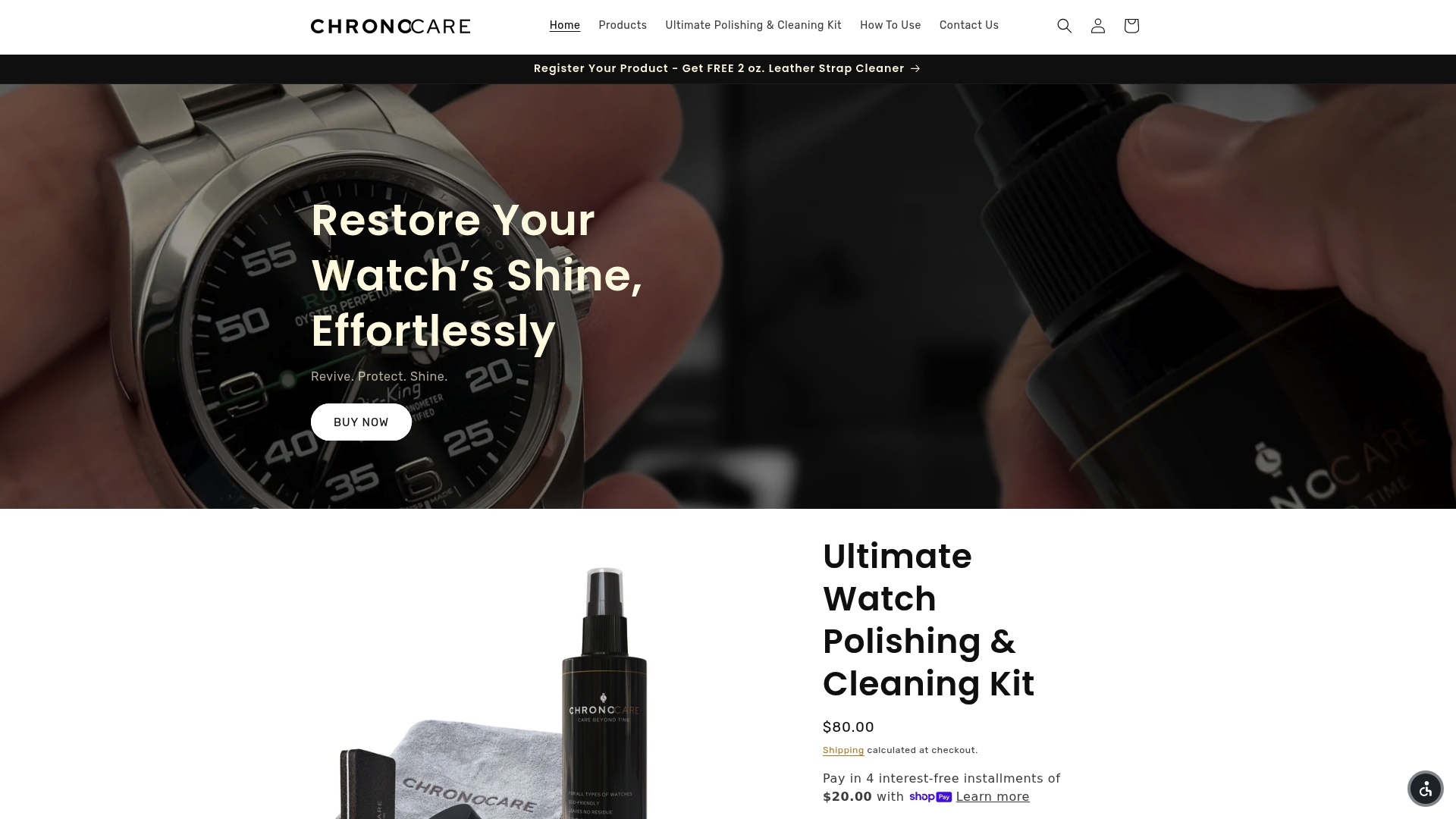
ChronoCare formulates its cleaning and polishing products specifically for luxury timepieces, so you are never guessing whether a product is safe for your sapphire crystal or brushed steel case. The Ultimate Watch Cleaning Kit includes everything you need for a complete weekly care routine, from case cleaning to bracelet care, in one purpose-built set. For targeted surface cleaning between deeper sessions, the Ultimate Watch Cleaner Spray removes oils and residue without damaging coatings or gaskets. Browse the full ChronoCare collection at shopchronocare.com and build a care routine your watch deserves.
FAQ
How often should i clean my watch between services?
Wipe down your watch with a microfiber cloth after every wear, and perform a more thorough bracelet and case cleaning weekly. Consistent basic cleaning prevents the majority of long-term cosmetic and mechanical issues.
What does watch care between services actually include?
Interim watch maintenance includes daily cleaning, proper storage, crown position checks, magnetic field avoidance, water resistance testing, and monitoring for performance changes. These practices collectively preserve accuracy, appearance, and seal integrity until the next professional service.
When should i take my watch in before its scheduled service?
Take your watch in immediately if you notice condensation inside the crystal, sudden timekeeping changes, unusual winding resistance, or physical damage like a chipped crystal. Waiting for fogging to clear risks permanent dial and movement corrosion.
Does proper care between services actually preserve resale value?
Yes. Consistent maintenance and aesthetic preservation can protect resale value by 8%–12% compared to neglected pieces. For luxury watches from brands like Rolex, Patek Philippe, or Omega, that difference is significant in dollar terms.
How do i know if my watch’s water resistance is still intact?
The only reliable method is a professional pressure test. Have it done annually if you wear your watch near water, and always request a seal inspection whenever the battery is replaced on a quartz watch.