

Best Practices for Keeping Your Watch Dust Free
Dust is one of the most underestimated threats to a luxury watch. It acts as an abrasive on polished surfaces, and when it works its way inside a movement, it mixes with lubricants to form a grinding paste that damages gears and reduces accuracy. The best practices for keeping watches dust free combine daily surface cleaning, disciplined handling, and proper storage to protect both the finish and the mechanics. Collectors who follow these habits consistently extend the life of their timepieces and preserve their resale value.
1. Best practices for keeping watches dust free start with daily wiping
The single most effective habit in watch maintenance is a quick wipe after every wear. Daily microfiber wipes remove oils, sweat, and surface dust before they bond to the case or crystal. This takes less than 30 seconds and prevents buildup that becomes much harder to remove later.
A microfiber cloth is the only material you should use for this task. Paper towels, regular cotton cloths, and even some polishing rags contain fibers coarse enough to leave micro-scratches on polished gold or platinum. Dust is abrasive, and wiping it across a surface without the right cloth turns a cleaning routine into a slow scratch session.
- Wipe the case, crystal, and caseback after each wear
- Pay attention to the lugs, where sweat and dust collect in the corners
- Fold the cloth so you always use a clean section on the crystal
- Never wipe a dry, dusty surface without first using a blower to lift loose particles
Pro Tip: Keep a dedicated microfiber cloth inside your watch box or storage drawer. Placing it right next to the watch makes the habit automatic.
2. Deep cleaning to remove hidden dust in bracelets and clasps
Surface wiping handles what you can see. Hidden dust trapped in bracelet links, between clasp plates, and around pushers causes wear that you only notice months later. Dust and grime in bracelet links accelerate metal wear and should be addressed every two to three months, or more often in dusty or humid environments.

A soft toothbrush works well for scrubbing between links. Use short, light strokes and work from the center of the bracelet outward toward the clasp. For dust lodged in tight gaps, a rubber air blower dislodges particles without touching the surface. This pre-cleaning step matters because brushing dry dust across metal links creates the same micro-scratch risk as wiping a case with the wrong cloth.
For stubborn debris near delicate case edges, wooden toothpicks remove grime safely without scratching soft gold or silver surfaces. Metal tools cause irreversible gouges and should never touch a finished watch case. This is a rule that experienced collectors treat as absolute.
- Use a rubber air blower before any brushing to lift loose dust
- Brush bracelet links with a soft toothbrush using light, short strokes
- Use wooden toothpicks for debris in tight corners near the case
- Never use metal picks, dental tools, or hard plastic implements on finished surfaces
- Ultrasonic cleaning works well for metal bracelets, but only when the bracelet is detached from the watch
Pro Tip: Run a wooden toothpick along the inside edge of the clasp after every few wears. That narrow channel collects more grime than any other part of the bracelet.
3. Storage practices that prevent dust from settling on your watch
How you store a watch between wears determines how much dust it collects. Leaving a watch on a nightstand or dresser top exposes it to airborne particles that settle on the crystal, case, and between links overnight. Dedicated watch boxes with soft linings protect against contaminants and prevent the gaskets that seal the case from degrading prematurely.
The storage environment matters as much as the container. Cool, dark, and stable conditions reduce condensation, which carries dust particles into tight spaces. Avoid storing watches near air vents, open windows, or in bathrooms where humidity fluctuates. Silica gel packets placed inside a watch box absorb moisture and help maintain a stable microclimate that keeps dust from adhering to damp surfaces.
| Storage method | Dust protection | Moisture control | Best for |
|---|---|---|---|
| Closed watch box with soft lining | High | Moderate | Daily wear pieces |
| Watch safe with sealed door | Very high | High (with silica gel) | Long-term storage |
| Open watch stand or tray | Low | None | Display only, short term |
| Zip-lock bag with silica gel | Moderate | High | Travel or temporary storage |
- Store each watch in its own compartment to prevent case-to-case contact
- Add silica gel packets and replace them every three to four months
- Keep the storage area away from direct sunlight, which degrades rubber gaskets
- Never store a watch in a drawer with loose items that can scratch the crystal
4. Professional maintenance to stop internal dust contamination
No amount of surface cleaning protects the inside of a watch from dust. The only barrier between the movement and the outside world is the set of rubber gaskets that seal the crown, caseback, and crystal. Annual water resistance testing detects worn or cracked gaskets before they allow moisture and dust to enter the movement. Horologists recommend this test every year, especially for watches worn near water.
DIY internal cleaning is not a valid option for mechanical watches. Professional servicing in a dust-free environment prevents contamination that amateur handling almost always introduces. Opening a caseback at home, even briefly, exposes the movement to airborne dust that settles on the mainspring and gear train.
Signs that a watch needs professional attention include a foggy crystal after temperature changes, a crown that feels gritty when turned, or a movement that runs noticeably fast or slow. The 7 signs your watch needs professional cleaning include these symptoms and others that are easy to miss without knowing what to look for.
- Schedule annual water resistance testing with a certified watchmaker
- Follow manufacturer service intervals, typically every three to five years for mechanical watches
- Never open the caseback outside a controlled, dust-free environment
- Report any gritty crown feel immediately, as it signals dust near the crown seal
5. Common mistakes that invite dust buildup
The most damaging habits are the ones that feel harmless. Using WD-40 or ammonia-based cleaners on a watch case strips protective coatings and leaves a residue that attracts dust like a magnet. These products are not formulated for watch finishes and cause long-term surface degradation.
Crown discipline is one of the most overlooked aspects of watch care. Dust mixed with internal lubricants forms a grinding paste that damages movement gears. Manipulating the crown when the watch is dusty or wet pulls contaminants directly into the crown tube and toward the movement. The rule is simple: wipe the watch clean and dry before pulling the crown out to set the time or wind the movement.
Dust is not just a cosmetic problem. Once it enters the movement through a worn crown seal or a briefly opened caseback, it bonds with lubricants and begins grinding against gear surfaces with every tick. The damage is cumulative and invisible until the watch starts losing time or stops entirely.
Other common mistakes include:
- Storing watches in open bathroom cabinets where humidity and dust combine
- Using paper towels or T-shirt fabric for wiping, which leaves micro-scratches
- Ignoring the clasp underside, where skin oils and dust form a sticky film
- Skipping the blower step and wiping dust directly across the crystal or case
Key takeaways
Keeping a watch dust free requires daily surface habits, disciplined handling, and proper storage working together. No single step is enough on its own.
| Point | Details |
|---|---|
| Daily microfiber wipe | Wipe the case and crystal after every wear to prevent dust and oil buildup. |
| Blower before brushing | Always use a rubber air blower before wiping or brushing to lift loose abrasive particles. |
| Sealed storage only | Store watches in closed boxes or safes with silica gel to block airborne dust. |
| Crown discipline | Never manipulate the crown when the watch is dusty or wet to prevent internal contamination. |
| Annual professional testing | Schedule yearly water resistance checks to catch worn gaskets before dust enters the movement. |
Why restraint is the real skill in watch care
I’ve handled enough watches over the years to know that the collectors who cause the most damage are the ones who clean too aggressively, not too little. There’s a reflex in this hobby to do something when a watch looks dirty. That reflex leads people to grab whatever cloth is nearby, skip the blower, and wipe hard. The result is a crystal full of hairline scratches that weren’t there before.
The discipline I’ve come to respect most is what I call “crown discipline.” Before you pull that crown out to set the time, wipe the watch. Every time. It sounds excessive until you understand that the crown tube is essentially an open channel into the movement when the crown is extended. Dust near the crown gets pulled inward. Over months and years, that dust mixes with the oils lubricating the gear train and creates a paste that grinds against every moving part.
The other thing I’d tell any collector is to stop treating storage as an afterthought. A luxury watch care routine that ends with leaving the watch on a nightstand is only half a routine. The box matters. The silica gel matters. The location of the box in your home matters. Dust settles on every horizontal surface overnight. Your watch should not be one of them.
The watches I’ve seen hold their value and their accuracy longest all have one thing in common. Their owners treat cleaning as a daily ritual, not a monthly chore.
— Raymond Jenkins
ChronoCare’s watch cleaning kit: built for this routine
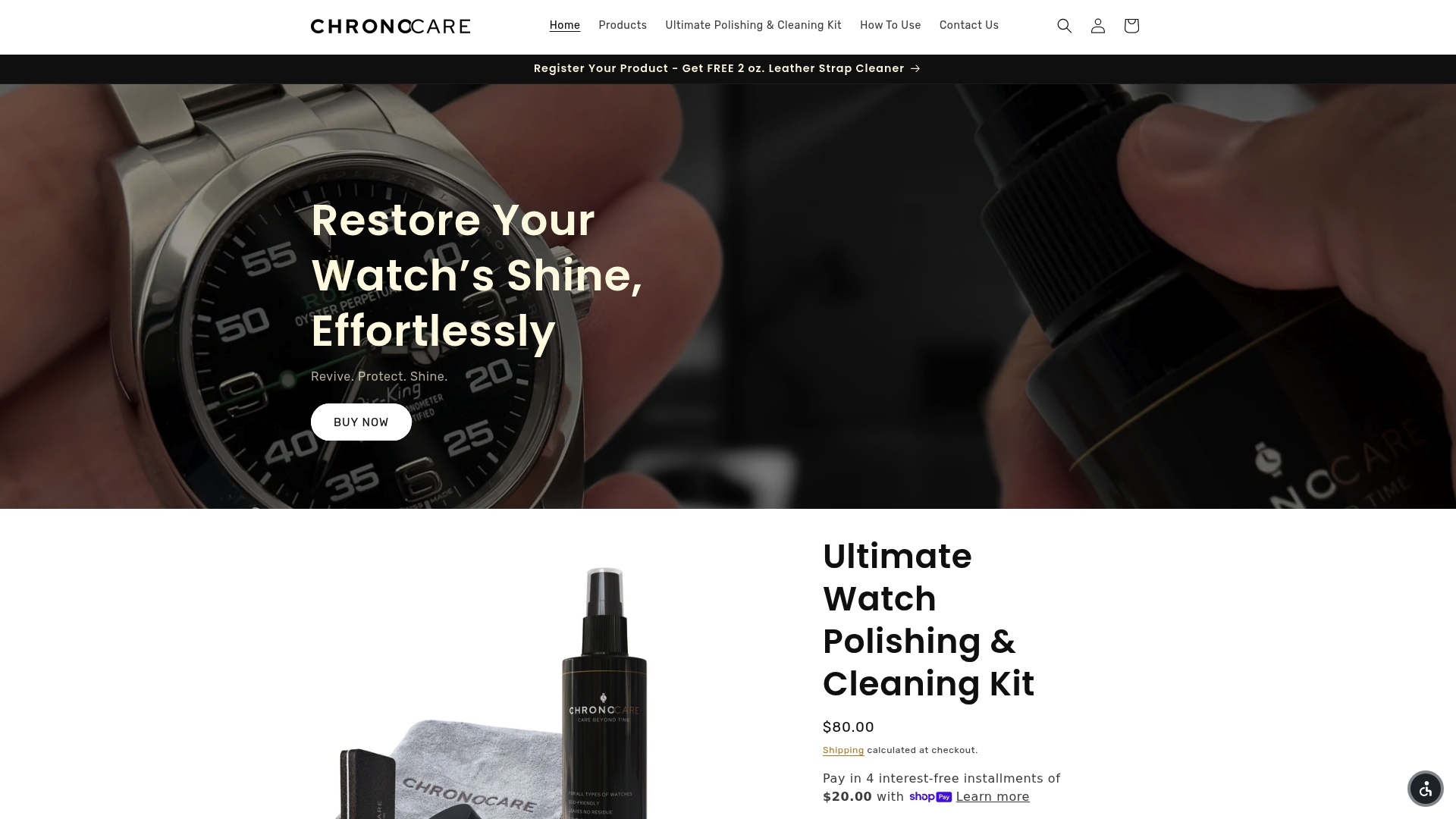
Every practice described in this article requires the right tools to work properly. ChronoCare’s Ultimate Watch Cleaning Kit includes professional-grade microfiber cloths, soft brushes sized for bracelet links and case edges, and cleaning solutions formulated specifically for luxury watch surfaces. The kit supports the full routine from daily wipes to deeper bracelet cleaning without introducing the abrasive risk that comes with household alternatives. ChronoCare formulates its products in the US for collectors who treat their watches as long-term investments. If you want to remove fingerprints safely and keep every surface looking as good as the day you bought it, this kit gives you everything you need in one place.
FAQ
How often should I wipe my watch to keep it dust free?
Wipe your watch with a microfiber cloth after every wear. For thorough cleaning of the bracelet and case, every two to three months is the standard recommendation.
Can I use a regular cloth to remove dust from my watch?
Regular cotton cloths and paper towels are too coarse for polished watch surfaces. Use only a clean microfiber cloth, and always use a rubber air blower first to lift loose dust before wiping.
Is ultrasonic cleaning safe for my watch bracelet?
Ultrasonic cleaning is safe for metal bracelets when the bracelet is detached from the watch. Never place a fully assembled watch in an ultrasonic cleaner, as vibrations can damage the movement.
What are the signs that dust has entered my watch movement?
A gritty feeling when turning the crown, a foggy crystal after temperature changes, or a movement running noticeably fast or slow all indicate potential dust or moisture intrusion. Take the watch to a certified watchmaker promptly.
How do I store a watch long-term without dust buildup?
Store the watch in a closed box or safe with a soft lining and silica gel packets. Keep the storage area cool, dark, and away from air vents or open windows where dust circulates freely.