

How to Remove Deep Scratches from Your Watch Case
Removing deep scratches from a watch case is a precise restoration process, not a simple buffing job. The industry term for this work is case refinishing, and it requires matching your technique to the watch’s specific material and finish. Get it wrong, and you risk altering the case geometry permanently. Get it right, and your watch looks factory-fresh. This guide covers how to evaluate scratch severity, which tools actually work, a step-by-step polishing method, and when to hand the job to a professional.
How to remove deep scratches from a watch case: start with an honest assessment
The fingernail test is the fastest way to judge whether a scratch is a DIY job or a professional one. Drag your fingernail across the mark. If it catches, the scratch has depth that requires more than a polishing cloth. Deep gouges that catch the fingernail require professional refinishing or part replacement, especially on luxury watches. That single test saves you from wasting hours on a scratch that no home kit can fix.
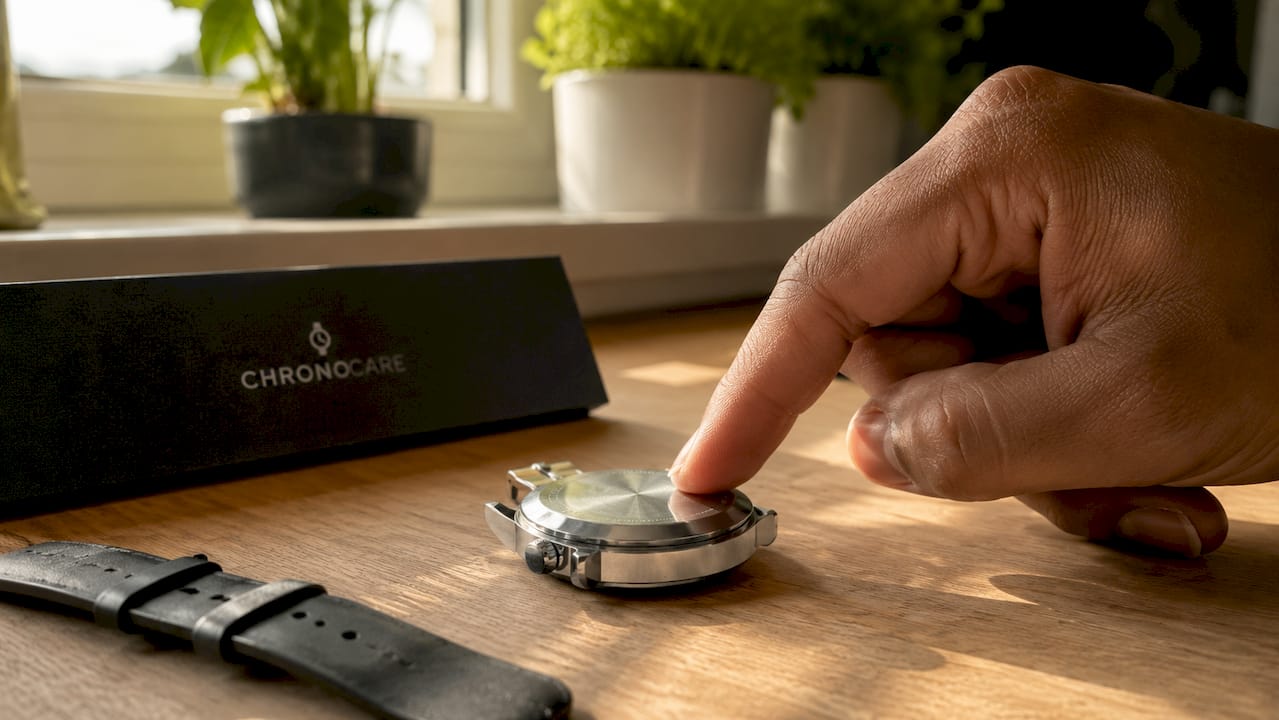
Material matters just as much as depth. Stainless steel and gold cases polish well with standard abrasive compounds. Ceramic and PVD or DLC coated cases require specialized treatment, because polishing removes the coating entirely. Sapphire crystals almost always need replacement rather than polishing. Acrylic crystals are the exception: a compound like Polywatch can reduce scratches safely at home.
Location on the watch also changes the calculus. The bezel and case flanks are the most commonly scratched areas, and they are also the most visible. Scratches on the crystal affect legibility. Scratches near the lugs or crown can indicate impact damage that may have affected water resistance. Assess each zone separately before deciding on a course of action.
- Fingernail test: Catches = professional job. Slides over = DIY candidate.
- Material check: Stainless steel and gold are polishable. Ceramic, PVD, and DLC are not.
- Crystal type: Acrylic is DIY-friendly. Mineral and sapphire require professional care.
- Location: Bezel and flanks are cosmetic. Crown area damage may signal internal risk.
Pro Tip: Inspect the scratch under a bright light at a low angle. This reveals the true width and depth far better than overhead lighting.
What tools and materials do you actually need?
The right abrasives make the difference between a restored case and a ruined one. Professional restoration uses a grit progression from 240–400 for initial deep scratch removal, stepping up through 800, 1200, and 1500 grit, and finishing at 2000–3000 grit before final polishing. Skipping grits or jumping straight to a fine compound on a deep scratch leaves visible scratching underneath the polish. Each stage removes the marks left by the previous, coarser grit.
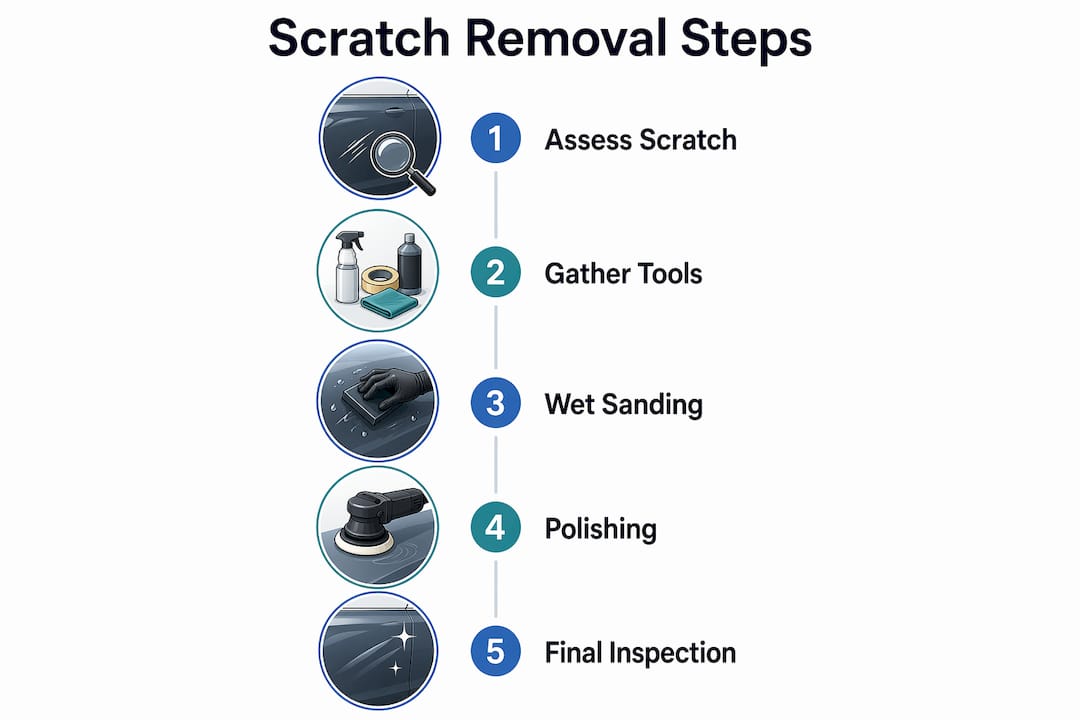
| Stage | Grit Range | Purpose |
|---|---|---|
| Coarse cut | 240–400 | Flatten and reduce deep scratches |
| Medium cut | 800–1200 | Remove coarse scratch marks |
| Fine cut | 1500–2000 | Smooth surface before polishing |
| Final polish | 2500–3000 | Restore surface clarity and sheen |
Beyond abrasive papers, you need a few more supplies before starting:
- Polishing compound: A metal-specific paste or cream designed for watch cases. Avoid automotive compounds, which are too aggressive for fine watch steel.
- Microfiber cloths: Use separate cloths for each polishing stage to avoid cross-contamination.
- Painter’s tape: Mask the crystal, crown, and any brushed surfaces adjacent to the polished area.
- Flat backing pad: Wrap abrasive paper around a firm, flat block to maintain even pressure and avoid rounding edges.
Pro Tip: Never use a rotary tool or Dremel on a luxury watch case at home. The speed makes it nearly impossible to control material removal, and you can destroy a chamfer in seconds.
Step-by-step: how to safely polish out deep scratches
A careful, sequential process is the only way to reduce deep scratches without creating new problems. Rushing any stage compounds the damage.
-
Clean the case thoroughly. Microscopic grit causes new scratches during polishing if not removed first. Use an ultrasonic cleaner if you have one, or scrub the case with a soft brush and mild soap. Rinse and dry completely before touching any abrasive.
-
Mask adjacent surfaces. Apply painter’s tape over the crystal, any brushed finish panels, and the crown. Polishing compound on a brushed surface will convert it to a mirror finish, which is very difficult to reverse at home.
-
Start with the appropriate grit. For a scratch that catches the fingernail, begin with 400 grit wet-and-dry paper wrapped around a flat block. Work in straight, consistent strokes that follow the existing grain of the case. Never use circular motions on a brushed finish.
-
Work through the grit progression. Move from 400 to 800, then 1200, then 1500 grit. At each stage, clean the surface and inspect under a bright light before moving on. The goal at each step is to replace the previous grit’s scratch pattern with a finer one.
-
Blend, do not erase. Experts recommend aiming for scratch blending rather than full eradication on deep marks. Trying to completely remove a deep gouge by polishing removes too much surrounding metal and rounds the edges of the case. A blended scratch is far less visible than a rounded lug.
-
Apply polishing compound for the final stage. Use a small amount of watch-specific polishing cream on a microfiber cloth. Work in short, controlled strokes. For a mirror-polished surface, finish with a clean cloth using very light pressure.
-
Restore brushed finishes separately. Brushed panels require a different technique. Use a fine Scotch-Brite pad or a dedicated brushing tool, working strictly in one direction along the original grain. Restoring a brushed finish after polishing is one of the most common mistakes collectors make, and it requires patience.
-
Inspect under varied lighting. Check the result under natural light, a direct lamp, and at different angles. Scratches that disappear under one light source often reappear under another. If the scratch is still clearly visible after this full process, it is time to consider professional refinishing.
Pro Tip: Keep a small spray bottle of water nearby when using wet-and-dry paper. Keeping the paper wet reduces friction heat and extends the life of each sheet.
When should you take your watch to a professional?
Some scratches are simply beyond what careful home polishing can address. Laser welding is the preferred technique for deep gouges because it adds metal rather than removing it. This preserves the sharp chamfers and defined edges that give a luxury watch its character. Traditional polishing removes surrounding material, which blurs those edges and reduces resale value over time.
Collectors who understand how polishing affects value know that over-polished cases are a red flag at auction. A watch with rounded lugs and softened edges signals repeated amateur refinishing, which buyers discount heavily. The goal of professional restoration is preserving geometry and finish, not just removing scratches.
Professional refinishing includes several steps that home polishing cannot replicate:
- Movement removal before any work begins, protecting the mechanism from vibration and contamination.
- Ultrasonic cleaning and contamination control at every stage.
- Grit progression managed under magnification to avoid collateral damage.
- Pressure testing after reassembly to confirm water resistance has not been compromised.
- Finish matching to restore brushed and polished zones to factory specification.
Cost is a real consideration. Professional case refinishing typically costs less than a full service, and far less than replacing a case damaged by aggressive DIY polishing. For any watch with significant collector or monetary value, professional evaluation is the correct first step, not a last resort.
“Owners often overestimate their ability to fully erase deep scratches, risking long-term watch damage. Professional restoration is about preserving geometry and finish, not just scratch removal.”
Key Takeaways
The most effective approach to removing deep scratches from a watch case combines honest scratch assessment, a disciplined grit progression, and professional intervention for any gouge that alters case geometry.
| Point | Details |
|---|---|
| Use the fingernail test first | If your nail catches the scratch, professional refinishing is the right call. |
| Match technique to material | Stainless steel and gold polish safely; ceramic and coated cases require specialist care. |
| Follow the full grit progression | Start at 240–400 grit and work up to 2000–3000 before final polishing. |
| Blend, do not erase | Chasing perfection removes too much metal and rounds case edges permanently. |
| Professional work preserves value | Laser welding and factory-matched finishing protect resale value better than DIY polishing. |
Why I think most collectors get this wrong
Most watch owners approach a scratched case the way they would approach a scratched car. They grab the finest compound they can find and start rubbing. That instinct is understandable, but it is exactly backwards for a luxury watch.
The edges of a well-made watch case are what give it visual weight and presence. A sharp chamfer on a polished lug catches light in a way that a rounded one never will. Every time you polish aggressively, you lose a little of that geometry. After two or three rounds of heavy polishing, a watch that once looked architectural starts to look soft and worn in a way that no amount of shine can fix.
My honest advice: accept the scratch. A few marks on a well-worn watch tell a story. If the scratch genuinely bothers you, do the fingernail test, assess the material, and if there is any doubt, take it to a qualified watchmaker for an evaluation before touching it yourself. The cost of a professional opinion is always less than the cost of fixing a mistake. Between restorations, a quality watch polishing cream used lightly and regularly will keep surface marks from deepening and maintain the finish between professional services.
— Raymond Jenkins
ChronoCare products for maintaining your watch’s finish
Watch collectors who want to keep their cases looking their best between professional services need the right products at home.
ChronoCare’s Ultimate Watch Polishing & Cleaning Kit includes everything needed to address light surface marks and maintain a polished finish on stainless steel and gold cases. For collectors focused on regular upkeep, the luxury watch cleaning kit provides a complete cleaning solution that removes oils, dust, and micro-abrasives before they work deeper into the surface. All ChronoCare formulas are developed in the US for luxury timepieces, so you are not using generic metal polish on a watch that deserves better.
FAQ
Can you remove deep scratches from a watch case at home?
You can reduce many deep scratches at home using a careful grit progression from 240 up to 3000 grit, but gouges that catch the fingernail typically require professional refinishing to avoid altering the case geometry.
Does polishing a watch case reduce its value?
Excessive polishing rounds the edges and removes factory finishes, which collectors and auction houses discount heavily. Blending scratches rather than erasing them preserves more of the original case geometry and resale value.
What is the best method for deep scratch removal on a watch?
Laser welding is the preferred professional technique for deep gouges because it adds metal rather than removing it, preserving sharp chamfers and original case proportions better than grinding or polishing alone.
Can all watch case materials be polished?
Stainless steel and gold cases polish well with standard abrasive compounds. Ceramic, PVD, and DLC coated cases cannot be polished without removing the coating, and sapphire crystals require replacement rather than polishing.
How do I tell if a scratch needs professional repair?
Run your fingernail across the scratch. If it catches, the gouge is deep enough to require professional evaluation. Scratches near the crown or case back may also indicate impact damage that could affect water resistance.