

Clean a Gold Watch: Daily Wipes, Monthly Care, 3–6 Month Deep Service
Clean a gold watch daily with a dry microfiber cloth, and save water for confirmed water-resistant pieces only, using a drop of mild soap and immediate drying. If your watch is gold-plated or vintage, skip soaking altogether and never use abrasive polish. ChronoCare’s Raymond Jenkins recommends this same conservative approach for anything you can’t verify is solid, sealed gold.
TL;DR:
- Most damage to gold watches results from skin oils and lotions accumulating over months, making daily wiping with a microfiber cloth essential.
- Confirm water resistance before cleaning with moisture, and use minimal water with gentle soap on fully sealed, water-resistant watches to prevent damage.
- Gold-plated and vintage watches require especially gentle cleaning with dry or barely damp cloths to avoid wear through the microns-thin gold layer.
- Ultrasonic cleaning is only safe for solid gold watches with intact seals; it can accelerate wear on plated or vintage pieces.
- Regular, conservative maintenance and avoiding aggressive polishing preserve a watch’s appearance and long-term value better than heavy-handed cleaning.
Table of Contents
- Quick Daily Care That Prevents Heavy Cleaning
- How Do You Safely Clean a Water-Resistant Gold Watch?
- Gentle Cleaning for Gold-Plated and Non-Water-Resistant Watches
- Should You Polish a Gold Watch? What to Know First
- When Should You Call a Professional Instead?
- A Maintenance Calendar That Actually Sticks
- Expert Guidance From ChronoCare on Product Selection
- Cleaning Engravings and Intricate Details Without Losing Detail
- Is Ultrasonic Cleaning Safe for a Gold Watch?
- Cleaning the Crystal Without Touching the Gold
- Why Conservative Cleaning Protects Long-Term Value
- ChronoCare’s Recommended Kits for Safe Home Cleaning
- Sources
Quick Daily Care That Prevents Heavy Cleaning
Most gold watch damage happens slowly, from skin oils, sunscreen, and hand lotion working into the case back and bracelet links over months, not from a single accident. A microfiber cloth wiped across the case and bracelet after you take the watch off removes that residue before it has a chance to settle in.
A few habits do most of the heavy lifting:
- Wipe the case and bracelet with a dry microfiber cloth every time you take the watch off.
- Put the watch on last, after lotion, sunscreen, and perfume have dried, not before.
- Store it in an individual soft pouch, a lined watch roll, or a separate compartment so it never rubs against other jewelry or metal.
- Keep it away from direct sunlight and bathroom humidity when it’s off your wrist.
Think of cleaning frequency in three tiers: a daily wipe, a light clean once a month, and a deeper clean every few months depending on how much you sweat, how often you’re outdoors, and how much lotion or sunscreen touches your wrist. Athletes and people in humid climates lean toward more frequent cleaning; someone who wears a dress watch to the office can clean less often.
Pro Tip: Keep a second microfiber cloth in your desk drawer or gym bag. The habit only sticks if the cloth is as accessible as the watch itself.
For watches with contrasting metal accents, our guide on caring for two-tone watches covers how to wipe gold sections without dragging grime from the steel side across the finish.
How Do You Safely Clean a Water-Resistant Gold Watch?
Before you introduce any moisture, confirm the watch can actually handle it. Check the case back or original paperwork for a water resistance rating, and if you can’t find one or the watch is decades old, treat it as non-water-resistant. Water resistance ratings on older watches often overstate what the gaskets can still handle, since rubber seals degrade with age even if the stamped number on the case back never changes.
If the rating checks out and you’re confident in it, here’s the routine that works without risking the movement:
What you need: lukewarm water, one drop of mild dish soap, two clean microfiber cloths, a soft-bristled brush (a child’s toothbrush works fine), a few cotton swabs, and a dry towel.
- Remove the bracelet from the case if your watch allows it. Cleaning the bracelet separately eliminates any risk to the crown, crystal seal, or case.
- Mix one drop of soap into a small bowl of lukewarm water. Dip the brush and work it gently between the links, focusing on grooves where grime actually collects.
- If the bracelet is fully detached and you’re comfortable rinsing it, a brief rinse under lukewarm running water clears soap residue. Skip this step if you have any doubt about seals or if the bracelet has glued or cemented elements.
- Dry immediately with a microfiber cloth, then let it air out for a few minutes before wiping again to catch moisture trapped between links.
- If you’re cleaning the case while it’s still attached to the bracelet, keep the crown unscrewed but shielded from direct water contact, and never submerge the case, even a water-resistant one, unless the manufacturer specifically confirms it’s rated for that kind of cleaning.
- Finish with a dry microfiber buff across the entire piece.
A soft brush and mild soap solution is the standard safe method for cleaning bracelets on water-resistant watches, but submerging the case itself is a separate risk that depends entirely on gasket condition, not just the ATM rating stamped on the back.
Drying immediately matters more than most people assume. Moisture that sits between bracelet links or inside a clasp doesn’t just evaporate cleanly. It can promote corrosion on base metals under gold plating and, worse, work its way toward the case seal over repeated cleanings. A bracelet link cleaning checklist walks through drying technique in more detail if your bracelet has a folding clasp or micro-adjustment holes, which trap water more easily than simple pin links.
Gentle Cleaning for Gold-Plated and Non-Water-Resistant Watches
Gold plating is typically only a few microns thick, a layer thinner than a human hair. That’s the entire reason plated watches need a different approach than solid gold: any abrasive cleaner or aggressive scrubbing can wear through the plating and expose the base metal underneath, and once that happens, the fix is replating, not cleaning.
The safe toolkit for plated and vintage pieces is deliberately minimal:
- Start with a completely dry microfiber cloth to remove loose dust and surface oil.
- For visible marks, dampen a corner of a fresh microfiber cloth (barely damp, not wet) and spot-clean just the marked area.
- For grime inside bracelet links, use a cotton swab lightly moistened with water, not soap, and work it gently along the inner edges.
- Dry the area immediately with a separate dry cloth, then buff lightly to restore shine.
- For deep crevices around engravings or clasp hinges, a blunt toothpick wrapped in a lint-free cloth can nudge grime loose without scratching the surface, followed by a damp swab pass and immediate drying.
Skip toothpaste, baking soda, vinegar, and any household solvent entirely. These show up constantly in casual advice because they work on other metals, but on gold-plated surfaces they tend to cause more harm than the grime they remove, either through mild abrasion or chemical reaction with the base metal.
Pro Tip: If a spot won’t come clean with a damp cloth and two passes, stop. That’s the line where a jeweler-grade, plate-safe cleaner or a professional cleaning beats pushing harder yourself.
Jeweler-formulated cleaners designed specifically for plated surfaces exist precisely because DIY acidic or abrasive mixtures are the leading cause of accidental plating loss. If you’re dealing with stubborn grime on a plated piece, that’s the safer next step before reaching for anything from under the sink.
Should You Polish a Gold Watch? What to Know First
Solid gold and gold-plated watches live by different rules the moment polishing enters the picture. Solid gold can tolerate a cautious polish because the metal goes all the way through. Plated watches can’t. Any polishing cream or cloth used on plating removes a portion of that microns-thin layer permanently, and there’s no adding it back without professional replating.
A few distinctions worth keeping straight:
- A polishing cloth (usually treated with a very fine, non-abrasive compound) is the gentlest option and appropriate for light, occasional use on solid gold.
- Polishing cream offers more correction for actual scratches, but it should always carry label guidance confirming it’s safe for the finish you’re treating.
- Look specifically for plate-safe certification before using any cream on a gold-plated piece, and when the label doesn’t say, assume it isn’t safe.
- Light surface scratches respond to gentle circular motions with minimal pressure and a small amount of product, never aggressive back-and-forth scrubbing.
- Deep scratches that catch a fingernail are a job for a professional, not a home polish attempt.
Here’s what most owners underestimate: polishing is cumulative. Every session removes a small amount of gold, and repeated polishing over years measurably reduces the metal’s thickness, which on a plated piece eventually reaches the base metal and on a solid gold vintage piece can flatten sharp case edges that were part of its original design. For collectors, that’s not just a cosmetic issue. Over-polished vintage watches routinely sell for less than examples with original, unpolished cases, because collectors specifically value crisp, factory-original edges over a shinier but rounded-off case. Once a polishing routine ends up in the ChronoCare guide on polishing a watch case after service, it should be occasional maintenance, not a habit.
When Should You Call a Professional Instead?
Some situations are outside the scope of any home routine, no matter how careful you are. Watch for these signs:
- Fog or moisture visible under the crystal, which usually points to a seal failure.
- Loose stones or a setting that moves when gently pressed.
- Plating that’s visibly peeling, flaking, or showing a different-colored metal underneath.
- A clasp that won’t close securely or a crown that doesn’t screw down properly.
- Any greenish or dark corrosion spots, especially around the case back or lugs.
A professional can offer ultrasonic cleaning when the watch’s seals support it, pressure testing and resealing for water resistance, replating for plated pieces that have worn through, and full movement servicing when grime or moisture has reached the inside.
For vintage and collector pieces specifically, resist the instinct to restore everything to a like-new shine. Many collectors intentionally preserve the original patina on a decades-old case, since aggressive restoration can strip character that actually adds to a watch’s value. Ask a jeweler what a cleaning versus a restoration means for resale value before you commit to either one. Our guide to checking an Oyster case before cleaning at home walks through exactly this kind of decision for Rolex owners weighing preservation against a full service.
A Maintenance Calendar That Actually Sticks

The cadence that works for most gold watch owners breaks down into three simple intervals: wipe it down daily, give it a light clean once a month, and schedule a deeper clean every three to six months depending on exposure to sweat, sunscreen, and humidity.
Storage matters just as much as cleaning frequency. A few habits worth building into your routine:
- Use individual soft pouches or a lined watch box rather than tossing watches into a drawer together.
- Keep the storage area at stable humidity. Bathroom cabinets and damp basements are both poor choices.
- Separate each piece so clasps and case backs never scratch against another watch.
- Keep watches out of direct sunlight, since UV exposure can affect leather straps and, over years, subtly dull some finishes.
If you have a watch you rarely wear, don’t ignore it entirely. Wind mechanical pieces periodically to keep the movement’s oils distributed, and check the crystal seal and gaskets every few months even if the watch sits in a drawer. Our long-term collector care routine breaks this down further for anyone rotating between several pieces.
Expert Guidance From ChronoCare on Product Selection
Raymond Jenkins, whose watch-care guidance shapes much of ChronoCare’s product instructions, has been clear on one point above all others: the right cleaning product depends entirely on whether you’re working with solid gold or a plated finish, and mixing that up is where most avoidable damage happens.
A few practical distinctions his guidance emphasizes:
- Polishing cream is appropriate for solid gold and other robust metal surfaces, never for thin plated finishes.
- A dedicated cleaning kit with soft brushes and microfiber cloths is the safer choice for routine residue removal on any gold watch, plated or solid.
- Crevices around clasps and engravings need the gentlest tools in the kit, not the polishing compound.
- When a product label doesn’t explicitly confirm plate safety, that silence is itself the answer.
For product-specific instructions tailored to your exact watch, ChronoCare’s how-to pages walk through which formula pairs with which finish before you touch a cleaning cloth to your wrist.
Cleaning Engravings and Intricate Details Without Losing Detail
Engraved casebacks, fluted bezels, and detailed clasp work collect grime faster than flat surfaces because dirt has more edges to cling to. Standard wiping barely touches what’s sitting inside a groove, which is why these areas often look dull even on an otherwise clean watch.
A soft-bristled brush, used dry first, lifts loose dust out of engraved lines without pushing debris deeper. If grime remains after a dry pass, a barely damp cotton swab worked along the engraving’s edge, rather than across its face, clears residue without applying pressure to raised details that could wear down over repeated cleanings. For genuinely fine work, like numerals inside a fluted bezel or a monogram on a caseback, a wooden toothpick wrapped in a lint-free cloth reaches into corners a swab can’t, provided you use it to nudge grime rather than scrape at it.
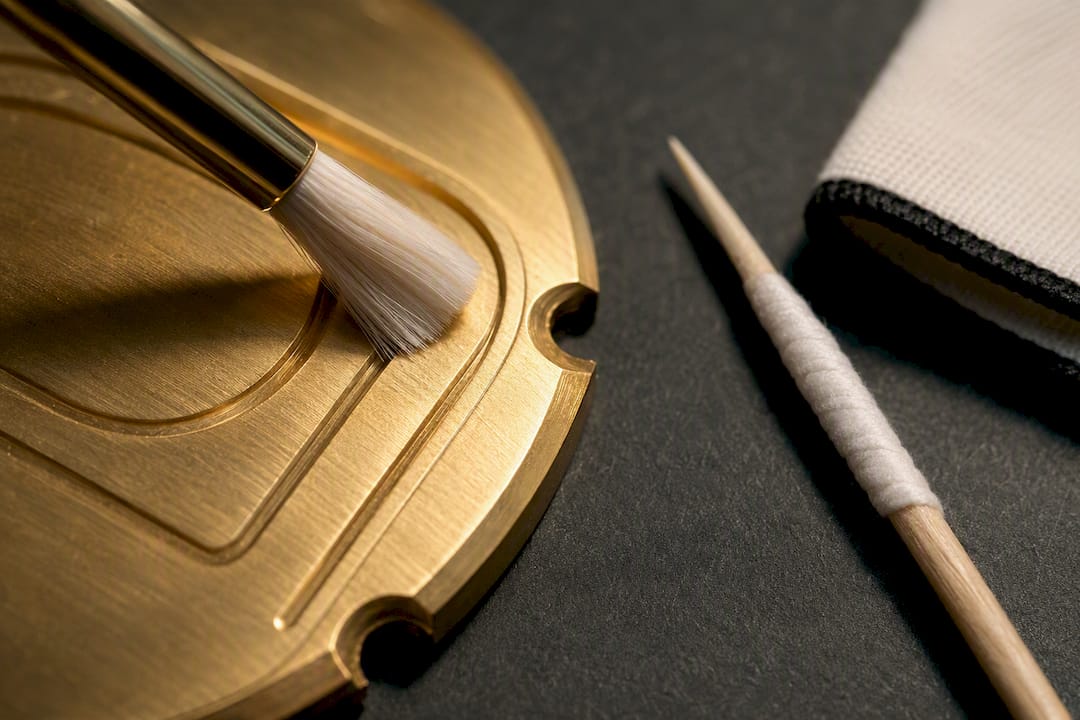
Raised lettering and applied indices deserve extra caution. These details sit slightly above the surface and take the brunt of any polishing motion, which is exactly why a polishing cloth or cream should never be worked directly across engraved text. The recessed areas need patience with a swab or toothpick; the raised areas need to be left alone entirely during routine cleaning. Rushing this step is how fine engraving detail slowly rounds off over years of well-intentioned but overly aggressive cleaning.
Is Ultrasonic Cleaning Safe for a Gold Watch?
Ultrasonic cleaners use high-frequency sound waves to agitate a cleaning solution, generating tiny bubbles that lift grime out of crevices no brush or swab can fully reach. For gold bracelets and cases with dense, hard-to-access spots, that’s a genuine advantage over manual scrubbing.
The precaution list is longer than the benefit list, though. Ultrasonic cleaning is only appropriate when the watch case is genuinely water-resistant with intact seals, since the process submerges the piece in liquid for several minutes. Watches with loose stones should stay out of an ultrasonic bath entirely. The vibration can work settings looser or, in rare cases, dislodge a stone completely. Pearls and certain colored gemstones are similarly vulnerable and should never go anywhere near an ultrasonic tank.
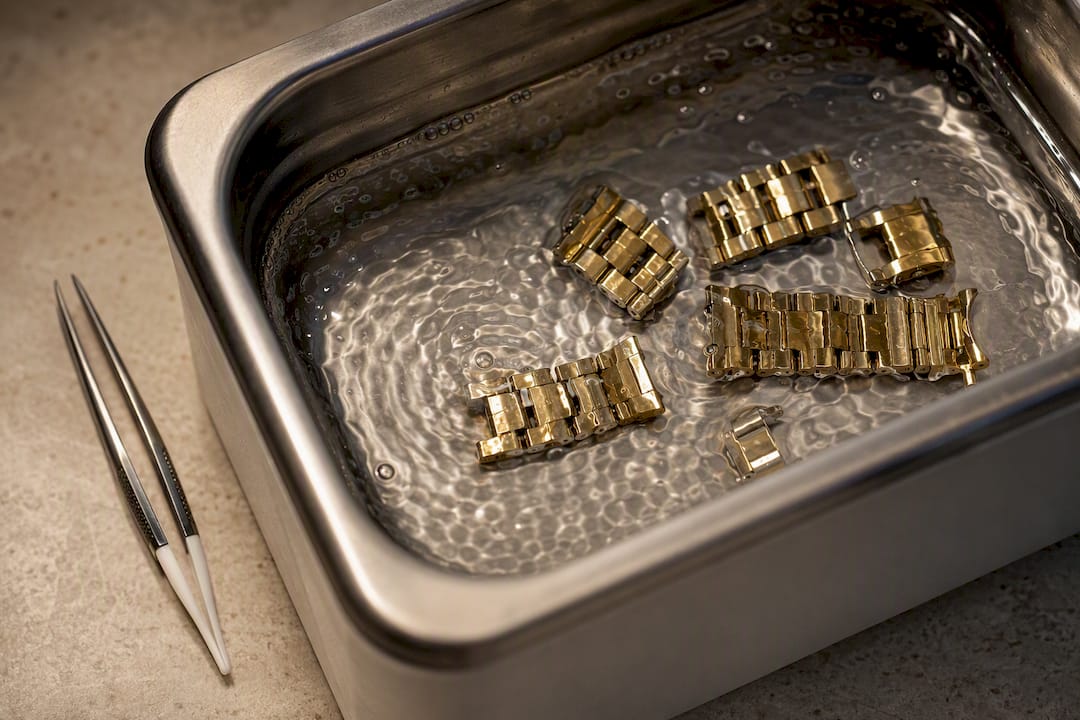
Gold-plated watches carry a more specific risk. The cavitation action that makes ultrasonic cleaning effective on solid gold can, over repeated cycles, accelerate wear on a plating layer that’s already only a few microns thick. That’s the main reason ultrasonic cleaning at home is best reserved for solid gold pieces with confirmed water resistance, while plated and vintage watches are better served by the manual, minimal-moisture methods covered earlier. If you’re unsure whether your watch qualifies, a jeweler with an ultrasonic unit can make that call in minutes, and that’s a far cheaper mistake to avoid than replating a bracelet.
Cleaning the Crystal Without Touching the Gold
The crystal usually needs more frequent attention than the case itself, since fingerprints and smudges show up there first. The cleaning approach differs depending on whether you’re working with mineral glass or sapphire.
Sapphire crystal is highly scratch-resistant and tolerates a slightly firmer wipe with a microfiber cloth and a drop of water if needed. Mineral or acrylic crystals scratch more easily and respond better to a dry microfiber pass first, followed by a barely damp cloth only if smudges persist. Either way, avoid paper towels and tissues entirely. Both contain wood fibers that can leave micro-scratches on crystal over repeated use, even when the crystal is sapphire.
The real risk during crystal cleaning isn’t the glass, it’s the metal surrounding it. Cleaning solution or excess moisture that pools where the crystal meets a gold bezel can seep into that seam, especially on older watches where the gasket has started to degrade. Wipe from the center of the crystal outward, and use a dry cloth to catch any moisture right at that edge before it has a chance to sit. If your watch has a raised gold bezel around the crystal, clean the bezel first with the dry or barely damp methods covered earlier, then move to the crystal last, so you’re not dragging polish or cleaning residue across glass you just cleaned.
Why Conservative Cleaning Protects Long-Term Value
Minimal, careful intervention beats aggressive cleaning almost every time, and that’s not a cautious hedge, it’s the pattern that shows up across every gold watch I’ve seen mishandled. A watch wiped down daily and cleaned gently every few months rarely needs professional restoration. A watch scrubbed hard once a year, or polished every time it looks slightly dull, ages faster and costs more to fix later.
Keep a simple record of when you clean and service your watch, and follow the manufacturer’s specific guidance over generic advice whenever the two conflict. That habit alone prevents most of the damage this article exists to help you avoid.
— Raymond Jenkins
ChronoCare’s Recommended Kits for Safe Home Cleaning
Most of the mistakes covered above happen because someone reaches for whatever’s in the bathroom cabinet instead of a tool actually built for gold. ChronoCare’s Ultimate Watch Cleaning Kit solves that problem directly: it pairs soft-bristled brushes, lint-free microfiber cloths, and a plate-safe cleaning solution so you can handle daily wipes and the monthly deeper clean without guessing whether a product is safe for your finish.
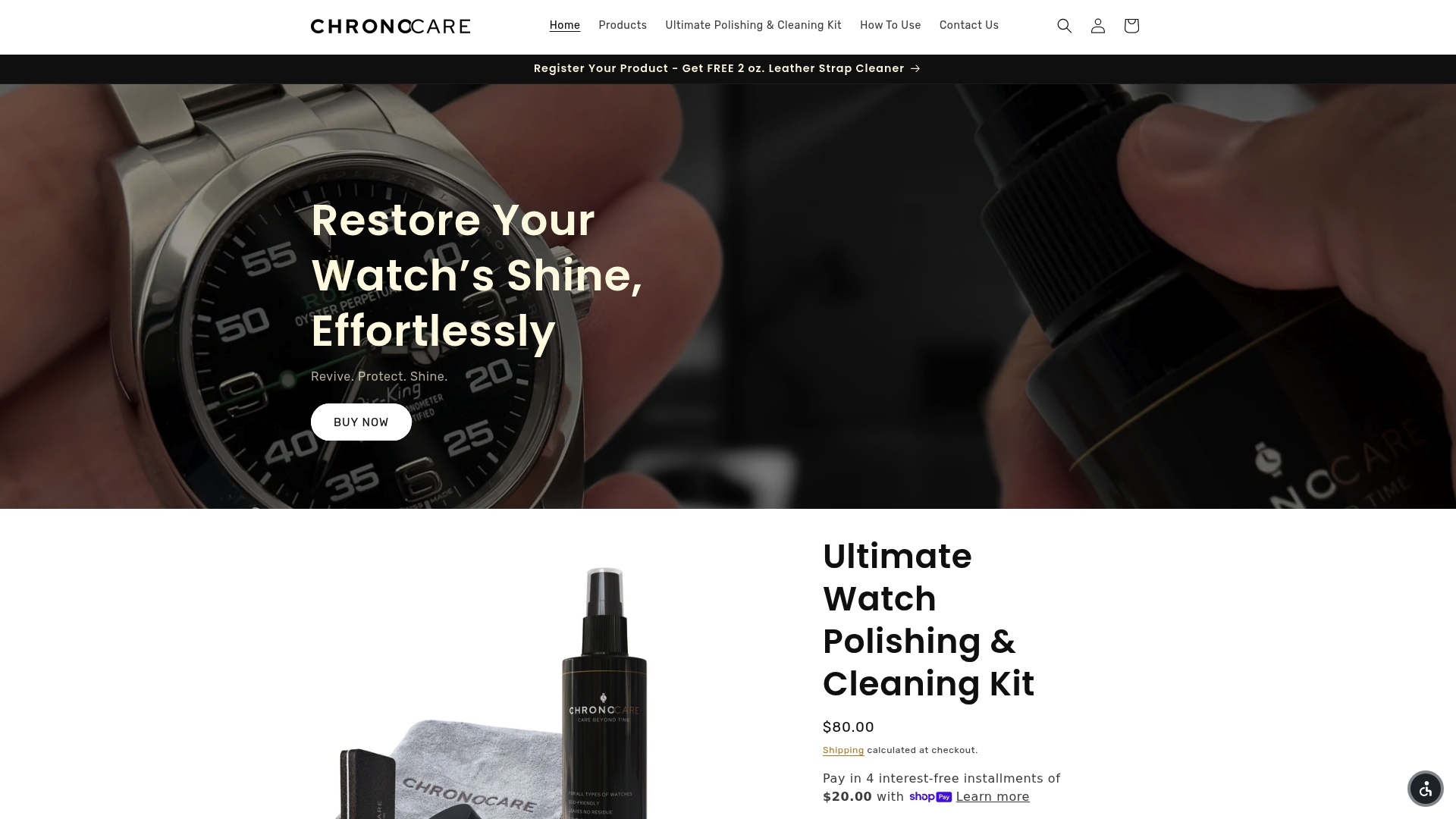
If your watch is solid gold and you’re dealing with light surface scratches rather than grime, the Ultimate Watch Polishing & Cleaning Kit adds a polishing cream formulated for robust metal surfaces alongside the same cleaning tools. That polishing cream is not intended for gold-plated pieces. Stick to the cleaning-only kit if your watch has any plated finish, and save the polishing cream for solid gold cases and bracelets where a bit of light correction is actually safe.
Start with whichever kit matches your watch, and keep it within reach the way you would a phone charger. The pieces that age best are the ones cleaned a little, often, not the ones restored a lot, occasionally.
Sources
- Our Gold Watch Maintenance Guide | Advice Before Selling
- How to Clean Your Watch at Home | Iglisi Watch
- How to Clean Your Vintage Watch
- How to Clean a Gold Watch? - Big Watch Buyers
- How to Clean Gold Plated Watches - WikiHow