

Benefits of Regular Watch Servicing for Collectors
Regular at-home servicing — cleaning, light polishing, and targeted restoration — preserves a luxury watch’s finish, slows corrosion, and directly supports resale value. For collectors, jewelers, and retailers, it is the difference between a piece that commands top dollar and one that quietly loses appeal between professional overhauls.
The core benefits of regular watch care:
- Appearance: Removes skin oils, grime, and environmental residue that dull high-polish and satin surfaces
- Corrosion prevention: Eliminates salt, sweat, and contaminants that cause pitting on stainless steel, gold, and plated cases
- Mechanical protection: Reduces debris accumulation in bracelet endlinks and case seams, lowering the risk of particles migrating toward the movement
- Hygiene: Critical for showroom pieces handled by multiple customers and for personal watches worn daily
- Resale and value retention: Clean, well-maintained pieces attract stronger offers; a polished sapphire crystal reads as “cared for” to any serious buyer
- Early problem detection: Routine cleaning surfaces issues — a loose crown, a cracked gasket, a stressed spring bar — before they become expensive
ChronoCare’s Ultimate Watch Cleaning Kit is built around exactly this maintenance philosophy, with US-formulated solutions and tools sized for both individual collectors and retail environments.
Table of Contents
- What does “regular watch servicing” mean here?
- What are the real benefits for collectors, jewelers, and retailers?
- How to clean your watch safely at home
- When should you polish, and how much is too much?
- How often should you clean, and what does it cost?
- How do you choose the right cleaning and polishing products?
- At-home maintenance checklist
- Key Takeaways
- The case for making this a habit, not a chore
- ChronoCare kits built for this routine
- Useful sources
What does “regular watch servicing” mean here?
This article covers exterior, at-home maintenance only: the cleaning, polishing, and light restoration work you do with a kit, a microfiber cloth, and a soft brush. It does not cover professional movement servicing — the overhaul a watchmaker performs that includes lubrication, regulation, parts replacement, and ISO 22810 water-resistance pressure testing.
Included tasks:
- Microfiber wipe-downs of the case and crystal
- Bracelet and endlink deep cleaning
- Light polishing of high-gloss surfaces
- Leather strap conditioning and cleaning
- Visual corrosion and seal checks
When a crown feels stiff, moisture appears under the crystal, or a gasket looks cracked, stop and escalate to a certified watchmaker. At-home care handles the cosmetic layer; movement integrity is a different discipline.
What are the real benefits for collectors, jewelers, and retailers?
Appearance and perceived value
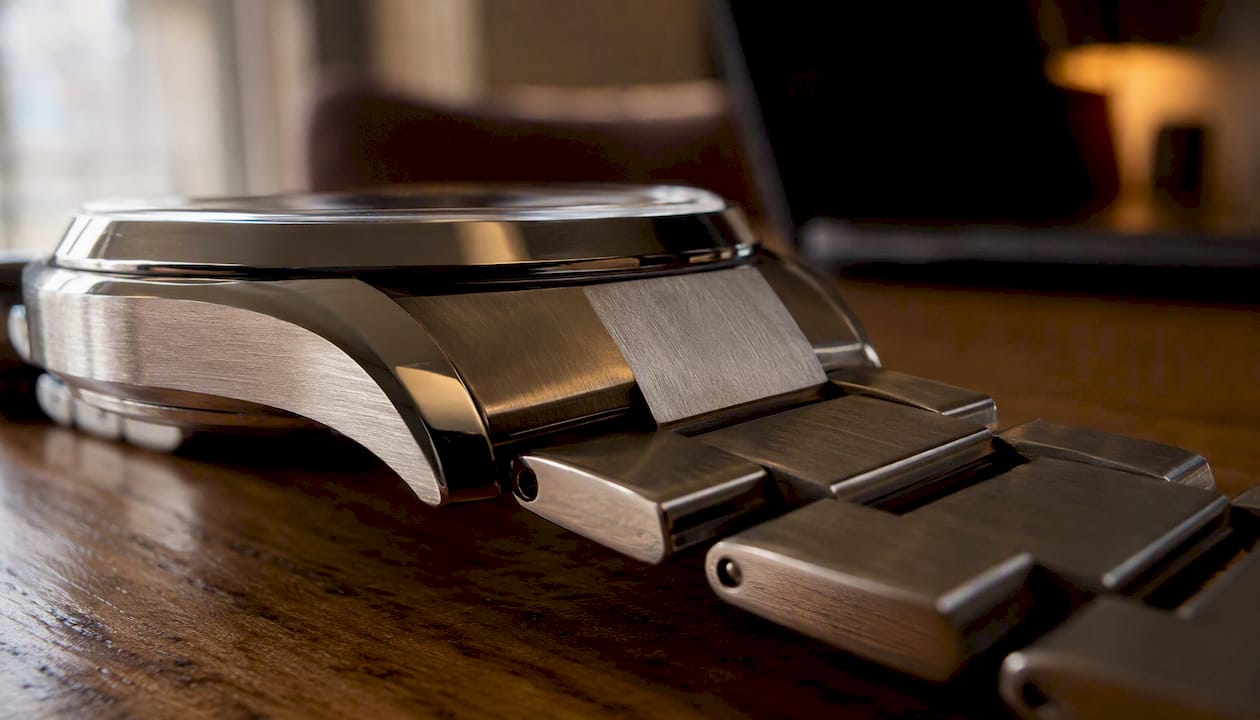
Skin oils and airborne grime bond to polished metal within days of wear. Left alone, they create a hazy film that flattens the contrast between brushed and polished surfaces — the visual signature of a well-finished luxury watch. A proper clean restores that contrast immediately. For retailers, a display piece that looks sharp sells faster and justifies its price tag more convincingly than one with visible smudging.
Corrosion and material protection
Salt from perspiration is the quiet enemy of stainless steel cases and bracelets. It does not cause dramatic rust overnight; it causes micro-pitting over months, particularly around endlinks and clasp mechanisms. Regular cleaning removes these contaminants before they can etch the surface. Gold and plated cases face a different risk: abrasive particles trapped against the surface act like sandpaper with every wrist movement.
Mechanical protection through debris control
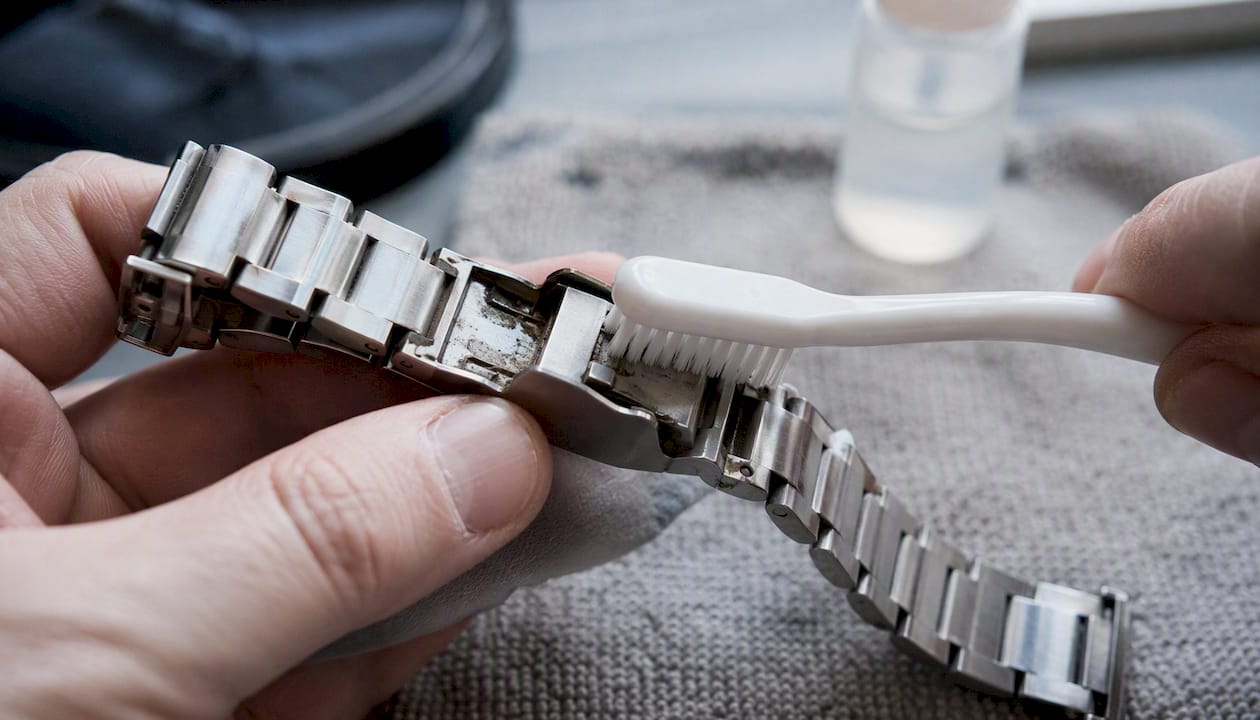
Grit accumulates in the gaps between bracelet links, around the crown tube, and in lug slots. Cleaning reduces the likelihood of debris entering the case and reaching the movement. This is especially relevant for watches without screw-down crowns, where the crown tube is the most vulnerable entry point.
Value preservation and resale
Polishing can restore shine and remove blemishes, which may increase resale value — but the relationship between polishing and value is not linear. Over-polished pieces lose edge definition, and serious collectors notice. The goal is a clean, presentable watch, not a mirror-buffed one that looks refinished.
Hygiene for retail environments
A watch handled by ten customers in a day accumulates fingerprints, skin cells, and trace contaminants. A showroom cleaning protocol protects both the merchandise and the customer experience.
Early problem detection
Cleaning forces close contact with the watch. That is when you notice a crown that does not seat firmly, a crystal with a hairline chip at the edge, or a spring bar that flexes more than it should. Catching these early costs nothing; ignoring them can mean water ingress or a dropped movement.
Pro Tip: When cleaning the crown area, press and rotate the crown gently by feel before any wet work. A screw-down crown that does not seat with its usual resistance is a warning sign worth addressing before moisture gets near the case.
How to clean your watch safely at home
A thorough clean takes 1–2 minutes for a quick wipe or a few minutes for a deeper bracelet clean. Here is the full routine:
Tools you need:
- Watch-specific cleaning solution (pH-neutral)
- Soft-bristle brush (dedicated watch brush or soft toothbrush)
- Microfiber cloth (lint-free)
- Dry lint-free cloth for finishing
- Spring bar tool (for bracelet removal on deeper cleans)
Step-by-step routine:
- Confirm the crown is fully secured (screwed down if applicable) before any contact with liquid.
- Check the watch’s water resistance rating. For pieces rated below 30m, use a barely damp cloth only.
- Apply a small amount of watch-specific cleaning solution to a microfiber cloth.
- Wipe the case, lugs, and crystal using light circular motions.
- Use a soft-bristle brush to work solution into bracelet links, endlinks, and the clasp mechanism.
- For a deeper bracelet clean, remove the bracelet using a spring bar tool and soak briefly in lukewarm water with a mild watch-safe solution.
- For leather straps: wipe with a barely damp cloth and a dedicated leather cleaner. Never submerge.
- Rinse metal components with lukewarm water if the watch’s water resistance allows it. Avoid hot water — it degrades gaskets.
- Pat dry with a lint-free cloth. Do not rub.
- Allow to air-dry fully before storing or wearing.
Avoid: household detergents, bleach, compressed air, and ultrasonic cleaners on vintage pieces with aged gaskets.
Pro Tip: To clear grit from tight endlink gaps without scratching, wrap a wooden toothpick tip in a thin strip of microfiber and work it gently along the gap. It lifts debris without metal-on-metal contact.
When should you polish, and how much is too much?
Polishing should be limited because it removes material — each pass takes a thin layer of metal with it. Done carefully and infrequently, it restores luster. Done repeatedly, it rounds edges, softens engravings, and erases the finishing contrasts that define a quality watch.
What to polish:
- High-gloss case flanks and bezel faces
- Polished center bracelet links (on integrated bracelets designed for this)
What to leave alone:
- Brushed or satin surfaces — polishing cream will destroy the texture
- Engraved case backs and chapter rings
- Plated surfaces — polishing cream removes plating faster than it removes scratches
- Vintage pieces where original patina is part of the provenance and value
Do not:
- Use aggressive buffing compounds on any luxury watch surface
- Polish more than once every 1–3 years unless a specific blemish affects saleability
- Apply polishing cream to a surface without testing on a hidden area first
For vintage collectors: preserve patina when provenance matters. A naturally aged dial or case tells a story that a freshly polished one cannot.
How often should you clean, and what does it cost?
| Task | Frequency | Time per session |
|---|---|---|
| Quick wipe-down | Daily | 1–2 minutes |
| Bracelet and case deep clean | Monthly (frequent wearers) | a few minutes |
| Light polishing | Every few years as needed | 30 minutes per piece |
| Professional cleaning | Periodically every few years | Varies by watchmaker |
Most luxury watches benefit from professional cleaning periodically, typically every few years, with at-home care filling the gap between those visits. A quality DIY kit runs tens of dollars for a complete set; professional cleaning typically costs from several tens to a couple hundred dollars depending on the piece and the service provider.
Signs you need a professional, not a kit:
- Crown feels stiff or does not seat properly
- Visible condensation or fogging under the crystal
- Gasket looks cracked, flattened, or discolored
- Deep scratches that reach the base metal
- Any moisture ingress, however minor
How do you choose the right cleaning and polishing products?
Prefer watch-specific, pH-neutral formulas and nonabrasive polishing creams. The formulation matters more than the price point.
Features to look for:
- pH-neutral cleaning solution safe for metal, crystal, and rubber gaskets
- Nonabrasive polishing cream with a fine-particle formula
- Soft detailing brushes with natural or nylon bristles
- Dedicated leather strap cleaner (separate from the metal cleaner)
- US-formulated products with clear ingredient disclosure
Labels to avoid: bleach, alcohol concentrations above 10%, acetone, ammonia, and any product marketed as a “heavy-duty degreaser.”
Jewelers and retailers buying for stock should look for satisfaction guarantees, bulk kit options, and professional branding that supports resale confidence. Premium formulation and US formulation claims are genuine trust signals for clients who ask what you used on their watch.
Pro Tip: Before applying any polishing cream to a visible surface, test it on the underside of a lug or an inner bracelet link. Photograph before and after. For retailers, that documentation supports warranty and return conversations with customers.
At-home maintenance checklist
Daily:
- Quick microfiber wipe of case, crystal, and bracelet
- Check crown is fully secured after wear
Monthly:
- Deep clean bracelet and endlinks (remove bracelet for thorough access)
- Inspect spring bars for flex or wear
- Check clasp function and alignment
- Wipe leather strap with conditioner
Annual (cosmetic):
- Light polish of high-gloss surfaces if needed
- Full visual inspection: crystal edges, crown seal, case back seal condition
- Review storage conditions
Escalate to a watchmaker when:
- Crown resistance changes
- Any moisture appears inside the crystal
- A spring bar shows visible stress or bending
- The watch loses or gains time noticeably
Storage and handling tips:
- Store away from humidity above 50% and temperature extremes
- Keep watches separated from hard objects (keys, other cases) to prevent contact scratches
- Use a watch roll or individual travel pouches for transport
- Avoid prolonged direct sunlight, which fades dials and degrades leather
The full luxury timepiece maintenance checklist from ChronoCare covers these cadences in printable format.
Key Takeaways
Regular, gentle at-home cleaning and targeted polishing preserve a luxury watch’s finish and resale value far more effectively than infrequent, aggressive restoration.
| Point | Details |
|---|---|
| Clean frequently, polish rarely | Daily wipes and monthly deep cleans protect finish; polish only every 1–3 years to avoid material loss. |
| Match method to water resistance | Always confirm water resistance rating before wet cleaning; use a damp cloth only for low-rated pieces. |
| Cleaning prevents mechanical risk | Removing debris from endlinks and case seams reduces the chance of particles reaching the movement. |
| Know when to escalate | Stiff crown, fogged crystal, or moisture ingress require a watchmaker, not a kit. |
| ChronoCare kits cover the full routine | The Ultimate Watch Cleaning Kit and Ultimate Watch Polishing & Cleaning Kit supply the tools and formulas for every task in this checklist. |
The case for making this a habit, not a chore
The conventional wisdom in collector circles is that watches are robust objects — built to take a beating, serviced when something goes wrong. That framing costs people money. A watch that arrives at resale with dull surfaces, micro-pitting on the lugs, and a bracelet full of compacted grime will sell for less than an identical reference that was wiped down after every wear. The difference is not the watch; it is the discipline.
What gets underestimated is how much information a cleaning session gives you. Spending five minutes with a brush and a microfiber cloth forces you to look at the watch closely. That is when you find the crown that does not quite seat, the crystal chip you missed in normal light, the spring bar that has started to bow. A professional catches these things at a service appointment every few years. You can catch them monthly, for free, with a kit.
The other thing most guides miss: polishing is not a maintenance task. It is a cosmetic intervention with a cost. Every time you polish, you remove metal. For a collector holding a reference for the long term, that matters. For a retailer preparing a piece for display, a clean watch with original finish is almost always worth more than a polished one with softened edges. Clean aggressively. Polish conservatively.
ChronoCare kits built for this routine
Collectors and retailers who follow the routine above need two things: a cleaning kit that handles daily and monthly care, and a polishing option for the occasional cosmetic refresh.
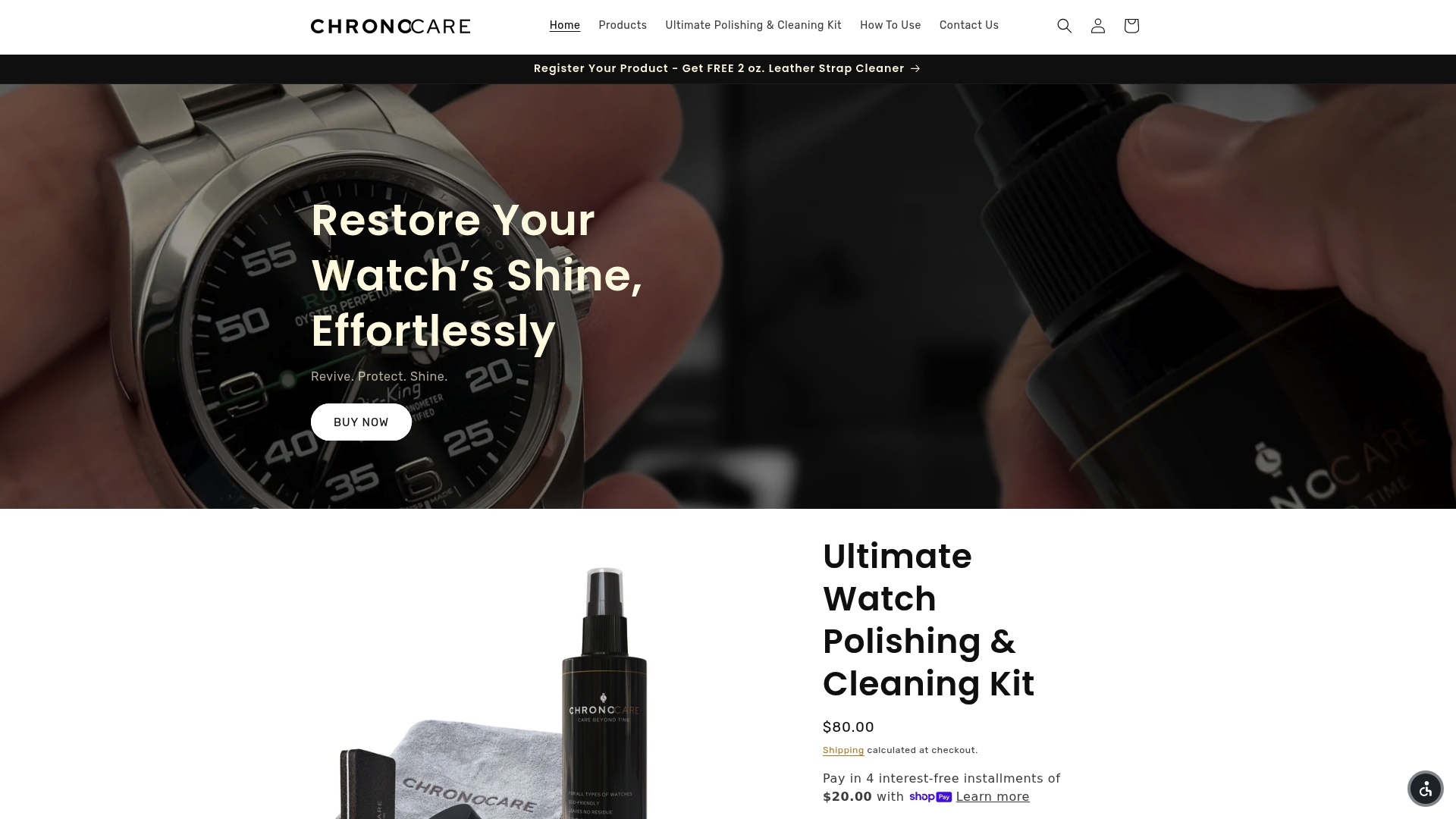
The Ultimate Watch Cleaning Kit from ChronoCare includes a US-formulated cleaning solution, soft detailing brushes, and microfiber cloths — everything on the tool checklist above, packaged for both single collectors and retail environments. For pieces that need light refurbishment, the Ultimate Watch Polishing & Cleaning Kit adds a nonabrasive polishing cream and surface protection products. Both kits carry a satisfaction guarantee and are formulated with ingredient transparency that jewelers can stand behind when clients ask. The standalone Watch Polishing Cream is the right call when you need targeted scratch removal without buying a full kit again. Browse all three at shopchronocare.com and match the kit to the task.
Useful sources
- How To Clean Your Watch - Hodinkee
- Caring for your watch - Audemars Piguet
- Watch Polishing: Pros and Cons - Exquisite Timepieces
- How to care for and maintain a luxury watch - Bob’s Watches
- Luxury watch cleaning - Majestix Collection
- How to clean your luxury watch at home - Toronto Watch Exchange
- Why premium watch care products matter for collectors – ChronoCare
- Ultimate Watch Cleaning Kit – ChronoCare
This article provides general maintenance guidance for informational purposes. For movement servicing, water-resistance testing, or any repair work, consult a certified watchmaker.