

Why premium watch care products matter for collectors
Most collectors spend thousands on a luxury timepiece and then reach for a cotton T-shirt to wipe it down. That habit, repeated over months and years, quietly degrades the very watch they worked so hard to acquire. Understanding why premium watch care products matter goes far deeper than keeping a dial smudge-free. It’s about preserving the mechanical integrity, resale value, and long-term performance of a watch that was engineered to last generations. This guide breaks down exactly what’s happening inside and outside your watch when care is neglected, and what to do about it.
Table of Contents
- Invisible internal wear: the hidden threat to your watch’s performance
- How proper maintenance and premium care preserve value and reliability
- The role of specialized products in protecting watch components
- Storage and handling: the underrated pillars of premium watch care
- Why premium care is the quiet guardian of your watch’s legacy
- Explore premium watch care products for lasting value
- Frequently asked questions
Key Takeaways
| Point | Details |
|---|---|
| Internal wear is invisible | Lubricants and seals degrade inside your watch even if it looks fine outside, causing friction and wear. |
| Regular servicing preserves value | Watches with documented maintenance sell for 20–50% more than those without records. |
| Specialized products prevent damage | Watch-specific cleaning cloths and seal care protect delicate finishes and water resistance. |
| Proper storage matters | Secure, purpose-built storage reduces environmental stressors and extends service intervals. |
| Premium care protects legacy | Good watch care safeguards both mechanical function and collector value over decades. |
Invisible internal wear: the hidden threat to your watch’s performance
External cleaning is the part of watch care you can see. The part you can’t see is far more consequential. Inside a mechanical movement, dozens of tiny components interact at high speed, kept in balance by lubricants and sealed against moisture by gaskets and O-rings. These materials don’t last forever. They degrade silently, regardless of how pristine the case looks on the outside.
Lubricants, seals, and internal consumables degrade over time even when the watch still runs, meaning external cleaning alone can’t prevent the internal wear that reduces accuracy, longevity, and reliability. This is the fundamental reason why premium watch care products matter beyond surface appearance.
Here’s what’s actually happening inside a neglected movement:
- Lubricant breakdown: Watch oils thin out and oxidize over time, increasing metal-on-metal friction between gears, jewels, and pivots.
- Seal degradation: Rubber gaskets harden and shrink with age, allowing moisture and dust to enter the case.
- Increased power loss: Thickened or dried lubricants force the mainspring to work harder, shortening power reserve and reducing accuracy.
- Accelerated component wear: Without proper lubrication, even hardened steel components develop microscopic wear that compounds over years.
“The watch may look and run fine externally while internal damage accumulates invisibly. By the time you notice a problem, the repair cost is often several times what proper maintenance would have cost.”
Pairing your service routine with an ultimate watch cleaning kit handles the external side of this equation while your watchmaker addresses the internal. The two work together. Neither alone is sufficient.
How proper maintenance and premium care preserve value and reliability
Understanding internal wear is vital, but why does this care translate into tangible value and reliability? Let’s explore.
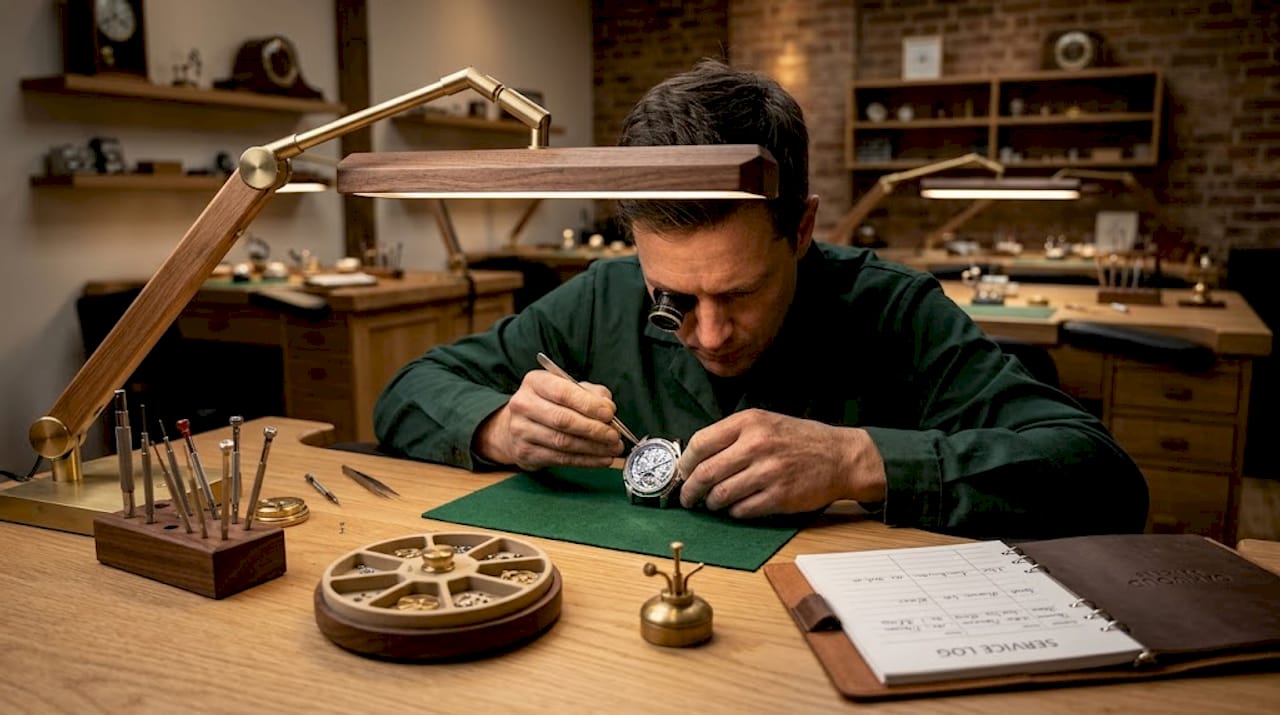
The watch industry has a well-documented relationship between service history and resale price. Watches with complete service documentation can sell for about 20 to 50 percent more than identical models without records. That’s not a minor premium. On a $10,000 watch, that gap represents $2,000 to $5,000 in recovered value, simply from keeping records and maintaining the piece properly.
Recommended service intervals by watch type:
| Watch type | Recommended service interval | Key maintenance focus |
|---|---|---|
| Mechanical (manual wind) | Every 3 to 5 years | Lubrication, seal replacement |
| Automatic | Every 3 to 5 years | Rotor bearing, lubrication |
| Chronograph | Every 3 to 4 years | Column wheel, clutch lubrication |
| Diver/sport watch | Every 2 to 3 years | Pressure testing, seal integrity |
The steps that protect both reliability and value follow a clear sequence:
- Schedule service proactively. Don’t wait for visible symptoms like gaining or losing time. By then, wear has already accumulated.
- Keep all paperwork. Service receipts, pressure test certificates, and parts records are as valuable as the watch itself to future buyers.
- Use premium products between services. Cleaning, polishing, and strap care between professional services reduce the workload on your watchmaker and slow surface degradation.
- Address cosmetic wear promptly. Scratches and finish damage aren’t just aesthetic. They can expose metal to oxidation and moisture.
Pro Tip: An ultimate watch polishing kit used correctly between services can restore brushed and polished surfaces without removing metal, preserving the original finish integrity that collectors and buyers scrutinize. Pair it with a quality watch polishing cream for targeted work on case edges and lugs.
Delaying service is a false economy. A watch that skips a $300 to $600 service at the five-year mark often needs a $1,500 to $3,000 movement overhaul at year eight because worn components have damaged adjacent parts. The importance of watch care compounds, for better or worse, over time.
The role of specialized products in protecting watch components
Having seen the value in servicing, let’s examine how specialized premium care products protect critical watch components between services.
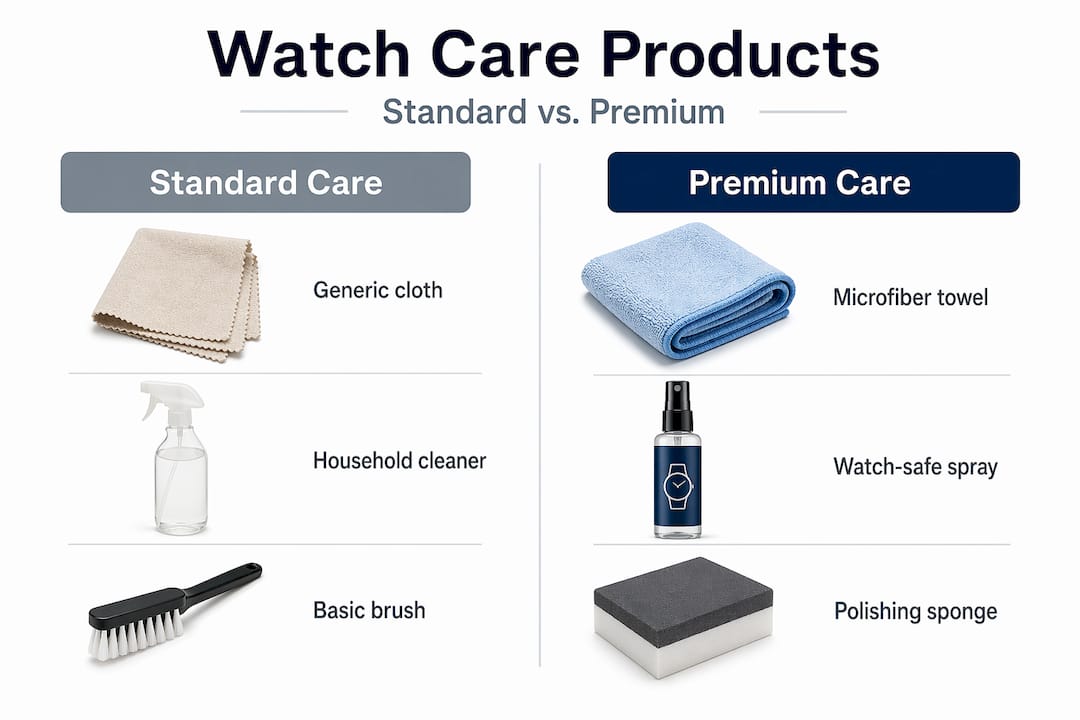
The case for using watch-specific products over household alternatives isn’t marketing. It’s materials science. A lint-free, watch-specific cleaning cloth removes fingerprints, salts, and skin oils without abrasives or residue. A standard cotton cloth, even a soft one, can leave micro-marring on polished surfaces and deposit lint in crown and pusher gaps. On a brushed dial or a satin-finished case side, that difference is visible under any decent light source.
Key benefits of premium watch care products for surface protection:
- Microfiber cloths use ultra-fine fibers that lift contaminants rather than dragging them across the surface, eliminating the micro-scratches that dull a high-polish finish over time.
- Watch-specific cleaning sprays are pH-balanced and alcohol-free, designed to dissolve oils and salt deposits without attacking lacquers, coatings, or gasket materials.
- Leather strap cleaners formulated for watch straps condition the leather without the silicone or petroleum distillates found in generic leather products, which can cause straps to stiffen and crack at the buckle holes.
The seal issue deserves particular attention. Between-service degradation at seals, crown, and tube interfaces is consistently underestimated by collectors. Once seals age, water resistance can change even if the watch passes a quick external inspection. This is slow, cumulative failure, not a dramatic event. A watch rated to 100 meters may lose significant water resistance between services if gaskets aren’t maintained, leaving it vulnerable to moisture damage from something as routine as washing your hands.
Pro Tip: Use an ultimate watch cleaner spray formulated for luxury watches to clean around the crown and caseback threads, where salt and soap residue concentrate and accelerate seal degradation. For watches with leather straps, a dedicated watch leather strap cleaner spray prevents the strap from becoming a source of moisture and oils that migrate toward the case.
The benefits of premium watch products aren’t theoretical. They show up in the condition of a watch at its next service appointment. Watchmakers who service well-maintained pieces report significantly less corrosion, fewer worn components, and better-preserved finishes compared to neglected watches of the same age.
Storage and handling: the underrated pillars of premium watch care
Beyond products, how you store and handle your watch when it’s not on your wrist is crucial to premium care.
Here’s a number that surprises most collectors: a watch worn daily for eight hours is still off the wrist for two-thirds of its life. A watch worn on weekends spends more than 90 percent of its time stored. The environment during rest affects long-term care just as much as active wear, and purpose-built storage is a core part of any serious care routine.
Best watch care practices for storage:
- Control humidity. Store watches at 40 to 60 percent relative humidity. Higher humidity accelerates seal degradation and promotes corrosion on movement components.
- Avoid UV exposure. Direct sunlight fades dials, degrades rubber gaskets, and can warp certain composite materials used in modern cases.
- Isolate from magnets. Store watches away from speakers, bags with magnetic closures, and electronics. Magnetization disrupts the balance wheel and causes significant timekeeping errors.
- Use a purpose-built watch box or roll. Hard-sided cases with individual cushioned slots prevent watches from contacting each other and protect against impact.
Handling habits that reduce wear:
- Set the date before midnight and after 6 a.m. to protect the date mechanism, which is under stress during the automatic changeover window.
- Wind a manual-wind watch at the same time each day to maintain consistent mainspring tension.
- Remove your watch before contact sports, heavy lifting, or any activity with significant vibration or impact risk.
- Clean the watch immediately after exposure to salt water, chlorine, or sweat, which are all corrosive to case materials and seals.
Storage environment comparison:
| Storage method | Dust protection | Humidity control | Impact protection | UV protection |
|---|---|---|---|---|
| Drawer (loose) | Low | None | Low | Moderate |
| Generic jewelry box | Moderate | None | Moderate | Low |
| Purpose-built watch box | High | Moderate | High | High |
| Watch safe with climate control | Very high | High | Very high | Very high |
For watches with matte or brushed finishes, a watch matte finish renewal sponge can restore the original texture between services without polishing away the intentional surface character that makes those finishes distinctive.
Why premium care is the quiet guardian of your watch’s legacy
Here’s a perspective worth sitting with: most collectors spend more time researching which watch to buy than they ever spend thinking about how to keep it. The purchase gets the attention. The care gets the afterthought.
That imbalance costs real money and shortens the mechanical life of pieces that were built to outlast their owners. A Patek Philippe or an A. Lange and Söhne isn’t just a timekeeping device. It’s a mechanical argument that precision and craft matter. Treating it with generic household products or skipping service intervals undermines that argument at the most practical level.
The uncomfortable truth is that premium care is less about making the case look clean and more about preserving the underlying system. Lubricants and seals degrade invisibly. Proper care is what keeps the watch running as intended over long time horizons, not just looking good in a photo.
We’ve seen collectors invest in a second or third watch before properly caring for the first. The logic is understandable. Acquisition is exciting. Maintenance is quiet. But the collector who maintains one watch impeccably over twenty years ends up with something more valuable, both financially and historically, than the collector who neglects five watches over the same period.
Collecting watches is a legacy effort. The watches you care for today will be worn, sold, or passed on to someone who will judge them by their condition. Premium watch care products are the tools that make the difference between a watch that tells its age and one that defies it.
Explore premium watch care products for lasting value
If you’re ready to elevate your watch care routine, consider these expertly crafted products to complement the practices we covered.
ChronoCare designs its entire product line around one principle: luxury watches deserve care products as precise as the movements inside them. Every formulation is developed with delicate finishes, sensitive seals, and collector-grade standards in mind.
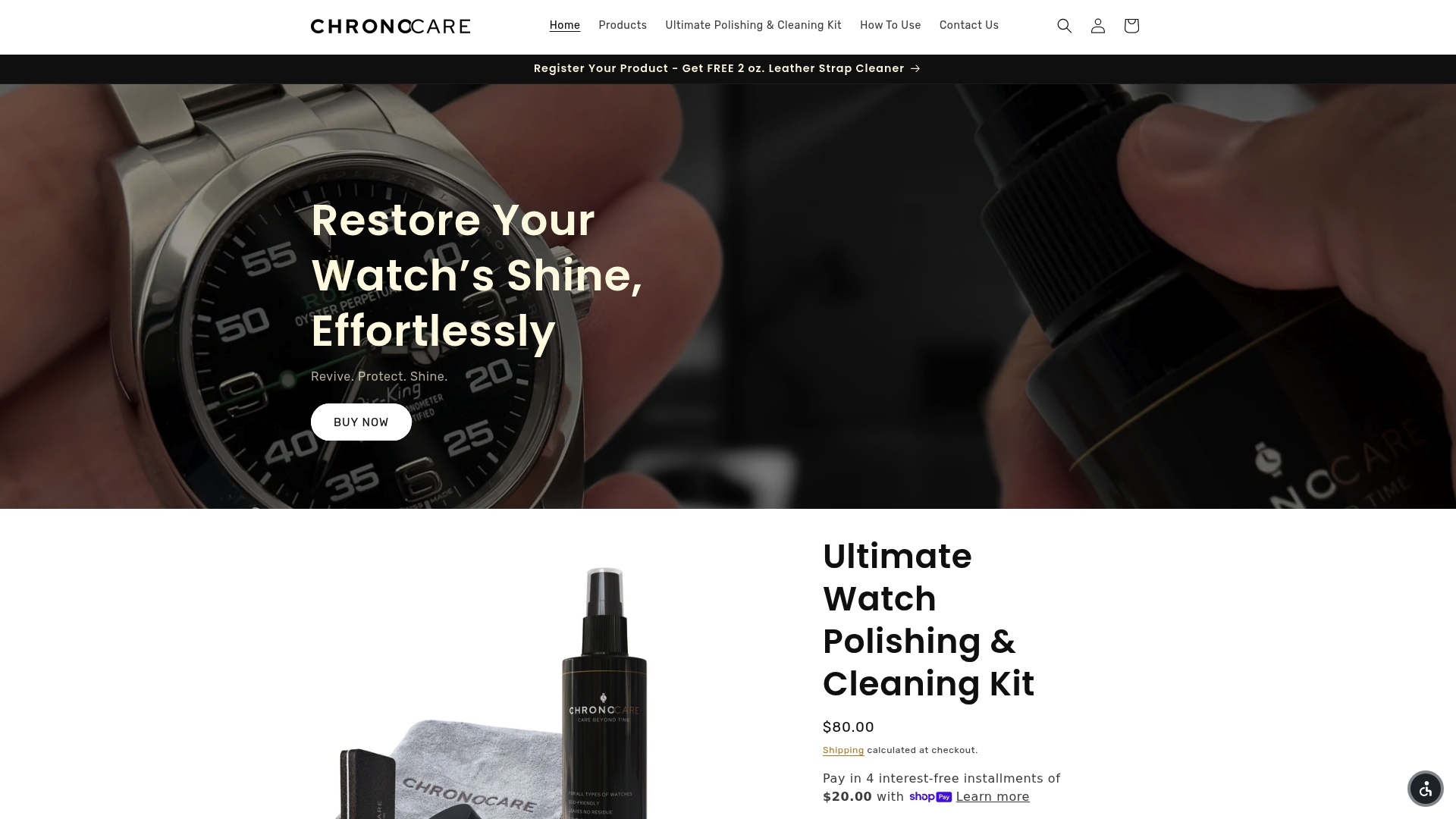
Whether you’re starting with the essentials or building a complete maintenance kit, the ultimate watch cleaning kit gives you a structured foundation for both surface care and finish preservation. For collectors focused on restoring and maintaining metal surfaces, the polishing and cleaning kit handles everything from high-polish cases to brushed lugs with purpose-built tools that won’t compromise the finish your watchmaker worked to preserve.
Frequently asked questions
Why can’t I just clean my watch with a household cloth?
Household cloths can leave residues or cause micro-marring on surfaces, dulling polished finishes over time. Watch-specific microfiber cloths lift oils, salts, and dust without abrasion or residue, protecting the finish integrity that collectors and buyers both notice.
How often should I service my luxury watch to maintain its value?
Experts recommend servicing every 3 to 5 years even when the watch seems to be running fine, because lubricants and seals degrade invisibly. Documented service history can increase resale value by 20 to 50 percent compared to unserviced examples.
Why is storage as important as cleaning my watch?
Watches spend far more time off-wrist than on it, and the storage environment directly affects seal integrity, movement health, and finish condition. Proper storage protects against dust, moisture, UV exposure, and impacts that degrade both mechanics and appearance over time.
What makes premium watch care products worth the investment?
Between-service seal and crown degradation happens slowly and invisibly, and by the time it causes visible damage, the repair cost far exceeds what prevention would have cost. Premium products use materials and formulations specifically designed for delicate watch components, preventing the kind of slow, cumulative damage that generic products simply aren’t built to address.