

How to Polish Your Watch Case After Service
Your watch just came back from the bench. The movement is fresh, the gaskets are new, and the case looks better than it has in years. What you do in the next few weeks determines how long that finish lasts.
The core rule for post-service watch care is simple: do less than you think you need to. A daily wipe-down with a soft microfiber cloth handles the majority of maintenance. Aggressive home polishing, on the other hand, can permanently alter the geometry of a case that took a skilled watchmaker hours to restore.
Here is what expert-backed post-service care actually looks like:
- Wipe the case and bracelet with a lint-free microfiber cloth after every wear to remove oils, sweat, and dust
- Never use abrasive compounds or power tools at home; the risks of home polishing are permanent
- Limit full professional refurbishment to major service intervals, typically several years apart.
- Respect factory finishes — satin flanks, mirror bevels, and crisp chamfers define the watch’s identity
- Use specialist cleaning kits formulated for luxury watch surfaces, not household cleaners
- Follow the conservative restoration philosophy that expert watchmakers endorse: preserve history, do not erase it
Table of Contents
- How to build a daily routine that keeps your polished watch case pristine
- Why home polishing puts your watch at real risk
- How chemicals and environmental hazards damage your watch finish after service
- Which products actually work for maintaining a polished watch case at home
- The right order for personal care products and wearing your watch
- How to do safe minor polishing touch-ups at home after service
- Aftercare habits that make your polish last longer between services
- ChronoCare makes post-service watch care straightforward
- Key Takeaways
How to build a daily routine that keeps your polished watch case pristine
A consistent daily habit prevents the slow accumulation of grime that dulls a freshly serviced finish faster than any scratch.
- End-of-day wipe-down. Use a clean, dry microfiber cloth to remove oils and dust from the case, lugs, and bracelet. Thirty seconds of this prevents weeks of buildup.
- Weekly deeper clean. Mix a few drops of mild soap with lukewarm water. Dip a soft-bristled brush and gently work the solution into bracelet links, around the crown, and along lug edges. Rinse carefully and dry completely with a fresh cloth.
- Check the crown first. Before any moisture touches the case, confirm the crown is fully screwed down or pushed in. An unsecured crown is the most common entry point for water damage after service.
- Dry thoroughly. Pat, do not rub, polished surfaces. Rubbing creates micro-swirls on mirror-finished steel or gold. Use compressed air for crevices between links.
- Store it right. Keep the watch in a watch box or pouch away from direct sunlight, humidity, and dust. UV exposure fades dials and can yellow rubber gaskets over time.
- Avoid chemical contact. Never spray cologne or apply sunscreen while wearing the watch. More on this below, but the short version: chemicals attack gaskets and dull polished surfaces fast.
- Monthly check. Run a finger along the case edges. If you feel rough spots or notice dullness that a cloth cannot fix, that is the signal to consider a light touch-up, not a full polish.
For a complete luxury watch care routine, collectors often pair this daily habit with a quarterly bracelet deep-clean.
Why home polishing puts your watch at real risk
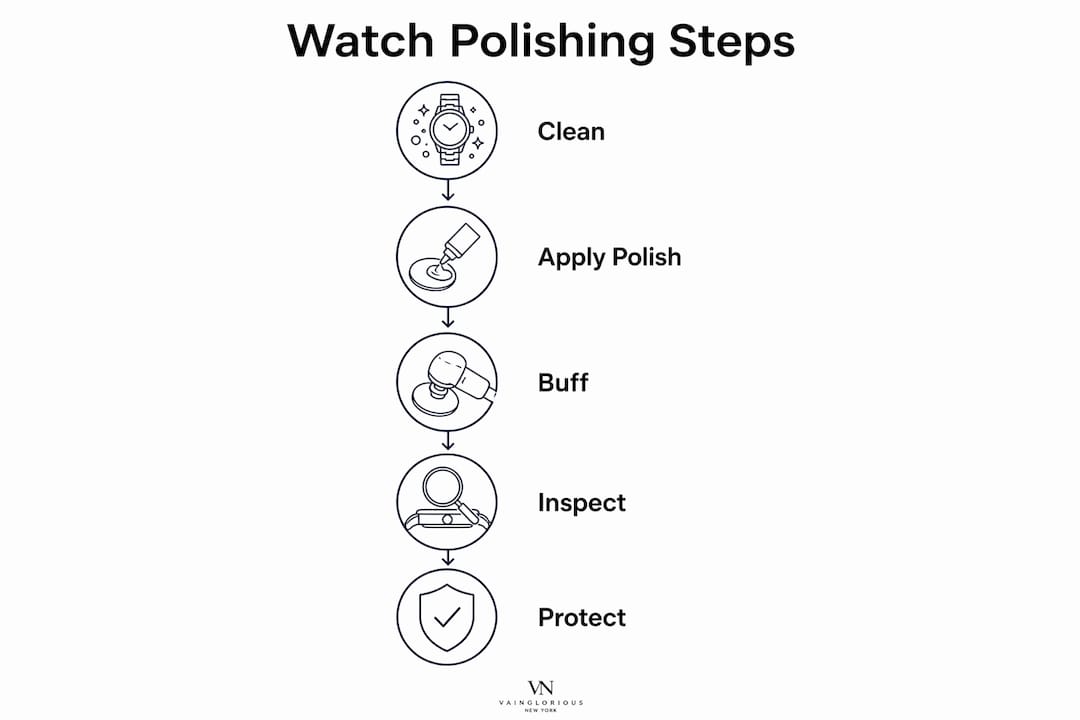
Polishing is not cleaning. That distinction matters more than most watch owners realize.
- Metal removal is irreversible. Every pass of a polishing compound removes a thin layer of metal. Repeated polishing — four or five times over a watch’s life — produces thinner lugs, asymmetrical cases, and misaligned satin finishes.
- Power tools destroy geometry. A Dremel or rotary buffer moves too fast and applies uneven pressure. Sharp chamfers and factory edges disappear in seconds.
- Serial numbers can be lost. Over-polishing case backs and flanks can render engravings illegible, which directly affects resale value and provenance.
- Water resistance is compromised. Aggressive home buffing near the crown or case back can disturb seals that a watchmaker just replaced.
- Vintage and collectible pieces are especially vulnerable. Many collectors prefer honest wear and patina over aggressive refinishing that erases a watch’s character and originality.
Professional shops use precision lapping machines with rotating flat discs to maintain geometric surfaces. That process matches factory specifications in a way no hand-buffing at home can replicate.
How chemicals and environmental hazards damage your watch finish after service
The finish that left the service bench in perfect condition can degrade within weeks if it meets the wrong substances.
- Cologne and perfume contain alcohol and solvents that chemically dull polished steel and attack rubber gaskets within repeated exposures.
- Sunscreen leaves a film that bonds to polished surfaces and is difficult to remove without abrasion.
- Hand creams and lotions work into bracelet links and around the crown, softening gaskets over time.
- Chlorinated water from pools accelerates oxidation on steel and can discolor PVD coatings.
- High-impact sports expose the case to shocks and scratches that no polish can fully reverse.
- Direct sunlight and humidity in storage degrade rubber seals and fade dials, undoing the gasket work done during service.
Pro Tip: Apply all personal care products — cologne, sunscreen, hand cream — and let them absorb fully into your skin before putting on your Miami Inspired Watches. That two-minute wait protects both the gaskets and the polished surfaces from chemical damage that shortens post-service finish lifespan.
Which products actually work for maintaining a polished watch case at home
Not all cleaning products are safe for luxury watch finishes. The wrong formula strips coatings, degrades gaskets, and leaves residue that attracts more grime.
ChronoCare’s product line is formulated specifically for this problem. Two kits stand out for post-service care:
- ChronoCare Ultimate Watch Polishing & Cleaning Kit: Designed for collectors who want professional-grade results at home. The kit includes a polishing cream calibrated for light correction only, a microfiber application cloth, and a cleaning solution safe for metal, sapphire crystal, and rubber gaskets. It supports the conservative restoration principle by removing surface oxidation without aggressive metal removal.
- ChronoCare Ultimate Watch Cleaning Kit: The daily-maintenance companion. US-formulated cleaning solution, lint-free cloths, and a soft brush cover the weekly routine without risking the finish.
Best practices when using either kit:
- Always clean before polishing — never apply polish to a dirty surface.
- Use the mildest product first; escalate only if the result is insufficient.
- Apply polish in short, linear strokes aligned with the factory finish direction.
- Never polish brushed surfaces with a compound meant for mirror finishes.
- Wipe residue completely before storing the watch.
Raymond Jenkins and the ChronoCare team built these kits around the same conservative philosophy that professional watchmakers use: minimal intervention, maximum preservation.
The right order for personal care products and wearing your watch
Put your watch on last. That is the rule, and it is not complicated.
Apply cologne, sunscreen, moisturizer, and any other product to your skin. Wait until they are absorbed — typically two minutes for most lotions, slightly longer for sunscreen. Then put the watch on. The absorbed product no longer transfers to the case back, gaskets, or bracelet in meaningful quantities.
The reverse order, watch first then products, means every spray and application lands directly on polished steel and rubber seals. Over weeks, that accumulation dulls mirror surfaces and softens gaskets that a watchmaker just replaced.
How to do safe minor polishing touch-ups at home after service
Home touch-ups work only for light surface scratches on polished areas. Stop before you start if the watch is vintage, collectible, or has alternating brushed and polished geometry.
- Clean the case completely with mild soap and lukewarm water. Dry fully before touching a polishing cloth.
- Tape off brushed surfaces. Use low-tack tape to protect any satin-finished flanks or lugs. Polish compound on a brushed surface ruins the texture permanently.
- Start with a polishing cloth only. A quality cloth alone often removes light hazing without any compound. Try this first.
- Apply compound sparingly if the cloth is insufficient. Use a pea-sized amount on a microfiber applicator. Short, linear strokes in the direction of the existing finish.
- Stay away from edges. Chamfers and transitions between surfaces are where geometry lives. One pass too many and a sharp edge becomes a rounded one.
- Blend, do not erase. The goal is to make a scratch less visible, not invisible. Chasing perfection leads to over-polishing.
- Final clean. Remove all compound residue with a damp cloth, then dry. Residue left in crevices attracts grime.
For restoring a brushed finish specifically, the technique differs — re-brushing requires a dedicated abrasive stick, not a polishing compound.
Aftercare habits that make your polish last longer between services
The finish you protect today is the finish you do not have to restore tomorrow.
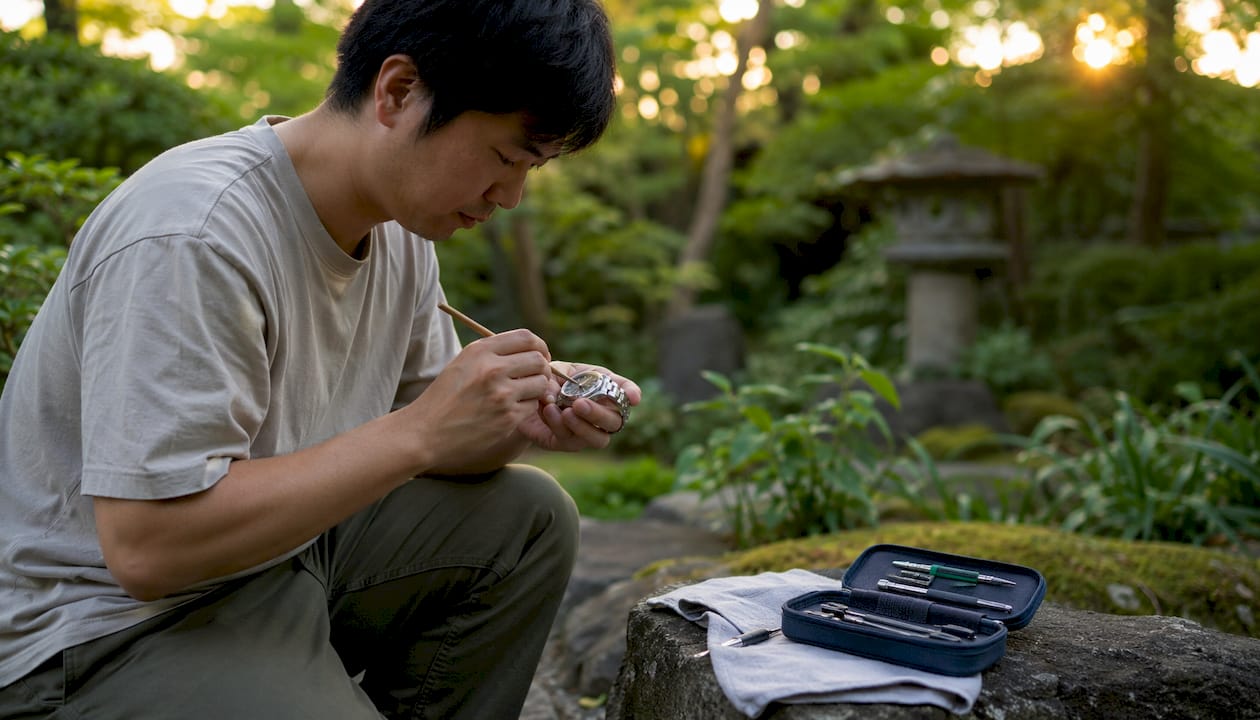
Store the watch in a dedicated case or pouch, not loose in a drawer where it contacts other objects. A dust-free storage habit alone extends the time between cleanings noticeably. Rotate watches if you own more than one; daily wear on a single piece accelerates surface wear faster than alternating two.
After any exposure to salt water, sweat, or sunscreen, rinse the case with fresh lukewarm water and dry immediately. Do not let residue sit overnight. And when a scratch appears that a cloth cannot address, consult a professional before reaching for a compound. The watch care guide between services from ChronoCare covers the full spectrum of between-service decisions collectors face.
ChronoCare makes post-service watch care straightforward
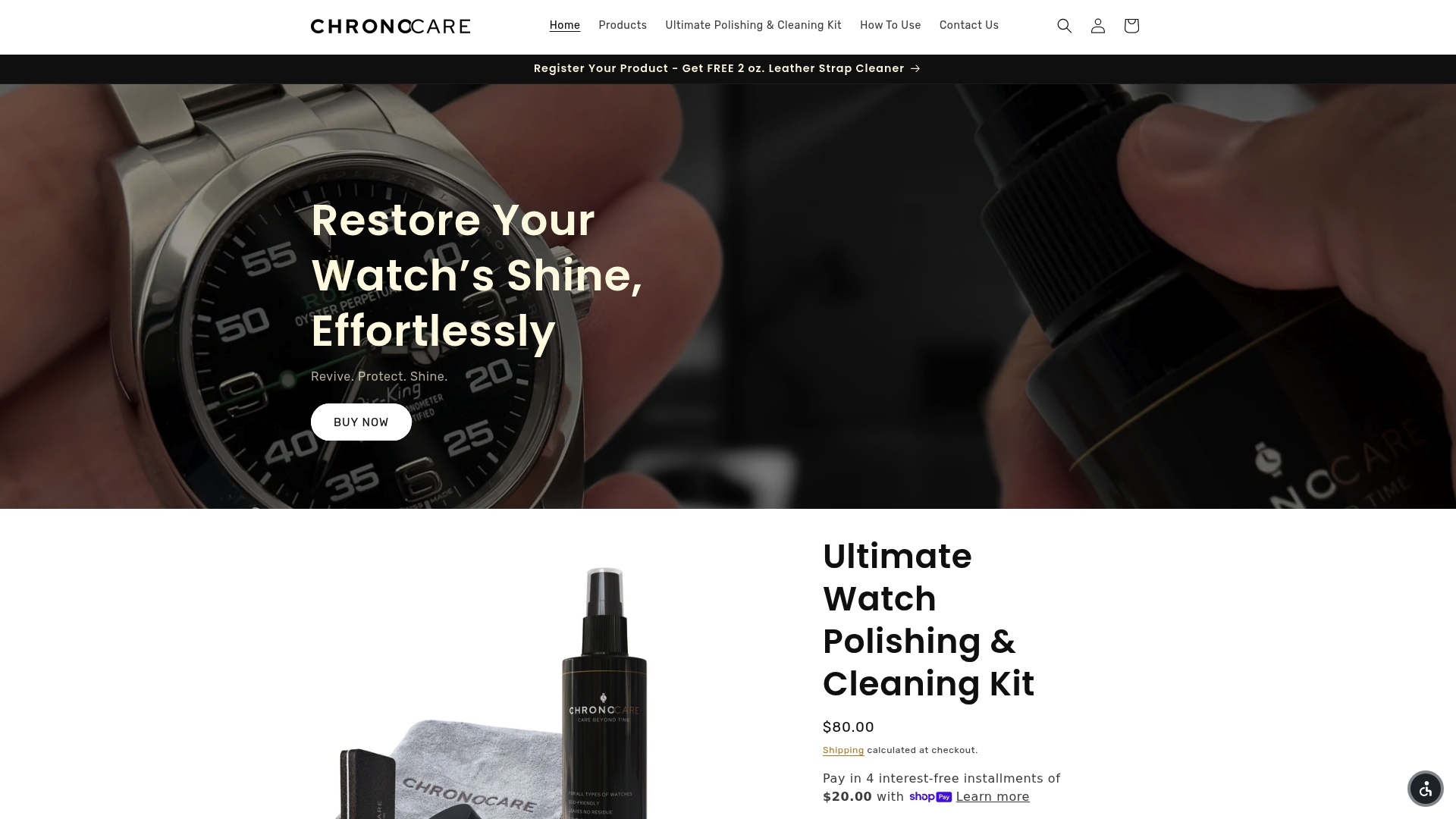
Keeping a freshly serviced watch looking its best does not require a professional bench at home. It requires the right products and the discipline to use them conservatively. ChronoCare’s US-formulated kits give collectors exactly that: professional-grade cleaning and light polishing tools designed around the conservative restoration principles this article covers, without the risk of over-polishing or gasket damage from harsh chemicals.
The Ultimate Watch Polishing & Cleaning Kit is the place to start for anyone who wants to maintain a serviced case between professional intervals. It handles daily care and light touch-ups in one kit, with every formula tested for compatibility with luxury watch finishes. Visit ChronoCare to see the full product range and find the right kit for your watch.
Key Takeaways
Conservative, consistent post-service care preserves a watch case’s factory finish and resale value far more effectively than periodic aggressive polishing at home.
| Point | Details |
|---|---|
| Daily wipe-down is non-negotiable | A microfiber cloth after every wear removes oils and dust before they bond to the finish. |
| Polishing removes metal permanently | Over-polishing causes thinning lugs, lost chamfers, and reduced resale value — limit full refurbishment to every 5–7 years. |
| Chemicals damage gaskets and finish | Apply cologne, sunscreen, and lotion before putting on the watch, not after. |
| Home touch-ups require strict limits | Tape brushed surfaces, use minimal compound, blend scratches rather than erase them, and stay away from edges. |
| ChronoCare kits support conservative care | The Ultimate Watch Polishing & Cleaning Kit provides professional-grade tools calibrated for safe, minimal home maintenance. |