

3–5 Year Service and Daily Cleaning for Collector Watches by Material
Wipe your watch with a microfiber cloth after every wear, do a full clean regularly depending on the type and how hard you use it, and rinse it immediately after saltwater, sweat, or sunscreen exposure. Beyond home care, send it to a professional every three to five years. That single rhythm, quick daily wipe, periodic deep clean, and occasional pro service covers nearly every watch on your wrist or in your box.
TL;DR:
- Regular home cleaning focuses on wiping daily and deep cleaning every three to five years for mechanical watches to maintain water resistance and prevent damage.
- Rinse saltwater or sweat exposure immediately with fresh water and dry thoroughly to avoid gasket corrosion and staining, especially for diving or sports watches.
- Avoid home attempts to polish coated crystals or soaking leather straps; seek professional care for gasket replacements, ultrasonic cleaning, or internal maintenance.
- A microfiber cloth and soft brush are sufficient for routine case, crystal, and bracelet cleaning; conditioned leather straps require gentle wiping and occasional conditioning.
- Professional service is essential for signs of fogging, corrosion, or stiffness between routine cleans, confirming gasket integrity and internal lubrication.
Table of Contents
- How Often Should You Clean a Watch by Type?
- How Do You Clean a Watch Case, Crystal, and Strap?
- What Should You Do Right After Saltwater or Sweat Exposure?
- When Does a Watch Need Professional Service?
- What’s a Simple Checklist You Can Actually Follow?
- Who’s Behind This Guide, and Where Can You Learn More?
- A Collector’s Honest Take on Routine Care
- Want a Kit That Does This Right the First Time?
- Where This Guidance Comes From
- Sources
- FAQ
How Often Should You Clean a Watch by Type?
Your cleaning schedule should follow how you wear the watch, not a generic calendar reminder. A dive watch strapped on for weekend swims needs more attention than a dress watch that comes out for dinners once a month.
Here’s the practical breakdown:
- Daily: A ten-second microfiber wipe after taking it off, plus a quick check that the crown and pushers move freely without grit inside them.
- Weekly to monthly: A full wet clean for metal, rubber, or textile straps on water-resistant models, timed to how often you wear the piece and how much you sweat in it. Frequent wearers often land closer to every two to four weeks, while occasional wearers can stretch to monthly.
- Leather straps: A dry wipe weekly, with conditioning roughly every quarter to keep the material from drying out and cracking.
- After exposure: Rinse and dry the same day anytime saltwater, chlorine, sweat, or sunscreen touches the case or bracelet.
- Professional service: Every three to five years for mechanical watches, sooner for vintage pieces or anything showing wear.
Dive and sports watches sit at the top of that cleaning frequency because they see the most moisture and grime. Dress watches, worn less and exposed to less, can often go a full month between deep cleans. Vintage pieces are the exception across the board; they call for gentler, less frequent handling and require a watchmaker’s judgment rather than a home routine, since older gaskets and finishes tolerate far less than modern water-resistant cases.
How Do You Clean a Watch Case, Crystal, and Strap?
You don’t need a workbench full of tools. A few basics handle almost everything: a microfiber cloth, a soft bristle brush, mild pH-neutral soap, a wooden toothpick or two, distilled water, and an air-puffer bulb (the kind used for camera lenses works fine).
Here’s the process, broken down by part:
- Case and crystal. Start dry, wiping away dust and fingerprints. If the watch is rated for water resistance, follow with a damp cloth and a drop of mild soap, working around the crown and pushers with a toothpick to clear grime from the seams. Rinse briefly under a light stream, dry completely, then buff the metal along the grain, not in circles, to protect the factory finish.
- Metal bracelet. Remove it from the case when you can. Soak it briefly in warm, soapy water, then use a soft brush link by link to dislodge buildup in the crevices. Dry with a cloth first, then finish with the air-puffer to force water out of clasp hinges and end links, where trapped moisture does the most damage over time. ChronoCare’s bracelet link cleaning checklist walks through this link by link if you want the longer version.
- Leather strap. Never soak it. Wipe or blot with a barely damp cloth, let it air dry away from direct heat, and condition it every few months to keep the leather supple. Leather that gets chlorinated or salt water exposure should be damp-wiped and dried immediately, never left to dry with salt residue still in the fibers.
- Rubber or textile straps. These are the most forgiving. Rinse after wear, use mild soap when needed, and dry fully before putting the watch back on.
Skip household detergents, anything abrasive, and any attempt to polish a coated or treated crystal at home. Those coatings scratch or cloud easily, and once that happens, only a professional refinish fixes it.
Pro Tip: Buff bracelets in the direction the metal was brushed or polished at the factory. Going against the grain, even lightly, leaves faint scratch patterns that catch the light wrong for years.

What Should You Do Right After Saltwater or Sweat Exposure?
Speed matters more than technique here. Saltwater and heavy sweat are corrosive, and letting them sit on a case or bracelet overnight does more damage than a rough cleaning ever would.
- Rinse in fresh water immediately after seawater or a chlorinated pool, then dry thoroughly. This single habit is what prevents gasket corrosion and the ugly staining that shows up around clasps and end links.
- For leather straps, blot instead of scrubbing, let it air-dry, and condition later if the leather feels stiff.
- If sunscreen or any chemical touched the case, rinse and dry it the same day. Sunscreen residue in particular breaks down gaskets faster than most people realize.
- If the crystal fogs internally or the crown feels sticky after exposure, stop cleaning at home and get it looked at professionally. Those are signs water reached somewhere it shouldn’t have.
When Does a Watch Need Professional Service?
Home care handles the surface. It does not touch the movement, and it cannot restore a gasket that’s already failed. That’s the line between what you can do with a microfiber cloth and what needs a bench and trained hands.
Most mechanical watches benefit from professional service every three to five years, though it’s worth checking your specific brand’s recommendation since some movements or use conditions shift that window. Watch for these red flags in between service intervals:
- Persistent fogging under the crystal, even after it seemed to clear
- A crown or pushers that feel stiff, gritty, or don’t spring back
- Visible corrosion or greenish buildup around gaskets or case seams
- Grime in the bracelet links that a soft brush and soap won’t budge
A proper professional cleaning goes far beyond what any home kit can do: full disassembly, ultrasonic cleaning of components, gasket replacement, and water-resistance testing on specialized equipment. That’s the only real way to confirm a watch’s water resistance still holds and that the movement is properly lubricated. If a bracelet has stubborn grime lodged in tight links, an ultrasonic bath at a shop is the safer move. Doing that at home risks damaging any glued components or coatings.
What’s a Simple Checklist You Can Actually Follow?

Save this and you’ll rarely need to think about watch care beyond a few seconds a day.
Every day:
- Wipe the case and crystal with a dry microfiber cloth
- Check that the crown turns smoothly and the clasp closes securely
Weekly to monthly:
- Clean the bracelet or case, timed to your water resistance rating and how hard you wear it
- Wipe leather weekly; condition it quarterly
Quarterly to annually:
- Do a visual check for gasket wear, clasp looseness, or strap thinning
- Note any fogging, stiffness, or corrosion and schedule service if you spot it
Drying technique that matters most: Use an air-puffer to clear water from crevices like clasp hinges and end-link recesses, since trapped moisture in those spots becomes abrasive over time. Then buff metal along the grain, never in circles.
That ten-second daily wipe is genuinely the highest-value habit in this entire list. It’s the one step that prevents most of the buildup the rest of this checklist exists to fix.
Who’s Behind This Guide, and Where Can You Learn More?
This guide is contributed by Raymond Jenkins, drawing on ongoing coverage of watch care for collectors and daily wearers alike. For deeper procedure on specific materials, ChronoCare’s step-by-step cleaning guide for collectors and its piece on cleaning stainless steel watches go further than the basics here.
If you’d rather build good habits than fix bad ones, keeping dust off your watch daily is a smaller companion read. And if you’re unsure whether a watch has crossed from “needs cleaning” to “needs a professional,” ChronoCare’s rundown of warning signs is worth bookmarking. Bundled kits are available for owners who want consistent, safe supplies on hand rather than piecing together tools one at a time.
A Collector’s Honest Take on Routine Care
Most of the damage I see discussed in collector circles isn’t dramatic. It’s cumulative: years of skipped wipes, sweat left to dry into a bracelet, sunscreen residue nobody rinsed off before bed. None of that shows up in month one. It shows up in year five, as a dull case, a stiff clasp, or a gasket that failed quietly while nobody was watching.
The habit that actually protects resale value isn’t a deep clean. It’s the boring daily wipe nobody wants to talk about. Save the bigger interventions, polishing, ultrasonic baths, gasket work, for a professional, especially on vintage pieces where a heavy hand does permanent harm. Small habits now beat expensive repairs later.
— Raymond Jenkins
Want a Kit That Does This Right the First Time?
Buying separate bottles of solution, random brushes, and a cloth that turns out to be the wrong material gets old fast, and it’s easy to grab something too harsh for a finished case. ChronoCare built its kits specifically to skip that guesswork: the Ultimate Watch Polishing & Cleaning Kit pairs a mild cleaning solution with soft brushes and separate polishing cloths, matched to the case and bracelet steps outlined above.
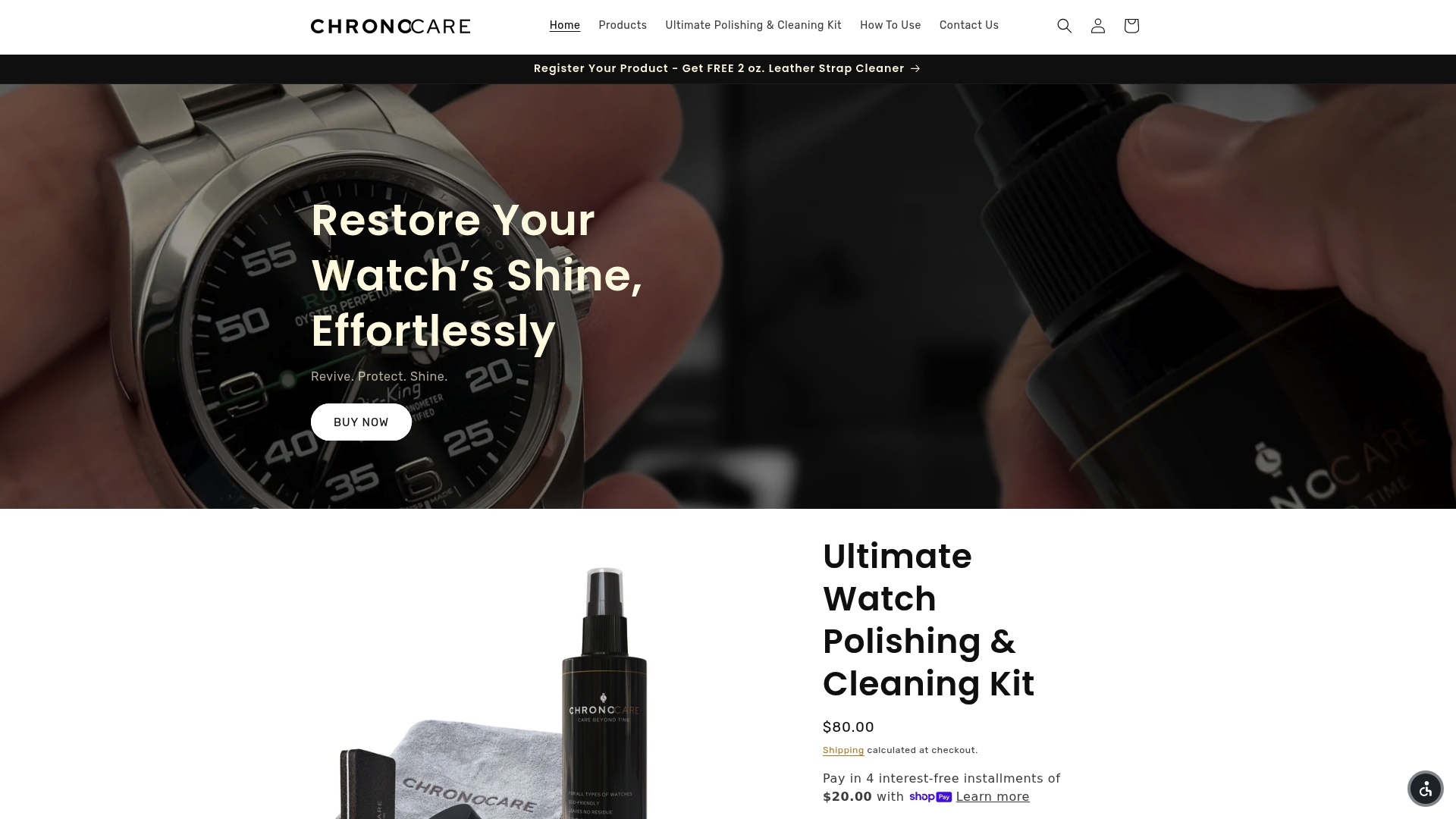
If you’re caring for a more delicate or high-value piece, the Ultimate Watch Cleaning Kit is built with gentler finishes in mind. Either kit fits neatly into the weekly-to-monthly routine this guide walks through, and both are formulated for luxury cases and bracelets rather than general household use. One thing worth remembering: a kit handles the surface work well, but it’s not a substitute for the professional service your watch needs every three to five years. Checking product pages for current availability and selecting a set that matches your watch is recommended.
Where This Guidance Comes From
- Longines’ official care guide for brand-specific cleaning frequency and drying technique
- Tudor’s cleaning tutorial for crown and pusher maintenance
- Citizen’s support pages for leather strap care
- GQ’s watch cleaning guide for what professional servicing actually involves
For vintage or high-value pieces, a brand-authorized service center will give you guidance no article can replace.
Sources
- How to clean a watch | LONGINES US
- How to Clean a Watch Without Damaging It: Case, Bracelet, and Crystal | WatchPolice
- How to clean a watch: GQ guide
- How to clean a watch | Citizen support
FAQ
What Is the 3-Watch Rule?
The 3-watch rule is a rotation habit collectors use, wearing three watches in rotation instead of one every day. It spreads out wear and moisture exposure across pieces, which stretches out how often each individual watch needs a deep clean or service.
Can You Use Dawn Dish Soap to Clean a Watch?
A small amount of mild, pH-neutral soap is generally fine for water-resistant cases and metal bracelets, and diluted dish soap is a common household substitute many owners use. Avoid harsh degreasers or heavily fragranced formulas, and never use soap on leather straps, which should only be wiped or blotted dry.
What Is the Average Lifespan of a Quartz Watch?
A quartz watch can run for decades with basic care, since the movement itself has relatively few moving parts to wear out. Battery changes every one to two years and periodic gasket checks are the main maintenance points, alongside the same wipe-and-clean routine used for mechanical watches.
How Much Does It Cost to Get a Watch Professionally Cleaned?
Professional cleaning and service costs vary widely by brand, movement complexity, and whether parts need replacing, so current pricing is best confirmed directly with a brand-authorized service center. A full service typically includes disassembly, ultrasonic cleaning, gasket replacement, and water-resistance testing, which is far more involved than a home clean and priced accordingly.