

How to Clean a Stainless Steel Watch Without Ruining It
You can safely clean most stainless steel watches at home with mild dish soap, lukewarm water, a soft-bristled brush, and a microfiber cloth. The exception is any vintage watch or one with unknown water resistance. Wipe those with a barely damp cloth only and skip the soak. The rest of this guide covers the tools, the step-by-step process, and the precautions that keep your watch looking sharp for years.
TL;DR:
- Using water is safe only if the watch’s water resistance is confirmed and the crown is fully secured; vintage or unknown water resistance watches should not be submerged.
- Regular daily wipes prevent grime buildup, but deep cleaning should include brushing the case and bracelet with gentle tools, avoiding abrasive cleaners and degreasers.
- Rinsing the bracelet in short bursts and drying immediately effectively removes soap residue and moisture, preventing dullness and corrosion.
- Professional cleaning involves disassembly, ultrasonic baths, and refinishing that cannot be safely done at home, especially on sealed or vintage watches.
- Proper small habits, such as daily quick wipes, help preserve the watch’s shine longer and maintain its value, aided by a tailored cleaning kit.
Table of Contents
- What You Need to Clean a Stainless Steel Watch
- How Do You Wipe Down a Watch After Daily Wear?
- How Do You Deep Clean a Stainless Steel Watch at Home?
- How Do You Dry a Watch and Restore Its Shine?
- When Should You Avoid Cleaning a Watch With Water?
- How Often Should You Clean and Service a Stainless Steel Watch?
- What Does a Watchmaker Do Differently When Cleaning a Watch?
- Why Small Habits Protect a Watch’s Value Over Time
- Get a Kit Built for This Exact Routine
- Sources
What You Need to Clean a Stainless Steel Watch
A proper cleaning kit is smaller than most people think. You need a lint-free microfiber cloth for dusting and drying, a mild ammonia-free dish soap to lift oils and skin residue, a soft-bristled toothbrush for the bracelet links, and cotton swabs for tight corners around the crown and lugs. Enthusiasts often add an interdental brush or a wrapped toothpick for gaps a swab can’t reach.
Stick to these and skip everything else in your cleaning cabinet:
- Acetone and alcohol strip lubricants near gaskets and can dry out seals.
- Bleach and household degreasers attack the metal’s finish and any plated surfaces.
- Toothpaste is abrasive enough to leave fine scratches on polished links.
- Abrasive scouring pads cut through brushed textures unevenly.
- Dishwashers and ultrasonic baths are for disassembled components only, not a whole watch on your wrist.
Compressed air helps clear moisture from crevices, but only cool bursts. Anything warm can push moisture deeper instead of pushing it out.
How Do You Wipe Down a Watch After Daily Wear?
A quick wipe after taking the watch off takes only moments, and it helps prevent grime buildup effectively over time. Skin oils, sweat, and lotion residue settle into link crevices within hours, not days, so catching it early matters more than scrubbing it out later.
- Dry wipe first. Run a clean microfiber cloth over the case, crystal, and bracelet to remove dust and loose particles.
- Damp wipe if needed. If you sweated heavily, wore sunscreen, or spent time near saltwater, dampen a corner of the cloth with plain water and go over the case back and clasp.
- Dry and buff. Finish with a dry section of the cloth, working with the grain on brushed surfaces.
Save the damp step for days that actually call for it. A dry-only routine is fine most days; reach for water when sweat, salt, or lotion has actually touched the metal. This habit does the quiet work of keeping grime from packing into the link crevices and clasp mechanism, which is exactly where it eventually causes stiffness or corrosion if you let it sit for weeks.
How Do You Deep Clean a Stainless Steel Watch at Home?
A thorough at-home clean removes the buildup a daily wipe leaves behind, and it can be done efficiently if you work through it in order.
- Verify water resistance and crown position first. Screw down or push in the crown. If you don’t know the watch’s water-resistance rating, or it’s vintage, treat it as non-submersible and clean with a damp cloth instead of any soak.
- Mix your solution. A small amount of ammonia-free dish soap in a bowl of lukewarm water is enough. Lay out a towel and your tools before you start.
- Clean the case. Wipe the case body, then use the soft toothbrush gently around the crown and lugs, where grime collects but where you also risk scratching the crystal if you press too hard. Use a cotton swab for anything tighter than the brush can reach.
- Clean the bracelet. If the bracelet is removable and the watch’s water resistance is confirmed, a brief soak helps loosen trapped debris. Brush between links with the toothbrush or an interdental brush, rinsing often so you’re not scrubbing grime back into the metal.
- Rinse. Running water works if resistance is confirmed. Otherwise, wipe everything down with a clean, barely damp cloth instead, exactly as Nixon’s care guide recommends for models you’re unsure about.
- Dry immediately. Pat the case and bracelet dry, paying attention to the clasp and between links where moisture likes to hide.
Pro Tip: Rinse in short bursts rather than one long soak. A slurry of soap and loosened grime is mildly abrasive, and repeated short rinses clear it away before it has a chance to do any polishing you didn’t ask for.
How Do You Dry a Watch and Restore Its Shine?
Trapped moisture between links is the most common reason a “clean” watch still looks dull. Wrap a toothpick in microfiber and run it through tight gaps, or use a cool blast of compressed air to push moisture out rather than deeper in.
Once it’s dry, decide whether you need buffing or actual polishing:
- Buffing with a jeweler’s cloth removes smudges and restores luster without touching the metal itself. Use it as your default.
- Polishing compounds remove a microscopic layer of metal, according to Manfredi Jewels, so save them for actual light scratches, not routine shine, and test on a hidden spot first.
- Brushed finishes need grain-aware motion. Polishing across the grain instead of along it leaves a visible mismatch that’s hard to unsee once you notice it.
If you’re not sure which finish you’re working with, ChronoCare’s guide to polishing compounds breaks down which product suits which surface.
When Should You Avoid Cleaning a Watch With Water?
Water resistance on a stainless steel watch isn’t a fixed guarantee. Gaskets age, and exposure to cosmetics, chlorine, and temperature swings wears them down over time, which is why The Gentleman’s Journal recommends checking resistance before submersion rather than assuming last year’s rating still holds.
- Always confirm the crown is pushed in or screwed down before any water contact.
- Skip acetone, bleach, alcohol, and household degreasers entirely. They break down seals and finishes alike.
- After saltwater exposure, rinse with fresh water and dry thoroughly. Saltwater residue accelerates corrosion if left on the case.
- If you swim regularly, book an annual pressure test rather than trusting the original rating indefinitely.
- Persistent condensation under the crystal or a sticky clasp means it’s time for a professional look, not another home attempt.
One detail worth remembering: a watch rated 100 meters of water resistance isn’t built for scuba diving. That number reflects lab testing conditions, not real-world depth performance, and treating it as a hard limit for swimming is safer than treating it as a target.
How Often Should You Clean and Service a Stainless Steel Watch?
Frequency depends on how hard you wear the watch, but the pattern is simple once you set it.
- Daily: a quick wipe after you take the watch off.
- Every 4 to 8 weeks: a full home deep clean, more often if you sweat heavily or work with your hands.
- Every 12 to 18 months: professional bracelet service for anyone wearing the watch daily.
- Every 3 to 5 years: a full movement service regardless of how careful you are with surface cleaning.
Watch for warning signs that jump the queue: fogging that won’t clear, pins that feel loose, visible corrosion, or a clasp that’s stopped closing smoothly. Any of those means a professional should look at it before you clean it again yourself.
What Does a Watchmaker Do Differently When Cleaning a Watch?
Home cleaning and professional cleaning solve different problems. A soft brush and mild soap handle surface grime. What they can’t do is get inside a sealed case or restore a finish that’s actually been cut into by wear, and pretending otherwise is how people damage watches they were only trying to help.
Authorized dealers and repair centers disassemble the watch, run bracelet components through an ultrasonic bath, refinish surfaces along the grain, then reassemble and pressure-test before handing it back, according to CJ Charles. That ultrasonic step is never meant for an assembled watch on your wrist. For a longer breakdown of professional-grade steps you can borrow safely at home, ChronoCare’s collector’s cleaning guide walks through the details.
Why Small Habits Protect a Watch’s Value Over Time
The watches that hold their shine longest aren’t the ones that get one aggressive cleaning a year. They’re the ones that get a thirty-second wipe most days. That habit does more for resale value and appearance than any polish ever will. Adjust frequency to how hard you actually wear the piece, and confirm water resistance before you deep clean anything you’re not certain about.
— Raymond Jenkins
Get a Kit Built for This Exact Routine
Guessing at what’s “mild enough” for your watch is how gaskets and finishes get damaged. ChronoCare built its kits around the exact steps above, so you’re never mixing your own soap solution or reaching for a random polish and hoping it’s safe.
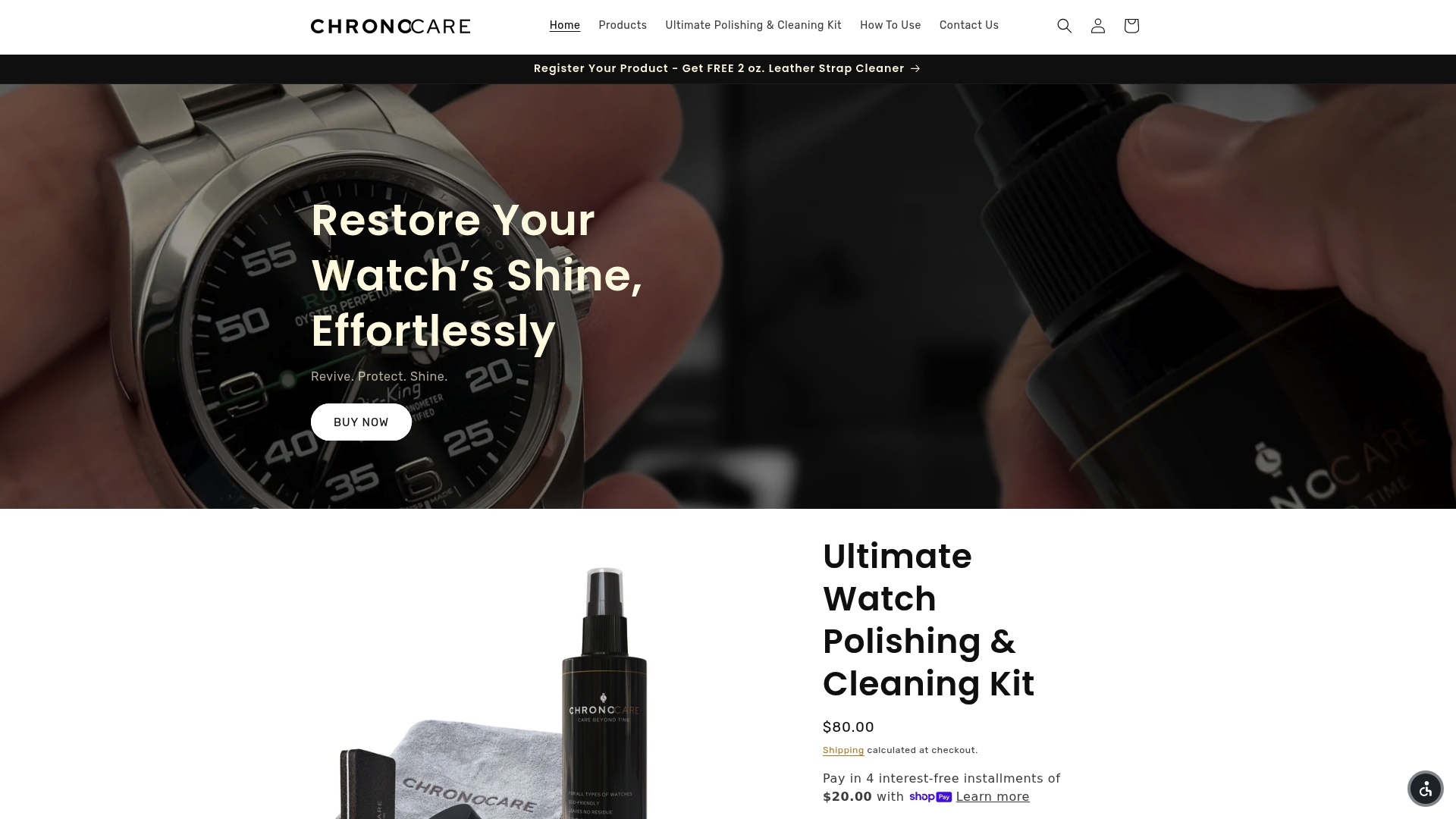
The Ultimate Watch Cleaning Kit includes an ammonia-free cleaning solution, microfiber cloths, and a soft brush sized for bracelet links, everything the deep-clean steps above call for, without the guesswork of substituting dish soap or an old toothbrush. If light scratches are your bigger concern, the Ultimate Watch Polishing & Cleaning Kit pairs that same cleaning system with a grain-safe polishing compound, and the standalone Watch Polishing Cream works well if you only need to address a few visible marks rather than a full clean. Each comes with an instruction card that matches the sequence in this guide, so you’re not translating generic advice onto your specific watch. Pick the kit that matches what your watch actually needs and start your next clean with the right tools already in hand.
Sources
- How to clean a steel watch without damaging it – The Gentleman’s Journal
- How to Clean a Stainless Steel Watch – CJ Charles
- How to Clean a Stainless Steel Watch – Nixon US
- How to Clean a Stainless Steel Watch Strap Properly – Manfredi Jewels