

How to Clean a Titanium Watch Without Damaging It
For most water-resistant titanium watches, the safest at-home method is straightforward: secure the crown, mix a small drop of mild dish soap into lukewarm water, submerge the case and bracelet for a short time, scrub gently with a soft-bristle toothbrush, rinse under a cool gentle stream, then pat dry with a microfiber cloth and use an air puffer to clear moisture from crevices. That routine, recommended by Longines, handles the vast majority of everyday grime without touching the finish or seals.
Before you start, confirm two things:
- Crown position: Screw it down or push it fully in. An unsecured crown is the fastest path to water damage.
- Water-resistance rating: If your watch has no rating or an unknown one, skip immersion entirely. Use a slightly damp cloth only.
Avoid immediately: ammonia-based cleaners (Windex), bleach, hydrogen peroxide, and abrasive pads. Any of these can strip coatings or degrade gaskets on contact.
Key Takeaways
Cleaning a titanium watch safely requires mild soap, a secured crown, and consistent habits — not aggressive chemicals or heavy polishing.
| Point | Details |
|---|---|
| Secure the crown first | Always screw down or push in the crown fully before any wet cleaning to protect seals. |
| Use mild soap and soft tools | Mild dish soap, a soft-bristle toothbrush, and microfiber cloth cover most cleaning needs safely. |
| Avoid harsh chemicals | Ammonia, bleach, hydrogen peroxide, and solvents damage coatings and gaskets on contact. |
| Service every 2–5 years | Professional servicing and pressure testing on this interval protects movement and water resistance. |
| ChronoCare for the full routine | The Ultimate Watch Cleaning Kit, Polishing Cream, and Leather Strap Cleaner Spray cover cleaning, light cosmetic care, and strap maintenance. |
Table of Contents
- Why cleaning your titanium watch protects more than just the looks
- What tools and cleaners are safe for titanium watch surfaces?
- How to clean a water-resistant titanium watch step by step
- How to clean non-water-resistant titanium watches and leather straps
- How to clean titanium bracelets, clasps, and link recesses
- Rinse and after-dive care for titanium dive watches
- How to address light scratches and preserve brushed titanium finishes
- When should you get professional servicing and pressure testing?
- Common mistakes that damage titanium watches
- Watchmaker-level tips for long-term titanium care
- The realistic expectations every titanium watch owner should have
- ChronoCare products for safe titanium watch care
- Sources
Why cleaning your titanium watch protects more than just the looks
Cleaning is maintenance, not vanity. Sweat and salt combine with fine dust in bracelet link joints to form an abrasive paste that grinds against pins, clasps, and gaskets every time the bracelet flexes. Over months, that paste shortens the life of components that are expensive to replace.
Titanium forms a stable oxide layer that resists corrosion well, but that protection has limits. Trapped moisture sitting against a gasket, or salt residue left in a crown groove, can still cause mechanical wear and accelerate seal degradation. The oxide layer protects the metal; it does not protect the rubber and polymer parts around it.
As WatchGecko notes, titanium shows surface marks differently than stainless steel and benefits from titanium-specific maintenance practices. Its relative softness means abrasive residue does more cosmetic damage per cycle than it would on a harder alloy.
Pro Tip: Clean your titanium watch monthly under normal wear. After any saltwater or heavy sweat exposure, rinse it the same day. Waiting even 48 hours lets salt crystallize in link recesses and start working against the metal.
For dust and fingerprint buildup between deeper cleans, a quick wipe with a dry microfiber goes a long way. The ChronoCare guide on keeping your watch dust free covers short-term storage habits that reduce how often you need a full clean.
What tools and cleaners are safe for titanium watch surfaces?
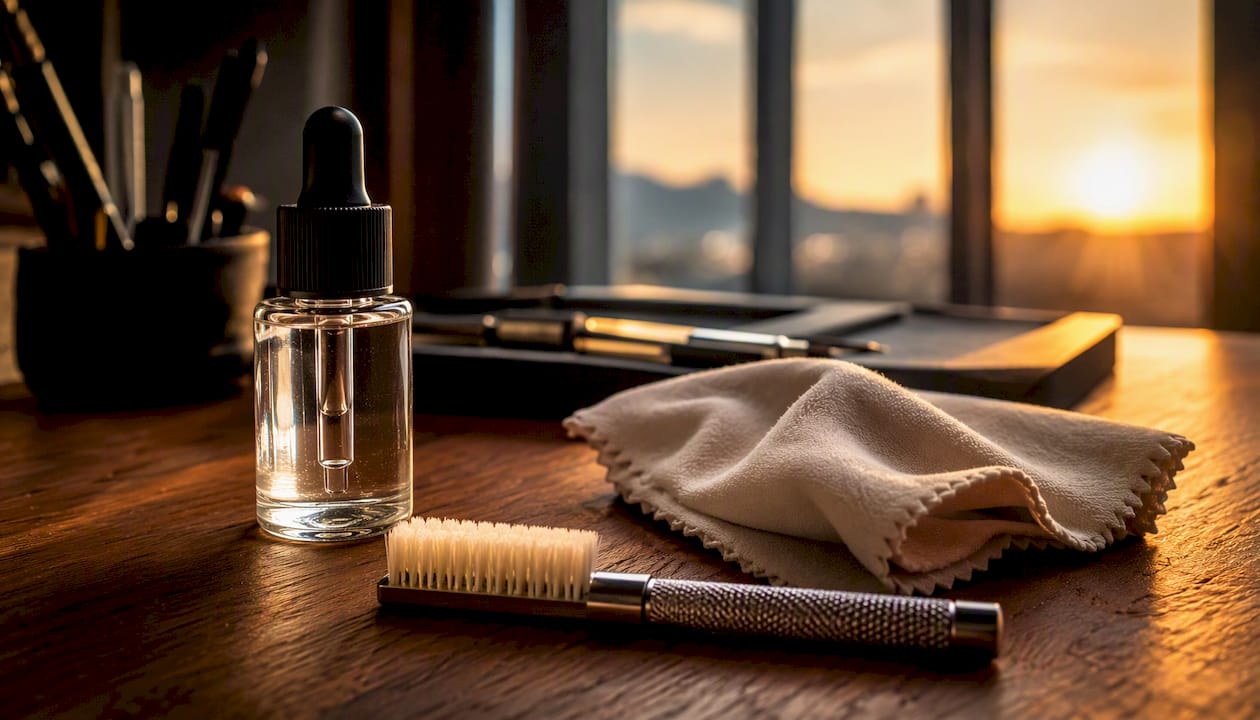
The short list of safe supplies: mild pH-neutral dish soap (Dawn, Seventh Generation), a soft-bristle toothbrush, a lint-free microfiber cloth, an air puffer, and a formulated watch-cleaning spray.
Safe to use:
- Mild dish soap diluted in lukewarm water
- Soft-bristle toothbrush (baby toothbrush works well)
- Microfiber or lint-free cloth
- Air puffer or canned air (held at distance)
- Formulated, residue-free watch-cleaning sprays
- Isopropyl alcohol applied sparingly on a cloth for sticky residue, per guidance on titanium cleaning — never soaking
Never use on a titanium watch:
- Ammonia-based glass cleaners (Windex and similar)
- Bleach or chlorine-based products
- Hydrogen peroxide
- Harsh solvents or acetone
- Abrasive pads, steel wool, or stiff-bristle brushes
- Ultrasonic cleaners without explicit manufacturer approval
Danger: Soaking a watch with an unsecured crown, a scratched crystal, or damaged pushers risks immediate water ingress. Even a watch rated water-resistant can fail if its gaskets are aged or its crown is not fully secured. Always check before any wet cleaning.
Citizen’s maintenance guidance specifically warns that dirt around crowns and buttons can make a watch inoperable. Clean those areas carefully, and only use running-water rinsing when your watch meets at least a 5-bar (WR.5BAR) water-resistance rating.
Pro Tip: Household cleaners that seem gentle — dish soap with added degreasers, multi-surface sprays — often contain surfactants that leave residue in link joints. Formulated watch sprays are designed to evaporate cleanly. The difference shows up in the crevices, not on the flat surfaces. See why that matters in ChronoCare’s breakdown of professional watch degreasers.
How to clean a water-resistant titanium watch step by step
Confirm your watch’s water-resistance rating before anything else. If it is rated 3 ATM or less, treat it as non-water-resistant for cleaning purposes. For watches rated 5 ATM (50m) or higher, this full routine is safe.
- Secure the crown. Screw it down completely. Check for any visible cracks in the crystal or damage to pushers.
- Prepare your solution. Add one small drop of mild dish soap to a bowl of lukewarm water. Never use hot water — thermal shock can stress gaskets.
- Soak briefly. Submerge the case and bracelet for about one minute. This softens grime in link recesses and around the bezel.
- Scrub gently. Use a soft-bristle toothbrush on the case, lugs, bezel flutes, and bracelet links. Work along the grain of any brushed surfaces — never across it.
- Rinse. Hold the watch head-down under a gentle stream of cool water. Avoid high-pressure faucets.
- Pat dry. Use a clean microfiber cloth. Blot, don’t rub, across brushed sections to avoid adding micro-scratches.
- Air-puff crevices. Direct an air puffer into crown grooves, between links, and around pushers to expel trapped moisture. This step is standard watchmaker practice and prevents water from sitting against gaskets.
- Buff lightly. If needed, a final light pass with a dry microfiber along the grain restores the satin look.
Avoid boiling water and ultrasonic cleaners for titanium. Community experience on The Watch Site cautions that ultrasonic vibration can cause micro-rubbing and surface marks on titanium bracelets, even when the machine is set to a low cycle.
How to clean non-water-resistant titanium watches and leather straps
No rating, or a rating below 3 ATM? Keep water away from the case entirely. A slightly damp microfiber cloth is your only tool for the case itself. Wipe the surfaces, then immediately follow with a dry cloth. Never let moisture sit.
For the case and crystal:
- Dampen a microfiber cloth with plain water or a small amount of watch-cleaning spray.
- Wipe the case, lugs, and caseback gently.
- Dry immediately with a second cloth.
- Use an air puffer around the crown groove.
For leather straps:
- Surface wipe with a barely damp cloth to lift surface dirt.
- Apply a leather-specific cleaner sparingly — the ChronoCare Watch Leather Strap Cleaner Spray is formulated for watch straps and won’t over-saturate the leather.
- Let it air-dry away from direct heat or sunlight.
- Condition with a leather conditioner after cleaning to prevent cracking.
For rubber or textile straps: a gentle wipe with mild soapy water and a soft cloth works well. Rinse with a damp cloth and air-dry flat.
Pro Tip: Remove the strap before any deeper cleaning of the case when possible. Leather and water-resistant cases have different tolerances, and keeping them separate means you can clean each correctly without compromise. For caseback cleaning, wipe gently around the edge — never pry or apply pressure that could shift the seal.
For dial-specific care, the ChronoCare guide on cleaning a watch dial without damage covers masking and safe techniques for delicate surfaces.
How to clean titanium bracelets, clasps, and link recesses
The link recesses are where abrasive paste builds up fastest and does the most damage. A thorough bracelet clean takes about ten minutes and protects the pins and clasps that hold the bracelet together.
- Soak the bracelet in lukewarm soapy water for two to three minutes to soften compacted grit.
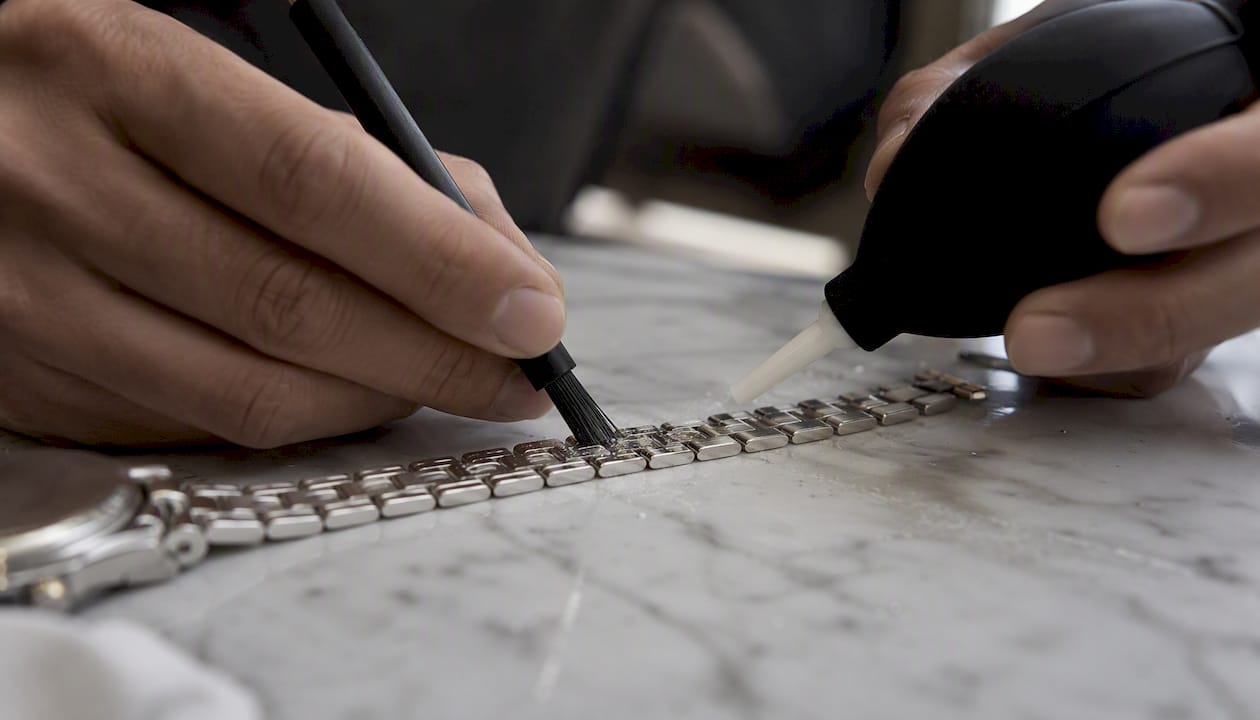
- Brush the links. Work a soft toothbrush along the grain, paying attention to the inner surfaces of each link where skin contact is highest.
- Use a wood toothpick for tight crevices between links and around the clasp. Wood is soft enough not to scratch titanium. Never use metal picks.
- Rinse thoroughly. Multiple short rinses under cool water are more effective than one long one for flushing debris out of recesses.
- Air-puff the links. Direct the puffer between each link set to expel remaining water and loosened grit.
- Dry completely before wearing. Trapped moisture between links is the primary cause of pin corrosion over time.
If the manufacturer permits it, a very light application of watch-safe lubricant on the pins after drying keeps the bracelet moving smoothly. Check your manual first — some manufacturers advise against owner lubrication.
Avoid driving pins with improper tools or forcing stiff links. If a clasp feels loose or a pin is visibly worn, that is a job for a watchmaker, not a cleaning session. The ChronoCare bracelet link cleaning checklist walks through the full process with additional detail.
Rinse and after-dive care for titanium dive watches
Salt is the fastest-acting threat to a dive watch’s seals and finish. Rinse immediately after any ocean exposure — do not wait until you get home.
- Fresh-water rinse: Hold the watch under a gentle stream of fresh water for 30–60 seconds. Do not operate the crown or pushers while submerged.
- Wipe dry: Pat with a microfiber cloth, paying attention to the bezel and crown area.
- Air-puff crevices: Clear the crown groove, between lugs, and any helium escape valve.
- Inspect the crystal: Look for condensation inside. Any fogging inside the crystal means water has entered and the watch needs immediate professional attention.
Spinnaker’s titanium dive watch care guide recommends rinsing after every saltwater exposure, drying thoroughly, and consulting a professional if condensation appears or mechanical issues develop after a dive.
Pro Tip: Schedule a pressure test if your dive watch took a hard knock underwater, or if it has not been pressure-tested in the past two years. A watch that passed its last test can still fail if a gasket aged or a crown seal was compromised by impact.
How to address light scratches and preserve brushed titanium finishes
The honest answer: leave most scratches alone. A brushed or matte titanium finish is more delicate than polished stainless steel, and aggressive polishing at home can create swirls, uneven texture, or permanently alter the factory grain. Light surface scuffs can sometimes be improved, but the risk of making them worse is real.
Garmin’s scratch-repair guidance is direct: avoid abrasive wheels and improper tools. Light cosmetic wear may be addressable, but deeper marks need professional refinishing. That advice applies to any titanium watch, not just Garmin’s.
For light surface marks on brushed sections, a non-abrasive polishing cream applied along the grain is the conservative approach. The ChronoCare Watch Polishing Cream is formulated for this: apply a small amount on a soft cloth, work gently in the direction of the existing grain, and wipe clean. Always test on a hidden area first.
Pro Tip: Never use a polishing cloth designed for stainless steel on a matte titanium surface. The abrasive compounds in those cloths are calibrated for harder metals and will flatten the satin texture on titanium within a few passes.
For deeper scratches or finish inconsistencies across the case, a professional with titanium-specific restoration tools is the only safe option. The ChronoCare guide on finishing a watch bracelet professionally explains what that process involves.
When should you get professional servicing and pressure testing?
Have your titanium watch professionally serviced every 2–5 years. Timex’s service guidance and most major manufacturers align on this interval as the standard for protecting movement function and water resistance. For a dive watch used regularly in the ocean, lean toward the shorter end of that range.
A full service typically includes movement disassembly and cleaning, gasket inspection and replacement, lubrication, and a pressure test. Titanium-cased watches may require special handling during case polishing to avoid altering the finish — confirm that the watchmaker has experience with titanium before handing it over.
Go sooner than your scheduled interval if:
- You notice condensation inside the crystal after any water exposure.
- The crown feels stiff, loose, or gritty when operated.
- The watch was dropped or took a hard impact while diving or during sports use.
- The caseback shows signs of corrosion or the bracelet pins feel loose.
| Watch type | Suggested service interval | Pressure test |
|---|---|---|
| Titanium dive watch (active use) | Every 2–3 years | Every 2 years or after impact |
| Daily sports/outdoor watch | Every 3 years | Every 3 years |
| Dress or occasional-wear watch | Every 4–5 years | Every 5 years |
Pro Tip: Ask your watchmaker to document the gasket condition and the pressure test result in writing. That record is useful when you sell the watch and proves the seals were recently verified.
Common mistakes that damage titanium watches
The most damaging errors are almost always avoidable. Here is what to stop doing:
- Using ammonia-based cleaners. Windex and similar products strip protective coatings and degrade rubber gaskets. Use mild dish soap or a formulated watch spray instead.
- Soaking a non-water-resistant case. Even brief immersion can cause immediate water ingress if the rating is unknown or the crown is unsecured.
- Skipping the crown check. An unsecured crown during any wet cleaning is the single most common cause of preventable water damage.
- Aggressive polishing on matte finishes. A polishing cloth or abrasive wheel on a brushed titanium surface permanently alters the texture. Use a non-abrasive cream along the grain only.
- Using ultrasonic cleaners without guidance. Vibration can cause micro-marking on titanium bracelet links. If your watchmaker recommends it, fine — but don’t run one at home without that confirmation.
- Leaving the watch wet. Trapped moisture in link recesses and crown grooves accelerates wear. Always air-puff and dry completely after cleaning.
Danger: Household solvents — acetone, paint thinner, strong degreasers — can dissolve PVD and DLC coatings on titanium cases in seconds. If your watch has a black or colored coating, treat it as more fragile than bare titanium and avoid any solvent contact.
Watchmaker-level tips for long-term titanium care
Small, consistent habits protect a titanium watch better than occasional heavy cleaning sessions. A quick wipe after a sweaty workout, a fresh-water rinse after beach use, and a monthly light clean keep gaskets and finish in far better shape than letting grime accumulate and then attacking it.
Professionals reach for specific product types for good reason: neutral-pH degreasers formulated for watches, residue-free sprays that evaporate without leaving film, air puffers, and satin-finish sponges designed for titanium surfaces. These outperform household alternatives because they are calibrated for the materials involved, not for kitchen grease or bathroom tile.
Pro Tip: Build a small dedicated kit and keep it near where you store your watches. When the supplies are right there, you actually use them.
For titanium watch care, three ChronoCare products cover the full routine:
- ChronoCare Ultimate Watch Cleaning Kit: the all-in-one solution for the regular cleaning routine — case, bracelet, and crevices.
- ChronoCare Watch Polishing Cream: for conservative treatment of light surface marks on brushed or satin titanium, applied along the grain.
- ChronoCare Watch Leather Strap Cleaner Spray: formulated for watch straps specifically, safe on the leather without over-saturating it.
The realistic expectations every titanium watch owner should have
Titanium watches earn their reputation for durability, but they are not maintenance-free. The finish will show light marks over time — that is the nature of a metal softer than stainless steel. Accepting a small amount of patina is part of owning a titanium watch, and chasing a factory-new look through aggressive polishing usually creates more problems than it solves.
The priorities, in order: seal integrity first, finish second. A watch with a lived-in bracelet and intact gaskets is in far better shape than one with a mirror-polished case and compromised water resistance. Follow the step-by-step cleaning routine consistently, schedule professional service on the 2–5 year cycle, and book a workshop visit whenever something feels off — a stiff crown, a fogged crystal, or a bracelet pin that moves when it shouldn’t.
ChronoCare products for safe titanium watch care
Cleaning a titanium watch correctly comes down to having the right products within reach. The ChronoCare Ultimate Watch Cleaning Kit is the practical starting point: it covers the full routine for case, bracelet, and crevice cleaning without requiring you to source individual tools separately.
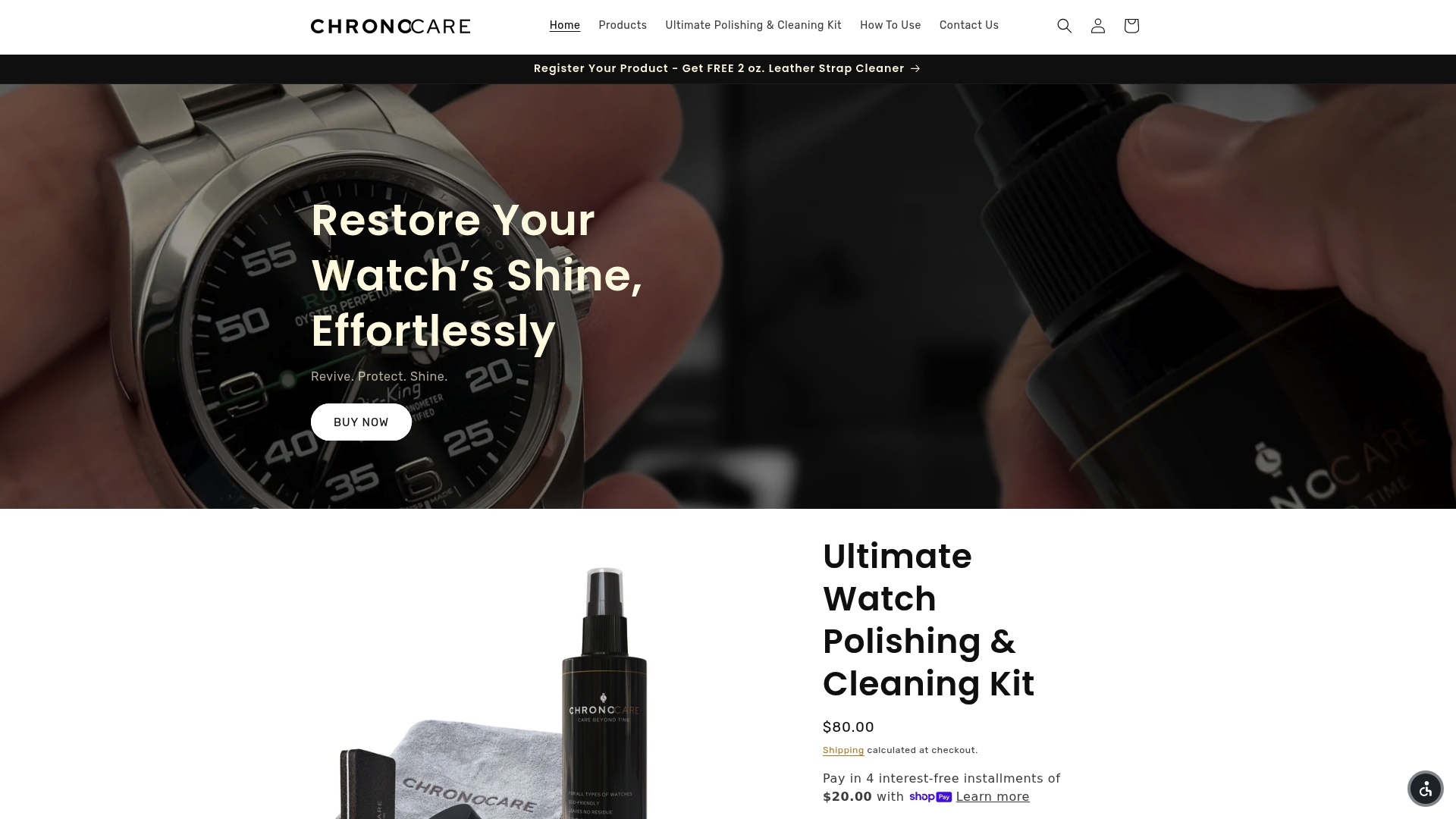
For light cosmetic work, the ChronoCare Watch Polishing Cream handles surface marks on brushed titanium when used conservatively along the grain — always test on a hidden area first. And for leather straps, the ChronoCare Watch Leather Strap Cleaner Spray is formulated specifically for watch straps, not general leather goods. Visit the ChronoCare shop to pick up what your routine is missing and follow the label directions for each product.
Sources
- How to clean a watch | LONGINES US
- Cleaning your wristwatch (with videos) | CITIZEN WATCH Global Network
- Care and Maintenance of Titanium Dive Watches: Tips for Longevity — Spinnaker
- Are Titanium Watches Any Good? | WatchGecko