

How to Remove Discoloration from Your Watch Case
You can usually remove common discoloration from a watch case at home with gentle, material-appropriate cleaning — provided you follow water-resistance rules and stop before removing plating or patina. The single most important safety rule: check water resistance before using any liquid. If your watch is not rated as water-resistant, keep water away from it entirely.
Before you touch anything, note these three warnings:
- Never use bleach, acetone, nail polish remover, or concentrated alcohol on any watch surface.
- Stop immediately if the finish looks thin, plated, or the watch is a collectible with vintage patina.
- Do not run a full watch head through an ultrasonic cleaner — remove the bracelet first.
Your five-minute starter checklist:
- Wipe the case with a dry microfiber cloth to remove surface oils and loose grime.
- Test any cleaning product or paste on a hidden spot (the case back edge or inner lug).
- Remove the strap or bracelet so you can reach every crevice without trapping moisture.
Pro Tip: Always remove fingerprints with a dry microfiber before applying any cleaning solution — this prevents you from grinding surface particles into the finish.
Table of Contents
- What safety rules should you follow before cleaning a watch case?
- What supplies do you need to clean a watch case safely?
- Step-by-step cleaning by watch case material
- What works on stubborn stains, and what are the risks?
- When should you stop DIY and call a professional?
- How do you prevent discoloration from coming back?
- ChronoCare-recommended products for removing discoloration
- Key Takeaways
- The case for cleaning less, not more
- Your watch deserves a kit built for it
- Useful sources and further reading
What safety rules should you follow before cleaning a watch case?
Water is the first hazard. Citizen’s maintenance guidance is clear: do not submerge a watch for cleaning unless it carries a water-resistance rating of at least 5 bar (50 m). A watch marked simply “Water Resistant” or rated at 30 m / 3 ATM withstands splashes but cannot handle a soapy rinse under the tap. When in doubt, treat it as non-water-resistant and use dry methods only.
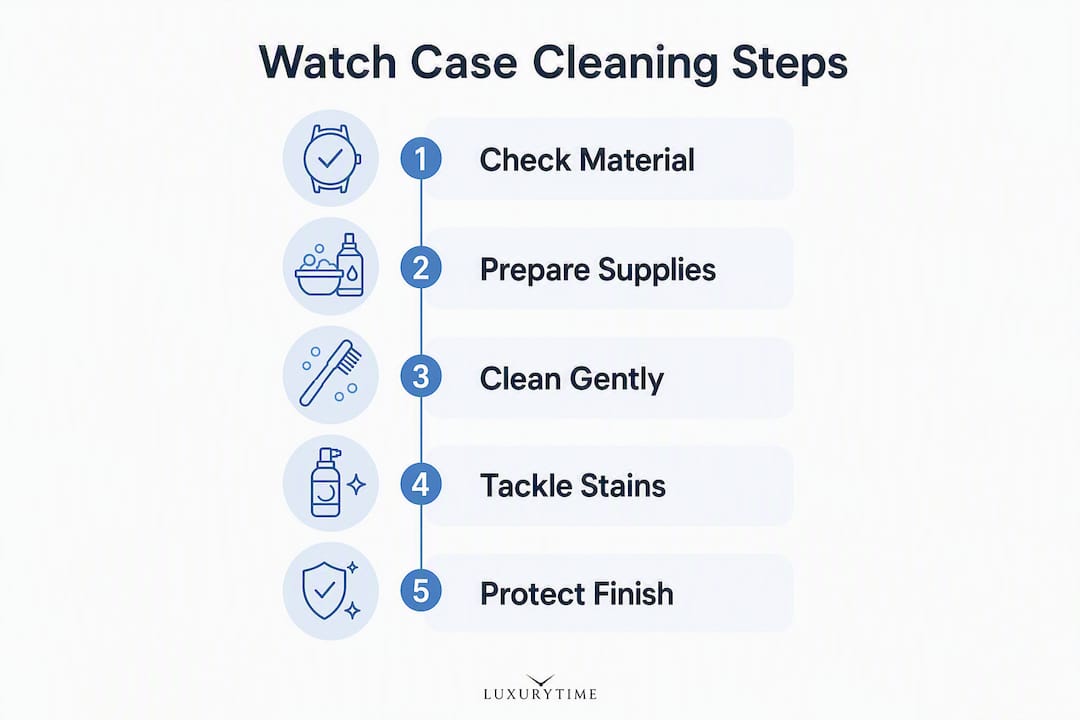
Chemicals are the second hazard. Household solvents — bleach, acetone, nail polish remover, gasoline, and high-concentration alcohol — can permanently discolor finishes, dissolve coatings, and degrade the rubber gaskets that keep moisture out. Ammonia-based glass cleaners like Windex fall in the same category: they strip anti-reflective coatings and attack seals.
Plated and PVD finishes need special attention. Gold plating, PVD coatings, and thin gilt layers can be paper-thin. Aggressive polishing or abrasive pastes will remove them permanently, and the only fix after that is professional replating. If the finish looks thin or the watch is collectible, light cleaning only.
Vintage patina rule: Original patina on a collectible watch is part of its value. Removing it can reduce what a collector will pay. Confirm historical importance before any aggressive cleaning — and when in doubt, consult a professional watchmaker.
Dos and don’ts at a glance:
- ✅ Use mild dish soap, distilled water, and soft cloths on water-resistant cases.
- ✅ Test any new product on an inconspicuous area first.
- ✅ Dry the watch completely before reattaching straps.
- ❌ Never use toothpaste — it is an abrasive that micro-scratches polished surfaces.
- ❌ Never use isopropyl alcohol above 70% concentration on seals or gaskets.
- ❌ Never force water past a push-pull crown.
Pro Tip: For non-water-resistant or vintage watches, a dry soft-bristled brush and a wooden toothpick for crevices are the only safe tools. No liquids at all.
What supplies do you need to clean a watch case safely?
Gather everything before you start. Having the right tools on hand prevents the temptation to grab something harsh mid-clean.
Essential home-safe supplies:
- Microfiber cloths (at least two — one for cleaning, one for drying)
- Very soft toothbrush or baby toothbrush
- Mild dish soap (clear, no moisturizers or degreasers)
- Distilled water (tap water leaves mineral deposits)
- Baking soda (for stubborn stains on silicone, rubber, and some plastics)
- Cotton swabs and wooden toothpicks for crevices
- Jeweler’s polishing cloth for a final buff on metal
Optional tools for more thorough cleaning:
- Spring-bar tool to remove straps and bracelets safely
- Compressed air to dry lug holes and bezel crevices
- Ultrasonic cleaner — for bracelets only, never the full watch head
- Specialty watch cleaning solution formulated for luxury timepieces
Specialized watch-cleaning solutions are worth the investment for high-value pieces. Unlike household detergents, they dissolve oxidation and oils without leaving residues that can enter the case if seals are compromised. For luxury watches especially, a formulated cleaner is the safer choice.
One thing to avoid that surprises people: isopropyl alcohol above 70% concentration. It dries out rubber gaskets, causing them to crack and fail. Ammonia-based cleaners do the same. Neither belongs anywhere near a watch.
Pro Tip: A can of compressed air from a safe distance clears lug holes and bezel crevices faster than any cloth. Let the watch air-dry for an hour after cleaning before reattaching the strap.
Step-by-step cleaning by watch case material
Stainless steel
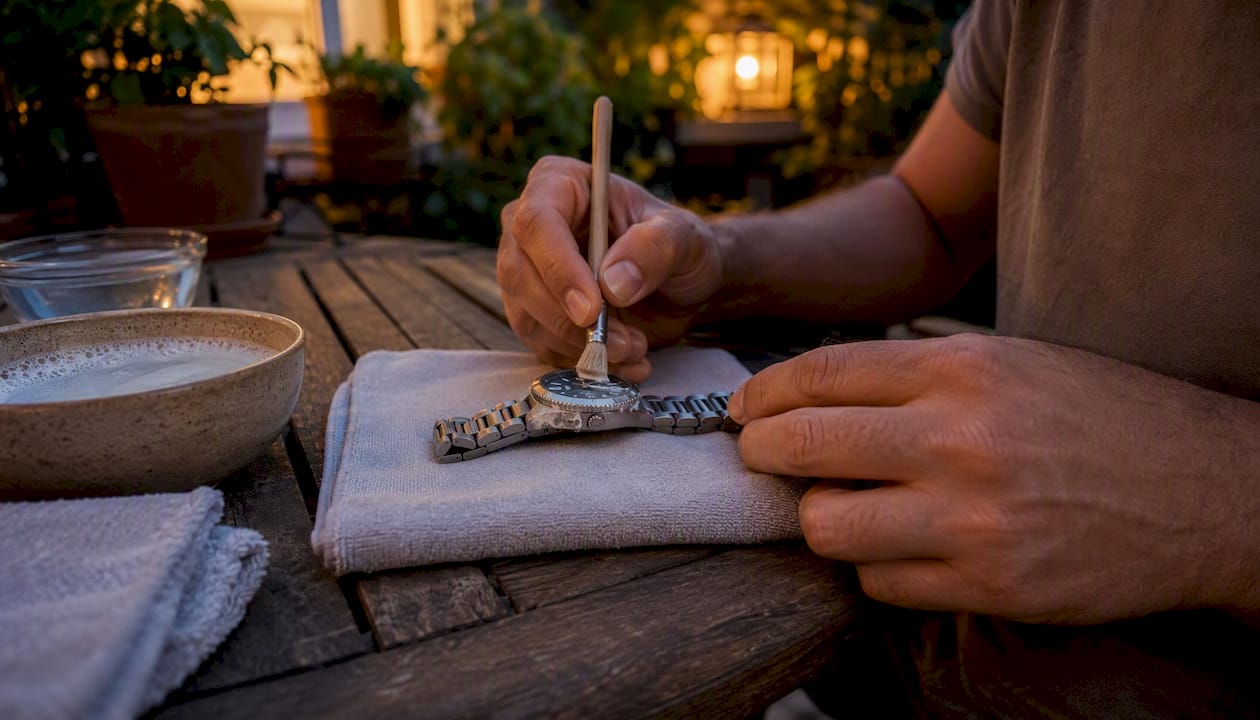
Stainless steel is the most forgiving material. For daily grime and light discoloration, mix one or two drops of mild dish soap in lukewarm distilled water, dip a soft toothbrush, and scrub gently in small circular motions. Pay extra attention to the lugs and bezel edge where sweat accumulates.
- Dip the brush in soapy water and scrub the case gently.
- Rinse under a low-pressure stream of lukewarm water (only if rated ≥5 bar).
- Pat dry immediately with a microfiber cloth; use compressed air for crevices.
For heavier spots, a paste of baking soda and a few drops of distilled water applied with a cotton swab lifts stubborn stains. Quick warning: avoid baking soda paste on high-polish surfaces — it can leave fine scratches on mirror finishes. Stick to brushed or satin cases.
Plated and PVD finishes
Dry-clean only. A microfiber cloth and a soft dry brush are your only tools here. Abrasives and polishing compounds will strip the coating permanently. If the color lightens during cleaning, stop — you are removing the plating.
- Brush away loose debris with a dry soft brush.
- Wipe gently with a clean microfiber cloth.
- Use a wooden toothpick for tight spots; no liquids, no pastes.
Quick warning: once plating is gone, professional replating is the only repair. There is no DIY fix.
Titanium
Titanium handles cleaning similarly to stainless steel and can tolerate slightly more scrubbing. Still avoid harsh acids, solvents, and anything abrasive enough to scratch the surface. Mild soap, lukewarm water, soft brush, thorough dry.
Plastic and resin (including UV yellowing)
Start with mild soap and a soft brush. For UV-induced yellowing on white or gray resin cases, the Retr0bright method — 12% oxidant cream applied under UV exposure — can reverse the discoloration. The mandatory rules: full disassembly first, all colored or painted parts removed or masked, and the method is only safe on white or gray plastic. Colored cases will be ruined.
- Disassemble completely — remove all buttons, colored inserts, and panels.
- Apply 12% oxidant cream, wrap in foil, and set in direct sunlight.
- Check progress every few hours; rinse thoroughly and reassemble once the desired shade is reached.
Quick warning: dye transfer from clothing or bags into plastic or resin can be impossible to remove. Prevention matters more than any cleaning method here.
Silicone and rubber
Warm soapy water handles most stains. For stubborn marks, a baking soda paste applied gently with a soft brush works well on silicone and rubber. Diluted hydrogen peroxide (3%) is another option for yellowing on white rubber. Do not use heat to dry silicone — it degrades the material. Never apply these methods to leather straps.
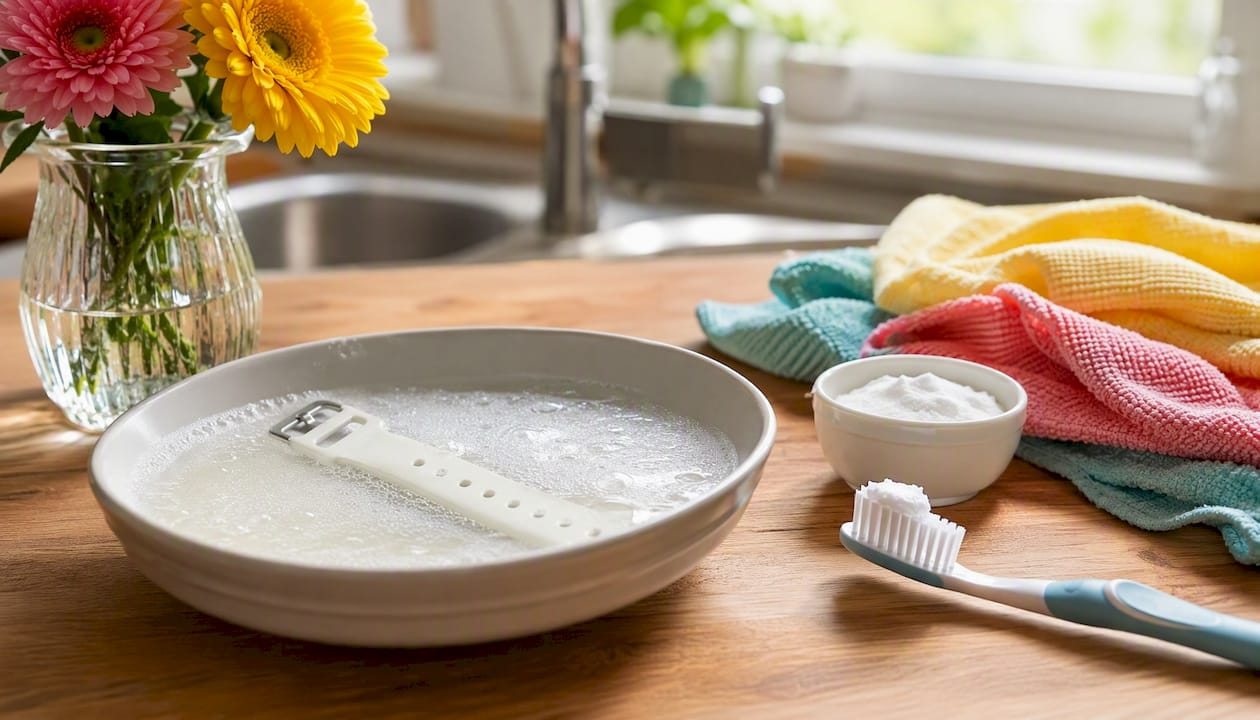
Pro Tip: Sweat stains on silicone are a mix of salt, oils, and acids. Soap cuts the oils, gentle brushing lifts the salt crystals, and a mild baking soda paste handles the acidic residue. Address all three for the best result.
What works on stubborn stains, and what are the risks?
| Method | Best For | Risk | When to Avoid |
|---|---|---|---|
| Baking soda paste | Silicone, rubber, brushed steel | Micro-scratches on polished surfaces | High-polish or plated finishes |
| Hydrogen peroxide (3%) | White rubber, white resin | Discolors colored parts | Any colored or painted surface |
| Retr0bright (12% oxidant + UV) | White/gray plastic cases | Destroys colored finishes | Colored, painted, or assembled cases |
| Polishing cream | Brushed/satin stainless steel | Removes plating, thins metal | Plated, PVD, or vintage cases |
| Ultrasonic cleaner | Metal bracelets | Movement damage from vibration | Full watch head with movement installed |
Polishing is the method most people underestimate. It removes microscopic layers of metal every time. On a solid stainless case, that is manageable. On a plated or PVD finish, even one pass can expose the base metal underneath. When dull patches reappear after polishing a plated surface, that is not oxidation — the plating is gone, and only professional replating restores it.
Ultrasonic cleaning is genuinely effective for metal bracelets, but industry professionals disassemble the watch head before any ultrasonic work. Vibration at the wrong frequency can damage a movement or force water past compromised seals.
When to stop with each stronger method:
- Baking soda paste: stop if the surface dulls or you see fine scratches forming.
- Hydrogen peroxide: stop if any color shift appears on adjacent parts.
- Polishing cream: stop if the finish lightens or loses its original texture.
- Ultrasonic: never start with the movement still in the case.
Pro Tip: Always work from the least aggressive method first. A microfiber cloth costs nothing and removes more than people expect. Save the paste and the polishing cream for what the cloth cannot handle.
When should you stop DIY and call a professional?
Some problems are beyond safe home repair. Stop DIY and consult a watchmaker when:
- The plating is visibly worn through to base metal.
- There is active corrosion or rust under the surface.
- The crystal is cracked or the case back seal is compromised.
- The watch fogged internally after any moisture exposure.
- The watch is a collectible where polishing affects resale value.
Typical U.S. price and timeline ranges for professional services:
| Service | Typical U.S. Range | Timeframe |
|---|---|---|
| Basic case polish | $50–$150 | 1–3 days |
| Bezel refinishing | $75–$200 | 2–5 days |
| Gold replating | $150–$400+ | 1–3 weeks |
| Full case refurbishment | $200–$600+ | 2–4 weeks |
Before handing over a watch, ask the watchmaker: Can you preserve the patina rather than remove it? Will polishing affect the plating thickness? Do you pressure-test the case after service? Is replating guaranteed, and to what thickness?
The preservation-versus-restoration question matters most for vintage pieces. A cosmetically imperfect watch with original patina is often worth more to a collector than a freshly polished one that has lost its history.
Pro Tip: Ask for a written estimate and confirm whether the price includes a pressure test. A watchmaker who skips the pressure test after opening a case is cutting a corner that could cost you far more later.
How do you prevent discoloration from coming back?
Prevention is faster than any cleaning method. A few consistent habits make a real difference.
Daily habits:
- Wipe the case with a dry microfiber cloth after every wear, especially after sweating.
- Put on perfume, sunscreen, and moisturizer before putting on your watch — not after.
- Avoid contact with dyed fabrics and leather goods that can transfer color to plastic or resin cases.
Storage:
- Store in a soft pouch or watch box away from direct sunlight and humidity.
- Rotate straps regularly so materials can breathe and dry between wears.
- Keep the watch away from prolonged UV exposure, which yellows resin and fades coatings.
Maintenance schedule:
- After each wear: quick dry wipe with microfiber.
- Monthly (for daily-wear watches): mild soap clean and bracelet check.
- Every 2–3 years: professional water-resistance pressure test and seal inspection.
After salt water or chlorinated pool exposure, rinse the watch promptly in fresh water and dry it completely. Salt crystals and chlorine abrade finishes and degrade seals over time, so a quick rinse right after exposure prevents long-term damage. For a deeper look at keeping your watch dust-free between cleans, ChronoCare’s storage guide covers the specifics.
ChronoCare-recommended products for removing discoloration
Two products from ChronoCare align directly with the methods in this guide.
ChronoCare Ultimate Watch Cleaning Kit: An all-in-one kit designed for luxury timepieces, covering the full cleaning process from initial wipe-down to final rinse. Use it for stainless steel, titanium, and solid metal cases. Do not use on plated or PVD finishes.
ChronoCare Watch Polishing Cream: Formulated for metal watch surfaces to remove light surface marks and restore shine. Safe for brushed and satin stainless steel. Do not apply to plated finishes, PVD coatings, or plastic surfaces.
Safe usage tips for both products:
- Remove the strap or bracelet before using either product.
- Test on a hidden area (inner lug or case back edge) before full application.
- Apply polishing cream sparingly — a small amount goes a long way and minimizes metal removal.
- Wipe away all residue thoroughly; soap residue can enter the case if seals are compromised.
Specialized formulations like these avoid the harmful residues that household detergents can leave behind, which matters especially when seals are aging or have not been recently serviced.
Pro Tip: Use the cleaning kit for routine maintenance and reach for the polishing cream only when the kit alone does not restore the shine. Polishing more than necessary removes metal you cannot put back.
Key Takeaways
Gentle, material-specific cleaning removes most watch-case discoloration safely at home, but plated finishes, vintage patina, and active corrosion require professional hands.
| Point | Details |
|---|---|
| Check water resistance first | Only use water or soapy solutions on cases confirmed to be water-resistant. |
| Match method to material | Stainless steel tolerates mild soap and baking soda paste; plated/PVD finishes need dry-clean only. |
| Polishing removes plating | Once plating is stripped, professional replating is the only repair — avoid polishing cream on coated surfaces. |
| Know when to stop | Fogged crystal, worn-through plating, active corrosion, or collectible patina all call for a professional watchmaker. |
| ChronoCare kit for safe starts | The ChronoCare Ultimate Watch Cleaning Kit and Watch Polishing Cream are formulated for metal cases and match the methods in this guide. |
The case for cleaning less, not more
Most watch owners clean too aggressively, too often. The instinct makes sense — a discolored case looks neglected, and the urge to fix it fast leads people straight to the harshest method available. But a polishing cloth used weekly on a plated dress watch does more cumulative damage than a year of sweat.
The preservation-first approach in this guide is not timidity. It reflects a real tradeoff: every abrasive pass removes material you cannot restore without professional intervention. For a stainless sports watch, that tradeoff is manageable. For a gold-plated vintage piece or a PVD-coated modern watch, it is permanent.
The collectors who keep their watches looking best long-term are not the ones who polish most aggressively. They are the ones who wipe down after every wear, store properly, and reach for a professional before the damage compounds. Original patina on a vintage piece is not a flaw. It is documentation.
Your watch deserves a kit built for it
Generic household cleaners were not designed with watch seals, coatings, or micro-engraved surfaces in mind. The ChronoCare Ultimate Watch Cleaning Kit was. Formulated in the U.S. for luxury timepieces, it gives you everything in this guide in one package: a safe cleaning solution, the right applicators, and step-by-step instructions that match the material-specific methods above.
For cases with light surface marks on brushed or satin stainless steel, the Watch Polishing Cream restores shine without the guesswork of mixing household products. Both products come with clear usage guidance, including the restrictions that matter: not for plated finishes, not for plastics, and always test on a hidden spot first.
Visit shopchronocare.com to find the right kit for your watch and get started with a solution designed for exactly this job.
Useful sources and further reading
- Citizen Watch Global — Care and Maintenance: Primary guidance on water-resistance thresholds, chemicals to avoid, and safe cleaning methods for wristwatches.
- Longines — How to Clean a Watch: Luxury brand guidance on using specialized cleaning solutions and protecting seals during cleaning.
- Pursuitist — How to Clean and Maintain a Luxury Watch: Covers salt and chlorine exposure, rinsing protocols, and maintenance schedules for high-end timepieces.
- WatchCritique — Remove Sweat Stains from Watch Case and Strap: Practical breakdown of sweat stain composition and ultrasonic cleaning cautions.
- WatchCritique — Remove Yellow Stains from a White Watch: Covers baking soda paste and hydrogen peroxide methods for silicone and rubber.
- CasioRestore — Casio TS-200 White Restoration: Detailed walkthrough of the Retr0bright method for UV-yellowed white resin cases, including disassembly requirements.
- ProfVolt — Brass Watch Bezel Restoration: Explains polishing risks on plated surfaces and when professional replating is necessary.
- Watch Savvy Zone — Clean a Vintage Watch Case at Home: Collector-focused guidance on patina preservation, gentle polishing workflows, and when to seek professional restoration.
A note on professional service: For U.S.-based watch owners, the American Watchmakers-Clockmakers Institute (AWCI) maintains a directory of certified watchmakers at awci.com — a reliable starting point when DIY methods have reached their limit or a pressure test is overdue.