

Types of Watch Polishing Compounds: A Complete Guide
Watch polishing compounds are specially formulated abrasive materials that remove scratches and restore shine to watch cases, crystals, and metal parts. Professional watch care relies on a three-stage compound system: Tripoli for cutting, White Diamond for pre-polishing, and Jeweler’s Rouge for a final mirror finish. Each stage uses a specific abrasive grit, and skipping any stage reduces the quality of the result. Knowing the types of watch polishing compounds, and how they differ by abrasiveness and material compatibility, is the foundation of effective luxury watch maintenance.
1. Types of watch polishing compounds: the three-stage system
Professional polishing follows a cutting, pre-polishing, and finishing sequence. Each stage uses a compound with a different abrasive level, and the progression matters as much as the compounds themselves.
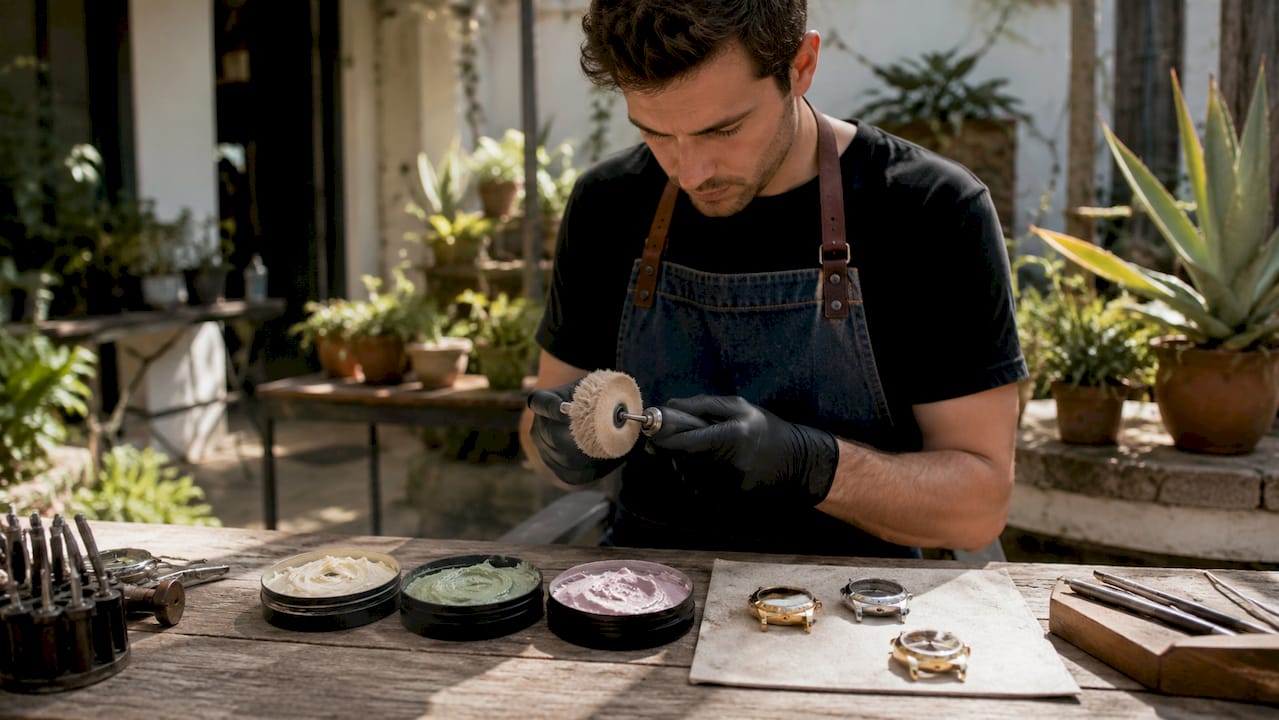
Think of polishing compounds like grades of sandpaper. Coarse compounds remove material fast but leave a hazy surface. Fine compounds remove that haze slowly. Matching compound aggression to the condition of the metal prevents over-polishing and protects the watch’s value.
The three core compound categories are:
- Cutting compounds (Tripoli): Brown or gray bars with high abrasion. Used to remove deep scratches, pitting, and heavy surface damage on hard metals. Fast cutting action leaves a dull, hazy surface that requires further stages.
- Intermediate compounds (White Diamond): Lower abrasion than Tripoli. Refines the surface left by cutting compounds, removes haze, and prepares the metal for a final shine. Works well on most metals and is the stopping point for softer metals like brass and copper.
- Finishing compounds (Jeweler’s Rouge): Very fine abrasion. Produces a high-gloss, mirror-like finish on metals like stainless steel and gold. Rouge on brass or copper causes oxidation that ruins the mirror finish, so professionals stop at White Diamond for those metals.
Pro Tip: Never use a finishing compound to skip the cutting stage on a heavily scratched surface. The fine abrasive in rouge cannot remove deep scratches. You will spend far more time and risk overheating the metal.
2. Stainless steel: the most forgiving material
Stainless steel is the most common watch case material, and it tolerates the full three-stage compound sequence well. Its hardness means cutting compounds like Tripoli are necessary to address scratches effectively. Skipping the cutting stage on stainless steel leaves surface marks that intermediate compounds cannot fully resolve.
The full sequence, Tripoli to White Diamond to Jeweler’s Rouge, produces the sharp mirror finish that stainless steel cases are known for. Brushed finishes on stainless steel require a different approach: directional polishing with a fine abrasive pad rather than rotary compound work, to preserve the original texture.
3. Gold: where compound choice protects material value
Gold is a soft metal. Aggressive cutting compounds cause irreversible material loss on gold cases, thinning the metal with each session. The correct approach uses low-abrasion compounds applied with light pressure and slow wheel speed.
Gold-plated cases carry an additional risk. The plating layer is thin, and any cutting compound can remove it entirely in one session. Finishing compounds or polishing creams designed for delicate surfaces are the only safe options for gold-plated watches.
4. Titanium: specialized compounds and low speed
Titanium is harder than stainless steel but behaves differently under polishing. Improper titanium polishing causes surface dullness rather than shine, because standard compounds smear the metal rather than cut it cleanly. Titanium requires specialized compounds formulated for its unique grain structure, applied at lower wheel speeds than stainless steel.
Heat buildup is the main risk with titanium. High-speed polishing generates friction that discolors the surface permanently. Slow, controlled passes with the correct compound preserve the finish and avoid heat damage.
5. Ceramic cases: diamond abrasives only
Traditional polishing compounds are completely ineffective on ceramic watch cases. Standard abrasives like Tripoli or Rouge do not work on ceramic and can cause surface damage. Ceramic’s extreme hardness requires diamond-based abrasives applied with specialized wheels.
This is not a DIY task for most watch enthusiasts. Ceramic polishing requires professional equipment and diamond compound grades that are not part of standard watch polishing kits. Attempting it with conventional compounds wastes time and risks scratching the case further.
6. Acrylic crystals vs. metal cases: different products entirely
Polishing a watch crystal requires a completely different set of products than polishing the metal case. Using the wrong product on either surface causes damage that is difficult or impossible to reverse.
For acrylic crystals, the correct process is:
- Start with a fine sanding pad (around 1500 grit) to level deeper scratches.
- Progress through finer sanding pads (2000, then 3000 grit) to reduce the sanding marks.
- Apply a chemical-based scratch remover with a soft cloth to restore clarity.
- Finish with a plastic-safe polishing cream to bring back the optical clarity.
Metal cases follow a different path: wax-based abrasive bars or cream compounds applied with buffing wheels or polishing cloths. Using a metal compound on an acrylic crystal melts or crazes the surface. Using an acrylic scratch remover on metal does nothing useful. The distinction between crystal and case polishing is one of the most commonly overlooked points in watch care.
Pro Tip: Tape off the metal bezel before working on an acrylic crystal. Chemical scratch removers designed for acrylic can dull metal finishes if they spread beyond the crystal.
7. Best practices for using polishing compounds safely
The most common polishing mistakes come from pressure and contamination, not from choosing the wrong compound.
Excessive pressure rounds off factory edges, which damages both the aesthetics and the resale value of a luxury watch. The compound does the cutting work. The wheel or cloth delivers it. Your hand controls direction and contact, not force.
Contamination between stages is equally damaging. Dedicated polishing wheels for each compound stage prevent coarser abrasives from transferring to finishing stages. A single pass of a Tripoli-contaminated wheel on a nearly finished surface introduces new scratches instead of removing them.
Key practices to follow:
- Label and store each polishing wheel separately after use.
- Work in the correct sequence: cutting, then intermediate, then finishing.
- Use a clean microfiber cloth for the final hand-polish stage.
- Clean the watch surface between stages to remove compound residue.
- Check your work under a bright light at a low angle to catch remaining scratches before moving to the next stage.
Microfiber cloths with specialized construction enhance the performance of polishing creams and protect delicate finishes during the final stage. A quality microfiber is not optional for finishing work. It is the tool that separates a professional result from a mediocre one.
8. Comparison of polishing compound types
The table below summarizes how watch polishing compounds differ by abrasiveness, use case, and material compatibility.
| Compound type | Abrasiveness | Typical use | Suitable materials | Key risk |
|---|---|---|---|---|
| Tripoli (cutting) | High | Remove deep scratches | Stainless steel, hard metals | Over-removal, edge rounding |
| White Diamond (intermediate) | Medium | Refine surface, remove haze | Most metals including brass, copper | Insufficient for deep scratches |
| Jeweler’s Rouge (finishing) | Low | Mirror shine | Stainless steel, gold | Oxidation on brass and copper |
| Diamond abrasive | Very high | Ceramic surface work | Ceramic only | Requires professional equipment |
| Plastic scratch remover | Chemical | Acrylic crystal clarity | Acrylic crystals | Damages metal if misapplied |
Key takeaways
The best polishing compounds for watches match both the abrasive stage and the specific material being polished, with a three-step sequence of cutting, intermediate, and finishing compounds producing the highest-quality results.
| Point | Details |
|---|---|
| Three-stage system | Use Tripoli, White Diamond, and Jeweler’s Rouge in sequence for stainless steel and hard metals. |
| Material matching | Gold needs low-abrasion compounds; ceramic requires diamond abrasives; acrylic needs chemical removers. |
| Dedicated wheels | Keep separate polishing wheels for each compound stage to prevent contamination and micro-scratches. |
| Pressure control | Let the compound do the cutting. Heavy hand pressure rounds edges and destroys factory finishes. |
| Crystal vs. case | Acrylic crystals and metal cases require entirely different products. Never cross-apply them. |
The part most enthusiasts get wrong
By Raymond Jenkins
After years of working with watch polishing products, the mistake I see most often is not choosing the wrong compound. It is skipping the intermediate stage because it feels redundant.
White Diamond looks like a minor step between the dramatic scratch removal of Tripoli and the satisfying mirror of Rouge. Enthusiasts skip it and then wonder why their final finish has a faint haze or micro-scratching under direct light. The intermediate stage is where the real refinement happens. Rouge cannot fix what White Diamond was supposed to do.
The second thing I have learned is that patience matters more than any single product. Rushing through a cutting stage leaves scratches that the next compound cannot handle. Rushing the finishing stage leaves a result that looks good in dim light and disappointing in sunlight. Slow, consistent passes with light pressure produce results that hold up under scrutiny.
The safe polishing practices that protect factory edges and material integrity are not complicated. They just require discipline. A watch that has been polished correctly looks better and retains more value than one that has been aggressively buffed back to a shine. Respect the material, respect the sequence, and the results speak for themselves.
— Raymond Jenkins
ChronoCare’s polishing kits for watch enthusiasts
Choosing the right compounds is easier when the kit is already curated for you.
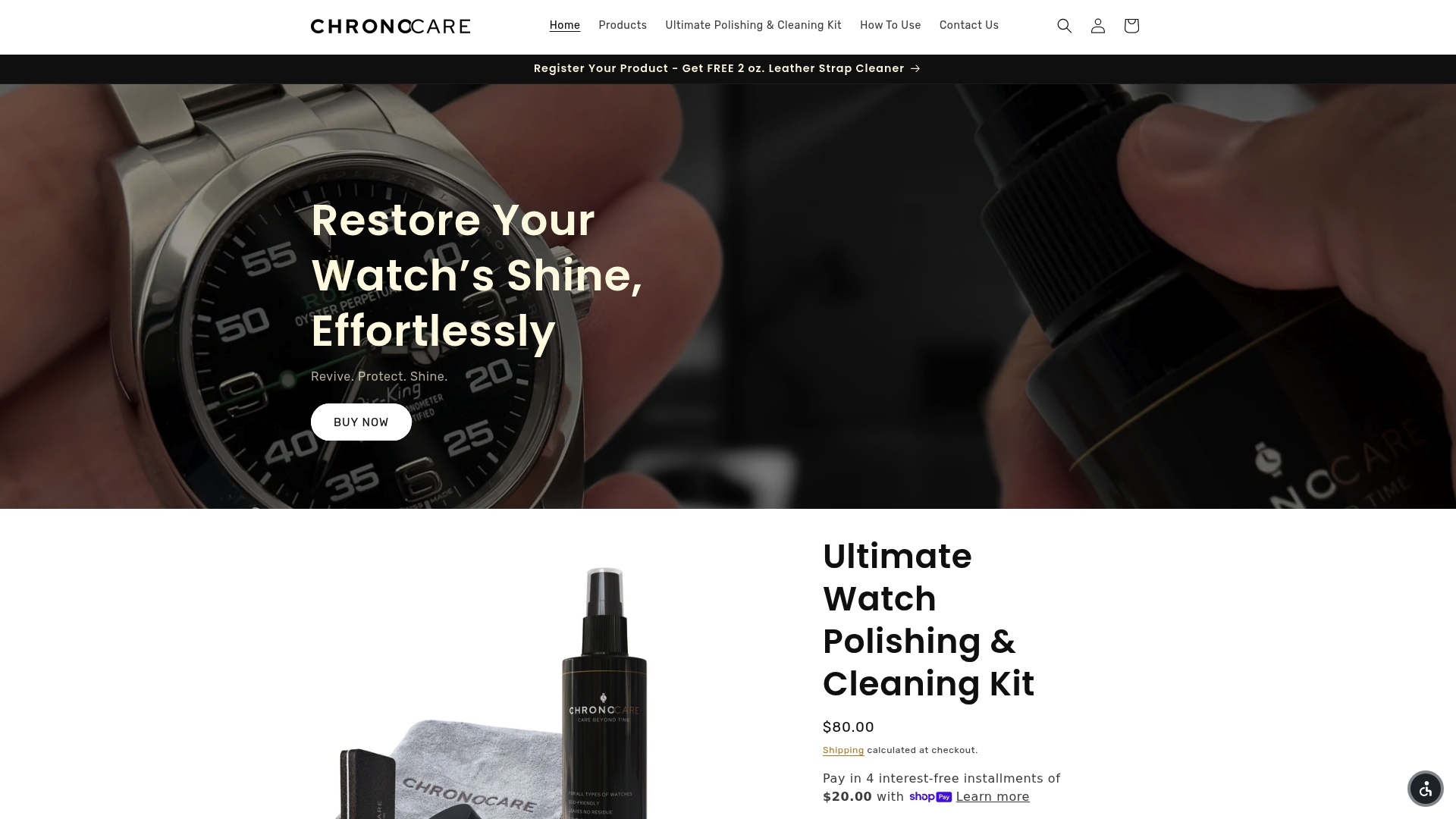
ChronoCare’s Ultimate Watch Polishing & Cleaning Kit includes compound-specific tools and polishing supplies selected for diverse watch materials, from stainless steel to gold-plated cases. The kit removes the guesswork of sourcing individual compounds and matching them to the correct wheels and cloths. ChronoCare formulates its products in the US, with a focus on protecting the finish and value of luxury timepieces. For enthusiasts who want a complete solution without assembling one piece by piece, the watch polishing cream is a strong starting point for light scratch removal and shine restoration on metal surfaces.
FAQ
What are the main types of watch polishing compounds?
The three main types are cutting compounds (Tripoli), intermediate compounds (White Diamond), and finishing compounds (Jeweler’s Rouge). Each targets a different stage of the polishing process, from scratch removal to mirror finish.
Can I use the same polishing compound on all watch materials?
No. Stainless steel tolerates aggressive cutting compounds, while gold requires low-abrasion products to prevent material loss. Ceramic cases require diamond-based abrasives, and acrylic crystals need chemical scratch removers rather than metal polishing compounds.
Why does skipping polishing stages reduce quality?
Each compound stage removes the marks left by the previous one. Skipping the intermediate White Diamond stage leaves haze and micro-scratches that a finishing compound like Rouge cannot eliminate, resulting in a dull or uneven final surface.
Is Jeweler’s Rouge safe for all metals?
Rouge is safe for stainless steel and gold but causes oxidation on brass and copper. Professionals stop at the White Diamond stage for those metals to avoid a finish that darkens or discolors quickly.
How do I avoid damaging my watch while polishing?
Use light, consistent pressure and let the compound do the cutting work. Keep dedicated wheels for each compound stage, work in the correct sequence, and always use a clean microfiber cloth for the final hand-polish step.