

Watch Scratch Prevention: Protect Your Luxury Timepiece
Watch scratch prevention is the practice of using protective films, scratch-resistant materials, and careful handling habits to stop surface damage before it happens. For luxury watch owners, a single deep scratch on a Rolex Submariner or an Omega Speedmaster can reduce resale value and ruin a factory finish that took decades to perfect. The good news is that modern tools like TPU protection films, polishing creams, and microfiber cleaning cloths make prevention far more achievable than most collectors realize. Understanding what causes scratches and how to stop them is the first step toward keeping your watch in showroom condition.
What is watch scratch prevention and why does it matter?
Watch scratch prevention is a system, not a single product. It combines physical barriers, material knowledge, and daily habits to protect a watch’s surface from the micro-abrasions and impact marks that accumulate over time.
The stakes are real. Frequent polishing removes microscopic layers of metal and affects both finish and long-term resale value. Every time a watch goes through a polishing wheel, it loses a fraction of its original form. Prevention eliminates that cycle entirely.
The core tools in any prevention strategy are TPU protection films, padded storage, microfiber cloths, and behavioral adjustments. Brands like Finxwatch and WatchSkins have built entire product lines around the idea that protecting a watch before it gets scratched is always better than restoring it after. ChronoCare takes the same position: prevention preserves factory finishes in ways that no restoration can fully replicate.
How do watch protection films work?
Watch protection film is a 0.16 mm thick transparent TPU layer that acts as a sacrificial barrier against daily scratches on watch cases, bezels, lugs, and clasps. The film absorbs micro-scratches that would otherwise mark the metal finish, while staying nearly invisible on the watch surface.
TPU films go far beyond what a basic screen protector covers. A screen protector shields only the crystal. A full protection film kit wraps the case, bezel, lugs, and clasp, which are the areas that take the most contact damage during daily wear. That coverage difference is significant for collectors who care about the entire watch, not just the dial.
One underappreciated feature is self-healing technology. Light scuffs and micro-scratches on the film surface fade over time without any intervention. The film takes the hit so the metal underneath does not.
Pro Tip: Clean the watch surface with isopropyl alcohol before applying any protection film. Trapped dust or oils under the film create visible bubbles and reduce adhesion, which shortens the film’s lifespan.
Installation matters as much as the film itself. Precision-cut film kits avoid edge lifting and dust trapping through careful adhesive technology. Edge lifting is the most common failure point, and it almost always traces back to improper surface preparation before application.
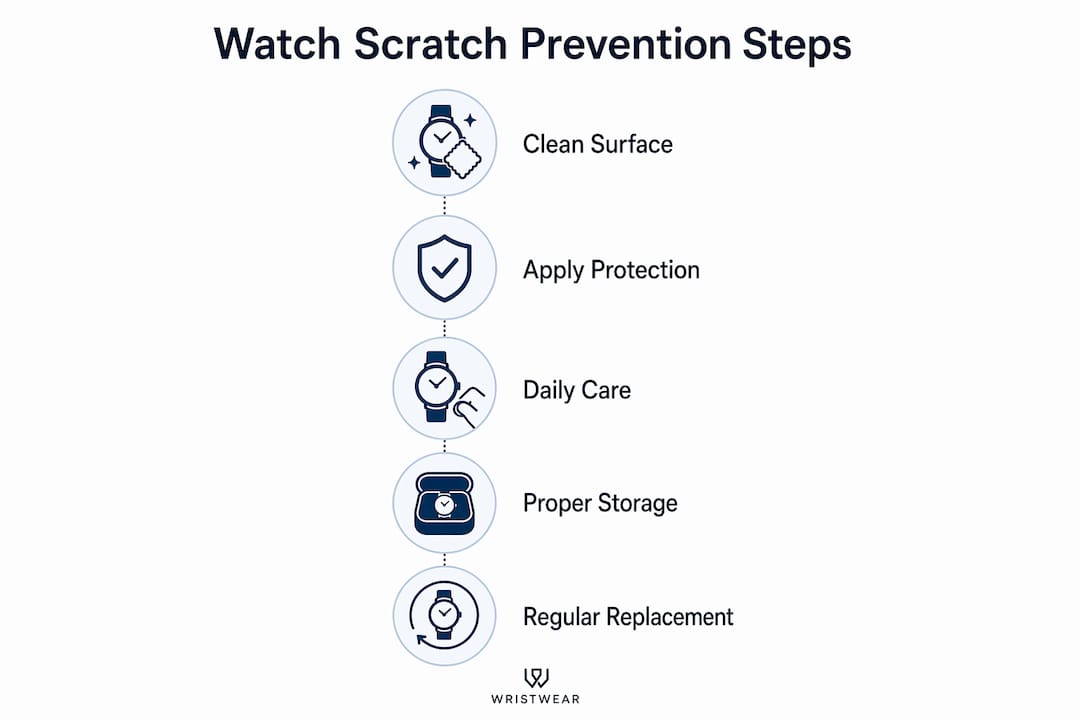
Films should be replaced every 6–12 months. By that point, the film has absorbed enough wear to warrant a fresh layer. Waiting longer risks edge lifting, which can trap grit against the very surface the film was protecting.
| Feature | TPU protection film | Screen protector only |
|---|---|---|
| Coverage area | Case, bezel, lugs, clasp | Crystal only |
| Self-healing | Yes | Rarely |
| Reversible | Yes, no surface damage | Yes |
| Replacement interval | 6–12 months | Varies |
| Impact on factory finish | None | None |
What role do daily habits play in preventing scratches?
Behavioral habits are the most underrated part of any scratch prevention plan. No film or product can compensate for consistently careless handling.
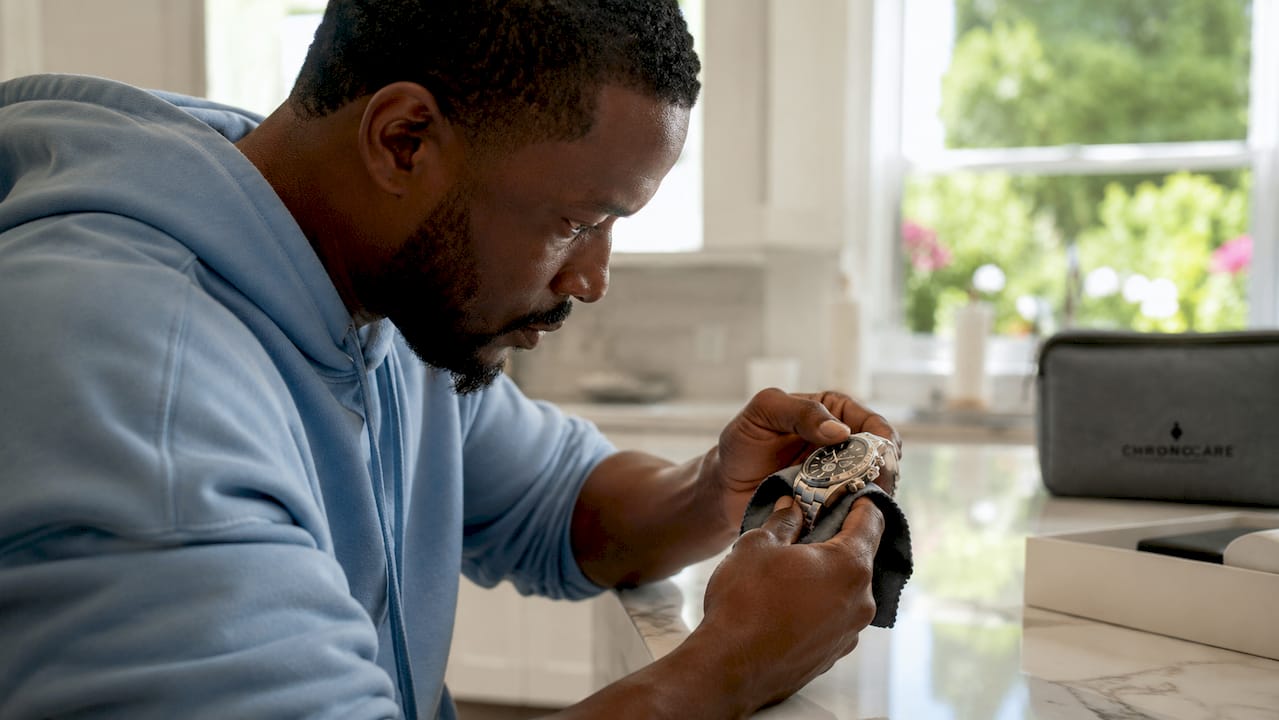
Desk-diving is the leading cause of clasp and bracelet scratches. It refers to resting your wrist on a desk edge, laptop corner, or hard surface while working. The clasp and bracelet links grind against the surface with every small movement. Switching your watch to your non-dominant hand cuts that impact significantly.
Follow these habits to reduce daily scratch risk:
- Wear your watch on your non-dominant hand to reduce contact with hard surfaces during tasks.
- Remove your watch before manual labor, yard work, or any activity involving tools or rough materials.
- Stay aware of door frames, metal railings, and countertops, which are common impact points for the case and lugs.
- Store each watch in its own padded compartment or a watch roll to prevent watches from scratching each other.
- Clean your watch only with a lint-free microfiber cloth. Abrasive cleaning materials like paper towels or toothbrushes leave micro-scratches on metal and crystal surfaces.
Pro Tip: Keep a dedicated microfiber cloth in your watch box. Using the same cloth you clean eyeglasses with risks cross-contamination from lens cleaning solutions, which can dull metal finishes.
Storage is where many collectors make a quiet but costly mistake. Tossing a Patek Philippe and an IWC into the same drawer without padding means the two watches scratch each other overnight. Individual compartments or a lined watch roll solve this completely.
How does your crystal type affect scratch prevention and repair?
The crystal covering your dial determines which prevention and repair options are available to you. Getting this wrong is one of the most common and costly mistakes in watch care.
Three crystal types dominate the market, and each behaves differently under stress:
- Acrylic crystal: The softest of the three. Scratches easily but polishes well. Compounds like Polywatch can remove up to 95% of light scratches on acrylic in 15–45 minutes using a grit progression technique. Vintage watches from the 1960s and 1970s commonly use acrylic.
- Mineral glass: Offers moderate scratch resistance. Partially polishable, but results are less consistent than with acrylic. Found on mid-range watches from brands like Seiko and Citizen.
- Sapphire crystal: Rates at Mohs 9 hardness, making it the most scratch-resistant option available. Rolex, Omega, and most modern luxury brands use sapphire. The tradeoff is that sapphire cannot be polished at home without risking damage to the anti-reflective coating.
| Crystal type | Scratch resistance | DIY polishable | Professional repair needed |
|---|---|---|---|
| Acrylic | Low | Yes | Rarely |
| Mineral glass | Moderate | Partially | Sometimes |
| Sapphire | Very high | No | Yes |
Misidentifying your crystal type leads to poor repair attempts. Applying Polywatch to a sapphire crystal does not remove scratches. It strips the anti-reflective coating, turning a minor surface mark into an expensive repair job. When in doubt, check the manufacturer’s specifications before touching any polishing compound to the crystal.
What are the best ways to remove existing scratches?
Scratch removal depends entirely on the material and the depth of the damage. The right method for acrylic is the wrong method for sapphire.
For acrylic crystals, a three-step grit progression polishing method delivers the best results. Start with a heavy-cut compound to address the scratch, move to a refinement compound to reduce haze, and finish with a clarity compound for a clean, transparent surface. Skipping steps leaves a milky haze that is often more distracting than the original scratch.
For metal surfaces like stainless steel cases and bracelets, specialized polishing creams formulated for watches can address light surface marks without removing significant material. The key is using a product designed for watch metals, not a generic metal polish. Generic products are often too aggressive for the fine brushed or satin finishes on luxury cases.
For sapphire crystals, the options narrow quickly:
- Light surface marks sometimes respond to a professional-grade polishing service.
- Deep scratches on sapphire almost always require crystal replacement, not polishing.
- Never attempt DIY polishing on sapphire. The risk of coating damage far outweighs any potential benefit.
The types of repair kits available for home use are best suited to acrylic and metal surfaces. For anything involving sapphire or deep structural damage, a certified watchmaker is the right call. Protecting the watch before scratches occur is always the better path, and that is exactly what a consistent prevention routine delivers.
Key Takeaways
Watch scratch prevention works best as a combined system: protective films guard the metal, mindful habits reduce daily contact damage, and material knowledge prevents costly repair mistakes.
| Point | Details |
|---|---|
| TPU films are the strongest barrier | A 0.16 mm protection film covers the case, bezel, lugs, and clasp, replacing every 6–12 months. |
| Desk-diving causes most bracelet damage | Switching to your non-dominant hand and avoiding hard surface contact cuts scratch risk significantly. |
| Crystal type determines repair options | Acrylic polishes well at home; sapphire requires professional service to avoid coating damage. |
| Prevention beats restoration | Frequent polishing removes metal and affects factory finish; films protect without material loss. |
| Microfiber cloths are non-negotiable | Paper towels and abrasive cloths leave micro-scratches; use only lint-free microfiber for cleaning. |
Why I think most collectors get scratch prevention backwards
Most watch owners reach for a polishing cloth the moment they spot a scratch. That instinct is understandable, but it treats the symptom instead of the cause. After years of working with luxury timepieces, I’ve come to believe that the order of operations matters more than any single product.
The collectors who maintain the best-looking watches are not the ones with the most polishing supplies. They are the ones who have built a prevention routine so consistent that polishing rarely comes up. A systematic approach combining protective accessories with behavioral changes is the most effective way to maintain condition and value over time. That is not a marketing claim. It is what the evidence consistently shows.
The most common mistake I see is applying a protection film to a watch that was not properly cleaned first. Isopropyl alcohol is not optional. Skipping it traps oils and particles under the film, which creates bubbles and shortens adhesion life. The second most common mistake is ignoring wrist position habits entirely and relying on the film to do all the work. Films absorb micro-scratches well. They do not absorb the impact of a watch case hitting a granite countertop at full speed.
The right mindset is layered protection. Film handles the daily micro-abrasions. Habits handle the avoidable impacts. And when you understand your crystal type before anything goes wrong, you avoid the expensive mistake of reaching for Polywatch on a sapphire dial. Prevention is not complicated. It just requires doing a few simple things consistently.
— Raymond Jenkins
ChronoCare products that support your prevention routine
Keeping a luxury watch scratch-free requires the right tools alongside the right habits. ChronoCare’s Ultimate Watch Cleaning Kit gives you a safe, thorough cleaning solution designed specifically for high-end timepieces, so your watch is always properly prepared before applying a protection film or performing routine maintenance.
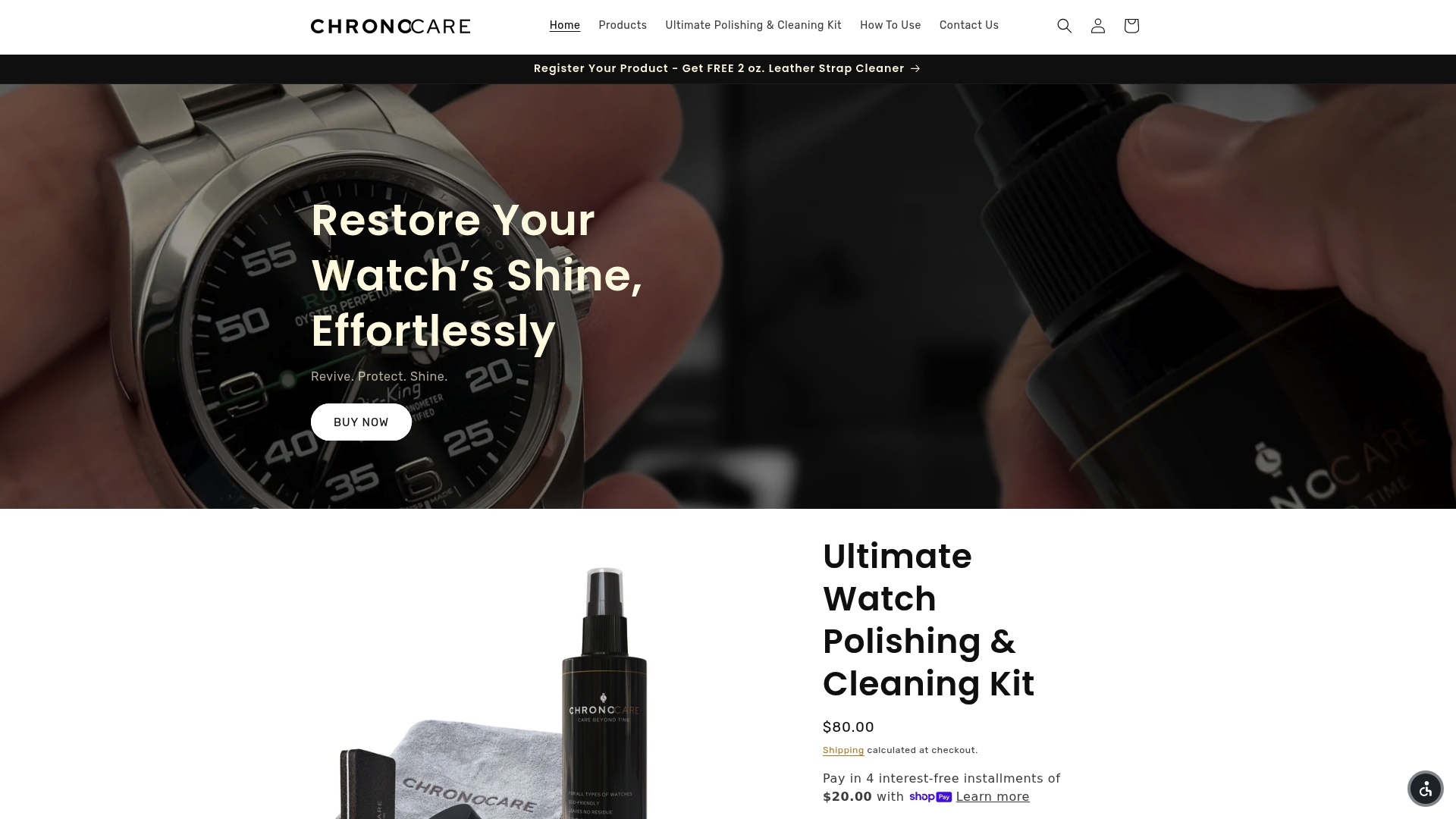
For collectors dealing with light surface marks on metal cases or bracelets, the Ultimate Watch Polishing and Cleaning Kit handles both steps in one package. ChronoCare formulates its products in the US for watch surfaces, not generic metal, which means you get results without the risk of over-polishing a brushed or satin finish. Pair either kit with a consistent protection film routine and you have a complete watch maintenance approach that keeps your timepiece looking its best between professional services.
FAQ
What is watch scratch prevention?
Watch scratch prevention is the use of protective films, scratch-resistant materials, and careful handling habits to stop surface damage before it occurs. It combines physical barriers like TPU films with behavioral practices such as proper storage and mindful wear.
How does a watch protection film work?
A TPU protection film sits as a 0.16 mm transparent layer over the case, bezel, lugs, and clasp, absorbing micro-scratches that would otherwise mark the metal. Many films also have self-healing properties that allow light scuffs to fade over time.
Can you repair watch scratches at home?
Light scratches on acrylic crystals and metal surfaces can be addressed at home using compounds like Polywatch or a dedicated polishing cream. Sapphire crystals require professional service because DIY polishing risks stripping the anti-reflective coating.
What causes most watch scratches during daily wear?
Desk-diving, which is resting your wrist on hard surfaces like desk edges or laptop corners, is the leading cause of clasp and bracelet scratches. Contact with metal railings, door frames, and rough surfaces during manual tasks also contributes significantly.
How often should I replace a watch protection film?
Protection films should be replaced every 6–12 months. By that point, the film has absorbed enough wear to lose effectiveness, and edge lifting becomes more likely, which can trap debris against the watch surface.