

Types of Watch Repair Kits for Home Use: 2026 Guide
Home watch repair kits fall into three main categories based on the repairs they enable: strap and bracelet kits, battery and case-back opening kits, and watchmaking kits for movement-level work. Each category serves a different skill level and repair goal, so choosing the wrong type wastes money and risks damaging your watch. The types of watch repair kits for home use are best classified by repair focus, with common tools ranging from spring bar removers and case openers to loupes and movement holders. Knowing which category fits your needs before you buy is the single most important decision a DIY watch owner makes.
1. Types of watch repair kits for home: the three core categories
Home watch repair kits are organized around three distinct repair functions: strap and bracelet maintenance, battery replacement and case-back access, and full watchmaking for movement-level tasks. This classification matters because a strap kit and a watchmaking kit share almost no tools in common. Buying a large, mixed kit without understanding these categories often means paying for tools you will never use while missing the one tool you actually need. Start by identifying your most common repair task, then match the kit category to that need.
2. Strap and bracelet repair kits
Strap and bracelet kits are the most practical entry point for any DIY watch owner. Spring bar tools and link removers are the most frequently used tools in home watch maintenance, making this category the highest-value starting kit for beginners. A standard strap kit handles resizing metal bracelets, swapping leather or rubber straps, and replacing worn spring bars.
A quality strap and bracelet kit typically includes:
- Spring bar tool with interchangeable forked and pointed tips for different lug styles
- Link remover with spare pins for resizing metal bracelets
- Precision screwdrivers sized for micro-screws on screw-link bracelets
- Assorted spring bars in common sizes (16mm, 18mm, 20mm, 22mm)
- Nylon jaw pliers or a bracelet holder to grip the watch without scratching
Entry-level strap kits from brands like Bergeon and generic sets sold on Amazon typically run between $15 and $50. A Bergeon 6767-F spring bar tool alone costs around $30 and outperforms most full kits in that price range. Replacement spring bars and spare pins bundled in kits reduce downtime during repairs, which is a genuine convenience advantage.
Pro Tip: Always use a tool with a nylon or plastic tip when working near a polished case. Metal tips slip and leave scratches that are expensive to buff out on luxury watches.
3. Battery replacement and case-back opening kits
Battery and case-back kits address one of the most requested home repairs: swapping a dead battery without paying a jeweler $20 to $40 for a five-minute job. The critical variable here is case-back type. Snap-on backs require a case knife, screw-down backs need an adjustable jaw wrench, and pop-off backs are the most difficult and are often best left to professionals.
The three most common case-back types and their matching tools are:
- Snap-on case back: Use a case knife or pry tool inserted into the notch at a low angle. Blade angle and notch placement are critical to avoid slipping and scratching the case.
- Screw-down case back: Use an adjustable three-jaw wrench or a friction ball opener. Jaw wrenches handle groove sizes from roughly 15mm to 55mm on most consumer watches.
- Pop-off case back: Requires a friction ball or specialized opener. Gasket replacement is often needed after opening, adding complexity for beginners.
Matching your opener to the case-back type is non-negotiable. Using the wrong case opener risks scratching the case back or slipping and gouging the watch body. Always identify your case-back type before purchasing a kit.
A well-specified multi-type battery kit includes an adjustable jaw wrench, a case knife, anti-magnetic tweezers, precision screwdrivers, and assorted spring bars for convenience. Some kits cover groove sizes from 15mm to 55mm with five-in-one screwdriver bits, making them genuinely versatile for mixed watch collections. The limitation is that no single kit handles every case-back design perfectly, so knowing your watches before buying remains the best strategy.
4. Watchmaking kits for movement-level repairs
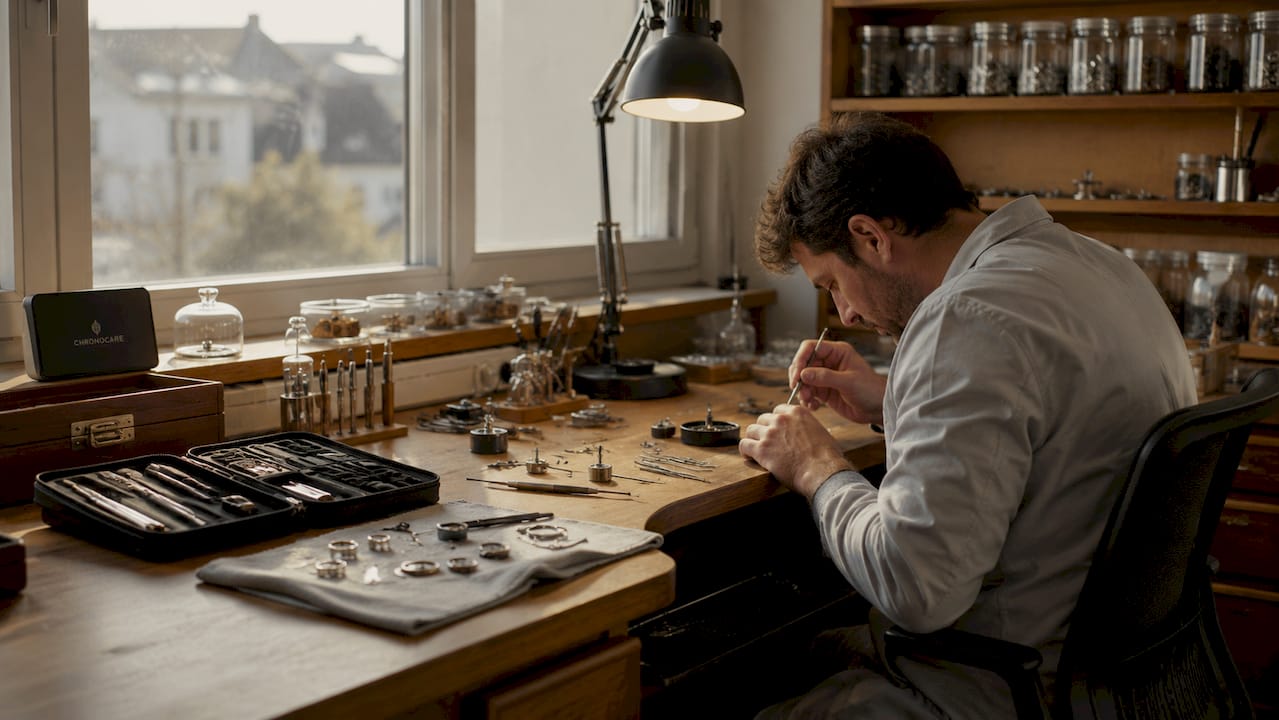
Watchmaking kits are for hobbyists ready to go beyond battery swaps and strap changes. Movement-level work means handling gears, springs, and jewels that require precision tools and a clean, organized workspace. Five starter tool groups cover most beginner watchmaking needs: precision screwdrivers, anti-magnetic tweezers, a loupe, a movement holder, and a case opener matched to the specific watch.
A functional beginner watchmaking kit includes:
- Precision screwdriver set (sizes 0.6mm to 2.5mm) with cleanly machined tips that grip screw heads without camming out
- Anti-magnetic tweezers in straight and angled styles to handle delicate parts without magnetizing them
- Watchmaker’s loupe (5x to 10x magnification) for part visibility during disassembly
- Movement holder or movement cushion to stabilize the movement during work
- Case opener set matched to the watch’s back type
- Dust blower and rodico (a tacky putty) for cleaning parts without contact damage
A loupe and movement holder are indispensable when working beyond basic battery or strap repairs. Without them, small parts become nearly impossible to track and handle safely. The movement holder in particular prevents the watch from shifting while you apply torque to screws, which is the most common cause of slipped screwdrivers and scratched movements.
Pro Tip: Buy in stages. Start with a quality screwdriver set and tweezers, then add a loupe and movement holder as your skills grow. Investing in tools that directly touch the movement pays off far more than buying a large, cheap kit all at once.
5. Comparing watch repair kit types for different DIY scenarios
Choosing between kit categories comes down to three factors: the repairs you actually perform, the watches you own, and your current skill level. The table below maps each kit type to its practical use case.
| Kit type | Core tools | Skill level | Typical repairs |
|---|---|---|---|
| Strap and bracelet kit | Spring bar tool, link remover, screwdrivers | Beginner | Strap swaps, bracelet resizing, spring bar replacement |
| Battery and case-back kit | Case knife, jaw wrench, tweezers, screwdrivers | Beginner to intermediate | Battery replacement, case-back access |
| Watchmaking kit | Loupe, movement holder, full screwdriver set, tweezers | Intermediate to advanced | Movement disassembly, cleaning, part replacement |
A quartz watch owner who only swaps straps and replaces batteries needs nothing beyond the first two categories. A mechanical watch collector who wants to service movements needs a full watchmaking kit. Budget options in the $20 to $60 range cover strap and battery work adequately. Movement-level kits from reputable sources like Bergeon or Horotec start around $80 to $150 for a functional beginner set.
The biggest risk in this category is buying a mismatched kit. A case holder stabilizes the watch during repairs and is recommended across all three kit types, yet most budget kits omit it entirely. Adding one separately costs $10 to $20 and prevents the most common beginner damage: a watch slipping off the bench mid-repair.
6. Tips for selecting quality watch repair supplies and avoiding pitfalls
Tool quality separates a successful home repair from a damaged watch. Good precision screwdrivers and anti-magnetic tweezers preserve screw heads and prevent movement damage in ways that cheap alternatives simply cannot match. The tip machining on a $3 screwdriver set is visibly rougher under magnification, and that roughness destroys screw heads on repeated use.
Practical buying guidance for home watch repair supplies:
- Match the case opener to your watches first. Identify whether your watches have snap-on, screw-down, or pop-off backs before purchasing any battery kit.
- Prioritize tools that touch the movement. Spend more on screwdrivers and tweezers; save on storage trays and cases.
- Buy essentials first, expand later. Starting with a strap kit or battery kit and expanding as skills grow avoids wasted expense and tool clutter.
- Check for smartwatch compatibility if you own modern wearables. Some kits include plastic opening picks and suction cups suited for smartwatch displays, as covered in guides on smartwatch repair essentials.
- Avoid kits with excessive plastic tools. Plastic spring bar tools and case openers flex under pressure and slip, causing scratches.
Pro Tip: Work on a watch repair mat or a folded microfiber cloth. Small parts like spring bars and screws disappear instantly on hard surfaces, and a soft mat prevents case scratches during handling.
A solid watch care routine pairs well with any repair kit. Cleaning and polishing after a repair preserves the work you just did and keeps the watch looking its best. ChronoCare’s guides on maintenance routines cover this step-by-step for both luxury and everyday timepieces.
Key takeaways
Choosing the right kit type from the start prevents damage, saves money, and makes home watch repair genuinely satisfying rather than frustrating.
| Point | Details |
|---|---|
| Three kit categories | Strap kits, battery kits, and watchmaking kits each serve distinct repair needs and skill levels. |
| Match opener to case back | Snap-on, screw-down, and pop-off backs each require a specific tool; using the wrong one causes damage. |
| Buy in stages | Start with a strap or battery kit and add watchmaking tools as your skills and collection grow. |
| Prioritize tool quality | Invest in precision screwdrivers and anti-magnetic tweezers first; these tools directly touch the movement. |
| Add a case holder | A case holder prevents slips during repairs and is the most overlooked tool across all kit types. |
What I’ve learned from years of home watch repairs
I made every beginner mistake in the book. I bought a 147-piece kit off Amazon for $22, convinced I was getting incredible value. Half the screwdrivers stripped on first contact with a movement screw, and the case opener left a ring of scratches on a vintage Seiko I still regret. That experience taught me something no buying guide had told me clearly: the number of tools in a kit is irrelevant. What matters is whether the three or four tools you actually use are made well.
The spring bar tool is the one item I tell every new hobbyist to spend real money on. A Bergeon 6767-F costs more than some full kits, but it has never slipped on a lug in years of use. Cheap alternatives flex at the tip and pop out of the spring bar slot at the worst moment, usually leaving a gouge in a polished case. That $30 investment has saved me far more in avoided damage.
My other hard-won lesson is lighting. A good magnifying lamp changes what you can see and do at a watch bench more than almost any tool upgrade. I use a daylight-spectrum LED loupe lamp and a 10x loupe together, and the combination makes movement work feel manageable rather than terrifying. Pair that with a movement holder and a clean mat, and you have a functional home repair setup for under $100 total.
The hobbyists I respect most buy individual high-quality tools rather than large multi-tool kits. It takes longer to build a complete set, but every tool in the box actually works. That philosophy has served me well, and I recommend it to anyone serious about maintaining their watches at home.
— Raymond Jenkins
Build your home watch repair setup with ChronoCare
A repair kit gets your watch working again. ChronoCare’s cleaning and polishing products keep it looking like it just left the boutique. After any strap swap, battery change, or case-back opening, the watch case picks up fingerprints, micro-scratches, and residue that a quick clean removes completely. ChronoCare’s luxury watch cleaning kit pairs directly with home repair work, giving you a complete post-repair finish in minutes. For collectors who want to go further, the polishing and cleaning kit restores luster to cases and bracelets after resizing or handling. Every product is formulated in the US and designed specifically for luxury timepieces.
FAQ
What are the main types of watch repair kits for home use?
Home watch repair kits fall into three categories: strap and bracelet kits, battery and case-back opening kits, and watchmaking kits for movement-level repairs. Each category targets a different skill level and repair task, so matching the kit to your actual needs is the most important buying decision.
What tools does a beginner watch repair kit need?
A beginner kit needs a spring bar tool, precision screwdrivers, and a case opener matched to the watch’s back type. Adding anti-magnetic tweezers and a case holder covers most strap, battery, and basic maintenance tasks without overcomplicating the setup.
Can I replace a watch battery at home without professional tools?
Yes, with the correct case-back opener for your watch’s back type. Snap-on backs open with a case knife, and screw-down backs require an adjustable jaw wrench. Using the wrong tool risks scratching or damaging the case back permanently.
How do I know which case-back opener to buy?
Identify your watch’s case-back type first: snap-on, screw-down, or pop-off. Snap-on backs have a notch for a thin blade, screw-down backs have grooves for a jaw wrench, and pop-off backs are the least common and most difficult to open safely at home.
Is it worth buying a large multi-tool watch kit or individual tools?
Individual high-quality tools outperform large cheap kits for most hobbyists. Starting with a quality spring bar tool, a precision screwdriver set, and the correct case opener delivers better results than a 100-piece kit where most tools are low-grade and rarely used.