

Watch Protective Coating Spray: Role, Benefits, and Use
Watch protective coating spray is a post-purchase chemical treatment that creates a transparent, temporary barrier on a watch’s surface to reduce minor scratches, repel light moisture, and restore shine. The industry term for these products is “aftermarket top-coat spray,” and understanding that distinction matters before you buy. Unlike factory-applied treatments such as Diamond-Like Carbon (DLC) or Physical Vapor Deposition (PVD) coatings, sprays do not bond at a molecular level. They sit on top of the surface and wear off over time. Collectors who understand the role of watch protective coating spray get real value from it. Those who expect it to armor-plate a Rolex or Patek Philippe will be disappointed.
How do watch protective coating sprays work?
Protective coating sprays work on the sacrificial barrier principle. The spray deposits a thin chemical layer over the watch case, bracelet, and sometimes the crystal. That layer absorbs minor contact wear before the metal or coating beneath does. When the spray layer degrades, you reapply it. The watch surface underneath stays cleaner and shinier for longer.
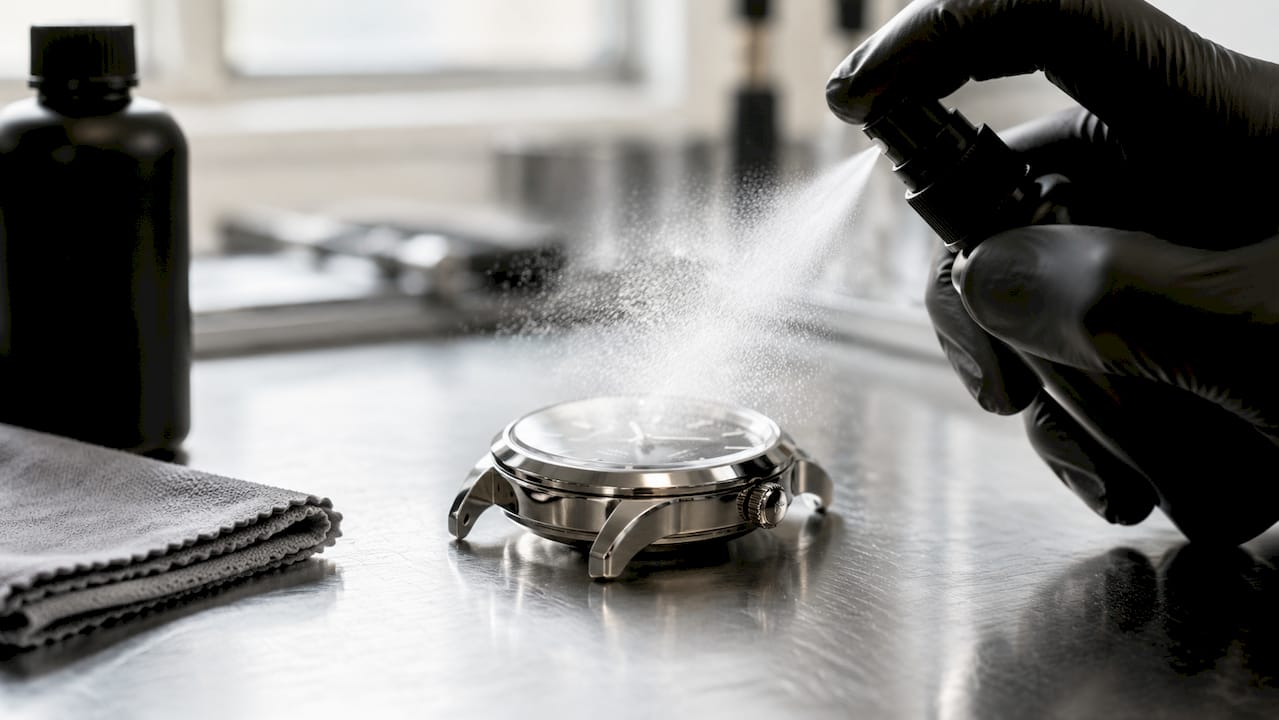
Aftermarket sprays are temporary treatments that require reapplication, unlike films and factory coatings designed for long-term durability. That is not a flaw. It is the design. Sprays are maintenance tools, not permanent solutions.
What sprays do well: they enhance surface gloss, create a light hydrophobic effect that beads water, and reduce the accumulation of fingerprints and dust. What they do not do: they cannot significantly harden the watch surface. No aftermarket spray matches the Vickers hardness of DLC or PVD coatings. Sprays act as top-coats, not anti-scratch armor.
Pro Tip: Reapply your protective spray every 4 to 8 weeks for daily-wear watches, or any time you notice the water-beading effect has stopped. That loss of hydrophobic behavior is the clearest sign the barrier has worn through.
Sprays vs. films vs. factory coatings: which protection is right for you?
Terminology confusion undermines proper care. Sprays are aftermarket chemical top-coats. Films are physical barriers adhered to the watch surface. Factory coatings involve molecular bonding processes applied during manufacture. These are three completely different technologies with different performance profiles.
Factory coatings: DLC, PVD, and sapphire
DLC coatings reach Vickers hardness between 2,000 and 5,000 HV, compared to standard stainless steel at 220 HV. That gap is enormous. DLC applied by vacuum bonding lasts 15–20 years and offers hardness close to natural diamond. PVD coatings follow a similar process and deliver comparable durability. Amorphous sapphire coatings on mineral glass improve scratch resistance by 60–75% compared to untreated mineral glass. These are the gold standard for surface protection, and no spray comes close.
Watch protection films (PPF)
Paint Protection Film (PPF) for watches, such as products from STYX, offers self-healing, optically clear layers that preserve original factory finishes without polishing. High-quality films can extend a timepiece’s visual life by 2–3 times, though they are damage mitigation tools, not invincibility solutions. Films sit between sprays and factory coatings in terms of permanence and cost.
Side-by-side comparison
| Protection type | Hardness level | Durability | Application | Cost | Best for |
|---|---|---|---|---|---|
| Aftermarket spray | Very low | Weeks to months | DIY at home | Low | Casual wearers, shine maintenance |
| Watch PPF (e.g., STYX) | Moderate | 1–3 years | Professional or DIY | Medium | Collectors, daily-wear protection |
| PVD factory coating | High | 5–10 years | Manufacturer only | High | Serious collectors, new purchases |
| DLC factory coating | Very high (2,000–5,000 HV) | 15–20 years | Manufacturer only | Very high | Investment-grade timepieces |
| Sapphire coating | High | Long-term | Manufacturer only | High | Crystal protection on luxury pieces |
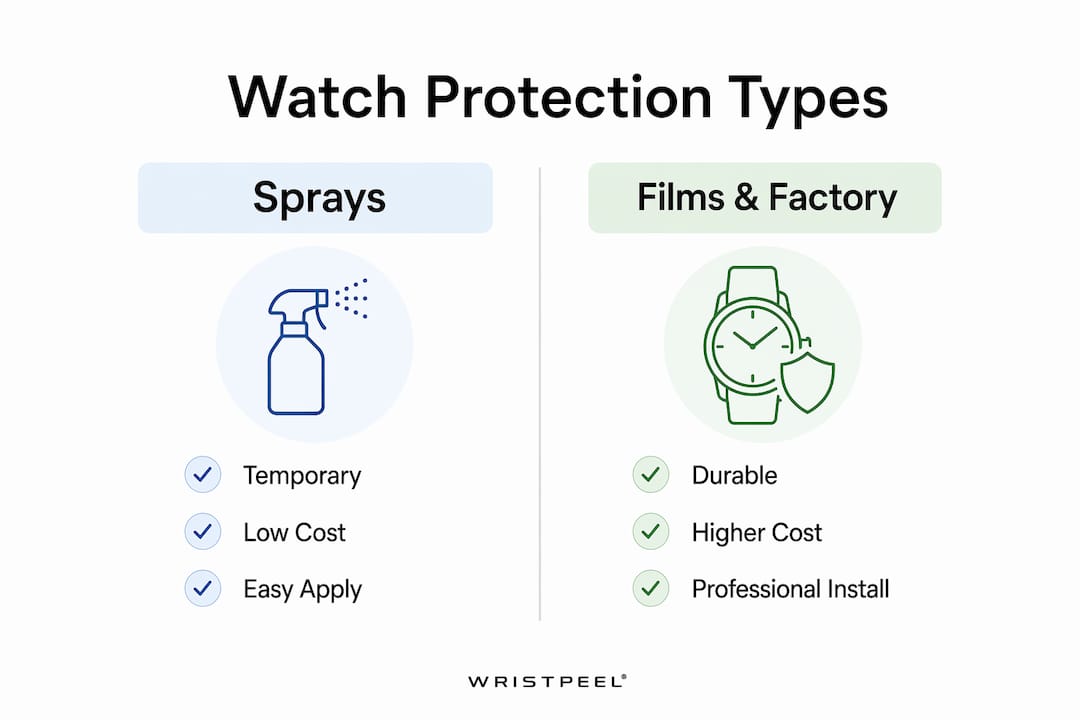
Casual wearers who rotate through several watches get solid value from sprays. Serious collectors with single-watch daily wearers should look at PPF first, and prioritize DLC or PVD when buying new.
What are the real benefits and limitations of watch coating sprays?
Collectors often misunderstand sprays as permanent solutions rather than maintenance aids for shine and light protection. Getting that expectation right changes how you use them and how satisfied you are with the results.
Practical benefits
- Shine restoration: Sprays revive the luster on brushed and polished surfaces between deep cleaning sessions.
- Light moisture resistance: The hydrophobic layer repels sweat, rain, and humidity during normal wear.
- Dust and fingerprint reduction: A fresh coat reduces how quickly surfaces pick up oils and particulates.
- Easy application: No professional tools required. A clean cloth and the right spray are all you need.
- Low cost: Sprays are the most affordable entry point into watch care with protective spray products.
Limitations you need to know
- Sprays offer no meaningful scratch resistance against keys, buckles, or hard surfaces.
- Protection degrades within weeks under daily wear conditions.
- Certain sprays can interact badly with rubber gaskets and silicone seals, reducing water resistance.
- Alcohol-based or solvent-heavy sprays can discolor PVD or DLC factory coatings.
“Improper spray products can compromise waterproofing and discolor delicate finishes. Experts advise avoidance of household cleaners on watches.” — NAWCC Forums
Brands like Apple and COROS warn against generic chemical sprays and alcohol-based cleaners, which can damage waterproof seals and surface coatings. The same logic applies to mechanical luxury watches. Always use sprays formulated specifically for watch surfaces, not general-purpose car wax or ceramic sprays designed for automotive paint.
How to apply watch protective spray correctly
Correct application is the difference between a spray that works and one that causes damage. Follow these steps every time.
- Clean the watch first. Remove all dirt, oils, and fingerprints before applying any coating. A microfiber cloth and a watch-safe cleaning solution work best. Applying spray over contamination traps particles under the coating.
- Remove the strap if possible. Leather straps and rubber gaskets are vulnerable to chemical exposure. Detach them before spraying the case and bracelet.
- Apply in a dry, dust-free environment. Humidity and airborne particles affect how the coating bonds. A clean indoor space at room temperature is ideal.
- Use a small amount. Apply a thin, even layer with a soft microfiber cloth or the applicator pad included with the product. Less is more. Thick applications streak and take longer to cure.
- Allow full cure time. Follow the product’s recommended cure time before wearing the watch. Most sprays need 10–30 minutes to set properly.
- Buff lightly. Once cured, buff the surface gently with a clean microfiber cloth to remove any residue and bring out the shine.
Pro Tip: Before applying any new spray product to your full watch, test it on a small, hidden area of the case back. Wait 24 hours and check for discoloration or surface changes. This is especially important on watches with PVD or DLC factory coatings.
Knowing how to safely remove fingerprints before each spray application keeps the surface clean and helps the coating bond evenly. Reapply every 4 to 8 weeks, or sooner if the watch sees heavy daily use.
Key Takeaways
Watch protective coating sprays are temporary maintenance tools that enhance shine and provide light surface protection, but they cannot replace factory-applied DLC, PVD, or sapphire coatings for serious scratch resistance.
| Point | Details |
|---|---|
| Sprays are temporary barriers | Reapply every 4–8 weeks; they wear off and do not bond permanently to the surface. |
| Factory coatings are far harder | DLC reaches 2,000–5,000 HV versus stainless steel at 220 HV. Sprays cannot replicate this. |
| PPF sits between sprays and factory coatings | Films like STYX offer self-healing protection and extend visual life by 2–3 times. |
| Product selection matters | Avoid alcohol-based or solvent-heavy sprays that can damage seals and factory finishes. |
| Clean before you coat | Applying spray over dirt or oils traps contaminants and reduces coating effectiveness. |
Why I think collectors underestimate the spray’s proper role
Collectors spend thousands on a Rolex Submariner or an Audemars Piguet Royal Oak, then either skip protective sprays entirely or expect them to do the job of a DLC coating. Both mistakes cost you.
Sprays will not save your watch from a hard knock against a granite countertop. They will not stop a key scratch on the case side. What they do, consistently and reliably, is keep the surface looking fresh between wearings. That matters more than most collectors admit. A watch that looks dull and fingerprint-covered loses visual appeal fast, and repeated polishing to restore shine actually removes metal over time. A spray used correctly reduces how often you need to polish.
The collectors I respect most treat sprays as part of a layered care routine. They clean regularly, use a watch ultrasonic cleaning process for deep maintenance, apply PPF to high-contact areas, and use a quality spray to maintain surface gloss between sessions. That approach preserves both the finish and the resale value.
The one thing I would caution against: using automotive ceramic sprays or graphene-based car products on a luxury watch. These are formulated for automotive clear coat, not watch-grade PVD or polished steel. The chemistry is different. Stick to products designed specifically for watches. The cost difference is small. The risk of damaging a $10,000 watch is not.
— Raymond Jenkins
ChronoCare’s watch care kits for collectors who take protection seriously
Protective sprays work best when paired with the right cleaning products before and after application. ChronoCare formulates its products specifically for luxury timepieces, not general-purpose surfaces.
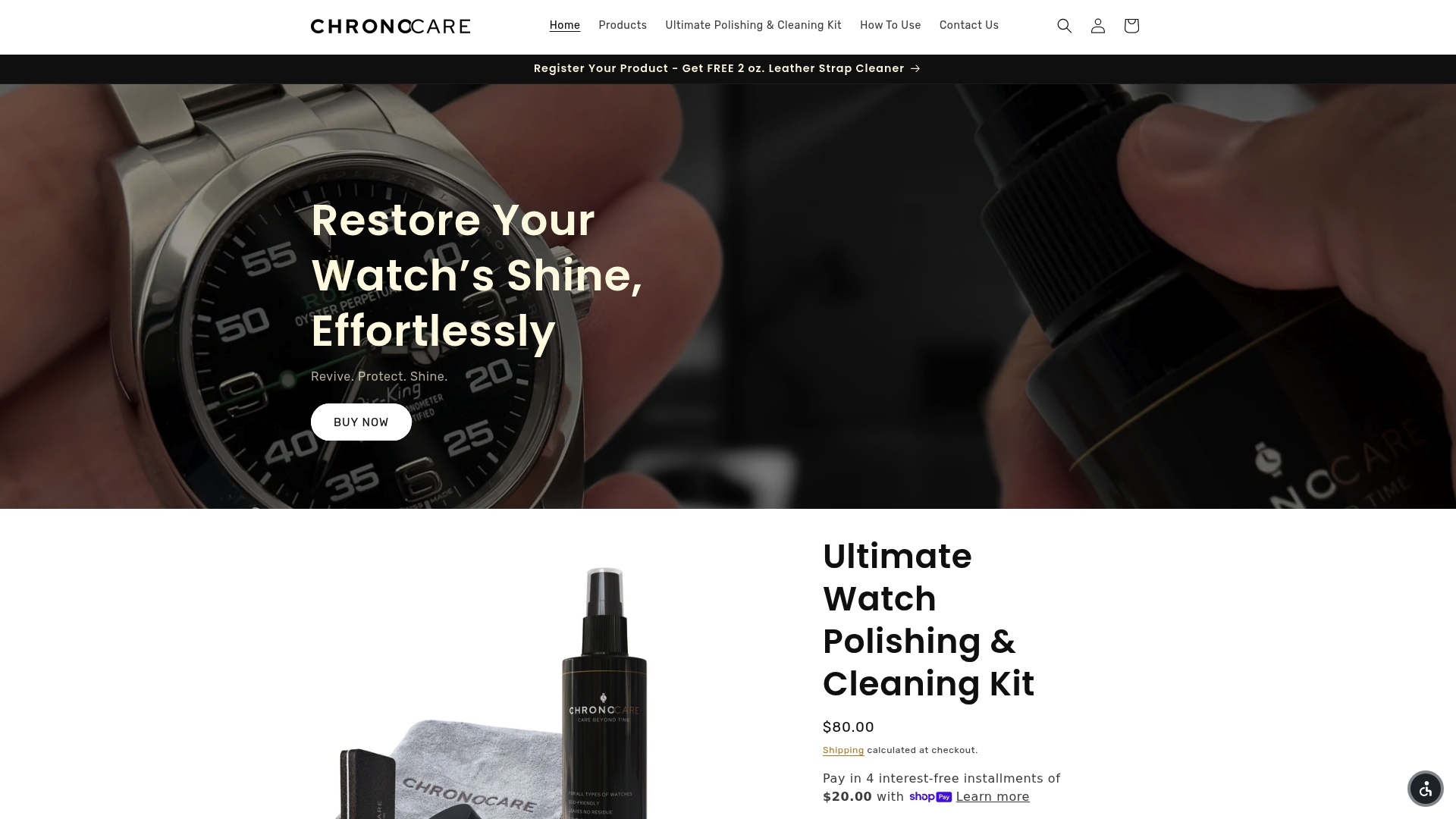
The Ultimate Watch Cleaning Kit from ChronoCare gives you everything needed to prep your watch before applying a protective spray, including safe, non-abrasive solutions that won’t compromise seals or factory finishes. For collectors who want to go further, the Ultimate Watch Polishing & Cleaning Kit adds polishing capability to restore surface luster before coating. Both kits are formulated in the US and designed for the specific demands of luxury watch care.
FAQ
What does a watch protective coating spray actually do?
A watch protective coating spray deposits a thin, temporary chemical layer over the watch surface that repels light moisture, reduces fingerprints, and enhances shine. It does not provide meaningful scratch resistance and requires reapplication every few weeks.
How often should I reapply watch protective spray?
Reapply every 4 to 8 weeks for daily-wear watches. The clearest sign that reapplication is needed is when the hydrophobic water-beading effect stops working.
Can I use a car ceramic spray on my luxury watch?
No. Automotive ceramic and graphene sprays are formulated for car clear coat, not watch-grade PVD, DLC, or polished steel. Using them risks discoloring factory finishes and damaging waterproof seals.
How is a protective spray different from a watch protection film?
A spray is a liquid chemical top-coat that wears off over weeks. A watch protection film (PPF) is a physical adhesive layer that bonds to the surface and can last 1 to 3 years, offering significantly more durable protection.
Will a protective spray damage my watch’s water resistance?
A spray formulated specifically for watches should not affect water resistance when applied correctly. However, alcohol-based or solvent-heavy sprays can degrade rubber gaskets and seals, which is why brands like Apple and COROS explicitly warn against generic chemical sprays on their devices.