

Watch Polishing Mistakes: Collectors Cannot Restore Removed Metal
Polishing can be appropriate, but it often does harm when it is aggressive, because every pass removes original metal and softens the sharp factory lines collectors prize. Casual buffing and skilled refinishing are different jobs, and the difference shows up in value. If you are unsure, conserve the watch or hand it to a trained refinisher. If you must act now, choose light blending over case re-profiling.
TL;DR:
- Compare both sides of the case with photographs of the same reference; rounded lugs, blurred bevels, uneven brushing, or faint markings suggest refinishing, but wear alone proves nothing.
- Reserve restoration for serious dents, corrosion, or structural damage; collectors may prefer honest wear, while daily wearers can accept documented, tasteful refinishing.
- Choose a trained refinisher who explains the process, disassembles the case, protects markings and sealing surfaces, and documents post service water resistance testing.
- At home, use a soft dry or microfiber cloth and a soft brush, avoid chemicals and solvents, and stop if the case’s appearance changes.
Table of Contents
- 1. Which watch polishing mistakes do collectors see most?
- 2. How does polishing physically damage a case and its finishes?
- 3. How can you tell if a watch has been overpolished?
- 4. When is polishing or refinishing actually appropriate?
- 5. How do you choose a qualified polisher or service?
- 6. What can you safely do at home, and where should you stop?
- 7. Who is behind this advice, and what is it based on?
- 8. Why do collectors favor preservation over cosmetic perfection?
- 9. Which ChronoCare kit suits conservative at-home maintenance?
- FAQ
- Sources
1. Which watch polishing mistakes do collectors see most?
Most damage we see falls into several patterns. Each one can be hard to undo, because removed metal cannot be restored by polishing.
- Over-polishing lugs and bevels. Polishing removes metal, and excessive or careless work can soften the case’s original lines. Hodinkee draws a clear line between careless “polishing” and skilled “refinishing,” and notes that indiscriminate polishing strips factory lines and often reduces collector value.
- Erasing satin and brushed surfaces. A polishing wheel can change the appearance of a brushed flank, making it difficult to preserve the original finish.
- Using the wrong compounds, wheels or speeds. Polishing removes metal, so the process calls for care and appropriate training. The American Watchmakers-Clockmakers Institute notes that modern case designs call for specialized training and that polishing was historically learned by trial and error, which is how so many over-polished vintage cases came to exist.
- Polishing over engravings, hallmarks or serial numbers. These markings are shallow. A few passes can soften them until they are faint or unreadable, which hurts authentication and resale.
- Polishing without disassembly. Polishing requires care around the case’s sealing surfaces. Seals also age and can be affected by servicing, which is why Seiko advises regular water resistance checks.
- Reaching for household solvents and oils. Seiko’s care guidance advises avoiding solvents or chemicals for cleaning. A soft dry cloth does the job without the risk.
Careless or excessive polishing can remove metal and change the case’s original lines.
Pro Tip: Photograph the case under raking light before you touch it, focusing on lug tips and bevel edges. Those images become your baseline, and they tell you honestly whether anything you do next changes the geometry.
2. How does polishing physically damage a case and its finishes?
Polishing is abrasion. Polishing removes metal from the surface, and excessive work can change the case’s appearance.
Here is what that means in practice:
- Dimensions shrink and geometry drifts. Excessive polishing can soften the case’s original lines and change its appearance.
- Factory edges are machined, not buffed. Bevels, chamfers and brushed surfaces are cut and grained during manufacture. A buffing wheel changes how they reflect light and replaces a sharp transition with a rounded one.
- Texture and reflection change together. Changing a brushed flank can alter its contrast with the polished surfaces around it.
- Sealing surfaces are at risk. Polishing around sealing surfaces calls for care. Have water resistance checked regularly, as Seiko recommends. Coursework from AWCI covers polishing procedures, metal identification and water-resistance testing for exactly this reason, to protect case shape and cut down on service come-backs.
- Deep damage calls for different tools. When a case has lost its original lines, consider a skilled restoration rather than more aggressive polishing.
We cover the way finishes are produced in more detail in our guide to how watch case finishing differs, which is worth reading before you decide what, if anything, to touch. A skilled hand may be needed to restore a finish, and an unskilled attempt can alter it.
3. How can you tell if a watch has been overpolished?
You do not need tools to spot most of it. A slow, careful look under good light is enough. Compare the watch against photographs of the same reference in original condition, if you can find them.
- Lugs look rounded or shortened. Crisp edges that have turned soft, or lug tips that seem stubby compared with reference photos, are the clearest sign.
- Bevels are missing or blurred. A bevel that should show a sharp line where two planes meet may look like a gentle slope.
- Finish direction is inconsistent. Brushed lines that stop abruptly beside a polished area, or grain that runs a different way than on the opposite lug, suggest refinishing.
- Engravings and hallmarks look shallow. Faint serial numbers, softened lettering or hallmarks that seem worn are worth noting.
- Fit has changed. Unusual gaps between bracelet end links and lugs, or visible thinning at the lug ends, can mean metal has been removed.
No single sign proves anything, since wear alone can soften edges. Several together make a strong case.
Pro Tip: Check both sides of the case against each other. Differences in their appearance may be worth having a professional assess.

4. When is polishing or refinishing actually appropriate?
There are good reasons to intervene, and a preservation-first approach does not mean never touching a watch. The question is whether the problem is cosmetic or functional, and whether you want originality or wearability.
- Deep damage that makes the watch unwearable or unsafe. Serious dents, corrosion or structural damage can justify action, because leaving them may cause further harm.
- Refinishing versus polishing. Polishing removes metal, while refinishing is a skilled restoration process. If the case has already been thinned, refinishing is often the more faithful route, and Hodinkee’s restoration piece shows case polishing done well as part of a careful, skilled process.
- Collector goals versus owner goals. A collector chasing originality will usually leave honest wear alone. An owner who wants to wear the watch daily may reasonably accept tasteful restoration. Either way, document the condition first. Collector commentary explains that original aging and factory finishes are often more valuable than aggressively restored pieces, and that restoration choices can materially affect resale value.
- Manufacturer policy and part replacement. Some makers have their own service policies, and replacing a damaged part may be better than reworking it. Patek Philippe stresses regular service and proper handling to preserve both function and appearance.
Our guide on why polishing affects value goes deeper on the market side. If you are weighing a polish for a watch you may sell, read it before you book anything.
5. How do you choose a qualified polisher or service?
Most bad outcomes start with picking the wrong person. A few direct questions sort the careful from the careless quickly.
- Ask for proof of training and portfolio. Look for formal coursework, such as AWCI’s polishing and refinishing class, which teaches disassembly, crystal and bezel removal, protecting sealing surfaces, texturing finishes, and speed and direction techniques. Ask for examples of their work and an explanation of the proposed process.
- Ask whether they disassemble the case. Ask how the polisher protects sealing surfaces during the work.
- Ask whether they test water resistance afterward and whether they preserve serial numbers and markings.
- Watch for red flags. Vague promises to “make it like new,” no photos and a refusal to give a scope of work are all reasons to walk away.
- Expect documentation. Ask for documentation of the work and any water-resistance testing.
Pro Tip: Ask the refinisher to describe, in plain words, how much metal the proposed work is expected to remove.
6. What can you safely do at home, and where should you stop?
Light home care is fine, and it keeps you from needing a heavy polish later. The goal is to clean carefully and avoid unnecessary alteration.
- Daily care. Wipe with a soft microfiber cloth and use a soft brush for dirt in crevices. Avoid chemicals and solvents, as Seiko advises. A dry cloth for moisture and dirt is usually all a case needs.
- Safe tasks. For polishing or scratch removal, consult a trained refinisher. Always remove straps and bracelets first. Our walkthroughs on dry polishing a case without losing value and restoring a brushed finish show the conservative method step by step.
- Never. Avoid solvents or chemicals for cleaning, as Seiko advises. For polishing, consult a trained refinisher and have water resistance checked. Skip leather strap shortcuts too: a daily habit that preserves leather cord patina is gentler than any quick fix.
- Stop signals. If you notice changes in the case, stop and consult a professional.
Pro Tip: Work in short, light passes and wipe clean between them. Checking your progress under raking light after each pass keeps you from taking off more than you meant to.
7. Who is behind this advice, and what is it based on?
This guidance draws on watch-care guides and restoration articles collected on our blog. It leans on formal industry training, because polishing skill is something AWCI coursework exists to teach, covering metal identification, disassembly and water-resistance testing. It also follows what manufacturers say in their own care pages: clean conservatively, avoid solvents, and service on schedule. Cartier, for example, advises functional checks every few years and cautions against forcing crowns and push-pieces.

8. Why do collectors favor preservation over cosmetic perfection?
Many collectors value original lines and aged character. Changes to those features can be difficult to reverse. Still, a tasteful, documented restoration can make a damaged watch wearable again without pretending the wear never happened. Whatever you decide, photograph and record the condition first.
— Raymond Jenkins
9. Which ChronoCare kit suits conservative at-home maintenance?
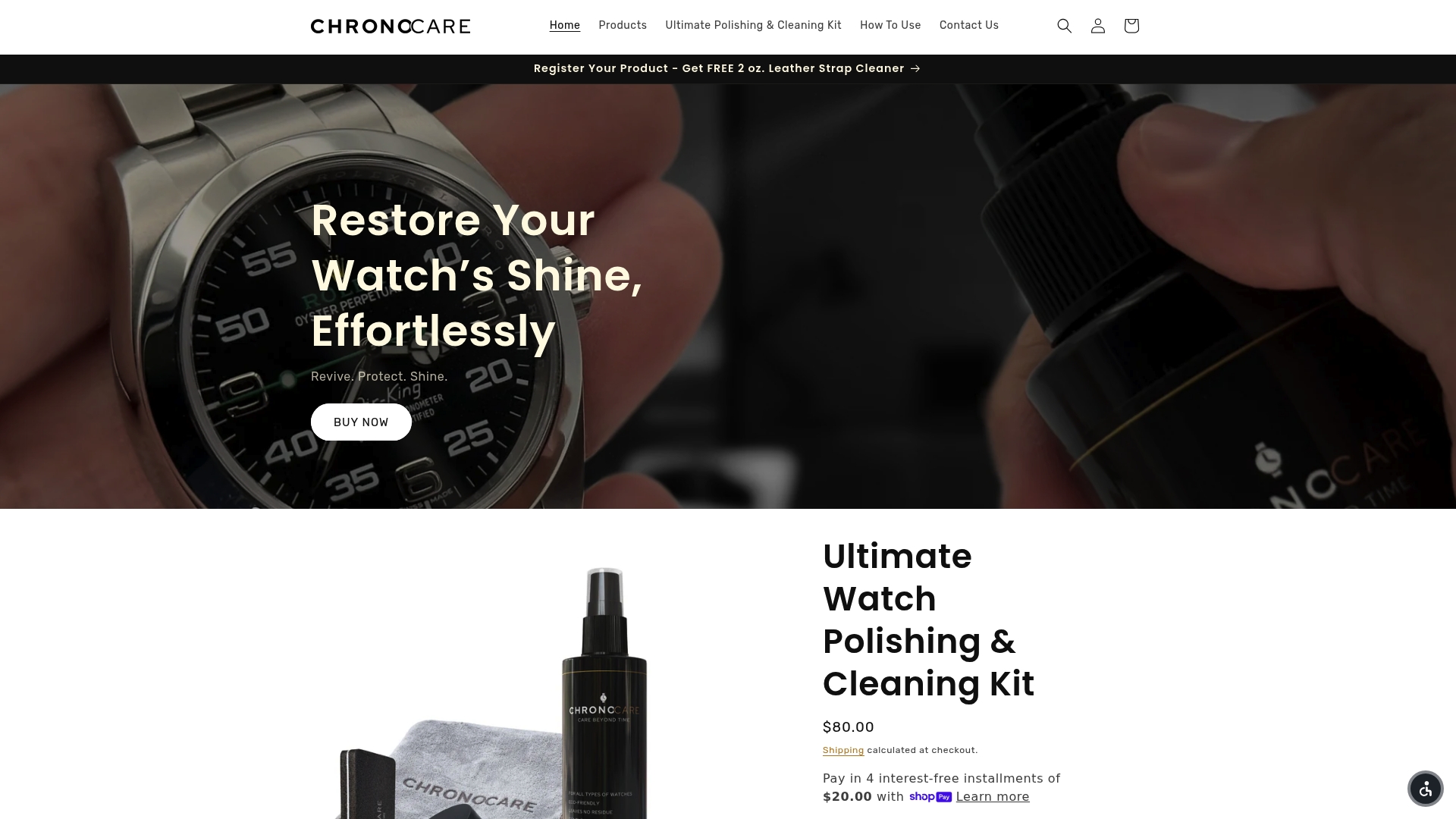
If you want to do light maintenance yourself, we formulated our Ultimate Watch Polishing & Cleaning Kit and our Ultimate Watch Cleaning Kit for luxury watches, with guided instructions for safe cleaning and light scratch blending, not for re-profiling a case. Follow the conservative steps above, read the instructions before you start, and keep sessions short.
FAQ
Can scratches be polished off a watch?
Scratch removal can alter a watch’s finish or original lines. Have scratches assessed by a trained refinisher before deciding how to proceed.
Is WD-40 good for watches?
No. Solvents and chemicals can harm gaskets, seals and coatings, and Seiko’s care guidance advises against using solvents or chemicals for cleaning. A soft dry cloth is the safer choice.
How can you tell if a watch has been polished?
Look for rounded or shortened lugs, softened bevels, inconsistent finish direction and faint engravings or serial numbers. No single sign is conclusive, but several together suggest the case has been refinished.
Can polishing hurt a watch’s value?
Often, yes. Collector commentary notes that original finishes can be worth more than aggressively restored pieces, so conservation usually protects resale value better than heavy polishing.
Sources
- At The Bench: When Case Polishing Is A GOOD Thing: The Restoration Of A Doxa 300T Searambler - Hodinkee
- Awci
- Watch 175: Case and Bracelet Refinishing
- What special care should I give my watch? | Seiko Watch Corporation