

Protect Value When Refinishing Bead-Blasted Watches for Collectors
You usually cannot reliably touch up a bead-blasted watch finish. Local rubbing, scratching, or spot-polishing almost always creates a shinier patch that stands out against the surrounding matte texture. If the mark is tiny and the watch isn’t a piece you care about preserving for resale, a very careful DIY blend may pass. For anything visible or collectible, full professional re-blasting is the only fix that actually restores a uniform surface.
TL;DR:
- Touch-up attempts on bead-blasted surfaces almost always create a shinier patch that stands out, making professional re-blasting the only reliable fix.
- Bead blasting produces a uniform, non-directional microtexture that cannot be safely or effectively repaired with simple abrasives or polishes.
- Professional refinishing involves disassembly, thorough cleaning, controlled abrasive progression, and precise media blasting to achieve a consistent finish.
- DIY retouching is only advisable for minor surface haze on non-collectible watches, using minimal pressure and proper masking to avoid damaging edges or altering texture.
- Before choosing a service, verify their disassembly process, media used, masking practices, and inspect for consistent, magnified results to ensure quality work.
Table of Contents
- Why Bead-Blasted Steel Behaves Differently Than Brushed or Polished Finishes
- Why Touch-Ups Almost Always Backfire
- What a Proper Professional Refinish Actually Involves
- Safe DIY Retouch Options for Very Small Marks
- How to Pick a Bead-Blasting or Refinishing Service
- Who’s Behind This Guidance
- The Honest Take on Refinishing Bead-Blasted Watches
- Keeping a Bead-Blasted Finish Looking Right After a Refinish
- Sources
- FAQ
Why Bead-Blasted Steel Behaves Differently Than Brushed or Polished Finishes
Bead blasting works by firing tiny glass or ceramic media at the metal under pressure, peening the surface into a uniform field of microscopic dimples. That texture is what scatters light evenly and gives the case or bracelet its soft, matte look instead of a mirror shine or the directional glint of a brushed finish.
The problem is consistency. A brushed finish has visible linear grain, so a light touch-up with fine sandpaper along the same direction can blend in reasonably well. Bead blasting has no direction at all. Every square millimeter needs the same random dimple pattern and the same reflectance, and any tool you drag across one spot, whether it’s a cloth, a polishing wheel, or a fingernail, changes the light behavior in that exact area. That’s why even a light buff often smooths the peened texture down to something glossier than its surroundings.
Marks show up most often in predictable places:
- Bezels and case sides that brush against desks, doorframes, or car interiors
- Bracelet links and clasps that flex against skin and clothing
- Caseback edges from tool slips during battery changes or strap swaps
One side note worth knowing: bead blasting does cause mild work hardening on the surface layer, but that hardening is a byproduct of the peening process, not a meaningful scratch-resistance upgrade. Don’t expect a bead-blasted case to shrug off marks any better than a polished one.
Why Touch-Ups Almost Always Backfire
The uniform microtexture requirement is unforgiving. Rub a bead-blasted surface with a cloth, a polishing cream, or a fine abrasive pad, and you flatten those microscopic peaks just enough to reflect light differently than the untouched area around it. You end up trading a small scratch for a small shiny halo, which is often more noticeable than the original damage.
Filler-based approaches don’t solve this either. A compound or paste might hide the mark temporarily by filling in fine lines, but it can’t recreate texture. It either sits on top and adds gloss, or it wears off within days of normal wear and handling.
Community experience backs this up consistently. Long-running discussions on Watchuseek show owners repeatedly landing on the same conclusion: there’s no dependable local touch-up for bead-blasted steel, and full re-blasting of the component is the only way to get back a matching finish. Threads on TZ-UK echo the same pattern, with experienced owners often recommending you simply live with light wear rather than risk making it worse.
The typical bad outcomes fall into a short list:
- Shiny spots where the texture got polished flat
- Uneven patches where the retouched area doesn’t match surrounding dimple density
- Rounded or softened edges where a bezel line or case chamfer loses its crisp transition
- Reduced resale value on collectible pieces once a mismatched patch is visible under normal light
What a Proper Professional Refinish Actually Involves
A competent refinishing job is closer to a small manufacturing process than a quick buff. Specialists who handle this kind of work follow a fairly consistent sequence, and knowing it helps you evaluate whether a service is doing it right.
- Assessment and disassembly. The case, bracelet, and any blast-eligible components come off the movement, crystal, and gaskets entirely. Bead media gets into everything, so nothing that isn’t meant to be textured stays attached.
- Cleaning and base polishing. Parts go through an ultrasonic cleaning stage, then get polished to a smooth, even base. Blasting over old scratches or oxidation just bakes those flaws into the new texture.
- Controlled abrasive progression. Rather than jumping straight to the final finish, restorers often work through a sequence of grits, each one removing the marks left by the coarser step before it, a principle laid out clearly in Buzzufy’s guide to abrasives in watch restoration. Skipping steps risks leaving faint scratch patterns under the new blast texture.
- Media blasting. Most specialists prefer glass beads over angular media because the rounded particle shape produces a smoother, more even peen, a detail confirmed by Mornington Watches’ bead and media blasting service. Cabinet pressure and distance get tightly controlled so the texture matches factory density.
- Final cleaning and quality control. Parts go back through ultrasonic cleaning to remove residual media, then get inspected under magnification for missed spots or uneven coverage before reassembly.
Repeated blasting has a real cost, though. Every pass removes a thin layer of metal, and case edges or bevels can round off after several rounds over a watch’s lifetime. That’s part of why Fratello Watches’ look at professional case refinishing treats masking and material control as just as important as the blasting itself.
Pro Tip: Ask any restorer whether they mask adjacent polished or brushed surfaces before blasting. A shop that skips masking will blur the transition lines between finishes, which is one of the fastest ways to devalue a collectible piece.
Safe DIY Retouch Options for Very Small Marks
DIY makes sense in one specific situation: the watch isn’t a collector piece you plan to sell, and the mark is minor desk-shelf haze rather than a deep scratch. That’s roughly the same bar the ShunTool guide to sand-blasted case repair sets when it calls DIY fixes limited and risky, best reserved for light surface issues rather than real damage.
If you’re in that category, here’s a reasonable approach:
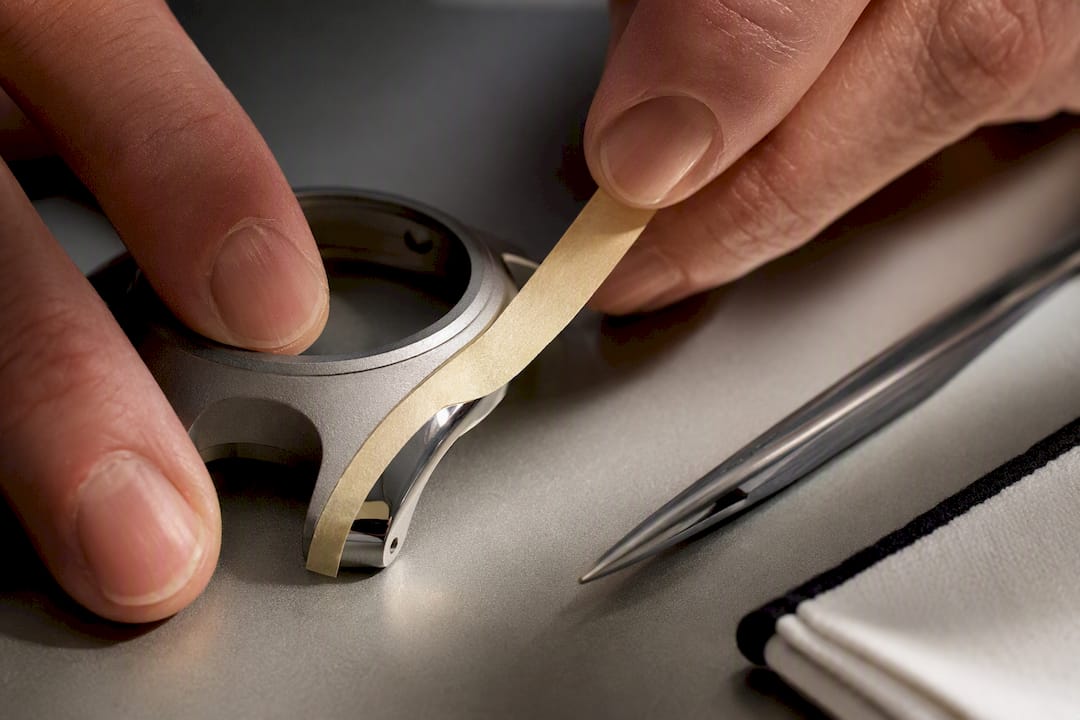
- Isolate and mask everything around the mark with painter’s tape so you’re not risking adjacent finishes.
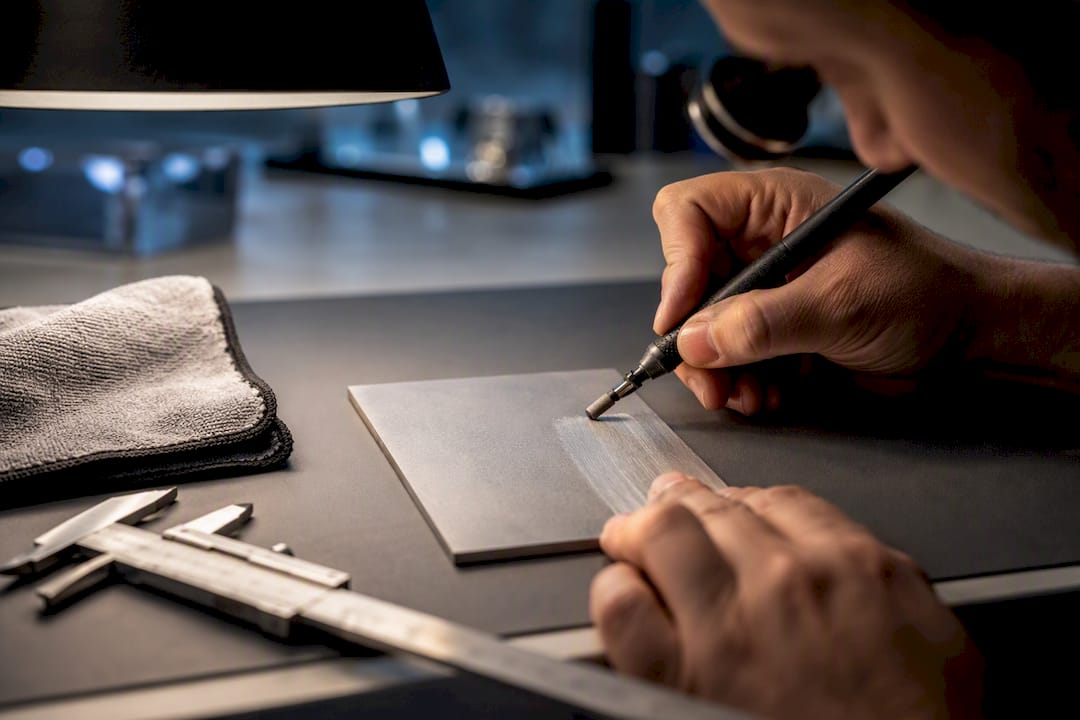
- Test on scrap first. A spare piece of stainless steel or an old bracelet link lets you judge how a tool behaves before it touches your watch.
- Use the lightest tool available. A fine Scotch-Brite pad, a glass-fiber pencil for controlled dabbing, or a micro-abrasive pen are the least aggressive options, and even these should be used sparingly.
- Work in short passes. Apply pressure for a second or two, then stop and inspect under good light rather than working continuously.
- Clean and check often. Wipe away debris between passes so you can see actual progress instead of guessing.
There’s also a firm “do not” list. Never buff near edges or bevels, since those round off fast and don’t come back without full material removal. Never reach for coarse sandpaper or aggressive polishing wheels. And never attempt freehand blasting with a handheld gun and no cabinet. Without proper containment and eye and respiratory protection, that’s a hazard to your health and to the parts around the watch you’re not trying to texture.
Pro Tip: If the test patch on scrap steel doesn’t look close to invisible after three or four passes, stop. That’s your signal the mark is beyond safe DIY range, not a cue to push harder.
How to Pick a Bead-Blasting or Refinishing Service
Before you box up a watch and ship it off, ask the shop a few direct questions.
- Can I see before-and-after photos of similar work? Look specifically for matte-finish restorations, not just polished-case examples.
- Do you fully disassemble before blasting? A shop that blasts with the movement still inside the case is not one to trust with anything you value.
- What media do you use, and how do you mask adjacent finishes? Glass beads and clear masking practices are the answer you want to hear.
- Do you inspect under magnification, and what’s your guarantee if the finish doesn’t match?
- Are you insured for the piece while it’s in your possession?
Good signs include a shop that’s happy to walk you through their process unprompted and one that shows you magnified detail shots, not just glamour photography. Red flags include vague answers about “buffing it out” or reluctance to discuss disassembly at all.
Cost and turnaround vary widely. A basic steel case or bracelet re-blast often runs into the low hundreds of dollars with a turnaround of one to three weeks, though exact pricing depends heavily on the shop. Complications that raise the price include PVD or DLC coatings that need to be stripped and reapplied, gold or gold-plated components that require different handling entirely, and any parts that need outright replacement rather than restoration. Some services, like the ones described on RightTime’s repair pages, offer precision blasting targeted at specific components rather than a full case, which can be more cost-effective when only one area needs work. For pieces still under manufacturer warranty or coverage, check whether the brand’s own service center handles refinishing in-house before going independent.
Who’s Behind This Guidance
This guide is written from ChronoCare’s ongoing coverage of watch maintenance, restoration risk, and aftercare, led by Raymond Jenkins, whose companion pieces cover restoring a tarnished case, protecting chamfers while polishing, and rebuilding a brushed finish.
This product line, built around cleaning kits, polishing creams, and repair sponges for luxury timepieces, exists for a narrower job than what this article describes. None of it replaces professional re-blasting. What it does well is the maintenance layer around a restoration: removing grime and oxidation before you ever consider a touch-up, gently blending trivial surface haze on non-critical areas, and preserving a finish after a specialist has already done the real work. That’s the honest scope, and it’s worth knowing before you reach for any product on your own watch.
The Honest Take on Refinishing Bead-Blasted Watches
Most advice on this topic oversells the DIY angle, probably because polishing pastes and abrasive pens are easy to sell as one-size-fixes-all. They aren’t. The research and the forum consensus point the same direction: bead-blasted texture is a uniformity problem, not a coverage problem, and no cream or pad fixes uniformity on a spot basis.
Where conventional advice really falls short is in treating “DIY” and “professional” as a binary choice made purely on cost. The better framing is value at risk. A $200 field watch with a thumbnail-sized haze mark is a reasonable DIY candidate. A vintage dive watch with collector demand is not, full stop, regardless of how confident you feel with a glass-fiber pencil.
If you take one thing from this guide, prioritize honest self-assessment over technique. Know what the watch is worth to you, know what a mismatched patch will look like in six months, and only then decide whether to pick up a pad or pick up the phone to a restorer. That decision matters more than which abrasive you choose.
— Raymond Jenkins
Keeping a Bead-Blasted Finish Looking Right After a Refinish
Once a watch comes back from professional re-blasting, or if you’re maintaining a piece that never needed it, the goal shifts to protecting that texture rather than repairing it. ChronoCare’s Ultimate Watch Cleaning Kit is built for exactly that stage: lifting oils, dust, and grime out of the peened texture without dragging anything abrasive across it.
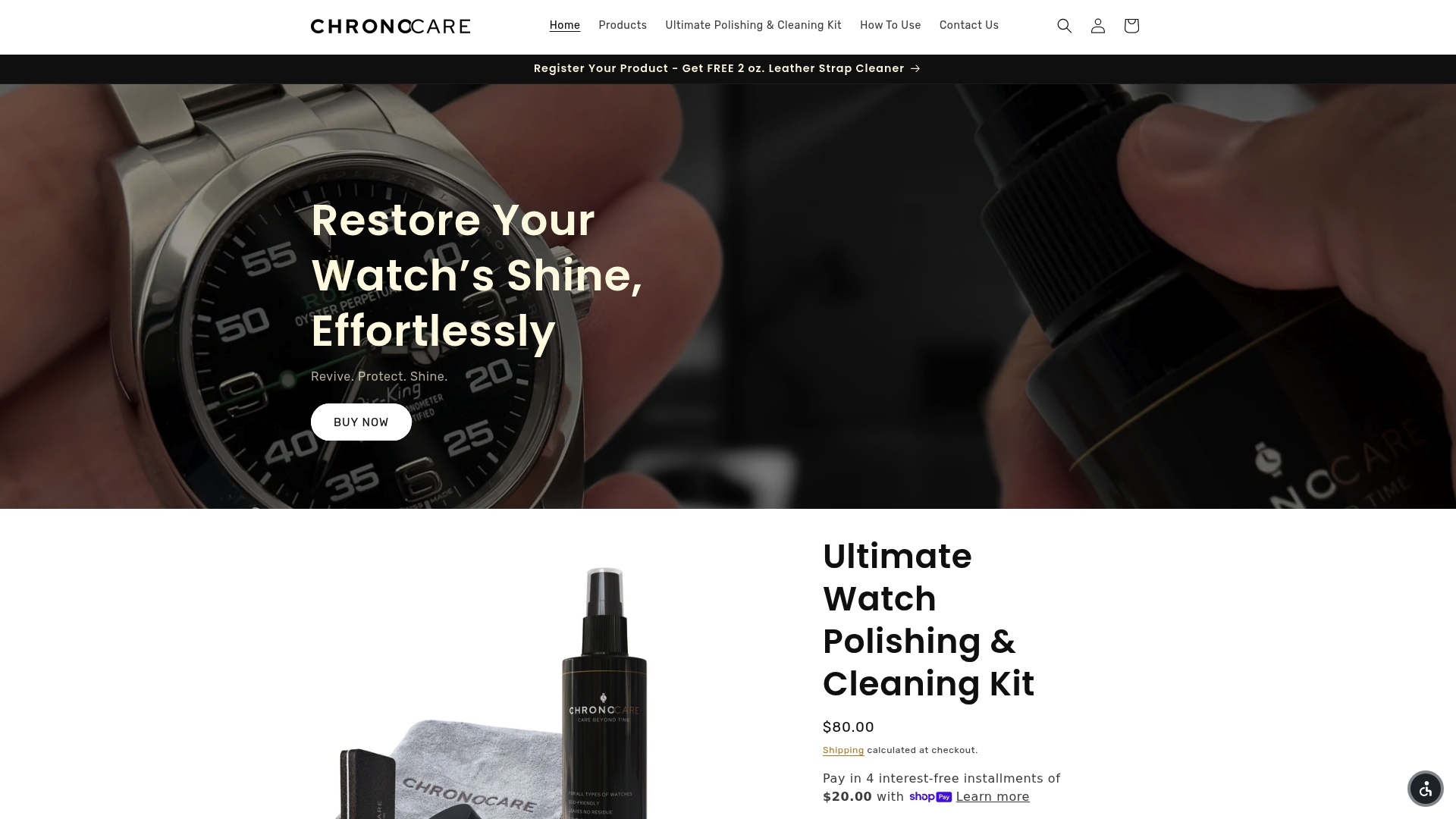
For light surface haze on non-critical areas, the Ultimate Watch Polishing & Cleaning Kit and the Watch Polishing Cream offer a gentler blending option, though neither substitutes for full re-blasting on a bead-blasted surface. Use them the safe way: clean the area first, spot test on an inconspicuous spot, apply with the lightest possible pressure, then rinse and inspect before deciding whether another pass is worth the risk. If you’re ready to build a proper aftercare routine, start with the cleaning kit and add the polishing cream only for the rare, truly minor spot that needs it.
Sources
- Touch up of marks on bead blasted steel — Watchuseek
- Bead/Media Blasting Service — Mornington Watches
- Salvaging sand-blasted watch cases — ShunTool
- A practical guide to abrasives and finishing in watch restoration — Buzzufy
FAQ
Can a jeweler buff scratches out of a bead-blasted watch?
A jeweler can buff out light scratches on polished steel, but buffing a bead-blasted surface removes the matte texture and leaves a shiny patch, so it isn’t a reliable fix for that finish specifically.
What is bead-blasted stainless steel?
Bead-blasted stainless steel is steel that’s been treated with high-pressure glass or ceramic media to create a uniform, non-directional matte or satin texture across the surface.
How much does it typically cost to have a watch professionally polished or refinished?
Pricing varies by shop and material, but a basic steel case or bracelet re-blast commonly runs into the low hundreds of dollars, with costs rising for PVD, DLC, or gold components.
Can scratches on a stainless steel watch be buffed out?
Yes, on polished or brushed steel, light scratches can often be buffed out by a skilled jeweler or watchmaker, though deeper scratches may require more aggressive material removal that affects case geometry.
Should I try to touch up my bead-blasted watch myself?
Only if the mark is trivial and the watch isn’t a piece you’re preserving for value. For anything more visible, full professional re-blasting is the only method that reliably restores a matching finish.