

Clean Under Spring Bars Safely: 9 Tools for Watch Collectors
Yes, you should remove the spring bars to clean under your strap and around the lugs, and you can do it safely with a forked spring bar tool or tweezers, isopropyl alcohol, and a soft nylon brush. Work over a soft surface and keep a fingertip over the bar so it can’t launch. If the bar won’t budge, stop and take the watch to a professional before your lugs pay for it.
TL;DR:
- Use a forked spring bar tool or tweezers, work over a soft towel, and press the bar at a shallow angle of about 10 degrees.
- After removing the strap, brush away loose debris, clean lug holes and bars with isopropyl alcohol and a soft nylon brush, then let everything air dry.
- For a stuck bar, clean first; use a tiny drop of penetrating oil only if needed, and consult a watchmaker rather than forcing it.
- Replace bars with pitting, rust, bending, or sticking pins, and confirm reassembly with a seating click and gentle pull; any movement calls for correct replacement.
Table of Contents
- What tools do you need before you remove spring bars?
- How do you remove spring bars from each strap type?
- How do you clean under spring bars and in the lug holes?
- How do you free a stuck or corroded spring bar?
- How do you put spring bars back and check they’re secure?
- What should you remember before you start?
- Why careful cleaning matters more than speed
- Which ChronoCare products fit the steps in this guide?
- FAQ
- Sources
What tools do you need before you remove spring bars?
The right setup can help prevent damage. Gather everything before you touch the watch, because hunting for a missing item mid-removal is how people end up reaching for a kitchen knife.
Here is what belongs on your bench:
- A forked spring bar tool, which engages the shoulder of the bar from the side
- Spring bar tweezers for tight clearances
- Spare spring bars in the right length, so you’re never stuck if one bends
- A soft microfiber towel to work over
- A bright light and a magnifier
- Cotton swabs and a soft nylon brush
- Isopropyl alcohol
- Optional: a small bottle of penetrating oil for stubborn bars
- Safety glasses, if you ever need to cut a bar
Why bother with dedicated tools? Professional spring bar tools are engineered with dedicated forked or tweezer tips, while makeshift tools like paperclips and knife blades tend to slip. Horological practice also warns against levering on the polished outside face of a lug, which is the most common cause of permanent, visible damage to a luxury watch. A proper fork gives you leverage on the bar itself, not on your case.
Your workspace matters as much as your tools. Work at a table with a flat, soft surface, and spread the microfiber towel so a dropped watch lands on cloth and not wood or stone. Put a small tray or magnetic mat beside you for loose bars. Position the watch so it can’t roll or slide, and set your light so it rakes across the lug gap and you can see the bar’s shoulder clearly.
Pro Tip: Lay the towel in a shallow fold around the watch head so it cradles the case. A spring bar that escapes will almost always land in the cloth instead of disappearing across the room.
How do you remove spring bars from each strap type?
The technique shifts slightly depending on what you’re removing. A typical removal workflow uses a forked tool to engage and depress the bar, while you hold the bar to keep it from popping free. Here is how that plays out for common strap and bracelet types.
Leather and nylon straps
Start on the side that has the most room. Turn the watch so the strap’s underside faces you and look for the gap between the strap and the lug.
- Rest the watch on your towel with the caseback toward you and the strap slightly lifted.
- Slide one prong of the fork into the gap and seat it against the shoulder of the spring bar, not against the lug.
- Keep the tool at a shallow angle. Professionals advise about 10 degrees, because holding the tool perpendicular can increase the odds of a slip that marks the metal.
- Press the bar inward along its axis until the pin retracts from the lug hole.
- Push the strap down and away to reveal the bar, and cup your other hand loosely over the area so a popping bar has nowhere to go.
- Repeat on the other side, then set both bars on the towel.
Quick-release spring bars
Quick-release bars have a small lever you can operate with a fingernail. Pull the mini lever toward the strap to retract the pin, then slide the strap away. When clearance is tight, shift the strap slightly away from the lug first, and use the fork from one side only so you aren’t fighting against both lugs at once. If the lever feels gritty, stop and clean before forcing it; grime is usually the culprit.
Metal bracelets
Bracelets add a step, because the bar often sits under a tightly fitted end link. Where the design allows it, split the bracelet so you have room to reach the bar, and release any micro-adjuster pins if needed. Then work methodically one side at a time. When the gap is very tight, a single fork tine often fits where both tines won’t, so be willing to approach from one side. Orient’s guidance also notes that splitting a metal bracelet to access the bars is sometimes necessary.

Sequencing that saves you grief
Start with the least constrained side, because it gives you practice and builds confidence before the tight side. Keep spare bars within reach in case one bends. As bars come out, lay them on the towel or tray in the order you removed them so you remember which belongs where. Never set them on a bare table, where a rolling bar can vanish.
Pro Tip: Photograph the watch with the strap on before you start. If you’re ever unsure which way a bracelet end link faces or how a strap threads, the photo can help settle it.
How do you clean under spring bars and in the lug holes?
With the strap off, you can finally reach the buildup that collects under the bar: skin oils, dust, lotion, and the gray residue of old leather. Cleaning here is simple, but sequence matters.
- Brush away loose debris first with a dry, soft nylon brush, working from the lug holes outward.
- Dampen a cotton swab or the brush tip with isopropyl alcohol and work it around the lug holes and along the inside faces of the lugs.
- Wipe the area lightly with a clean microfiber cloth.
- Let everything air-dry fully before the strap goes back on.
The same alcohol-and-nylon-brush approach applies to the bars themselves. Spring bars are a metal tube with captive pins, and cleaning with isopropyl alcohol and a nylon brush removes grime that can hide the pin’s ridge and make it reluctant to slide into the tube. If you want to understand where alcohol belongs and where it doesn’t, our guide to what watchmakers wipe with isopropyl alcohol and what they avoid covers it in detail.
Spring bars are a metal tube with captive pins, and cleaning them with isopropyl alcohol and a nylon brush helps remove grime that can hide the ridge and make the pin reluctant to slide. Restarters Wiki notes that spare bars in various lengths are readily available online, so replacing a questionable one is cheap insurance.
Alcohol isn’t the only option. For non-coated leather concerns or sticky residue, a drop of mild soap in water on a swab works, as long as you wipe it off thoroughly. Avoid prolonged soaking anywhere near seals or leather adhesives, because lingering moisture is the enemy of both. Our notes on protecting seals when you remove soap residue walk through the details. If you’re working with a metal bracelet, our bracelet link cleaning checklist covers the small parts between the links.
Once everything is clean, inspect each bar. Look for pitting, rust spots, a bent shaft, or a pin that sticks instead of springing back. Any of those means the bar should be replaced, not reused.

How do you free a stuck or corroded spring bar?
Resist the urge to muscle it. A stuck bar is usually a grime problem before it’s a force problem, and brute force is how lugs get scratched.
- Clean first. Brush and alcohol often clear the buildup that hides the ridge, which is exactly the repair practice described by the Restarters Wiki.
- Add a tiny drop of penetrating oil only if cleaning doesn’t free it. Apply it precisely at the bar’s end, and keep it off the strap.
- Try rotating the bar inside the lug hole, or nudge it with a single tine of the fork rather than both.
- Be cautious with community tricks. Threads about stuck quick-release bars mention dental floss pulls and careful cutting close to the strap, but they also stress tradeoffs: you may sacrifice a strap or scratch the case, and repeated forceful attempts can damage the lug finish.
- Stop if it still will not move. A professional watchmaker has the tools and patience to assess it and reduce the risk of damage.
Pro Tip: If you do need to cut a bar as a last resort, wear safety glasses and cut as close to the strap as possible, away from the lug. Cut slowly, and expect to replace the strap.
How do you put spring bars back and check they’re secure?
Reassembly is where careless handling undoes your careful cleaning. Take your time here.
- Insert one pin of the bar into its lug hole and seat it fully.
- Compress the opposite pin with the fork and guide it into the other lug hole.
- Listen and feel for the click that tells you the ridge has seated in the hole.
- Give the strap a gentle pull away from the case on each side. It shouldn’t move.
- Check orientation, making sure the strap sits straight and square with the case.
If a bar wiggles or the strap shifts, replace it with the correct length and strength instead of nursing it along. Avoid adhesives as a routine fix; a loose bar is a signal to swap the part, and the replacement is the reliable answer for repeated looseness.
What should you remember before you start?
In watch care, the pattern we see is consistent: damage can happen when people hurry. Collectors who protect their watches share two habits. They use the right tool at the right angle, and they quit while the lug is still unmarked. We hold ourselves to the same rule we gave you above: stop if the bar will not move and hand the watch to a professional. Formulated cleaning products and proper tools do more than keep a watch looking good. They preserve the finish and condition that a collector’s value depends on, and that is the standard we build every product around.
Why careful cleaning matters more than speed
Here is a take that goes against the grain of most DIY advice: the tool isn’t the hard part, restraint is. Spring bar removal is a mechanical task, but restraint matters too. The most common cause of permanent damage is levering against the polished face of a lug, and that happens when someone is impatient, not when someone lacks a tool.
Where conventional advice falls short is the “just pry it out” shortcut and the habit of reaching for forceful fixes the moment a bar resists. Cleaning, not force, is usually the answer to a stubborn bar. So prioritize in this order: set up your workspace, clean the bar’s seat before you push on anything, and consider whether a professional visit is preferable to risking damage to a lug. If you only change one thing about how you approach this job, make it your willingness to stop.
— Raymond Jenkins
Which ChronoCare products fit the steps in this guide?
The cleaning steps above connect with products we offer for luxury watches. Our Ultimate Watch Cleaning Kit brings together what you need in one place, so you aren’t improvising with household items on a watch you care about.
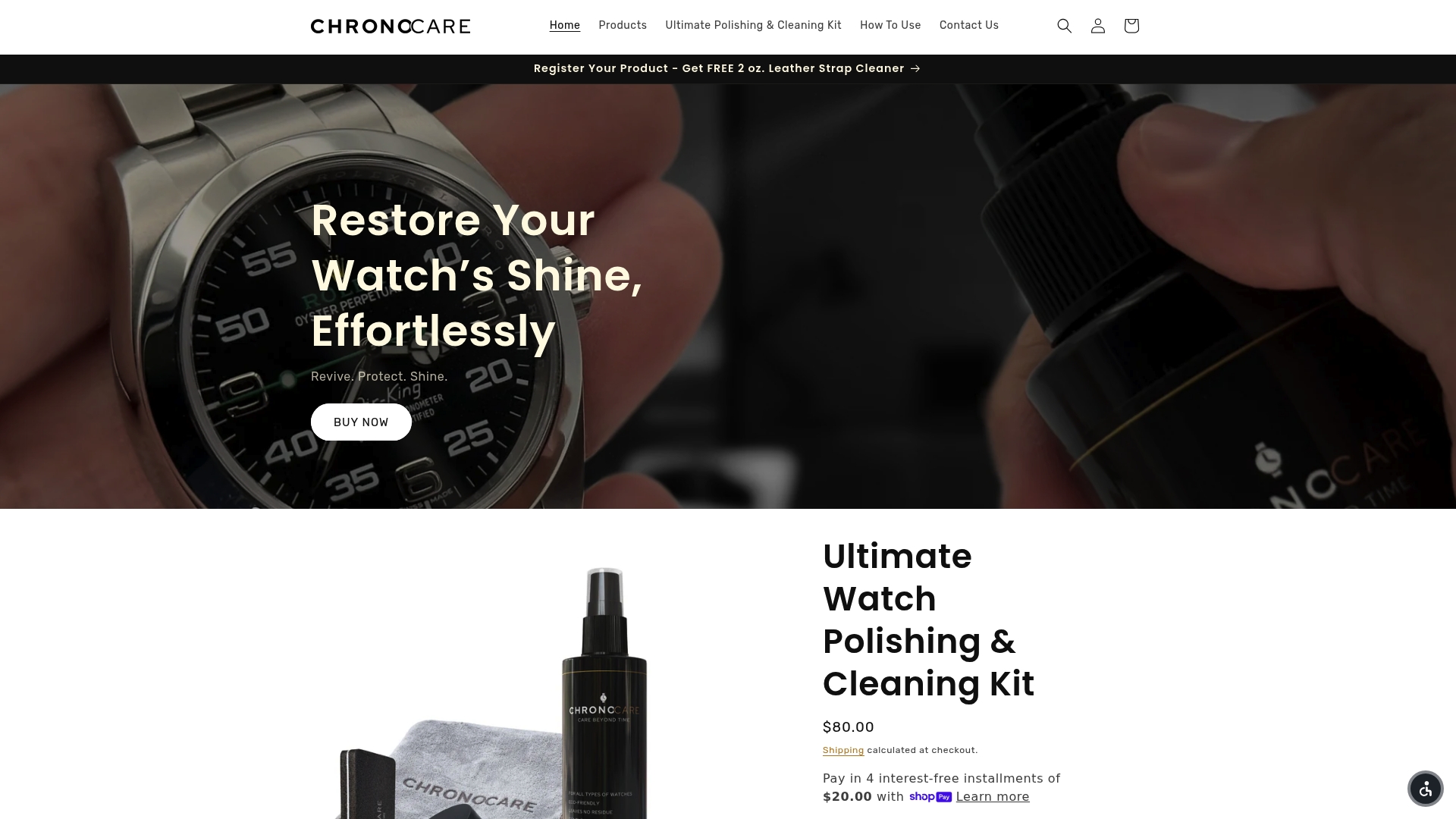
- The cleaner can be used to clean watch surfaces
- The kit is designed for cleaning luxury watches
- Our Watch Polishing Cream is one of our watch care products.
Our products are designed for luxury timepieces. Check the product page for the terms that apply to your purchase. Check the product page for full usage instructions, then pick up the kit and set up your bench for your next strap change.
FAQ
How do you get a stuck spring bar out of a watch?
Start by cleaning around the bar with isopropyl alcohol and a soft nylon brush, since grime often hides the ridge. If it still won’t move, try a tiny drop of penetrating oil and a single tine of the fork. If it still will not move, stop and see a professional.
How do you clean under spring bars?
Remove the strap, brush away loose debris with a soft nylon brush, then wipe the lug holes with a swab dampened in isopropyl alcohol. Let everything air-dry completely before reassembly. Inspect the bars for pitting or bending, and replace any that look worn.
Are shoulderless spring bars more secure?
Shoulderless bars let a strap sit flush against the lug, but security depends on a correct fit, not the style alone. Whichever type you use, confirm the pin seats with a click and passes a gentle pull test. If it wiggles, replace the bar with the right length.
What is the best tool for removing watch spring bars?
A forked spring bar tool is the standard choice, with spring bar tweezers helpful for tight spaces. Dedicated tools are engineered for precision, whereas makeshift tools like paperclips are prone to slipping and marking the lug.
Sources
- Nothingbutbands
- Watch Maintenance - Restarters Wiki
- How to Remove a Spring Bar | Orient Watch USA
- Stuck Quick Release Springbar