

Protect Seals: ChronoCare Tips to Remove Soap Residue From Luxury Watch
The safest fix for soap residue on a watch is a light clean with lukewarm water, a drop of mild soap, and a soft brush, followed by a full rinse and thorough drying. Skip submersion on leather straps, vintage pieces, or any watch with uncertain water resistance. ChronoCare, alongside watch-care writer Raymond Jenkins, built this guide around manufacturer-safe methods that protect seals and finishes rather than just chasing shine.
TL;DR:
- Rinsing with lukewarm water and mild soap with a soft brush is safe for metal cases and bracelets, but avoid submerging leather, vintage, or water-resistant uncertain watches.
- Use gentle tools like wooden toothpicks or cotton swabs for stubborn soap buildup, and never use metal picks or acidic cleaners on plated or coated surfaces.
- Leather straps should only be lightly wiped with a damp cloth and conditioned sparingly, while fabric and rubber straps can be hand washed and air dried thoroughly.
- Always rinse thoroughly till no soap residue remains, and avoid aggressive cleaning methods or chemicals that can damage seals or finishes.
- Seek professional help if you see fogging, water inside the watch, loose parts, or if the watch has an unknown water-resistance history.
Table of Contents
- What Materials Do You Need to Clean Soap Off a Watch?
- How Do You Remove Soap Scum From a Metal Case and Bracelet?
- What Do You Do About Stubborn Soap Buildup?
- How Should You Clean Soap Residue From Leather, Fabric, or Silicone Straps?
- How Do You Know All the Soap Is Really Gone?
- When Should You Call a Watchmaker Instead of Cleaning It Yourself?
- What Do ChronoCare and Raymond Jenkins Recommend for Ongoing Care?
- Why Manufacturer Caution Beats Aggressive DIY Cleaning
- Finish the Job Right With the Ultimate Watch Cleaning Kit
- Sources
What Materials Do You Need to Clean Soap Off a Watch?
You don’t need a workshop, just a few things you probably already own. Gather a mild soap (a plain hand soap or a single drop of dish soap works fine), a small bowl of lukewarm water, a soft-bristled toothbrush, a couple of microfiber cloths, cotton swabs, and a dry towel to work over.
What you should leave in the cabinet matters just as much as what you pull out. Apple’s care guidance explicitly discourages isopropyl alcohol and household solvents on watches, since these dry out gaskets and can strip protective coatings meant to keep moisture out. That advice applies just as directly to a mechanical Swiss watch as it does to a smartwatch.
Pro Tip: Keep the water lukewarm, never hot. Heat softens adhesives and seals just enough to let soap and moisture creep where they shouldn’t.
Materials worth having on hand:
- Mild soap (hand soap or one drop of dish soap)
- Small bowl of lukewarm water
- Soft-bristled toothbrush
- Microfiber cloths
- Cotton swabs
- Dry towel
A dedicated kit like ChronoCare’s cleaning products simplifies this by bundling the right brush and cloth textures in one place, so you’re not guessing whether your toothbrush is too stiff.
How Do You Remove Soap Scum From a Metal Case and Bracelet?
Working on a metal bracelet is where most soap residue actually collects. Suds work their way between links and around the caseback, then dry into a chalky film if they’re not rinsed out properly.
- Lay a towel down and mix a shallow bowl of lukewarm water with a drop of mild soap.
- Confirm the crown is pushed in and secured; if you’re not sure about your watch’s water resistance rating, switch to the damp-cloth method instead of rinsing under a stream.
- Dip the toothbrush and gently work it between the links and around the caseband, focusing on where residue is visible.
- If the bracelet detaches easily, remove it for a deeper, more thorough clean away from the case head.
- Rinse under a gentle stream, or wipe repeatedly with a clean damp cloth, until no suds remain.
- Dry carefully with microfiber, paying attention to the gaps between links and the area around the crown.
The WatchPolice household method of one drop of dish soap in warm water, plus a soft toothbrush, is the standard recipe watchmakers point beginners toward. It’s mild enough not to touch plating, strong enough to lift everyday grime.
Pro Tip: Wrap the case head in a small strip of plastic wrap before you brush the bracelet if you’d rather avoid direct water contact with the dial and crown entirely. It’s a low-tech fix, but it works.
Once dry, check the clasp and pins for movement. A bracelet that feels loose after cleaning needs attention before you wear it again.
What Do You Do About Stubborn Soap Buildup?
Some residue doesn’t budge on the first pass, especially soap that’s dried and hardened in tight spots. The fix is patience, not stronger chemicals.
For a removable metal bracelet, a longer soak in the same mild soapy water, followed by another round of brushing and a full rinse, usually finishes the job. WatchGecko’s bracelet-cleaning method supports this approach for standard stainless steel, though it flags caution for plated and PVD-coated surfaces, which scratch and dull more easily under aggressive scrubbing.
For crevices a brush can’t reach, a wooden toothpick or cotton swab does the trick. Steer clear of metal picks or dental tools. They scratch finishes faster than soap ever will.
- Soak removable bracelets longer, then brush and rinse fully
- Use wooden toothpicks or cotton swabs in tight crevices
- Never use metal picks, needles, or abrasive pads
- Avoid vinegar or acidic cleaners on plated or PVD surfaces
Vinegar and similar acids show up constantly in DIY watch-cleaning advice, and they’re one of the worst ideas for a coated finish. Acid attacks the thin plating layer, leaving a duller, patchier surface that no amount of buffing fixes.
Pro Tip: If soap residue seems to be sitting under a pin or deep inside the lug, stop working on it yourself. That’s usually a sign the bracelet needs to come apart, and that’s a watchmaker’s job.
How Should You Clean Soap Residue From Leather, Fabric, or Silicone Straps?
Straps don’t all respond to the same treatment, and this is where most people accidentally shorten a strap’s life. Leather is the one to be careful with: wipe it with a cloth that’s barely damp, blot dry immediately, and never let it soak. Soaking swells and warps leather permanently. Once it’s dry, a small amount of leather conditioner keeps it supple, but use it sparingly.
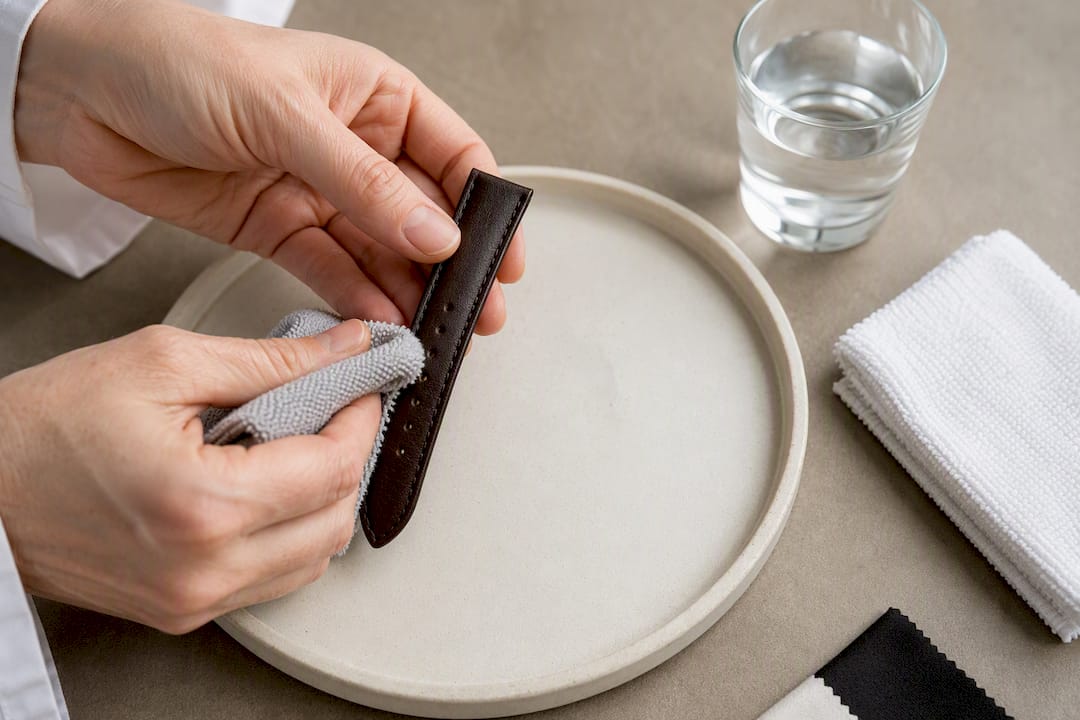
Fabric and NATO straps are more forgiving. Remove the strap from the case, hand wash it separately in mild soapy water, and let it air dry fully before reattaching.
Silicone and rubber straps are the easiest of the bunch. They handle soap and water well, so a soft brush and regular soapy water clean them without much risk.
- Leather: damp wipe only, blot dry, condition sparingly
- Fabric/NATO: remove and hand wash separately, air dry fully
- Silicone/rubber: wash with soapy water and a soft brush, rinse and dry to prevent odor
If a leather strap is already cracking or peeling, aggressive cleaning won’t save it. Replacing it is usually the better call than fighting a losing battle.
How Do You Know All the Soap Is Really Gone?
The finish stays cloudy until every trace of soap is rinsed away. Leftover residue on metal dulls the surface, and Ernest Jones’s home-care guidance notes that a thorough rinse and dry is what actually restores the shine, not extra polishing.
- Rinse or wipe with a clean damp cloth repeatedly until no suds or cloudiness remain.
- Finish with a dry microfiber cloth for the final pass across the case and crystal.
- Dry thoroughly between links and around the crown; a gentle blast of compressed air helps if you’ve used it before, but skip it if you haven’t.
- Check under the crystal for any fogging, and check the caseback and clasp for loose parts.
- If you spot fogging or moisture trapped inside, stop wearing the watch and get it looked at.
Frequent, light wiping between deep cleans is genuinely the easiest habit to build. Hodinkee’s maintenance guidance recommends a quick microfiber wipe every few days specifically to prevent soap and grime from hardening into the kind of buildup that needs a full wet clean in the first place. If your watch has had heavy water exposure recently, or its service history is unclear, a pressure test from a watchmaker is worth the small cost for peace of mind.
When Should You Call a Watchmaker Instead of Cleaning It Yourself?
Some warning signs mean it’s time to put the toothbrush down. Water or fog visible under the crystal is the clearest signal that a seal has failed, and no amount of home cleaning fixes that. Persistent residue in spots you can’t reach, damaged finishes, or screws and pins that feel loose all point the same direction.
Vintage watches or any piece with an unknown water-resistance history deserve professional handling from the start, not after something goes wrong.
- Fogging or water visible under the crystal
- Residue trapped in spots you can’t access without disassembly
- Loose screws, pins, or a clasp that doesn’t sit right
- Vintage pieces or unclear water-resistance ratings
A professional visit typically includes an ultrasonic bracelet clean, gasket replacement where needed, and a pressure test to confirm the case is sealed properly again.
What Do ChronoCare and Raymond Jenkins Recommend for Ongoing Care?
ChronoCare works specifically in luxury watch care, and its product philosophy leans conservative on purpose. Non-abrasive formulas and finish-safe tools matter more than speed, because a watch case is a lot easier to dull than it is to restore.
Raymond Jenkins, who writes ChronoCare’s how-to content, points readers back toward maker-specific guidance rather than generic internet advice. Following your watch’s own service intervals, not just wiping it when it looks dirty, is what actually protects seals long term.
The single best habit to build: a quick microfiber wipe every few days after handwashing or sweat exposure. It’s a small routine that keeps soap from ever hardening into the stubborn scum that requires the deeper cleaning steps above.
Why Manufacturer Caution Beats Aggressive DIY Cleaning
The instinct with soap residue is to reach for something stronger, alcohol, vinegar, a stiffer brush, when a soft cloth doesn’t finish the job fast enough. That instinct is backward. Every escalation in cleaning intensity is also an escalation in risk to seals, plating, and lume, and the residue itself has never been the real threat. Moisture trapped behind a compromised gasket is.
What gets underrated in most advice online is timing, not technique. A watch that gets a light wipe every few days rarely develops the kind of hardened buildup that tempts people into harsher methods in the first place. The people who end up soaking bracelets overnight or scrubbing with metal picks are usually the ones who let residue sit for weeks.
If you take one thing from this guide, let it be this: treat water resistance as a question mark until you’ve confirmed it, not an assumption. Vintage pieces and unknown service histories deserve a watchmaker’s eyes before they see a sink.
— Raymond Jenkins
Finish the Job Right With the Ultimate Watch Cleaning Kit
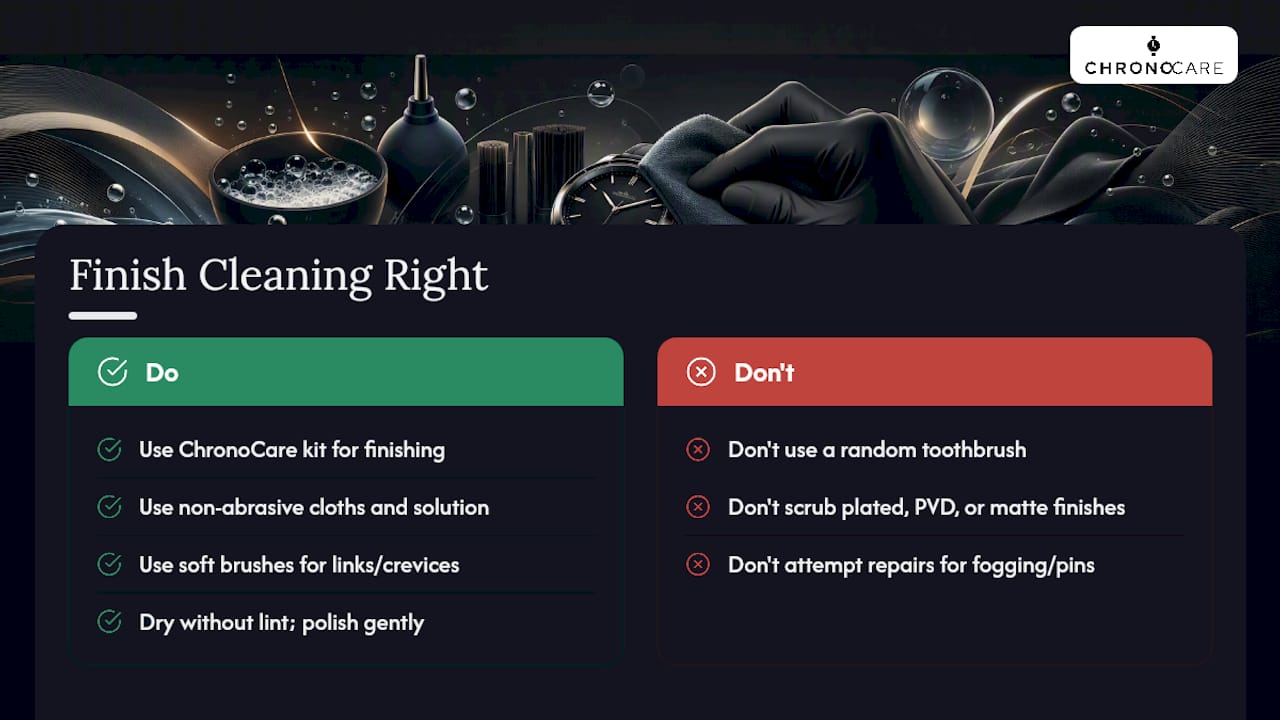
Soap and water handle most residue, but the last stretch, full drying and getting the finish looking genuinely restored, is where the right tools save you from streaks, micro-scratches, or a cloudy case you didn’t have before you started cleaning.
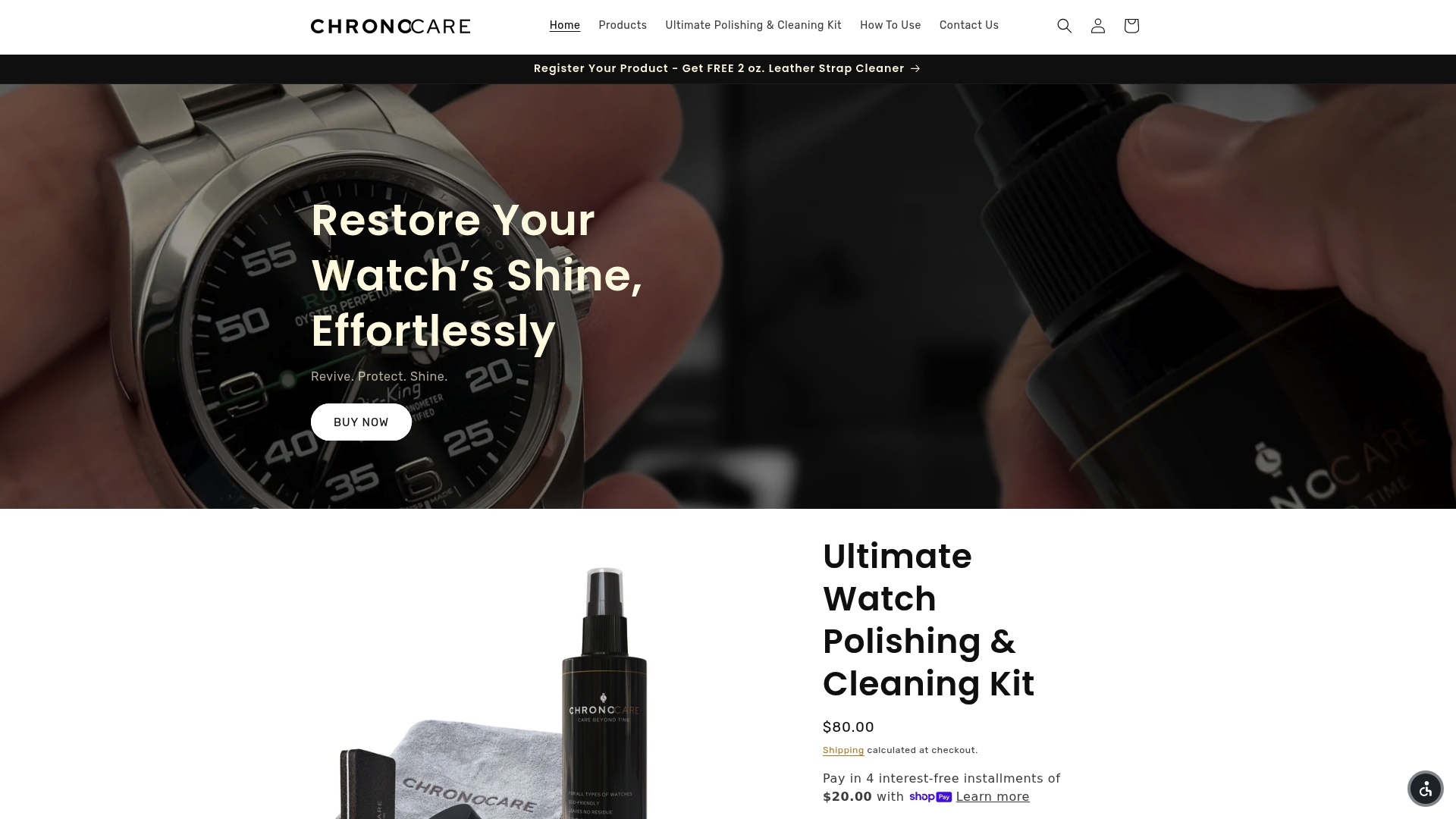
The Ultimate Watch Cleaning Kit from ChronoCare pairs microfiber cloths, a gentle finish-safe cleaning solution, and soft brushes sized for links and crevices, so you’re not relying on a random toothbrush from the bathroom drawer. Every item is formulated to be non-abrasive, which matters most on plated, PVD, or matte finishes that scratch under generic cleaning pads. The kit takes over exactly where soap and water leave off: drying without lint, polishing without stripping the surface, and treating the case gently enough for daily use.
If you’ve spotted fogging, loose pins, or damaged finishes anywhere along the way, that’s a job for a watchmaker, not a bigger cleaning kit. For everything short of that, browse ChronoCare’s watch care products and pick up the kit before your next cleaning session.
Sources
This guide draws on manufacturer safety rules from Apple, maintenance frequency guidance from Hodinkee, luxury-specific methods from Pursuitist, and step-by-step technique from WatchPolice.
- Use safe cleaning methods — Apple Support
- How To Clean Your Watch - Hodinkee
- How to Clean a Watch Without Damaging It: Case, Bracelet, and Crystal | WatchPolice