

7 Watchmaker Approved Steps to Safely Clean a Watch With a Toothbrush
A soft, dedicated toothbrush is safe for cleaning most water-resistant watches, as long as the crown is secured and you skip harsh soaps. The one deal breaker: check the crown, case, and crystal before any water touches the watch. Get the exact technique right in the step-by-step section below, and you’ll clean without scratching or flooding a thing.
TL;DR:
- Use a dedicated extra-soft brush and lukewarm water to clean water-resistant watches, ensuring the crown is secured and the case is intact before wet cleaning.
- Avoid abrasive substances like toothpaste, alcohol, and gritty pastes, and only clean with mild dish soap to prevent damage to finishes and gaskets.
- Always inspect the watch for cracks, loose crowns, or gaps before cleaning, and remove bracelets for thorough cleaning of metal or rubber straps.
- Ultrasonic cleaners are suitable for metal bracelets if used carefully with mild solutions, but never for fragile, plated, or vintage components.
- Regular cleaning routines include daily wipes, monthly brushing, and quarterly deep cleans, with professional service recommended for cracked crystals or moisture under the glass.
Table of Contents
- Toothbrush for Watch Cleaning: What Works and What Ruins a Finish
- How Do You Safely Clean a Watch With a Toothbrush?
- What’s Better Than a Toothbrush for Detail Cleaning?
- Cleaning Metal Bracelets, Leather Straps, and Rubber Straps
- What Do Watchmakers Say About Toothbrush Cleaning?
- A Simple Cleaning Routine Worth Sticking To
- Get the Right Tools Instead of Improvising With One
- Sources
- FAQ
Toothbrush for Watch Cleaning: What Works and What Ruins a Finish
Bristle hardness decides whether you’re cleaning your watch or scuffing it. A standard toothbrush marked “medium” or “firm” can leave micro-scratches on brushed steel or gold plating within a few passes. Stick to extra-soft bristles, or better, a purpose-built watch detail brush sized for lugs and clasps.
Grit is the real enemy, not the brush. Dust and dried sweat act like sandpaper once you start brushing dry debris against metal, so always rinse the watch briefly under lukewarm water before you touch a bristle to it.
Chemicals cause more damage than most owners realize. Alcohol, benzine, and abrasive cleaners degrade gaskets and eat into finishes, and toothpaste, despite the name association, contains micro-abrasives that will dull polished surfaces fast.
Two checks matter more than any product choice:
- Confirm the watch’s actual water resistance rating before it gets wet, not what you assume it is.
- Push the crown fully in, or screw it down if your watch has a screw-down crown, since an unsecured crown is the main way water gets inside the case.
- Inspect the crystal and case for chips, gaps, or a loose bezel before soaking anything.
- Skip alcohol, benzine, and gritty pastes entirely, even for stubborn grime.
How Do You Safely Clean a Watch With a Toothbrush?
Follow this sequence in order. Skipping the inspection step is the most common way collectors end up with a foggy crystal or a corroded movement.
- Inspect first. Look for hairline cracks in the crystal, gaps at the case back, or a crown that feels loose when pushed in. If anything looks compromised, do not wet-clean the watch.
- Gather your tools. You need a dedicated soft-bristle brush, lukewarm water, one drop of neutral dish soap, a microfiber cloth, a wooden toothpick, and a spring bar tool if you plan to remove the bracelet.
- Rinse before brushing. Run the watch briefly under lukewarm water to knock loose dust and grit. This single step prevents most of the scratching people blame on brushes.
- Mix a mild solution. One drop of neutral dish soap in a cup of lukewarm water is enough. More soap doesn’t clean faster; it just leaves residue in the case gaps.
- Brush gently. Work the bristles lightly around lugs, end-links, the clasp, and bezel edges. Avoid aggressive scrubbing on polished bevels or soft gold, where swirl marks show up permanently.
- Rinse and dry. Rinse thoroughly under running water, pat dry with the microfiber cloth, and let the watch air-dry completely before you put the bracelet back on or store it.
- Recheck the seals. Once dry, glance at the crown and crystal edge one more time to confirm nothing shifted during cleaning.
Pro Tip: Set aside a toothbrush strictly for watches the day you start this routine. A brush that’s touched toothpaste carries dried abrasive residue in the bristles, even after rinsing, and that residue transfers straight to your case finish.
What’s Better Than a Toothbrush for Detail Cleaning?
A toothbrush is a fine starting point, but it’s not the only tool worth owning, and for some jobs it’s not even the best one. Dedicated watch-detail brushes use denser, finer bristles that clean without the risk of a worn-down toothbrush head, which tends to fray and scratch as bristles splay outward.
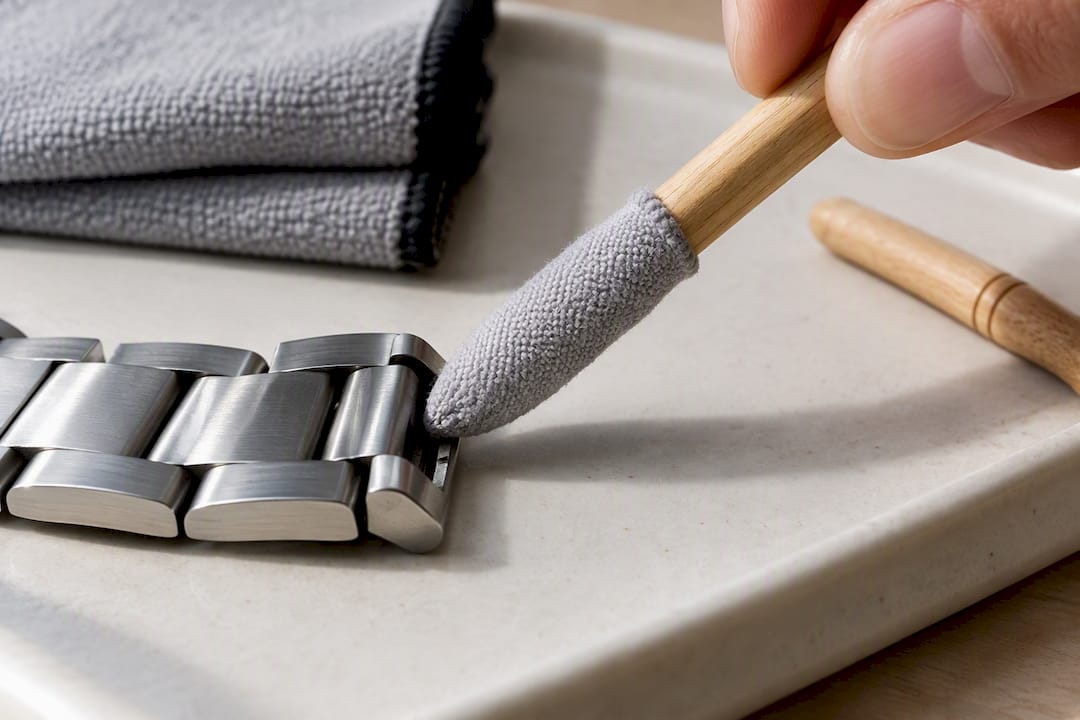
For tight spots, professionals reach for peg wood or a wooden toothpick with the tip snapped off and wrapped in microfiber. This gets into bezel flutes and end-link recesses that no brush can reach, without the metal-on-metal contact a bare toothpick risks.
Electric toothbrush heads on their lowest setting work for some owners cleaning casebacks and rubber straps, but vibration is a real concern for movement-sensitive pieces, and abrasive particles left on the head can still create swirl marks.
Ultrasonic cleaners handle metal bracelets exceptionally well once removed from the case. A few rules matter here:
- Use mild dish soap or a manufacturer-recommended solution, never straight solvent.
- Avoid ultrasonic cleaning for plated, glued, or fragile vintage components, since the vibration can loosen adhesives or strip thin plating.
- Run short cycles and use a separate basket so parts don’t knock against each other.
Cleaning Metal Bracelets, Leather Straps, and Rubber Straps
Every material on your watch reacts differently to water and soap, and treating them all the same way is how straps get ruined.
Metal bracelets tolerate a lot. Soak the bracelet briefly in warm soapy water once removed, then brush the link gaps and clasp before rinsing and drying thoroughly, including inside the clasp hinge where moisture likes to hide. A closer look at bracelet link cleaning covers the exact spots most owners miss.
Leather straps need the opposite treatment. Never immerse leather in water; wipe it with a barely damp cloth and follow with a leather-specific cleaner and conditioner. Dish soap strips the natural oils leather needs to stay flexible.
Rubber and silicone straps are the easiest of the three. Mild soap and water clean them safely, but if the strap is still attached to the case, wrap the case in cling film first or pull the strap free with a spring bar tool.
- Remove spring bars whenever a strap or bracelet needs a deeper clean than a wipe.
- Reassemble only once every component is fully dry, since trapped moisture under a reattached bracelet leads to corrosion over weeks, not days.
What Do Watchmakers Say About Toothbrush Cleaning?
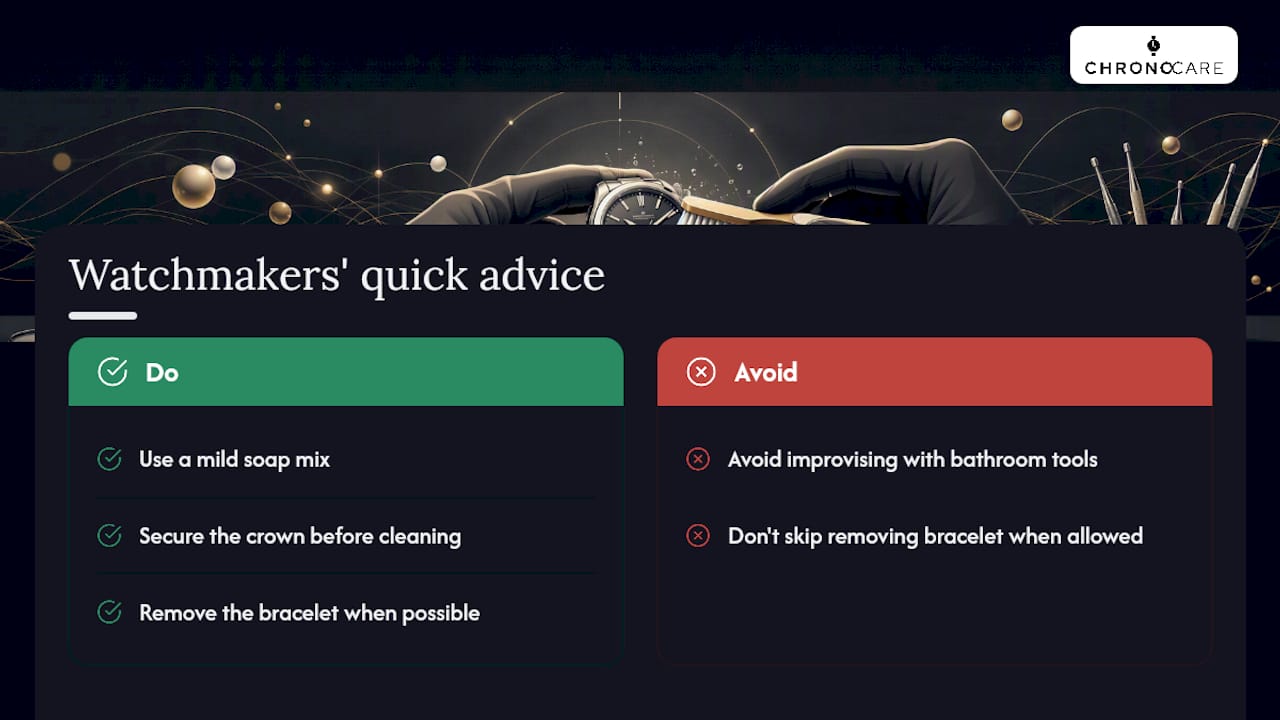
A mild soap mix, a secured crown, and removing the bracelet whenever the design allows it are recommended care practices aligning with watchmakers’ advice. Those three habits prevent the majority of at-home cleaning mistakes.
Author Raymond Jenkins covers the deeper procedures, including bracelet disassembly and finish restoration, in ChronoCare’s guide to watch cleaning for collectors and the companion piece on metal bracelet maintenance.
Dedicated brushes and cleaning kits exist that are built around this exact method, so the tools match the technique instead of forcing you to improvise with whatever’s in the bathroom drawer.
A Simple Cleaning Routine Worth Sticking To
A quick wipe after daily wear keeps grime from building up. Once a month, a gentle brushing session handles what the wipe misses, and Hodinkee recommends a full deep clean every few months for water-resistant models worn regularly, since sweat and dust wear down joints and gaskets over time.
Know when to stop and call a professional: a loose crown, a cracked crystal, or moisture visible under the crystal are all signs the watch needs a specialist, not another home cleaning attempt. One habit fixes most risk on its own: retire a brush for watch use only, or just buy a dedicated detail brush from the start.
— Raymond Jenkins
Get the Right Tools Instead of Improvising With One
A repurposed toothbrush works, but it’s a compromise. The Ultimate Watch Cleaning Kit is built around the exact steps above, so you’re not guessing which brush is soft enough or which soap is actually neutral.
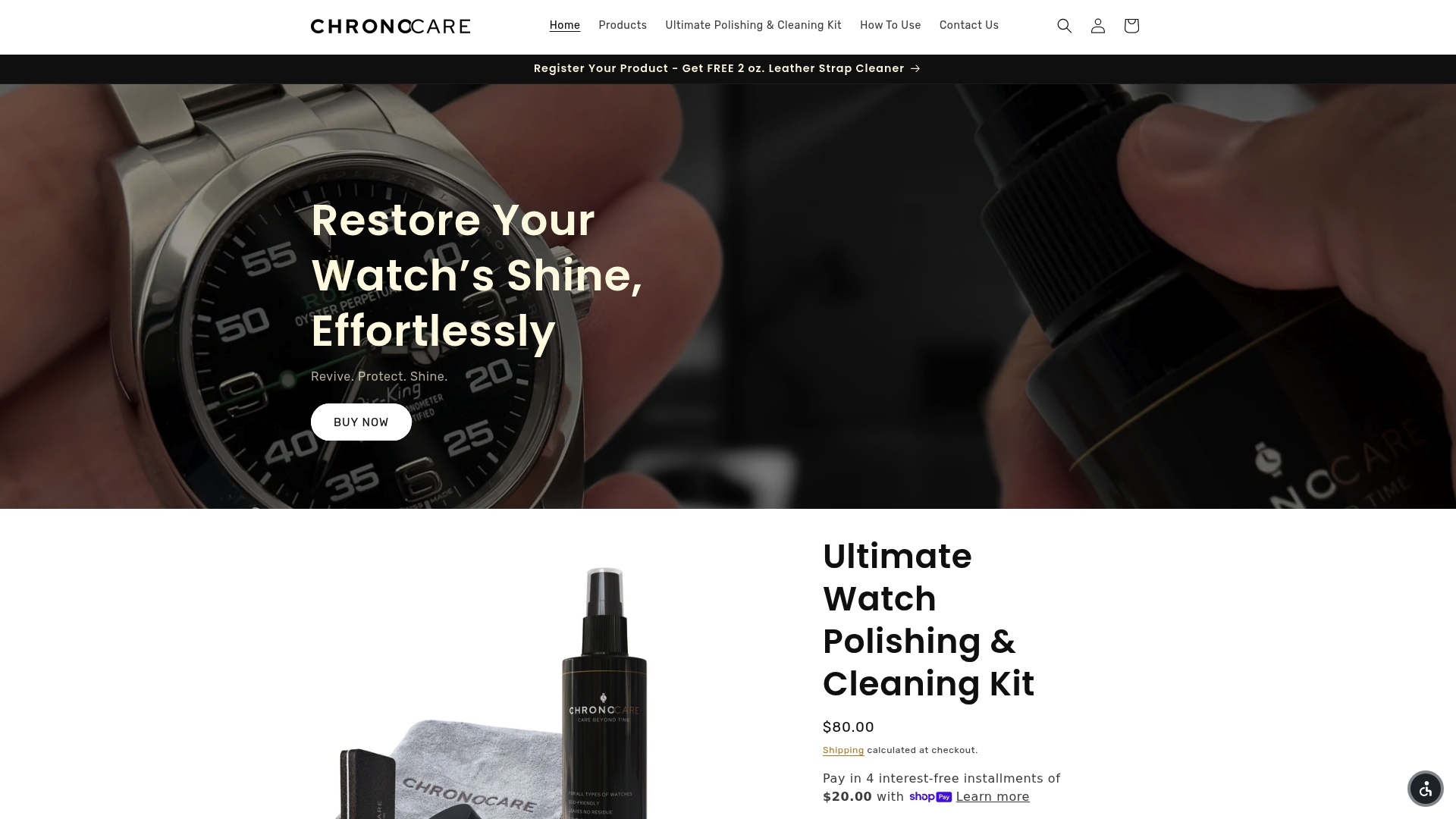
The kit pairs a dedicated soft-bristle brush with a microfiber cloth, a US-formulated cleaning solution, and an instruction card that mirrors the routine in this article, inspect, rinse, brush, dry. Because the brush has never touched toothpaste or oral bacteria, you skip the cross-contamination risk that comes with grabbing an old bathroom toothbrush. Collectors who want to go a step further after cleaning can pair it with the Ultimate Watch Polishing & Cleaning Kit to handle light surface scratches picked up between cleanings. Order the kit, run through the steps above on your next cleaning day, and see the difference a purpose-built tool makes over an improvised one.
Sources
- How To Clean Your Watch - Hodinkee
- How to clean a watch - Longines blog
- How To Clean A Watch - Teddy Baldassarre
- How to Clean a Watch - GQ
- Care and maintenance - Citizen
FAQ
What Is the Best Thing to Clean a Watch With?
A soft-bristle brush dedicated to watch care, paired with lukewarm water and a single drop of mild dish soap, handles most cleaning jobs safely. For tight spots like bezel flutes, a wrapped wooden toothpick reaches where bristles can’t.
Can You Clean a Luxury Watch With a Toothbrush?
Yes, as long as the bristles are soft, the crown is secured, and you avoid harsh chemicals or abrasive pastes. Skip this method entirely if the crystal is cracked, the crown feels loose, or the water resistance rating is unknown.
What Makes a Good Watch Cleaning Brush?
The best brush for watch cleaning has extra-soft bristles dense enough to clean grime from lugs and clasps without scratching polished surfaces. A retired toothbrush works for this in a pinch, but a purpose-made detail brush is built specifically to avoid the fraying and splayed bristles that cause scratches over time.
What Liquid Should You Use in an Ultrasonic Cleaner for Watches?
Mild dish soap diluted in water or a manufacturer-recommended cleaning solution both work well in ultrasonic cleaners for removed metal bracelets. Avoid ultrasonic cleaning entirely for plated, glued, or vintage components, since the vibration can strip finishes or loosen fragile parts.