

Metal Watch Bracelet Maintenance: Your Complete Guide
Metal watch bracelet maintenance is the regular process of cleaning, inspecting, and caring for your bracelet to prevent grime buildup, corrosion, and link wear. A stainless steel bracelet can collect 10x more bacteria than a smartphone screen in 30 days. That fact alone reframes maintenance from cosmetic habit to genuine hygiene practice. Skin oils, sweat, and environmental dust work together to degrade both the finish and the mechanical tolerances of your bracelet. The good news is that a consistent routine, paired with the right tools, stops most of that damage before it starts.
What is metal watch bracelet maintenance and why does it matter?
Metal watch bracelet maintenance is defined as the two-tiered practice of routine surface cleaning and periodic deep cleaning to preserve a bracelet’s finish, structural integrity, and wearer comfort. The industry term used by professional watchmakers is “bracelet upkeep,” and it covers everything from a daily microfiber wipe to a full ultrasonic service. Most watch owners treat their bracelet as an afterthought. That is a costly mistake.
The mixture of dead skin cells, body oils, and fine dust that collects inside bracelet links acts as an abrasive compound. Over time, this grime grinds down pins and causes permanent bracelet stretch. Once a bracelet stretches, the links loosen and the watch sits unevenly on your wrist. Restoring a stretched bracelet professionally can cost $600 or more, depending on the model.
Caring for your metal watch band also protects the watch movement itself. Water damage during cleaning often arises not from the water but from degraded seals that let moisture reach the movement. Removing the bracelet before any wet cleaning reduces that risk significantly.

What is the recommended routine for cleaning and maintaining metal watch bracelets?
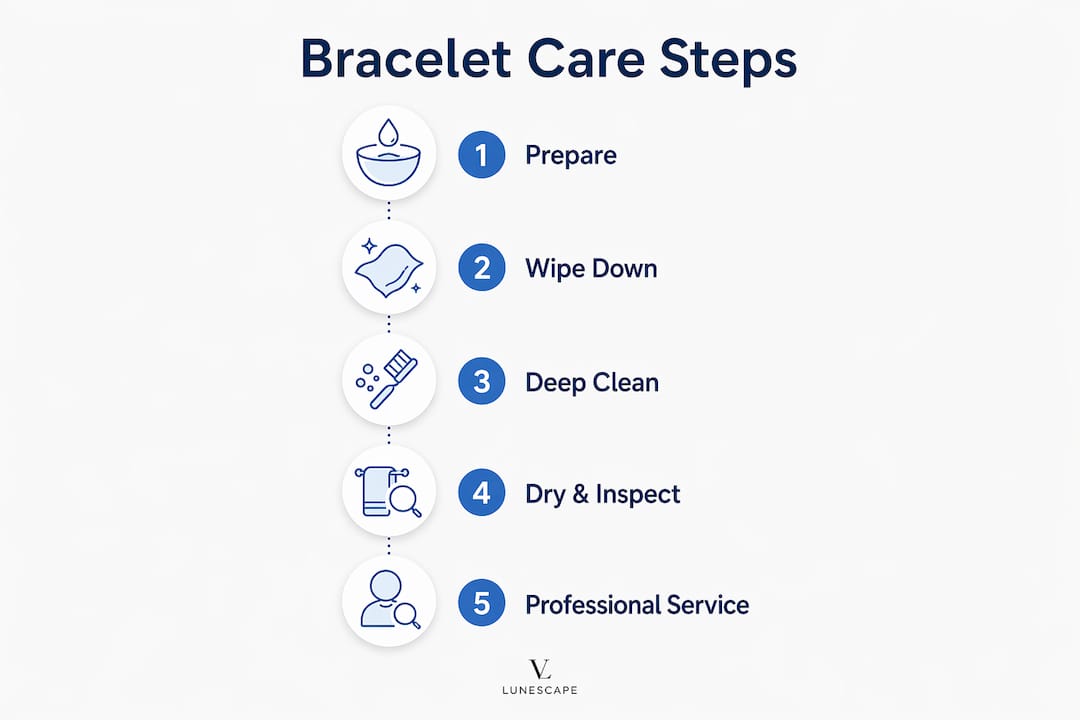
A two-tiered cleaning schedule gives you the best protection without over-cleaning. Quick wipe-downs every 14 days handle surface oils. A thorough wet clean every eight weeks removes embedded grit before it causes damage. Follow these steps for the eight-week deep clean:
- Remove the bracelet from the watch head. Never submerge the watch case unless you have confirmed its water resistance rating and the crown is fully secured.
- Prepare a cleaning solution. Fill a small bowl with lukewarm water at a maximum of 30°C and add a few drops of pH-neutral dish soap.
- Soak the bracelet for 5–10 minutes. This loosens compacted grime from inside the links without requiring aggressive scrubbing.
- Agitate gently with an extra-soft brush. Use a brush with bristles around 0.12mm in diameter to work into the gaps between links. A standard firm toothbrush will micro-scratch polished surfaces.
- Rinse thoroughly under lukewarm running water. Residual soap left in the links causes skin irritation and degrades rubber gaskets over time.
- Air-dry flat for a minimum of one hour. Trapped moisture inside links corrodes the pins from the inside out.
- Reattach only when fully dry. Rushing this step is one of the most common causes of preventable bracelet damage.
Pro Tip: Use a wooden toothpick, not a metal tool, to dislodge stubborn grit from tight link gaps. Metal picks scratch the inner surfaces of links, accelerating the pin wear you are trying to prevent.
For your watch bracelet upkeep between deep cleans, a 10-second wipe with a dry microfiber cloth after each wear removes the surface oils before they migrate into the links.
How does neglecting maintenance damage metal watch bracelets?
Skipping bracelet care does not just affect appearance. The damage is structural, progressive, and expensive to reverse. Here is what actually happens when metal watch strap cleaning gets ignored:
- Bracelet stretch. Abrasive grit trapped between links grinds down the pins that hold each link in place. The bracelet gradually loosens and develops an uncomfortable, floppy feel.
- Contact dermatitis. Residual soap and accumulated grime affect roughly 15% of wearers, causing watch rash on the inner wrist. This is often misattributed to a nickel allergy when the real cause is trapped irritants.
- Internal moisture damage. Worn seals on older watches let water reach the movement during cleaning. The bracelet acts as a reservoir that holds moisture against the case back.
- Finish degradation. Polished surfaces lose their mirror quality as micro-abrasions accumulate. Brushed finishes become uneven and patchy.
- Accelerated damage from improper cleaning. Using harsh chemicals or inadequate rinsing causes more harm than no cleaning at all. Ammonia-based glass cleaners and bleach solutions destroy gaskets and discolor metal.
The most counterintuitive finding in bracelet care is this: improper cleaning is worse than no cleaning. A watch owner who scrubs their bracelet with a stiff brush and a household cleaner every week will see faster deterioration than one who does nothing.
What special considerations apply to different metal materials?
The metal your bracelet is made from determines which cleaning methods are safe and which are destructive. The three most common materials in quality timepieces are 316L stainless steel, 904L stainless steel, and titanium. Precious metal bracelets in 18ct gold require the most careful handling.
| Material | Safe cleaning method | What to avoid |
|---|---|---|
| 316L stainless steel | pH-neutral soap, lukewarm water, soft brush | Chlorine, ammonia, abrasive pastes |
| 904L stainless steel | Same as 316L; more corrosion-resistant | Prolonged chlorine exposure |
| Titanium | Mild soap, soft cloth; avoid prolonged soaking | Acidic cleaners, abrasive tools |
| 18ct gold | Damp microfiber cloth; minimal water contact | Ammonia, chlorine, ultrasonic cleaning at home |
Chlorine and ammonia cause stress corrosion cracking in precious metals and can weaken even surgical-grade stainless steel over repeated exposure. That means pool water, hot tubs, and household cleaning sprays are all genuine threats to your bracelet.
Integrated bracelets, where the bracelet flows directly from the case without a standard lug attachment, present a separate challenge. Many cannot be removed without specialized tools. For these, dry cleaning with a microfiber cloth and a soft brush is the safest home method. Before any wet cleaning on an integrated design, confirm the watch’s water resistance rating and have the crown fully screwed down, as WatchPolice emphasizes that crown discipline is the single most critical step in preventing internal water damage.
Pro Tip: If you are unsure whether your watch is water-resistant enough for wet bracelet cleaning, take it to a watchmaker for a pressure test before soaking. A $30 test prevents a $500 repair.
When should you consider professional cleaning and servicing?
Home cleaning refreshes the surface. Professional cleaning restores the bracelet. That distinction matters because ultrasonic baths reach grime in areas no brush can access, and hand refinishing brings polished and brushed surfaces back to their factory finish. No amount of careful home care replicates that result.
Watch owners who wear their bracelet daily should schedule professional cleaning every 12–18 months. Less frequent wearers can extend that to every two years. The signs that you need professional service before that interval include:
- Stiff or sticky links that do not flex smoothly when you bend the bracelet.
- Deep scratches that a polishing cloth cannot improve.
- Persistent grime that remains after a thorough home clean.
- Visible pin wear where the link pivot points show metal fatigue or play.
- A stretched, floppy feel that was not present when the bracelet was new.
A full professional service typically includes disassembly of the bracelet, an ultrasonic bath, hand cleaning of individual components, pin and screw inspection with replacement where needed, refinishing of polished and brushed surfaces, and a pressure test of the watch case. This process cannot be replicated at home, and attempting to disassemble a bracelet without the right tools risks snapping pins or scratching link surfaces permanently.
The value of professional finishing extends beyond aesthetics. A well-maintained bracelet on a luxury watch retains more of its resale value. Collectors and buyers inspect bracelets closely. A stretched or heavily scratched bracelet signals neglect and reduces the watch’s market value, sometimes significantly.
Knowing when links wear and catching the early signs of pin degradation is what separates a collector who preserves value from one who unknowingly destroys it.
Key Takeaways
Consistent metal watch bracelet maintenance, combining a biweekly wipe-down, an eight-week deep clean, and annual professional servicing, is the most effective way to preserve both the appearance and structural integrity of any metal bracelet.
| Point | Details |
|---|---|
| Follow a two-tiered schedule | Wipe down every 14 days and deep clean every 8 weeks to prevent grime and pin wear. |
| Match your method to the metal | 316L steel, 904L steel, titanium, and gold each require different cleaning agents and tools. |
| Avoid harsh chemicals | Ammonia and chlorine cause stress corrosion cracking and degrade gaskets on all metal types. |
| Know the limits of home care | Home cleaning refreshes surfaces; only professional ultrasonic cleaning restores factory tolerances. |
| Schedule professional service | Daily wearers should book a full bracelet service every 12–18 months to protect structural integrity and resale value. |
What I have learned from years of watching collectors get this wrong
The most common mistake I see is not neglect. It is overconfidence. Watch owners who know enough to clean their bracelet regularly often do the most damage because they use the wrong tools or skip the drying step. I have seen beautifully maintained watches arrive with bracelets that look worse than those that were never cleaned, simply because someone used a firm-bristled brush and a household spray cleaner every week for two years.
The second mistake is treating the bracelet as separate from the watch. It is not. The bracelet is a mechanical component with pins, screws, and tolerances that matter. When those tolerances degrade, the bracelet stretches, and that stretch is permanent without professional intervention. Cleaning preserves those tolerances. It is not just about shine.
The third mistake is skipping the drying step. Moisture trapped inside links corrodes pins from the inside, invisibly. By the time you notice the bracelet feels loose, the damage is done. One hour of flat air-drying after every wet clean costs you nothing and prevents a repair bill that could exceed the cost of a new bracelet.
My honest advice: combine a disciplined home routine with a professional service every 12–18 months if you wear your watch daily. That combination keeps the bracelet looking factory-fresh and structurally sound for decades. Neither approach alone is enough.
— Raymond Jenkins
ChronoCare’s cleaning kits for metal bracelet care at home
Equipping yourself with the right tools makes the difference between a cleaning routine that protects your bracelet and one that slowly damages it.
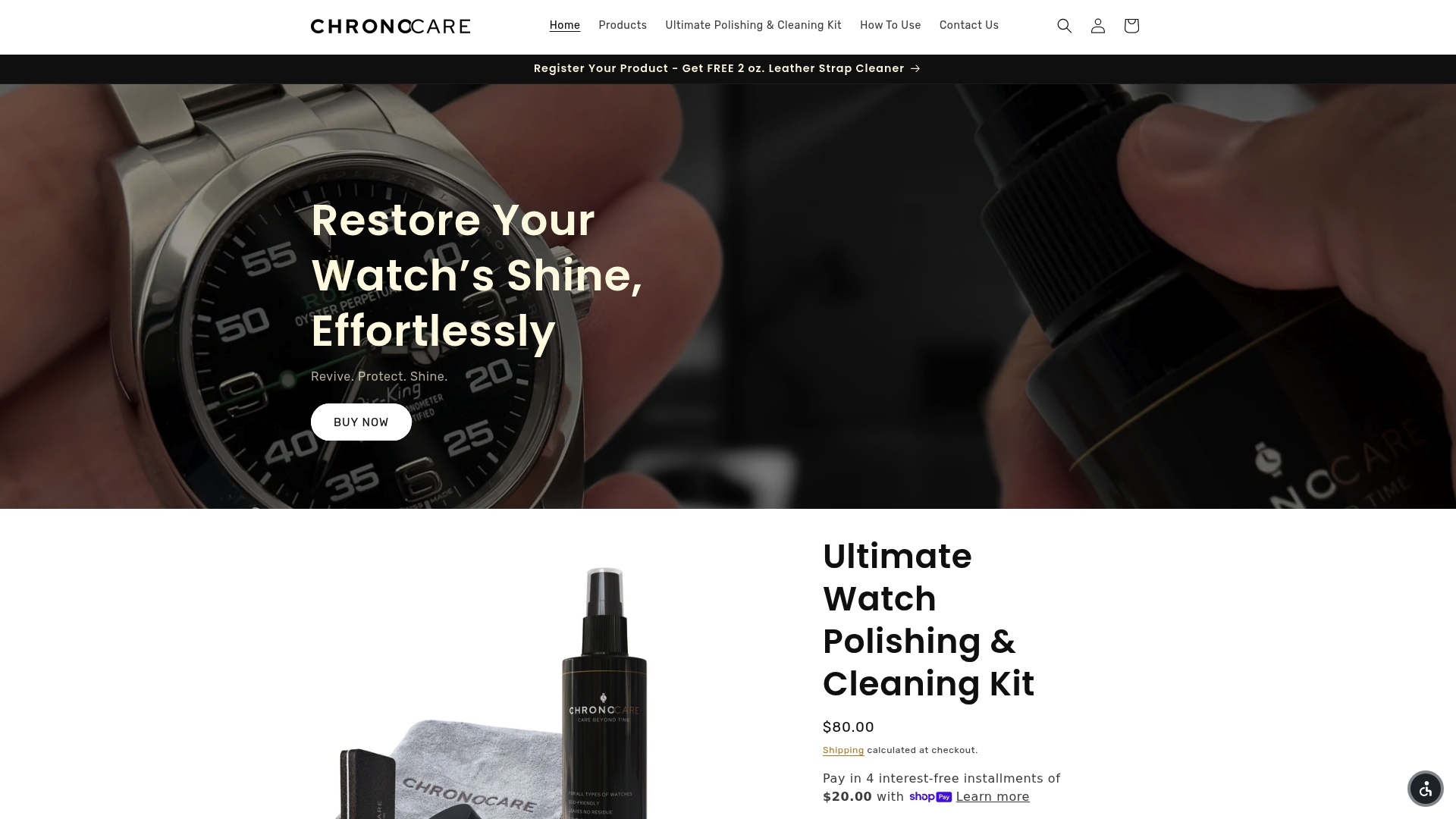
ChronoCare’s Ultimate Watch Cleaning Kit includes microfiber cloths, extra-soft brushes, and a pH-neutral cleaning solution formulated specifically for metal watch surfaces. For collectors who want to restore luster between professional services, the polishing and cleaning kit adds a polishing cream that safely improves surface appearance without removing metal. Every product is formulated in the US and designed to complement, not replace, periodic professional servicing. The result is a bracelet that looks maintained because it is.
FAQ
What is metal watch bracelet maintenance?
Metal watch bracelet maintenance is the regular practice of cleaning and inspecting a metal bracelet to prevent grime buildup, corrosion, and link wear. It includes both routine home cleaning and periodic professional servicing.
How often should I clean my metal watch bracelet?
A quick wipe-down every 14 days and a thorough wet clean every eight weeks is the recommended schedule for daily wearers. Professional cleaning should follow every 12–18 months.
Can I use any soap to clean my metal watch bracelet?
Use only a pH-neutral mild dish soap with lukewarm water at a maximum of 30°C. Harsh cleaners, ammonia-based products, and chlorine solutions damage gaskets and can cause corrosion.
What causes a metal watch bracelet to stretch?
Bracelet stretch results from abrasive grit, made up of skin cells, oils, and dust, grinding down the pins inside each link over time. Regular cleaning removes this grit before it causes permanent wear.
When does a metal watch bracelet need professional cleaning?
Stiff links, deep scratches, persistent grime after home cleaning, or a noticeably loose feel are all signs that professional service is needed. Ultrasonic cleaning and hand refinishing restore what home care cannot.