

Isopropyl Alcohol on Watches: What Watchmakers Wipe, What They Avoid
Short answer: isopropyl alcohol works well on many metal exteriors and hard crystals when you use it carefully, but it has no place on leather, painted or lacquered dials, or shellac-held movement parts.
TL;DR:
- Use 70% IPA wipes on sapphire or mineral crystal and solid metal surfaces, spot test first, and wipe rather than soak.
- Keep alcohol off painted or lacquered dials, leather or fabric straps, coated finishes, and rubber gaskets; use mild soapy water or dedicated cleaners instead.
- High purity IPA at 91% to 99% suits controlled rinses of disassembled metal parts, but its flammability requires ventilation and distance from sparks.
- Brief IPA contact lasting a minute or two usually keeps stones secured with shellac stable; longer exposure or ultrasonic cleaning can dislodge them.
Table of Contents
- Which watch parts you can safely clean with isopropyl alcohol
- Parts and materials to avoid: what alcohol damages and why
- Choosing the right IPA concentration for each task
- How to clean a watch with isopropyl alcohol safely
- Watchmaker cautions on shellac, pallet forks, and ultrasonics
- How ChronoCare’s product expertise fits into safe cleaning
- When a DIY wipe-down is enough, and when to call a watchmaker
- Clean with confidence using the right ChronoCare tools
- FAQ
- Sources
Which watch parts you can safely clean with isopropyl alcohol
Isopropyl alcohol (IPA) is a solvent that breaks down skin oils, sunscreen residue, and light grime without leaving a film behind, which makes it genuinely useful on the parts of a watch that just sit against skin and fabric all day. The surfaces that tolerate it best share one trait: they are hard, non-porous, and not covered in paint or adhesive.
Safe targets for careful IPA cleaning include:
- Sapphire or mineral crystal surfaces, wiped rather than soaked
- Stainless-steel cases and solid metal bracelets
- Metal bezels and crown exteriors, away from any gaskets
Apple’s own cleaning guidance permits a moderate concentration of isopropyl alcohol wipes for gently cleaning the exterior of an Apple Watch and its metal bands, which lines up with what watch repairers do with mechanical pieces too. Higher-purity IPA evaporates faster and leaves less residue, which is why workshops reach for it when a surface needs to dry quickly without streaking.
Before you touch any watch with alcohol, test on an inconspicuous area, such as the underside of the case back or a hidden link, and wait a minute to see if anything changes. If you’re working on a bracelet with a leather or fabric strap attached, remove the strap first. That single step avoids most of the damage reports that show up in cleaning forums, since a soaked strap is far more likely to suffer than a wiped case.
Parts and materials to avoid: what alcohol damages and why
The flip side of IPA’s degreasing power is that it does not discriminate between skin oil and the thin lacquer or paint that gives a dial its finish. Several materials common on watches react badly to repeated or prolonged alcohol contact, and the damage is usually permanent.
- Dials with printed logos, sunburst finishes, or lacquer coatings can fog, discolor, or lose their printed detail
- Leather and fabric straps absorb alcohol and dry out, crack, or discolor over time
- PVD and other coated finishes can thin or streak under solvent exposure
- Rubber and silicone gaskets can soften or age faster when repeatedly exposed to solvents
Watch owners posting on WatchUSeek have described sunburst dials that fogged or changed appearance after alcohol contact, with the consensus in those threads being that the change was not reversible. Citizen’s official care guidance backs this up directly, warning that alcohol and other volatile chemicals can cause discoloration or premature aging of cases and bands.
Gaskets face a slower version of the same problem. A single wipe of IPA on a case exterior is unlikely to compromise a seal, but solvents that creep into the case gap or get used repeatedly around the crown tube can soften rubber gaskets over months and years, which is the kind of thing that only shows up later as a failed water-resistance test.

Choosing the right IPA concentration for each task
Not all isopropyl alcohol is the same, and the strength you reach for should match the job rather than whatever bottle is on hand.
- 70% IPA wipes: suited to exterior surface cleaning, with enough water content to help lift oils gently; this is the concentration Apple specifically names for wiping down a watch exterior
- high-purity isopropyl alcohol in the 91% to 99% range: used by watchmakers mainly as a final rinse on disassembled metal parts, where fast evaporation and a residue-free finish matter more than gentleness
- Soap and water or a dedicated spray: the better choice for straps, grime buildup, or anything with a coated or painted surface
- High-purity IPA safety notes: technical data sheets for high-purity IPA flag it as highly flammable, requiring ventilation and gloves, since it evaporates fast and carries real fire risk around open flames or sparks
High-purity IPA is also more aggressive toward shellac and certain adhesives, which is part of why it stays confined to brief, controlled contact in a workshop setting rather than general home use.
How to clean a watch with isopropyl alcohol safely
Follow this sequence for exterior cleaning, and stop at any point where something looks or feels wrong.
- Check the band material. If it’s leather, fabric, or a coated strap, remove it before you bring out any alcohol.
- Inspect the case. Look for visible gaps at the crystal edge, a crown that won’t seat fully, or any sign the case back isn’t sealed, since these suggest the watch should go to a professional instead.
- Set up a clean, ventilated workspace. You’ll want a lint-free microfiber cloth, cotton swabs, a soft nylon brush, a pre-wet 70% alcohol wipe or small spray bottle, and nitrile gloves.
- Spot test first. Dab a small amount on a hidden area of the case and check after a minute for any change in finish.
- Wipe the metal surfaces. Use minimal wetting on the case, bracelet links, bezel, and crystal, letting the alcohol do the work rather than scrubbing.
- Rinse greasy spots with damp soapy water if needed. For stubborn oil or grime, a damp cloth with a trace of mild soap often finishes the job better than more alcohol.
- Dry thoroughly. Use a dry microfiber cloth immediately, then let the watch air-dry fully before closing it up or putting the strap back on.
- Reassemble once dry. Reattach the strap and confirm the crown is fully seated.
Pro Tip: Keep a dedicated small spray bottle filled with 70% IPA just for exterior wipes; reaching for the same pre-measured solution every time reduces the temptation to grab a stronger concentration out of convenience.
Stop the process and consider professional service if you notice any softening, color shift, or haze on the dial or crystal, or if you suspect moisture has gotten past the gaskets during a previous swim or shower. Those signs point to a problem alcohol alone won’t fix and may get worse if you keep working on the piece yourself.
Watchmaker cautions on shellac, pallet forks, and ultrasonics
Mechanical movements raise the stakes well beyond anything a case exterior faces. Many escapement parts, including pallet stones, are held in place with shellac, a natural adhesive that softens with solvent exposure over time rather than instantly.
- Brief IPA contact of a minute or two tends to leave shellac-secured parts stable
- Exposure stretching past a few minutes, or repeated dips, risks softening the shellac enough for stones to shift
- Ultrasonic cleaners combined with IPA add vibration on top of solvent exposure, which can dislodge delicate parts faster than a simple soak
Watch repair tutorials testing IPA exposure on movement parts found that pallet fork stones held firm at brief contact up to a couple of minutes, which is generally safe, but longer exposure or ultrasonic/spin rinses can cause damage.
Watchmakers who do use high-purity IPA favor it as a final rinse precisely because it displaces water and dries without residue, but they pair it with strict timing and dedicated rinse baths rather than open soaking.
If you’re working on anything beyond a case exterior, the safer path is a professional service with controlled rinse protocols, or at minimum following a workshop procedure with short, timed exposures rather than improvising with a soak.
How ChronoCare’s product expertise fits into safe cleaning
We built our cleaning lineup around the same hierarchy outlined above: gentle tools for the surfaces that can handle them, and dedicated formulas for the ones that need special care.
- Our Ultimate Watch Cleaning Kit covers the metal case, bracelet, and crystal steps described in the procedure above, without reaching for raw solvent on parts that don’t need it
- Our watch polishing cream addresses light scratches on metal surfaces after cleaning, restoring shine without stripping a finish
- Our leather strap cleaner spray handles straps separately, since leather should never see isopropyl alcohol
We also publish a step-by-step collector’s cleaning guide that walks through the same sequence in more visual detail, written by Raymond Jenkins for readers who want a companion reference while they work.
When a DIY wipe-down is enough, and when to call a watchmaker

Our rule of thumb: exterior cleaning with the right alcohol concentration is fine for most owners handling a case, bracelet, or crystal. Anything touching the movement, the dial, or a gasket you suspect is compromised belongs with a professional.
A stripped dial or a watch that fails a water-resistance check afterward costs far more to fix, or simply can’t be fixed, than the few minutes saved by skipping a trip to a watchmaker.
— Raymond Jenkins
Clean with confidence using the right ChronoCare tools
Having the right product on hand removes most of the guesswork from the steps above, and that’s exactly what we built our lineup to do.
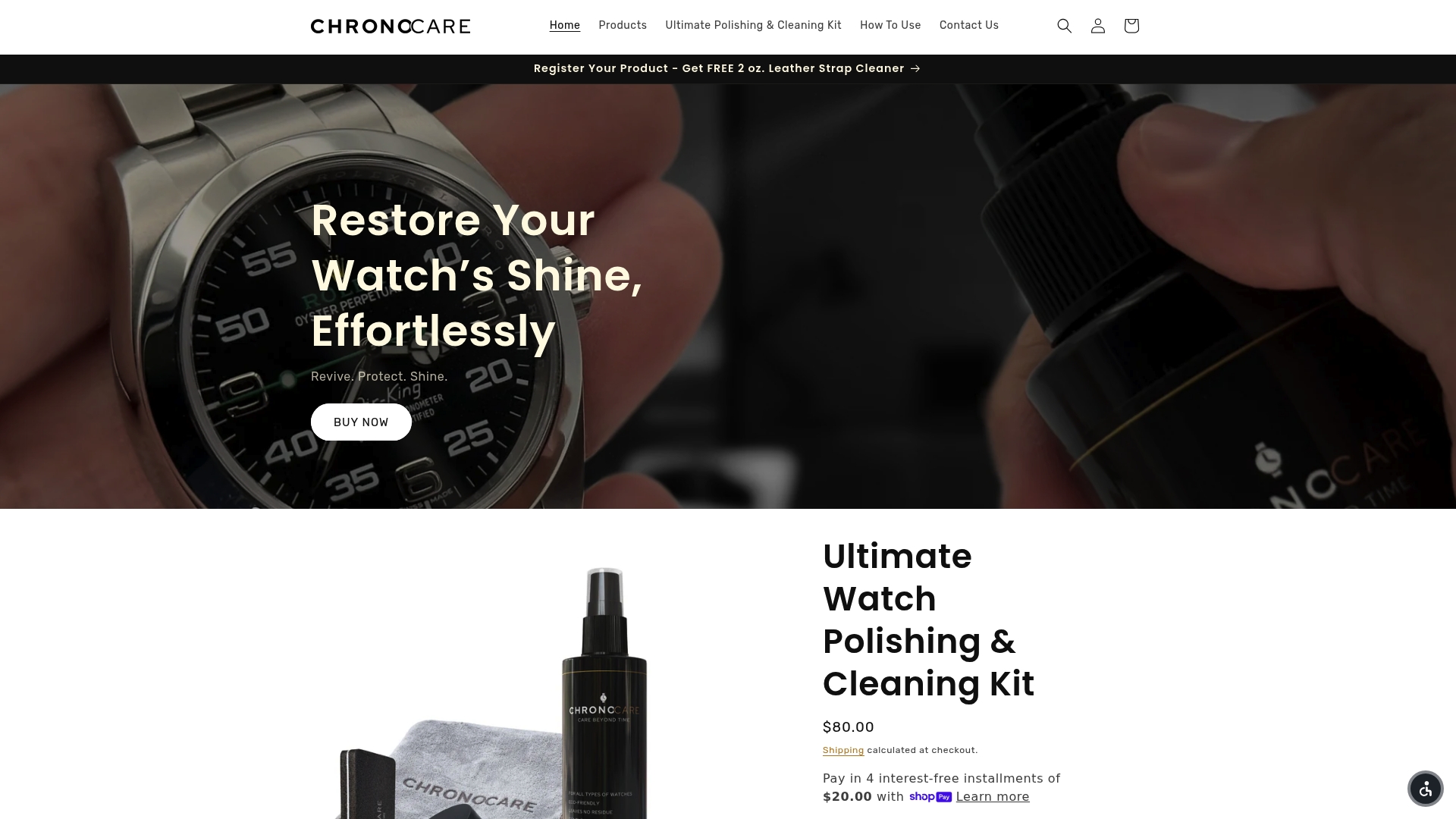
For case, bracelet, and crystal cleaning, our Ultimate Watch Cleaning Kit pairs safe exterior solutions with the soft tools this kind of cleaning calls for. If scratches have built up on metal surfaces, our polishing cream restores shine without the aggressive solvent action that damages finishes. And since leather should stay away from alcohol entirely, our leather strap cleaner spray gives straps a safer path to looking clean again.
If you’re also thinking about how to store a growing collection safely, Safes and Security Solutions’ guide to watch winder safes covers options worth a look. Browse our full lineup at ChronoCare and pick the product that matches what your watch actually needs.
FAQ
Is 70% isopropyl alcohol safe for electronics?
Yes, for exterior wiping. Apple’s cleaning guidance specifically names a moderate concentration of isopropyl alcohol wipes as safe for gently cleaning the exterior of an Apple Watch and its metal bands, provided you avoid submersion and leather or fabric straps.
What is the best thing to clean a watch with?
For general grime and oil, mild soap and water is usually the gentler first choice before reaching for any solvent. Isopropyl alcohol at 70% works well for exterior metal and crystal surfaces once soap and water aren’t enough, while leather and painted dials call for dedicated, alcohol-free cleaners.
Can I use 90% isopropyl alcohol to clean electronics?
Higher-purity IPA, in the 91% to 99% range, is used mainly in controlled workshop rinses rather than casual home wiping, since it evaporates fast and is more aggressive toward adhesives, shellac, and gasket materials. Technical data on high-purity IPA also flags it as highly flammable, so ventilation and care matter more at this strength.
Can you use Dawn soap to clean a Rolex?
A small amount of mild dish soap in water is a common first step for removing grease from a metal case and bracelet before any stronger cleaner. Avoid soaking the crown area or straps, and dry thoroughly afterward, since the goal is to lift oil without pushing moisture past the seals.
Sources
- How to clean your Apple Watch - Apple Support
- How to Clean Watch Parts with IPA - Watch Repair Tutorials
- Cleaning your wristwatch (with videos) | CITIZEN WATCH Global Network
- TDS - MapleChem Isopropyl Alcohol (99% IPA) Anhydrous High Purity IPA Solvent & Degreaser