

One Drop of Dish Soap Safely Cleans Collector Watches
A single drop of mild dish soap in lukewarm water is a safe, routine way to clean most watches, as long as the water resistance is current and the crown is secured. Leather straps and any watch with unknown or degraded water resistance should never be soaked. When in doubt, wipe with a barely damp cloth instead. Manufacturer guidance and ChronoCare’s own care guides both back this approach for everyday grime.
TL;DR:
- Confirm the water resistance rating and ensure the crown is fully secured before cleaning a watch with dish soap.
- Use a single drop of mild dish soap in lukewarm water and brush gently with a soft toothbrush, rinsing only if resistance is confirmed.
- Avoid soaking leather, fabric, or vintage watches, as water damages these materials, and opt for wiping with a damp cloth instead.
- Rinse thoroughly under a gentle stream and dry completely, paying special attention to tight joints and clasp areas to prevent corrosion.
- Skip water cleaning and seek professional servicing if the watch shows signs of fogging, loose parts, or if it is vintage or has not been pressure tested recently.
Table of Contents
- Is Dish Soap Watch Cleaning Actually Safe to Try?
- Step-By-Step: Cleaning a Metal Case and Bracelet
- Cleaning Leather, Rubber, Silicone, and Fabric Straps
- Removing Soap Residue and Drying Your Watch Completely
- When to Skip Dish Soap and Call a Watchmaker
- Considerations on dish soap and when specialty products help more
- What I’d Actually Do With My Own Watches
- A Residue-Free Upgrade for Collectors Who Clean Often
- Sources
- FAQ
Is Dish Soap Watch Cleaning Actually Safe to Try?
Dish soap works because it’s mild, cheap, and effective at breaking down the skin oils, sunscreen, and dust that build up on a case and bracelet without stripping finishes or attacking gaskets the way harsher jewelry cleaners can. Several watch-care guides point to a single drop of a pH neutral dish soap, mixed into lukewarm water, as the standard home solution for metal cases and bracelets. It’s not a hack. It’s the same basic chemistry that watchmakers themselves recommend for routine external cleaning.
The catch is that “safe” only applies under specific conditions, and skipping the precheck is where most home cleaning mistakes happen.
Check water resistance before you touch a drop of water
Water resistance ratings (30M, 50M, 100M, and so on) describe static pressure in a lab, not real-world conditions like a running faucet or a jet of water from a sink sprayer. Seals and gaskets also age. A watch rated 100 meters when new can lose meaningful protection after years without service, which is why Seiko’s own customer guidance warns that resistance decreases over time and should never be assumed current on an older piece.
Before you mix any soap and water, run through this:
- Confirm the water resistance rating on the case back, dial, or original documentation.
- Screw down or push in the crown fully, and check that pushers (on chronographs) seat properly.
- Inspect the crystal for chips or a loose bezel, both of which compromise sealing.
- Look for fogging or condensation under the crystal, a sign water has already gotten in.
- If the watch is vintage, has never been serviced, or you simply don’t know its rating, treat it as not water resistant.
Metal and rubber components tolerate a soapy rinse well. Leather, fabric, and anything vintage need a different approach entirely, which the next sections cover in detail.
Pro Tip: If you can’t remember the last time your watch was pressure tested, assume it isn’t fully water resistant anymore. A five-minute check at a watchmaker costs far less than replacing a water-damaged movement.
Step-By-Step: Cleaning a Metal Case and Bracelet
Once you’ve confirmed the watch can handle moisture, the actual cleaning takes about 15 minutes and needs almost nothing you don’t already own.
Tools you’ll need:
- A soft-bristled toothbrush (a new, unused one)
- A small bowl for the soap and water mixture
- Microfiber cloth
- Cotton swabs or a toothpick for tight seams
- A small air puffer, the kind used for camera lenses
- Mild dish soap (Dawn is the most commonly cited example)
Here’s the sequence watch professionals actually follow:
- Secure the crown. Screw it down if it’s a screw-down type, or push it fully in. This is non-negotiable before any water touches the case.
- Remove the bracelet if you’re comfortable doing so. This isn’t required, but it lets you clean links more thoroughly and speeds up drying. If you’d rather not risk it, clean the bracelet on the wrist.
- Mix the solution. Add one drop of mild dish soap to a bowl of lukewarm water. Skip hot water; it can affect certain seals and finishes over time, and it’s simply unnecessary.
- Dip the toothbrush, not the watch, into the mixture, then gently brush the case sides, lug areas, and each bracelet link. Focus on crevices where grime hides, not the flat polished surfaces.
- Avoid pressing hard or scrubbing in circles on polished links or bezels. Mild dish soap doesn’t need aggressive pressure to work, and circular buffing motions can create fine scratches on soft metals over time.
- Rinse under a light stream, crown facing down, only if the watch’s water resistance clearly supports it. If you’re at all unsure, skip the rinse and wipe the soap off with a damp cloth instead.
- Pat dry immediately with the microfiber cloth, then use the air puffer to blast out moisture trapped between links and around the case back.
- Lay the watch on a towel and let it air-dry fully before wearing it or storing it in a case.
This exact sequence, mix, brush, rinse if allowed, dry, mirrors the process manufacturers like Longines outline for their own timepieces, right down to using an air puffer on crevice moisture.
A quick reality check on frequency: most enthusiasts don’t need to do this weekly. A daily-wear watch collects enough oil and dust to warrant a full soap clean approximately monthly, with a quick dry-wipe after sweaty days or workouts in between.
If your bracelet has particularly tight micro-adjust links or a folding clasp, a detailed link cleaning checklist helps you avoid missing pin gaps where grime accumulates unseen.
Cleaning Leather, Rubber, Silicone, and Fabric Straps
Dish soap is not a one-size-fits-all solution once you move past the case and bracelet. Strap material changes the rules completely, and this is where most at-home cleaning damage actually happens.
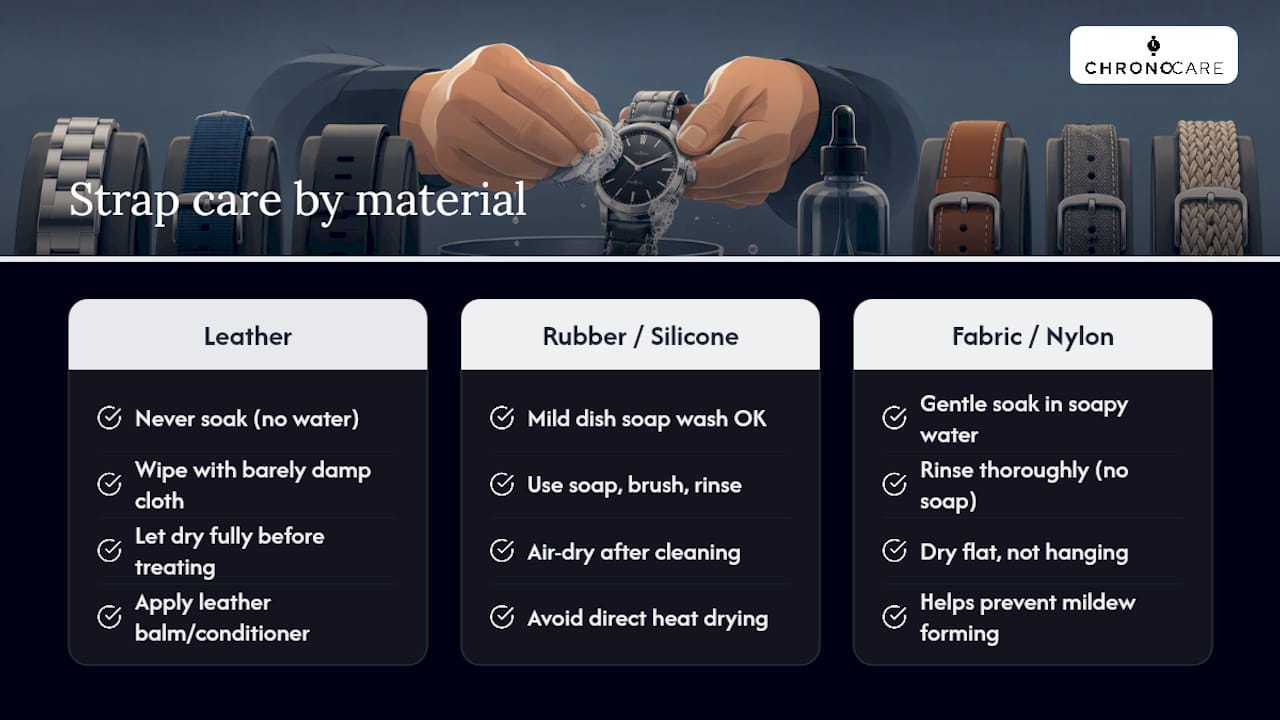
Leather straps should never be soaked, even briefly. Water breaks down the fibers and finish, and soap residue left in leather tends to dry it out further. Instead, wipe the strap with a barely damp cloth, let it dry fully, then apply a leather-specific balm or conditioner to keep it supple. Breitling’s own care guidance is explicit on this point: leather needs dedicated care, not water exposure. If you want the full process, ChronoCare’s guide on cleaning a leather strap without ruining it walks through conditioning in more depth.
Rubber and silicone straps are the easy case. They tolerate a mild dish soap wash just fine, soap, brush, rinse, air-dry. The one thing to avoid is direct heat for drying, since it can cause cracking or warping over months of repeated exposure.
Fabric and nylon (NATO-style) straps can handle a gentle soak in soapy water, unlike leather. Rinse thoroughly so no soap stays trapped in the weave, then dry flat rather than hanging, which helps prevent mildew from forming in the fibers.
If a strap detaches easily with quick-release pins, take it off and clean it separately from the case. It dries faster, and you avoid getting the case wet unnecessarily.
Pro Tip: Keep a spare rubber or NATO strap on hand for workouts and swimming. It saves your leather strap from ever needing repair in the first place.
Removing Soap Residue and Drying Your Watch Completely
Soap residue left on a case or bracelet isn’t just a cosmetic issue. It attracts dust and dirt faster than a clean surface, and over months it can sit against gasket seams, slowly degrading the rubber. Getting the soap fully off, and the watch fully dry, matters as much as the cleaning step itself.
- Rinse under a gentle stream, crown down, if your water resistance rating supports it. This is the fastest way to clear soap from links and case grooves.
- If you skipped the rinse, wipe every surface with a clean, damp microfiber cloth until no soapy film remains, then follow with a dry cloth.
- Pat the entire watch dry, then use the air puffer on the underside of links, around the crown tube, and along the case back edge, exactly the spots where water hides.
- Set the watch on a towel and let it air-dry for at least an hour before putting it back on or storing it.
- Inspect the clasp and folding links closely. These tight mechanical joints trap moisture longer than flat surfaces and are the most common spot for hidden corrosion to start.
Manufacturers like Citizen recommend the same rinse-and-dry discipline after any exposure to salt water or chlorinated pools, not just after a soap clean, because trapped moisture is what actually causes long-term corrosion, not the water exposure itself. If you notice a cloudy film even after drying, ChronoCare’s guide to removing soap residue covers targeted fixes that a towel alone won’t solve.
When to Skip Dish Soap and Call a Watchmaker
Home cleaning has real limits, and pushing past them is how a $20 mistake turns into a $400 repair bill.
Skip wet cleaning entirely and get professional service if you notice any of the following:
- A chipped, cracked, or loose crystal
- A crown or stem that feels loose, sticky, or doesn’t screw down properly
- Any fogging or moisture under the crystal, which means water already got past the seals
- A vintage watch that hasn’t been serviced or pressure tested in years
- Visible corrosion or discoloration around the case back or crown tube
Vintage and high-value pieces deserve extra caution even when they look fine externally. Gaskets degrade quietly, and a watch that was water resistant to 100 meters a decade ago may not hold up to a kitchen faucet today. A professional service typically includes full disassembly, ultrasonic cleaning of the movement and case, gasket replacement, and a pressure test that confirms the actual current water resistance, something no home method can replicate.
As a general interval, plan on a professional water-resistance pressure test regularly as recommended for daily-wear divers or sports watches, and before any dress watch with unknown service history goes anywhere near a sink.
Considerations on dish soap and when specialty products help more
The mild dish soap method is supported for routine external cleaning whenever a watch’s water resistance clearly allows it. The chemistry is sound, and it’s the same approach most manufacturer guides recommend. Where a dedicated product line adds real value is in the details dish soap can’t fully address.
- Residue-free cleaning solutions rinse clean without leaving the trace film that plain dish soap sometimes leaves in tight seams and clasp joints.
- Polishing cream handles light surface scratches that soap and a toothbrush simply won’t touch, restoring shine without removing metal aggressively.
- Dedicated brushes and air puffers built for watch geometry reach bracelet gaps and case corners more precisely than a generic toothbrush.
For readers who want a full walkthrough beyond the basics covered here, ChronoCare’s collector-focused cleaning guide breaks down a maintenance cadence suited to how often you actually wear a piece, not a generic monthly rule that ignores your collection’s habits.
What I’d Actually Do With My Own Watches
Cleaning frequency should match how the watch gets worn, not a fixed calendar rule. A daily-wear watch on a bracelet earns a quick wipe-down weekly and a full soap clean monthly. A dress watch that comes out twice a month needs almost none of this beyond an occasional wipe. The mistake I see enthusiasts make most often isn’t using dish soap. It’s skipping the water-resistance check because the watch “seems fine,” which is exactly the assumption that leads to fogged crystals and expensive movement repairs.
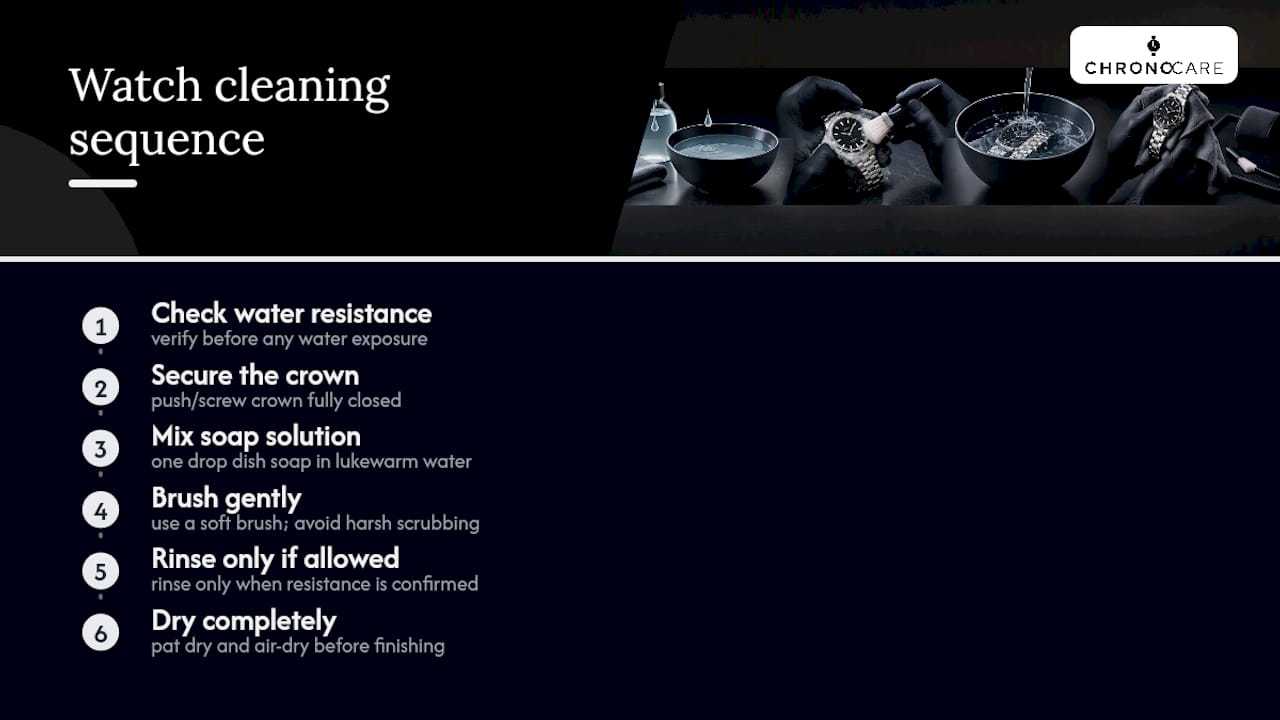
If you remember nothing else, remember the sequence: check water resistance, secure the crown, mix one drop of soap into lukewarm water, brush gently, rinse only if resistance allows, dry completely. Follow that order every time and you’ll rarely run into trouble.
— Raymond Jenkins
A Residue-Free Upgrade for Collectors Who Clean Often
If you’re cleaning a watch every few weeks, or you manage a small collection where every piece needs attention, dish soap starts to show its limits. It works, but it can leave faint residue in tight seams, and it does nothing for light scratches that build up on polished surfaces over time.
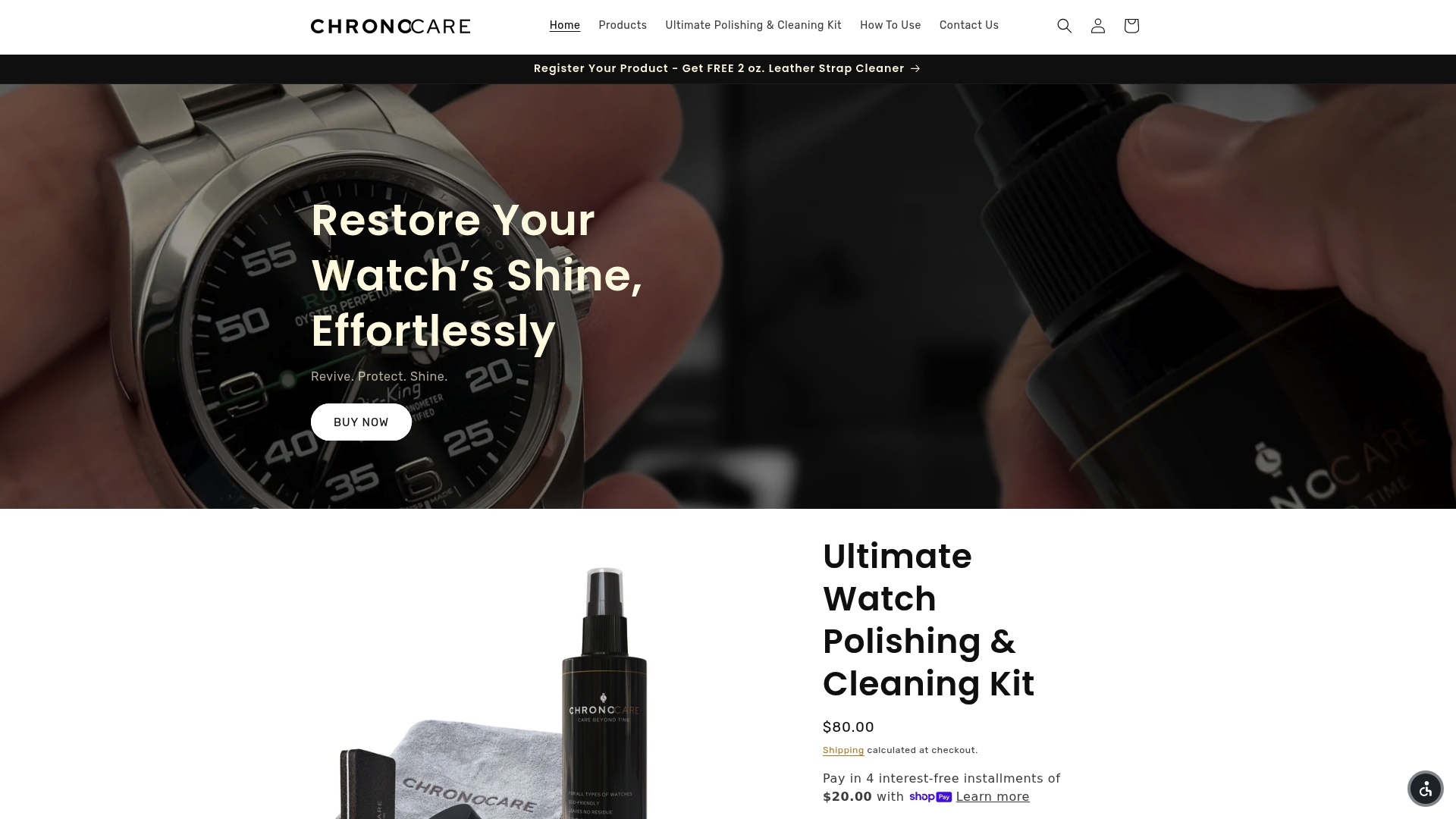
ChronoCare’s Ultimate Watch Cleaning Kit is built specifically for that gap. It pairs a residue-free cleaning solution with the same crevice-safe tools, soft brushes and an air puffer, that the step-by-step method above relies on, minus the guesswork of eyeballing a single drop of dish soap correctly every time. If your case or bracelet has picked up light surface scratches from months of wear, the Watch Polishing Cream restores shine without the abrasive risk of DIY buffing.
A dish-soap clean is fine for occasional upkeep. For collectors doing this monthly or more, a purpose-built kit saves time and protects finishes better over the long run. Check the product page for full instructions before your next cleaning session.
Sources
- How to Clean a Watch Without Damaging It: Case, Bracelet, and Crystal | WatchPolice
- How to Clean a Watch at Home — Avoid Costly Mistakes - Hewore
- Seiko customer service — water resistance and care
FAQ
Can I use Dawn dish soap to clean my Rolex?
Yes, a single drop of Dawn or a similarly mild dish soap in lukewarm water is commonly recommended for cleaning a Rolex case and bracelet, as long as its water resistance is current and the crown is screwed down. Avoid soaking the watch if you’re unsure when it was last pressure tested.
What is the best thing to clean a watch with?
For metal cases and bracelets, a soft toothbrush with mild dish soap and lukewarm water is the standard, effective method that manufacturer guides recommend. Leather needs a dry cloth and leather-specific balm instead, never water.
Is it okay to clean jewelry with Dawn dish soap?
Dawn and similar mild dish soaps are generally considered safe for cleaning metal jewelry and watches because they’re gentle and free of harsh abrasives. Avoid using them on porous gemstones, pearls, or leather, which need their own dedicated care methods.
Can I use alcohol wipes to clean my watch?
Alcohol wipes can be used sparingly on external metal surfaces to disinfect, but repeated use can dry out gaskets and damage leather. Mild dish soap and water remains the safer choice for routine cleaning, with alcohol reserved for occasional spot disinfecting only.