

Treat Rose Gold Watches as Precision Tools, Skip Ultrasonic Cleaners
The safest way to clean a rose gold watch is a soft microfiber cloth with mild soap and lukewarm water for removable bracelets, and a barely damp microfiber paired with a rose-gold-safe commercial cleaner for the case, dial, and crown. Skip anything abrasive, skip ammonia, and skip the ultrasonic machine at the jewelry counter. Guidance from watch care experts treats every rose gold piece as a precision instrument first and jewelry second.
TL;DR:
- Regular cleaning with a barely damp microfiber cloth and gentle soap prevents oils and residues from dulling rose gold finishes over time.
- Avoid ultrasonic cleaning, harsh chemicals, and metal abrasives, which can damage or strip the thin copper alloy layer responsible for rose gold’s color.
- Detach removable bracelets carefully and soak only the links in a mild dish soap solution, but never submerge the case or dial to prevent moisture damage.
- Use a commercial cleaner formulated specifically for rose gold on case and dial, testing it on hidden areas first to avoid discoloration or seal damage.
- Schedule professional polishing no more than once or twice a year, as overpolishing can erode the fine case edges and alter the watch’s original shape.
Table of Contents
- How Do You Clean a Rose Gold Watch for Everyday Maintenance?
- Can You Deep Clean a Removable Rose Gold Watch Bracelet?
- How Do You Clean the Case, Crown, and Dial Without Water Damage?
- What Ruins a Rose Gold Finish Fastest?
- When Should a Professional Handle Your Rose Gold Watch?
- What Tools and Supplies Belong in a Rose Gold Cleaning Kit?
- A Preservation-First Take on Rose Gold Watch Care
- Which ChronoCare Kit Fits Your Rose Gold Watch?
- Sources
How Do You Clean a Rose Gold Watch for Everyday Maintenance?
Most of the damage to a rose gold watch has nothing to do with dirt. It’s oils, lotion, perfume, and sweat sitting against the metal until they dull the finish. A quick routine clean, done every couple of weeks on a daily-worn piece, handles this before it ever becomes a real problem.
Gather what you need before you start. You want:
- A clean microfiber cloth (two, ideally, one for washing and one for drying)
- A soft-bristled brush (an old, clean toothbrush works, but keep the bristles genuinely soft)
- A small bowl of lukewarm water
- A few drops of mild dish soap
- A lint-free drying cloth
Work over a towel on a flat surface, not over a sink drain where a spring bar or screw could vanish.
- Remove the watch if the strap or bracelet allows it. Working off-wrist gives you better control and keeps water away from the crown.
- Dampen the microfiber cloth with the soapy water. Wring it out well. It should feel barely wet, not soaked.
- Wipe the case and bracelet in one direction, following the grain of any brushed finish rather than scrubbing in circles.
- Brush the links and crevices gently. This is where skin oils and lint collect, and it’s the spot people skip because it’s tedious.
- Wipe again with a clean, lightly damp cloth to lift away any soap residue. Leftover soap film is what makes a “cleaned” watch look hazy the next day.
- Dry immediately and completely with the lint-free cloth, then buff lightly to bring back the shine.
That’s the whole routine, and it takes less time than most people spend deciding whether to bother. Wiping down after wear and keeping fragrances away from the wrist does more for long-term appearance than any deep clean ever will, because it stops residue from setting in the first place. If you wear the watch daily, a 30-second wipe with a dry microfiber cloth each night keeps buildup from accumulating between full cleanings.
Pro Tip: Keep perfume, hand sanitizer, and sunscreen application away from your wrist until they’ve dried. Rose gold’s copper content makes it more reactive to chemical exposure than plain gold, and repeated contact accelerates dulling.
Can You Deep Clean a Removable Rose Gold Watch Bracelet?
Yes, but only the parts you can safely detach from the movement. A bracelet or removable strap that has no connection to the watch’s inner workings can handle a short soak. The case housing the movement cannot, regardless of what the water-resistance rating on the dial claims.
Check whether your bracelet uses a simple pin-and-collar or screw system before attempting removal. If you’re not confident doing this yourself, a detailed link-by-link cleaning checklist walks through the process without forcing anything that could bend a link or scratch the finish.
Once the bracelet is off:
- Mix a few drops of mild dish soap into a bowl of lukewarm water, nothing stronger.
- Soak the bracelet for 5 to 10 minutes, no longer.
- Brush between links with the soft-bristled brush while it’s still submerged.
- Rinse under lukewarm running water and dry immediately with a lint-free cloth.
Skip the ultrasonic cleaner, even the small ones marketed for jewelry. These machines vibrate at frequencies that can loosen plating on rose-gold-plated pieces or stress soft alloys, and there’s no way to tell from the outside whether your bracelet will tolerate it. Rose gold’s pink tone comes from its copper content, and copper is a softer, more reactive metal than the gold alloys used for yellow or white pieces, which is exactly why it doesn’t take kindly to aggressive mechanical cleaning.
You’ll see vinegar, salt, and baking soda recommended constantly in watch forums. These can work on solid, unplated rose gold with no gemstones, but only in seconds, not minutes, and never on plated pieces. Baking soda’s mild abrasiveness that’s harmless on solid metal for a few seconds can wear through a thin plating layer with repeated use. If you’re not certain your piece is solid gold rather than gold-plated, don’t risk it.
How Do You Clean the Case, Crown, and Dial Without Water Damage?
The case, crown, and dial are a different problem entirely. You cannot soak these, and you should never pour or splash liquid directly onto them, no matter what the watch’s stated water resistance suggests.
Work with a barely damp microfiber cloth and cotton swabs instead. Dampen the cloth just enough that it doesn’t leave visible moisture behind, then wipe the case in the direction of its finish. For grooves around the crown, bezel, and lugs, a dry cotton swab lifts grime that a cloth can’t reach.
A commercial cleaner formulated for rose gold can help with heavier buildup:
- Apply a small amount to a cotton swab, not directly to the watch.
- Test it on a hidden spot, like the case back or a clasp underside, before using it anywhere visible.
- Wipe the treated area thoroughly with a clean, dry cloth to remove all residue.
Never let cleaner sit in the seam where the case back meets the crystal, and keep the crown screwed down or pushed in throughout.
A water-resistance rating on the dial is not a cleaning permission slip. Seals age with time, heat, and impact, and a watch that was rated 100 meters at the factory a decade ago may not hold that rating today. The only way to know for certain is a pressure test at a watchmaker, and DIY cleaning that introduces moisture past a compromised seal can cause movement corrosion that no amount of polishing will fix. For dial-specific concerns, including smudges under the crystal, a guide on cleaning without damaging the dial covers the narrower risks around crystal seals and lume.
What Ruins a Rose Gold Finish Fastest?
Abrasive pads, harsh household chemicals, and a handful of popular forum remedies cause more damage than the dirt they’re meant to remove. Rose gold’s color comes from a thin layer of copper alloy on the surface, and once that layer is scratched or stripped away, the color shift underneath is not something a cloth can undo.
Avoid these outright:
- Toothpaste. It’s mildly abrasive by design, meant for enamel, not metal, and it will haze a polished or brushed finish over repeated use.
- Household bleach and ammonia-based glass cleaners. These can permanently strip rose-gold finishes and alter the metal’s color, and ammonia in particular degrades gasket seals over time.
- Abrasive scouring pads or steel wool. Obvious in hindsight, but people reach for them on stubborn spots more often than you’d think.
- Ultrasonic cleaners for plated or vintage pieces. Fine for some solid-gold jewelry with no stones, risky for anything plated, aged, or already loose at the joints.
If a home remedy sounds too aggressive to use on your skin, it’s too aggressive for a thin gold finish.
When Should a Professional Handle Your Rose Gold Watch?
Polishing is a restorative procedure, not routine maintenance, and it should stay that way. Professionals recommend limiting polishing to once or twice a year for a piece you wear regularly, because every polish removes a microscopic layer of metal. Do it too often and you’ll soften case edges and blur the crisp lines that gave the watch its shape when it was new.
Call in a watchmaker when you notice:
- Fogging or moisture visible inside the crystal
- Loose or wobbly bracelet links
- A dent deep enough to catch a fingernail
- Timekeeping that’s suddenly running fast, slow, or stopping
- Any visible gap or damage around the case back seal
A trained watchmaker preserves case geometry in a way a home buffing wheel cannot. They know how much metal a specific model can lose before the lugs or bezel edges start looking wrong, and they pressure-test the case after any service that involved opening it, which confirms the seals actually hold before you wear it near water again. Skipping that test after a repair is how a “fixed” watch ends up with corrosion six months later.
Pro Tip: If your watch has never been professionally serviced and it’s more than three or four years old, book a case inspection even if nothing looks wrong. Gasket wear happens quietly, long before you’d notice a leak.
If a case has visible scuffing between service visits, a look at how professionals approach polishing after service explains why they treat it so conservatively.
What Tools and Supplies Belong in a Rose Gold Cleaning Kit?
A short list of the right supplies covers nearly every cleaning situation a rose gold watch owner runs into:
- Microfiber cloths (at least two, kept separate from cloths used on other surfaces)
- A soft-bristled brush for links and crevices
- A lint-free drying cloth
- Cotton swabs for tight spots around the crown and bezel
- A small bowl for soap-and-water soaks
- Mild dish soap, unscented if possible
- A commercial cleaner formulated specifically for rose gold or plated metals
- A watchmaker’s blower to clear dust and lint before wiping, which prevents you from grinding grit into the finish
Skip anything labeled as an all-purpose metal polish, jewelry rouge cloth, or scouring pad from the hardware store. These are formulated for solid silver or brass and are too aggressive for a thin gold layer. Before using any new cleaner on a visible surface, dab a small amount on a cotton swab and test it on the case back first. If you don’t see discoloration after a minute, it’s safe to use more broadly.
A Preservation-First Take on Rose Gold Watch Care
Most people treat a scuffed rose gold watch like a problem to solve with a bigger tool. It isn’t. The finish that made you buy the watch in the first place is a thin, finite layer, and every aggressive fix spends a little of it permanently.
The habit that actually protects a rose gold watch is boring: wipe it down after you take it off, keep sprays and lotions off your wrist until they’ve dried, and save the deep clean for when it’s genuinely needed rather than every weekend. Polishing belongs on a once or twice a year schedule, handled by someone trained to respect the case’s original lines, not a monthly ritual.
If you want to go further than a soap-and-water routine, ChronoCare’s restoration guidance walks through what a deeper refresh actually involves, and when it’s worth doing yourself versus handing off.
— Raymond Jenkins
Which ChronoCare Kit Fits Your Rose Gold Watch?
Once you know the routine, the right supplies make it faster and safer, especially since not every household cloth or soap is actually gentle enough for a plated finish. Some specialty kits are formulated specifically for luxury metals like rose gold, so you can avoid guessing whether a random drugstore product will strip the finish you’re trying to protect.
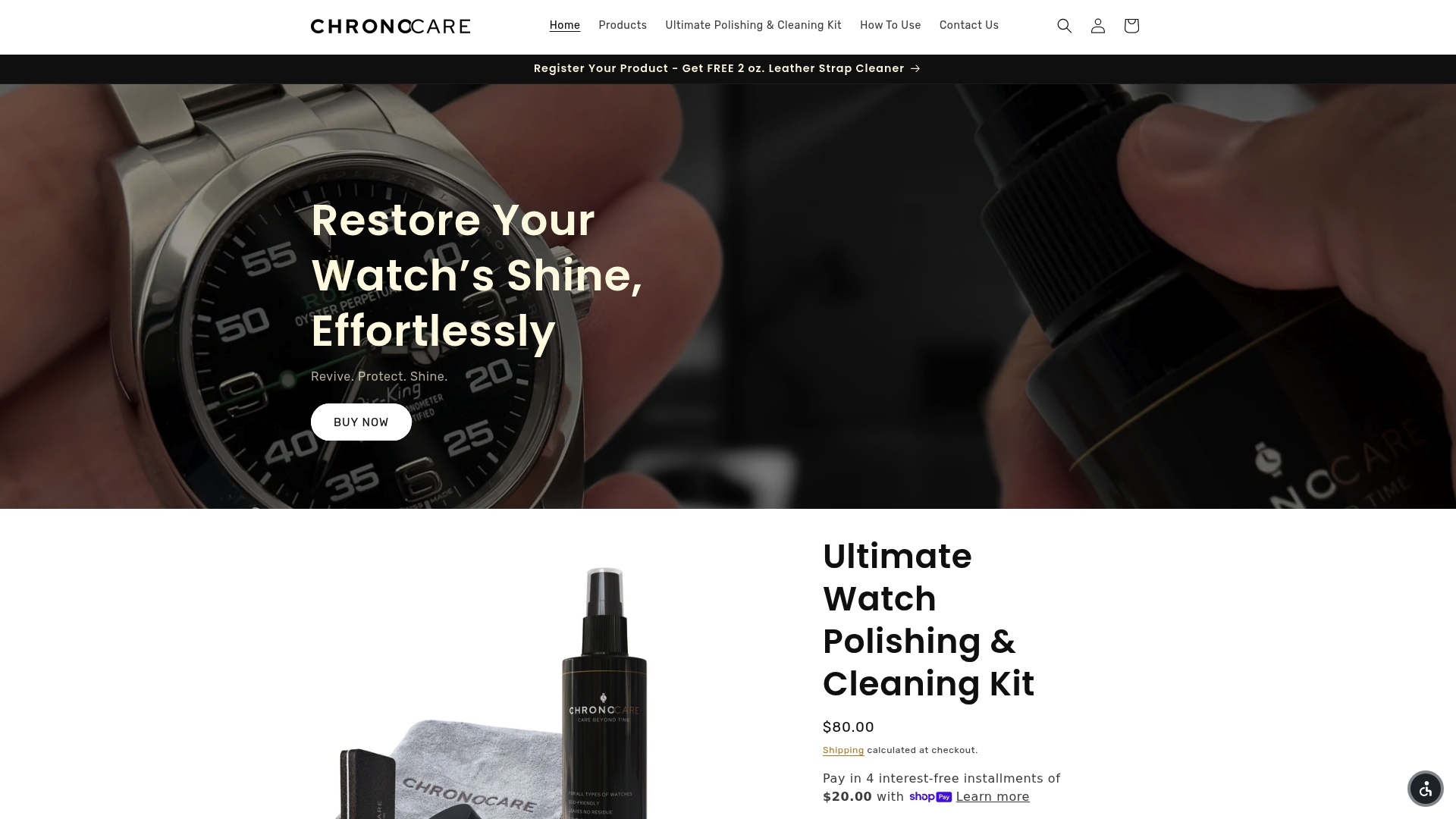
For anyone dealing with a case, crown, or dial that can’t be submerged, the Ultimate Watch Polishing & Cleaning Kit pairs a rose-gold-safe cleaning formula with light polishing compounds for restoring shine between professional services. If your main need is routine upkeep on a bracelet you can remove and clean weekly, the Ultimate Watch Cleaning Kit gives you the microfiber cloths, brushes, and mild cleaner covered in the routine above, sized for regular use rather than occasional deep cleaning. Pick the polishing kit for restoration work on the case itself, and the cleaning kit for the weekly wipe-down and bracelet soak. Check either product page for the full ingredient list and usage instructions before your next cleaning session.
Sources
- Luxury Rose Gold Watches: Buying Guide, Top Picks & Care
- Care for Rose Gold Watches: Simple Tips for Lasting Shine
- How to Clean Rose Gold