

Collectors: Protect Seals with 6 Steps to Clean a Ceramic Watch
Clean a ceramic watch with a microfiber cloth for daily upkeep. For a deeper clean, use lukewarm water with a drop of pH-neutral soap and a soft brush, but only after confirming water resistance and securing the crown. Skip alcohol, abrasive pads, and ultrasonic cleaners on an assembled watch. Those three rules cover almost every situation you’ll run into.
TL;DR:
- Regular dry wiping with a microfiber cloth is sufficient for daily upkeep unless grime is visible or the watch is heavily used.
- Use lukewarm water with pH-neutral soap and a soft brush only if your ceramic watch is water-resistant and the crown is fully secured.
- Avoid ultrasonic cleaners, alcohol, abrasives, and soaking leather straps, as these can damage the ceramic or internal components.
- Repeat gentle cleaning cycles for stubborn stains, but stop and seek professional help if residues persist after multiple attempts.
- Schedule professional servicing every few years to disassemble, clean, replace gaskets, and verify water resistance, especially after exposure to salt or chlorine.
Table of Contents
- Why ceramic watches need a different cleaning approach
- Step-by-step: the safe home cleaning routine for a ceramic watch
- How do you remove stubborn stains from a ceramic watch?
- Cleaning mistakes that damage ceramic watches
- How often should you clean a ceramic watch?
- When should you stop cleaning it yourself and see a professional?
- A collector’s honest take on ceramic watch care
- Get the right tools without guessing
- Sources
Why ceramic watches need a different cleaning approach
Ceramic is one of the toughest case materials in watchmaking. It resists scratches better than steel or titanium and won’t fade or tarnish the way some metals do over time. That hardness gives people a false sense of security, because ceramic can still chip if you hit it against something hard, and it’s the watch’s soft, hidden components, not the ceramic itself, that are actually at risk during cleaning.
The real vulnerability sits in the seams. Grime, sunscreen, and skin oils don’t soak into ceramic the way they might into leather or worn metal. Instead, they collect in the tight spaces between bracelet links, around the bezel edge, and along the case back seam. Because ceramic is non-porous, that buildup usually sits on the surface, which is actually good news. It also means the seals, gaskets, and bracelet pins underneath the case are the parts that suffer if you get careless with water or solvents.
A few material realities worth knowing before you start:
- Ceramic can chip on impact even though it resists surface scratches.
- Gaskets and seals control water resistance, not the ceramic case itself.
- White and light-colored ceramic shows oil and sunscreen residue far more visibly than black or gray versions.
- Bracelet pins and clasps are typically steel or titanium, and they corrode differently than the ceramic links around them.
That last point explains why white ceramic owners tend to notice grime faster. It’s not that their watches get dirtier. They just see it sooner, which is exactly why frequent microfiber wiping matters more for light-colored pieces than dark ones.
Step-by-step: the safe home cleaning routine for a ceramic watch
Here’s the workshop-grade routine that professional watchmakers rely on, scaled down for home use. Longines’ own cleaning guidance follows this same basic sequence: dry first, wet only when justified, and never force water where it doesn’t belong.
What you’ll need:
- A clean microfiber cloth
- A soft-bristle toothbrush (a spare, unused one works fine)
- A small bowl of lukewarm water with a single drop of pH-neutral dish soap
- An air-puffer bulb (the kind used for camera lenses)
- A dry towel for final drying
That short list handles nearly every ceramic watch cleaning job you’ll face, from a quick wipe to a full link-by-link deep clean.
Before you touch any water:
- Confirm your watch’s water resistance rating, either on the case back or in the manual. If it isn’t clearly water-resistant, skip the wet-cleaning steps entirely and stick to dry methods.
- Push the crown fully in, and if it’s a screw-down crown, screw it down completely.
- Close the clasp or buckle so the bracelet is secure and won’t swing into the sink or counter.
- Remove any leather strap first. Leather and water don’t mix, and this gets its own section below.
The cleaning sequence:
- Start dry. Wipe the entire case, bezel, and bracelet with the microfiber cloth to lift loose dust and surface oil. This alone handles most day-to-day grime.
- If the watch is water-resistant and the crown is secured, dip the soft-bristle toothbrush into the soapy water and gently brush the links, clasp, and bezel edges where dirt tends to hide.
- Rinse under lukewarm running water, keeping the crown pointed away from the stream and never submerging beyond what the water-resistance rating supports.
- Use the air puffer on the clasp mechanism and any narrow gaps between links to force out trapped water before it has a chance to sit.
- Dry immediately with a fresh towel, then let the watch air-dry for a few minutes before wearing it.
- Check that the crown and any pushers still move smoothly, and confirm there’s no fogging under the crystal, which would signal moisture got somewhere it shouldn’t.
Pro Tip: Do the toothbrush step over a folded towel, not directly over an open drain. Watch clasps have a habit of popping open at the worst possible moment, and a towel gives you a second chance a sink drain never will.
For bracelets with a lot of small links, a dedicated link cleaning checklist can help you work through each section methodically instead of missing spots. And if your routine ever needs to extend to the crystal itself, cleaning the crystal separately protects any coating without risking the case finish.
How do you remove stubborn stains from a ceramic watch?
Repeat the gentle wet-clean cycle two or three times before you consider anything stronger. Most residue that looks “stained” on ceramic is actually a surface transfer, sunscreen, dye from clothing, or mineral deposits from hard water, sitting on top of the non-porous surface rather than embedded in it. That means patience usually beats force.
Before trying anything beyond the basic soap-and-brush method, test it first:
- Apply any new cleaning product to a small, hidden spot, like the underside of a link, and wait a few minutes to check for dulling or discoloration.
- Increase soak time or brushing gently before reaching for a different product entirely.
- Avoid baking-soda pastes or bleach-based cleaners. They’re commonly recommended online for household ceramics, but on a watch they risk degrading the finish around seals and metal components you can’t see.
- For white ceramic specifically, dye transfer from denim or dark fabric is common. Gentle soap and repeated rinsing typically lifts it within a few cleaning cycles.
If a stain survives three or four honest attempts at gentle cleaning, stop. That’s a signal the residue has worked into a seam or seal area a toothbrush can’t reach, and it’s time to consider professional discoloration removal rather than escalating to harsher chemicals at home.
Cleaning mistakes that damage ceramic watches
Ceramic’s reputation for toughness leads a lot of owners to treat it more roughly than they should, and the damage that results usually isn’t visible until it’s already done.
- Ultrasonic cleaners on assembled watches. These machines vibrate at frequencies that can loosen gaskets, crystal seals, and even internal movement components. Professionals use ultrasonic baths on detached bracelets and disassembled parts, never on a fully cased watch.
- Alcohol and solvent-based cleaners. Solvents can degrade gaskets and coatings even when the ceramic surface looks completely fine afterward. The damage happens where you can’t see it.
- Abrasive pads and polishing compounds. These cause micro-chipping or uneven sheen on ceramic, and once that texture changes, there’s no buffing it back to the original finish the way you can with steel.
- Soaking leather straps or non-water-resistant watches. Water that seeps past a rated seal, or into leather that was never meant to get wet, causes damage that often isn’t reversible.
None of these mistakes announce themselves right away. A loosened gasket doesn’t leak the first time you shower with your watch on. It leaks the third or fourth time, after the seal has already started to fail, which is exactly why the workshop approach treats “gentle every time” as the standard rather than an occasional precaution.
How often should you clean a ceramic watch?
Frequency depends on what you wear and how hard you wear it. A dress watch that sees occasional use needs less than a daily beater that goes through a workout.
- Wipe with a microfiber cloth weekly, or after any day where you noticed visible smudging.
- Run the full wet-clean routine monthly for water-resistant watches you wear daily.
- Rinse and dry within a few hours of exposure to seawater, pool chlorine, or heavy sweat, assuming the water resistance rating allows it.
- Clean leather straps off the watch with a dedicated leather cleaner, and never soak them, ever.
- Have your watch pressure-tested periodically as part of routine servicing, since gasket wear happens gradually and isn’t something you can check by eye.
Salt and chlorine are particularly aggressive on exposed metal components like clasps and spring bars, even when the ceramic itself shrugs them off entirely.
When should you stop cleaning it yourself and see a professional?
A few warning signs mean it’s time to put the toothbrush down and call a watchmaker instead of trying one more cleaning cycle.
- Condensation or fogging under the crystal after any water contact.
- Crown or pushers that feel sticky, gritty, or rough when operated.
- Grime that persists after three or four honest attempts at gentle cleaning.
- Any visible chip, crack, or hairline fracture in the ceramic itself.
Professional service covers ground home cleaning simply can’t reach. That includes safely disassembling the case, running ultrasonic cleaning on detached bracelet links, replacing worn gaskets, and pressure-testing the case afterward to confirm the water resistance rating still holds. Manufacturer guidance on ceramic care points to professional cleaning specifically because deep cleaning without full disassembly risks pushing moisture or debris toward the hidden metal components underneath. Watchmakers generally recommend a full service every few years for exactly this reason, and it’s a lot cheaper than replacing a movement damaged by water that snuck past a seal nobody checked.
A collector’s honest take on ceramic watch care
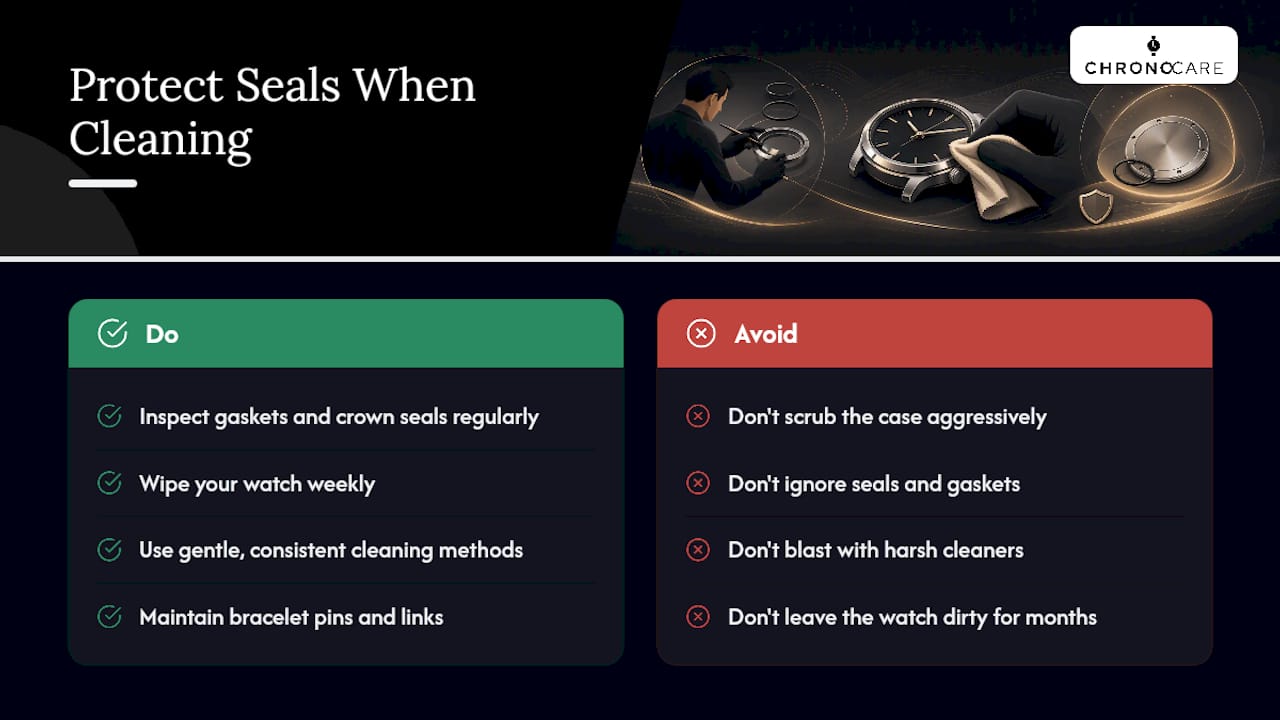
Most of the fear around cleaning ceramic watches is misplaced. People treat the case like it’s fragile porcelain when the actual risk sits somewhere else entirely, in gaskets, crown seals, and bracelet pins that don’t get a second thought until they fail. The focus on luxury watch care comes from watching the same mistake happen over and over: someone scrubs a case with something too aggressive because they’re worried about the ceramic, while completely ignoring the parts that actually determine whether their watch stays water-resistant.
The step-by-step cleaning process ChronoCare outlines for collectors exists because gentle, consistent maintenance beats occasional aggressive cleaning every time. A watch wiped weekly rarely needs rescuing. One left dirty for months, then blasted with whatever’s under the sink, usually does.
— Raymond Jenkins
Get the right tools without guessing
Everything in the routine above, the microfiber cloth, the soft brush, a gentle cleaning solution, and something to clear trapped water from the links, maps directly to what’s in the Ultimate Watch Cleaning Kit. Instead of hunting down a pH-neutral soap that’s actually safe for watch seals or guessing whether a brush is soft enough for ceramic bezels, the kit puts a matched set in one box.
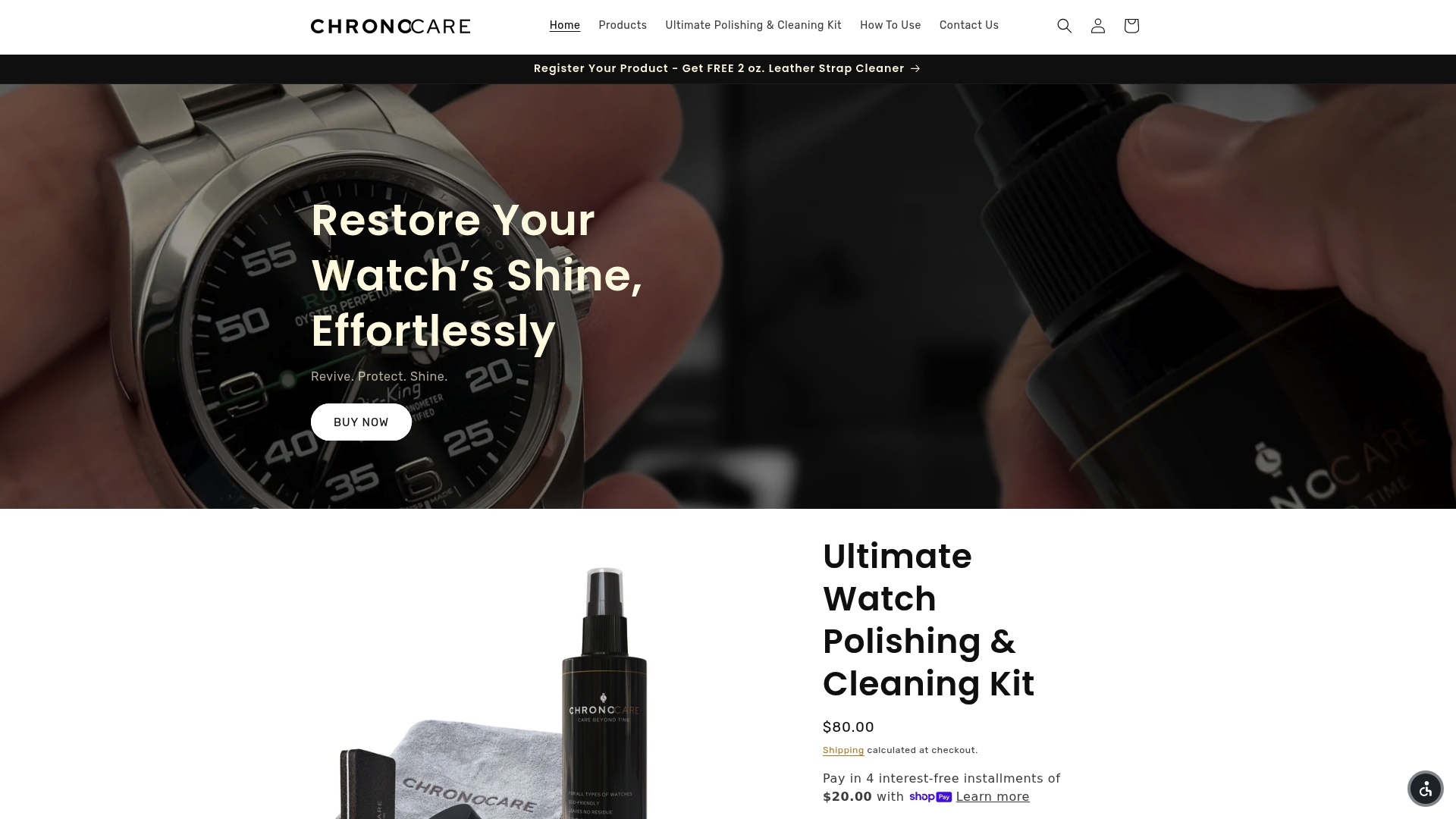
It’s not a requirement for safe cleaning. Everything in this guide works with items you likely already own. But if you’d rather have a curated set built specifically for luxury watch maintenance instead of piecing one together yourself, watch cleaning kits often cover the full routine described above in one purchase. Check the Ultimate Watch Cleaning Kit and see what’s included before your next cleaning session.
Sources
- Longines — How to clean a watch
- Majestix Collection — How to clean a ceramic watch
- LAGOS — Care and cleaning for ceramic jewelry