

How to Clean Your Watch Crown Properly: 2026 Guide
Before anything else, push the crown fully in or screw it down tight. That single step is the difference between a safe cleaning session and water damage you won’t see until the dial fogs over. To clean your watch crown properly, you need five things: a soft toothbrush, a microfiber cloth, mild soap, lukewarm water, and patience. Here’s the short version:
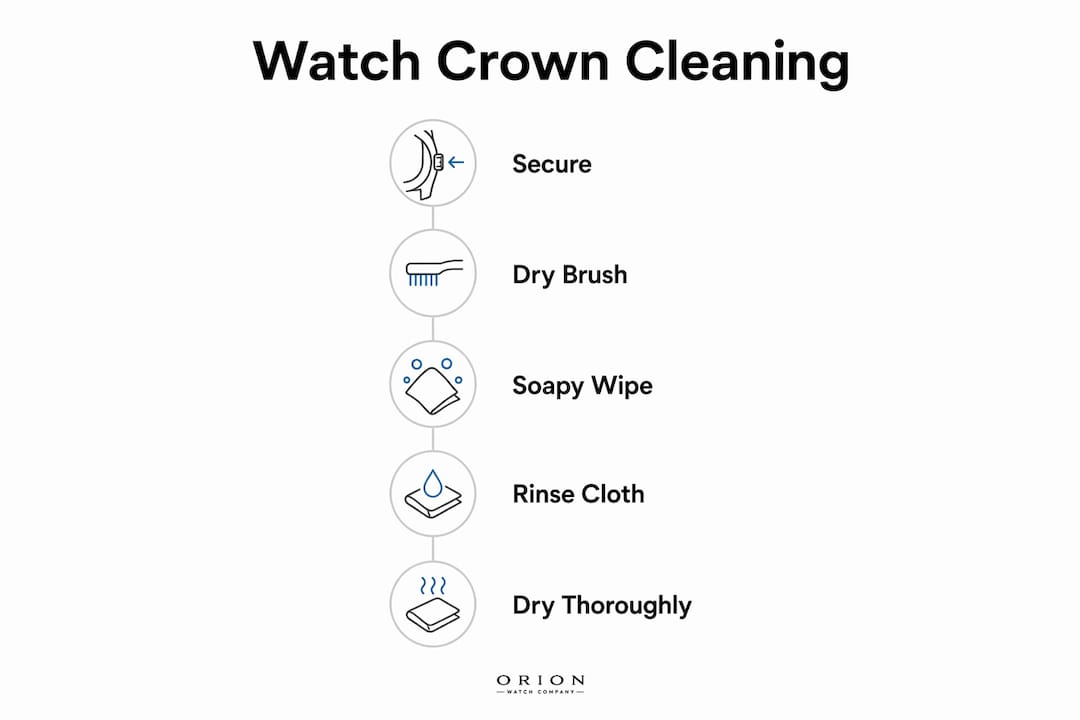
- Secure the crown first. Fully push in or screw down the crown before any moisture comes near the watch. Leaving it unsecured creates a direct path for water into the movement.
- Start dry. Use a soft toothbrush to brush away loose debris before introducing any liquid.
- Clean with a lightly damp microfiber cloth moistened with lukewarm water and a drop of pH-neutral soap. Never soak the case.
- Never force the crown. If it feels stiff or gritty during cleaning, stop and assess before continuing.
- Dry thoroughly. Pat the crown area dry immediately and let the watch air-dry before storing or wearing it.
- Clean regularly. A quick wipe after each wear prevents the buildup that causes crowns to seize over time.
How do you clean a watch crown properly, step by step?
Good crown care starts before you pick up a single tool. Set the watch face-down on a soft cloth under bright light. Remove the bracelet if it blocks access to the crown area. Gather everything you need within arm’s reach: a soft-bristle toothbrush (a child’s toothbrush works perfectly), a microfiber cloth, a small bowl of lukewarm water, one drop of pH-neutral dish soap, and a wooden toothpick.
Step 1: Secure the crown. For a screw-down crown, turn it clockwise until it seats firmly against the case. For a push-pull crown, press it fully flush. Water resistance ratings only hold when the crown is fully secured, and hot water stresses gaskets, so stick to lukewarm throughout.
Step 2: Dry-brush the crown area. Before any liquid touches the watch, use the dry toothbrush to sweep around the crown, crown tube, and adjacent case. Sweat dries, salt hardens, and lint packs into the gap between the crown and case. Brushing first lifts that loose material so your damp cloth isn’t just pushing grime deeper.
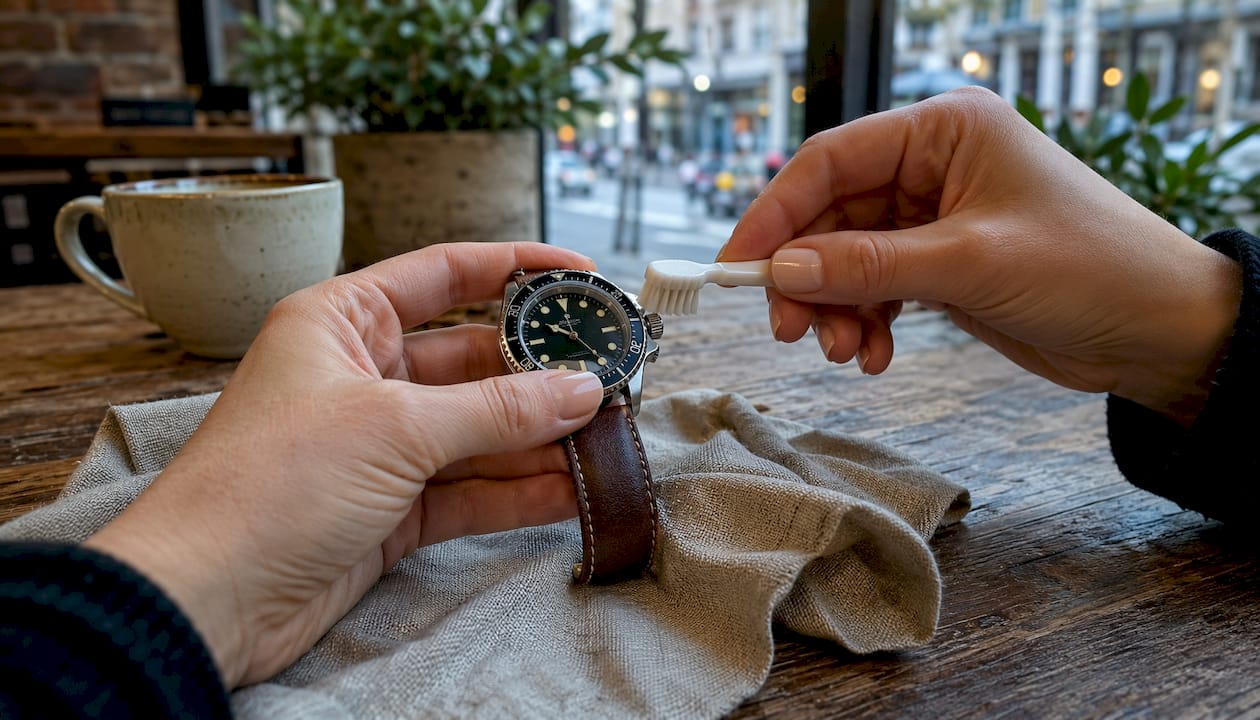
Step 3: Wipe with a lightly soapy cloth. Dampen the microfiber cloth with your lukewarm soapy water. Wring it out so it’s barely moist, not dripping. Work the cloth around the crown in small circular motions, paying attention to the ridged edges where skin oil collects. For watches with unverified water resistance or vintage pieces, this damp-cloth method is the only wet step you should take.
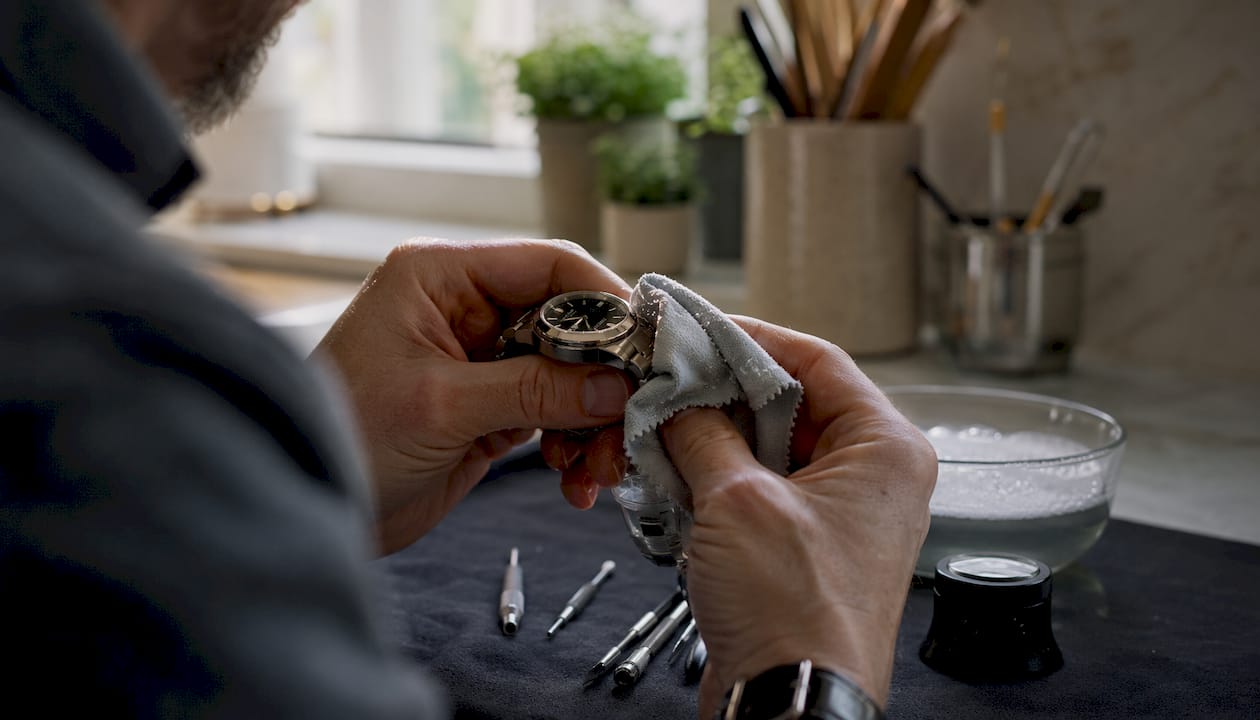
Step 4: Clear stubborn grime with a wrapped toothpick. For packed-in debris between the crown and case, a cloth-wrapped wooden toothpick is the right tool. Wrap a corner of your microfiber cloth around the tip and scrape gently along the stem tube. The cloth protects the finish; the toothpick provides the leverage. Never use a bare metal tool or a raw toothpick directly on the case.
Step 5: Rinse or wipe clean.
- Water-resistant watches (confirmed, recently tested): Rinse under a gentle stream of cool water with the crown pointing down so water doesn’t pool around the stem.
- Low-rated, vintage, or untested watches: Skip the rinse entirely. Wipe with a clean, barely damp cloth, then a dry one.
Step 6: Dry immediately and thoroughly. Pat the crown and surrounding case dry with a fresh microfiber cloth. Then set the watch on a soft surface, face up, and let it air-dry for at least an hour before storing. Moisture trapped in the crown tube is what causes long-term corrosion, so don’t rush this step.
Screw-down vs. push-pull crowns: what changes. Screw-down crowns, common on dive watches, require you to unscrew them counterclockwise before any adjustment and re-screw them firmly after cleaning. The threads themselves can trap grime, so pay extra attention to the base of the crown during brushing. Push-pull crowns are simpler but offer less protection, so keeping them clean is even more important for maintaining whatever seal they do provide. For a broader look at watch dial cleaning alongside crown care, the same gentle principles apply across the case.
Cleaning frequency. After heavy sweat or saltwater exposure, wipe the crown area the same day. Salt is corrosive and works fast on both metal and gaskets. For regular daily wear, a quick dry wipe after each session and a full damp clean every two to four weeks keeps buildup from hardening into a problem.
When does a crown problem need a watchmaker?
Not every crown issue is a cleaning problem. Knowing the difference saves you from turning a minor fix into a costly repair.
Watch for these warning signs:
- Gritty or rough resistance when turning the crown, which points to internal debris or damaged threads
- Stiffness that appeared suddenly after swimming, sweating heavily, or beach exposure
- A wobbly or loose crown that moves side to side, suggesting a bent or worn stem
- Fog or condensation under the crystal, which means moisture is already inside
- A crown that won’t screw down fully, often caused by stripped threads or a clogged tube
Forcing a stiff crown is the single most common mistake watch owners make, and it almost always results in a bent or broken stem. That turns a $50 service into a much more expensive repair. If the crown feels solidly blocked, gritty like sand, or crooked, stop immediately.
Household oils are particularly destructive here. They attract dust and grit, forming an abrasive paste that accelerates wear on the crown tube and stem gaskets. Only watchmaker-approved grease applied during a professional service belongs inside a crown mechanism.
Water resistance is another area where professional judgment matters more than most owners realize. Seals degrade over time, and a watch rated 100m at the factory may offer far less protection after years of use without service. If your watch hasn’t passed a professional pressure test within the past 24 months, treat it as non-water-resistant during cleaning regardless of what the dial says.
Watchmakers recommend servicing gaskets and seals periodically, more frequently if the watch sees regular exposure to saltwater, chlorine, or heavy sweat. Ignoring crown symptoms long enough leads to moisture reaching the movement, which means dial corrosion, rust on the gear train, and a repair bill that dwarfs the cost of routine service. For a full picture of when to hand the watch off, the 7 signs your watch needs professional cleaning guide covers the broader checklist.
How do you keep your watch crown in good shape between cleanings?
Prevention is easier than repair. A few consistent habits make a real difference in how long a crown stays smooth and functional.
- Turn the crown gently during regular use. Operating it occasionally distributes lubricant through the mechanism and stops debris from hardening inside the threads or tube. A crown that sits unused for months is more likely to seize than one that gets regular, gentle movement.
- Rinse after saltwater or sweat exposure the same day. Salt crystalizes as it dries and becomes abrasive. A quick wipe with a damp cloth immediately after a workout or beach day removes it before it does damage.
- Keep chemicals away from the crown. Sunscreen, cologne, and cleaning sprays all degrade gaskets faster than normal wear. Apply them before putting the watch on, and wipe the crown area if any product makes contact.
- Store the watch properly. A watch box or dedicated storage case keeps dust from settling into the crown gap when the watch isn’t being worn.
- Wipe the case after every wear. A ten-second pass with a dry microfiber cloth after taking the watch off removes skin oils and sweat before they can build up. It’s the simplest habit with the biggest cumulative payoff.
Pro Tip: For tight spots between the crown and case, wrap a corner of a microfiber cloth around a wooden toothpick. It reaches where a cloth alone can’t, lifts grime without scratching the finish, and costs nothing. Never use a bare metal pick or a cotton swab with loose fibers that can snag on crown threads.
For delicate cleaning tasks on luxury pieces, using products specifically formulated for watch surfaces makes a genuine difference. ChronoCare’s watch cleaning kit includes tools sized for crown-area work and solutions that won’t attack gaskets or case finishes. Pairing the right tools with consistent habits is the best way to extend crown life between professional services.
The right tools make crown cleaning easier
Cleaning a watch crown with the wrong materials is worse than not cleaning it at all. Abrasive cloths scratch the finish; paper towels leave fibers; household cleaners attack seals. ChronoCare formulates its products specifically for luxury watch surfaces, so you’re not guessing whether a cleaner is safe for your gaskets or case coating.
The Ultimate Watch Cleaning Kit gives you everything needed for thorough crown and case care in one place: a microfiber cloth, a soft brush, and a cleaning solution that’s pH-balanced for delicate finishes. For collectors who want a complete maintenance routine, the luxury timepiece maintenance checklist pairs well with any cleaning session.
Key Takeaways
Cleaning your watch crown properly requires securing it first, using only gentle tools and mild soap, and recognizing when stiffness or grit signals a problem that needs a watchmaker.
| Point | Details |
|---|---|
| Secure the crown before cleaning | Always push in or screw down the crown fully before any moisture contacts the watch. |
| Use the right tools | A soft toothbrush, microfiber cloth, and cloth-wrapped wooden toothpick cover most crown cleaning needs safely. |
| Never force a stiff crown | Forcing resistance causes bent stems and costly repairs; stop and seek professional help instead. |
| Service gaskets and seals regularly | Professional servicing every 3–5 years is recommended, with more frequent intervals if the watch is exposed to saltwater, chlorine, or heavy sweat, to maintain water resistance. |
| Wipe down after every wear | A quick dry wipe after each use prevents salt and oil from hardening into buildup that seizes the crown. |