

Collectors Keep Royal Oak Geometry When Cleaning an Audemars Piguet
If your Audemars Piguet is a modern, water-resistant model with a confirmed-tight crown and pushers, you can safely clean the case and metal bracelet at home using lukewarm water, mild pH-neutral soap, a very soft brush, and a lint-free microfiber cloth. Vintage pieces, anything with a leather strap, or a watch with unverified water resistance should go straight to a service center instead. If you just swam in the ocean, rinse it in fresh water immediately.
TL;DR:
- Only water-resistant modern models with verified seals can be safely cleaned at home, while vintage or unverified ones should be serviced professionally.
- Regular cleaning of the bracelet every two to three weeks with lukewarm water and gentle tools greatly reduces wear caused by grime buildup.
- Leather straps must never touch water, whereas rubber and synthetic straps can be rinsed with mild soap, but detailed materials require specific care.
- Rinse and dry the watch promptly after salt water exposure, and always get seals tested regularly as gaskets age and can lose their water resistance.
- Polishing should be limited to three to five times in a lifetime to avoid diminishing the watch’s original shapes and finishes.
Table of Contents
- How Do You Clean an Audemars Piguet at Home Without Damaging It?
- How Should You Care for Different Strap Materials?
- What Do You Do After Swimming or Salt Water Exposure?
- Why Is Polishing an Aesthetic Fix, Not Routine Cleaning?
- When Should You Send Your Audemars Piguet for Professional Service?
- How Do You Clean the Dial and Case Without Causing Damage?
- How Should You Clean Chronograph Pushers and Complications?
- What’s the Best Way to Store an Audemars Piguet After Cleaning?
- How Should You Care for Royal Oak Offshore or Code 11.59 Models?
- What Tools Does Audemars Piguet Recommend to Avoid Warranty Issues?
- Minimal Intervention Wins Over Time
- Which ChronoCare Kit Fits Your Cleaning Needs?
- Where to Verify This Guidance
- Sources
How Do You Clean an Audemars Piguet at Home Without Damaging It?
The bracelet is where most of the damage happens, not the case. Sweat, skin oils, and airborne grit work their way into every link and pivot, and that slow buildup is one of the leading causes of accelerated wear on a luxury bracelet. Cleaning it out regularly is the single most effective thing you can do between services.
Before you touch a drop of water, do a quick physical check. Look at the crown and pushers for looseness, inspect the crystal edge for chips, and confirm no screws are backing out of the case or bracelet links. If the watch has never had its water resistance tested, or it’s been a few years since the last pressure check, treat it as not water-safe and skip straight to a dry wipe with a microfiber cloth.
Once you’ve confirmed the watch is sound, gather what you need: lukewarm water, a drop of mild pH-neutral soap, a very soft-bristled brush (a baby toothbrush works well), a couple of microfiber cloths, a peg-wood stick or wooden toothpick for crevices, and a shallow tray to work over.
- If the bracelet has quick-release links or you’re comfortable removing it, take it off the case. This lets you clean it more thoroughly and keeps water away from the crown seals entirely.
- Mix lukewarm water with a single drop of pH-neutral soap in the tray. Never use hot water. Heat stresses gaskets and can cloud lubricants.
- Dip the soft brush and work it gently through the bracelet links and around the case, focusing on the undersides of links where grime collects.
- Use the peg-wood or a toothpick to clear debris from tight gaps between links, being careful not to scratch brushed or polished surfaces.
- Rinse thoroughly under running lukewarm fresh water to remove all soap residue.
- Dry immediately and completely with a clean microfiber cloth, then let the watch air-dry fully before reattaching the bracelet or wearing it again.
This mirrors the routine care Audemars Piguet itself recommends, and it lines up with what experienced watch-care writers suggest for any water-resistant sport watch, not just this brand.
A few things to never do at home: no hot water, no steam cleaners, no ultrasonic cleaning on an assembled watch (the vibration can loosen seals and jar internal components), no solvents or abrasive metal polishes, and never operate the crown or pushers while the watch is wet. For a deeper breakdown of bracelet-specific grime removal, ChronoCare’s bracelet link cleaning checklist walks through the crevice work in more detail.
Pro Tip: Clean the bracelet every two to three weeks if you wear the watch daily. It takes five minutes and does more for long-term condition than any deep clean six months from now.
How Should You Care for Different Strap Materials?
Metal bracelets tolerate water. Almost nothing else on an Audemars Piguet does, and treating every strap material the same way is how owners ruin an otherwise healthy watch.
- Leather straps should never touch water. Remove the strap if possible and wipe it with a dry or barely damp cloth. Leather-safe spot cleaners are fine only when a product specifically says so; general conditioners can darken stitching and stain the edges permanently.
- Rubber and synthetic straps, common on some Offshore references, tolerate a rinse with mild soap and water without issue. Check regularly for surface cracking or stiffening, especially if the watch sees sun exposure, and replace the strap rather than continuing to clean a strap that’s starting to split.
- Fabric and NATO-style straps need whatever cleaning method the maker specifies. Saturating the strap can weaken adhesive bonding points or hardware where the strap meets the buckle, so a light hand-wash and air dry beats a full soak.
- Precious-metal cases and two-tone bracelets call for a conservative touch. Gold-plated surfaces and soft precious-metal links wear down faster under any kind of home polishing or aggressive brushing, so stick to soap, water, and the softest brush you own.
The common thread across every material: when in doubt, dry cleaning beats wet cleaning, and a soft cloth beats a brush.
What Do You Do After Swimming or Salt Water Exposure?
Rinse only if you know the watch is genuinely sealed and sound. If there’s any doubt about water resistance, skip the rinse and towel-dry the exterior instead, then get it checked before you swim in it again.
- After salt water or a chlorinated pool, rinse the case and bracelet in fresh water as soon as you’re out. Audemars Piguet’s own guidance is explicit on this point: salt residue left to dry becomes crystalline and works its way into gaps, accelerating wear on gaskets and metal surfaces alike.
- Dry the watch completely with a microfiber cloth right after rinsing, and never touch the crown or pushers while it’s still wet. Water intrusion during operation is one of the most common causes of moisture getting past a seal that would otherwise have held.
- Book a pressure test before a water-heavy vacation, or immediately after any incident where you suspect water got in, such as fogging under the crystal. Seals are a snapshot in time, not a permanent guarantee. Gaskets age and lose their seal from heat, chemical exposure, and simple time, so a watch that passed a pressure test two years ago isn’t automatically safe today.
Why Is Polishing an Aesthetic Fix, Not Routine Cleaning?
Polishing removes metal. Cleaning doesn’t. That distinction gets lost constantly, and it’s the reason so many secondhand Royal Oaks look softer and less crisp than they did leaving the factory.
A polish takes off a microscopic layer of the case or bracelet surface to erase scratches, which means every polish very slightly reshapes the piece. On most watches that’s a minor cosmetic tradeoff. On a Royal Oak, it’s a real risk to the design itself.
- The Royal Oak’s octagonal case relies on eight precisely cut bevels and a mix of brushed and polished finishes that meet at sharp, defined edges.
- Amateur or repeated polishing rounds those edges and blurs the transition between finishes, and that geometry doesn’t come back once it’s gone.
- Audemars Piguet itself frames polishing as an occasional refresh rather than a routine step, and generally recommends limiting a given watch to roughly three to five aesthetic polishes over its entire lifetime.
That’s a low number for a watch you might own for decades, which is exactly the point. Treat each polish as a decision, not a default. Document scratches and wear as they happen with a few photos, and when the time comes, use the manufacturer or a genuinely qualified atelier that understands Royal Oak geometry specifically, rather than a general jeweler. A conservative touch-up on the worst areas almost always beats a full case-and-bracelet polish. ChronoCare’s guide on professional bracelet finishing covers what that specialist-level work actually involves.
Pro Tip: Many collectors now prefer a watch with honest, light wear over one that’s been polished flat. It signals the piece hasn’t been over-serviced, and buyers increasingly notice the difference.
When Should You Send Your Audemars Piguet for Professional Service?
Certain symptoms mean stop cleaning and start calling a service center. Home care is for maintenance, not for fixing problems that have already started.
Watch for these red flags: fogging or moisture visible under the crystal, a crown that feels loose or doesn’t screw down properly, a noticeable drop in timekeeping accuracy, any sign of corrosion or discoloration on metal parts, or bracelet links that have become visibly stretched or loose at the joints. Any one of these means the watch needs a professional, not another home clean.
A full professional service typically follows this sequence:
- Complete disassembly of the case, bracelet, and movement.
- Ultrasonic and manual cleaning of individual components, which is safe precisely because the watch is taken apart first.
- Movement inspection, cleaning, and relubrication of the moving parts.
- Replacement of worn seals and gaskets.
- Reassembly followed by a pressure test to confirm water resistance.
- Selective polishing of the case and bracelet, if warranted and within recommended limits.
- Replacement of any parts that have worn past acceptable tolerances.
Before you hand the watch over, gather your service history and any papers you have, and take a few clear photos of the current condition, especially the bracelet and case edges. Ask the service center directly how many polishes the watch has already had and whether they can document what’s done this time. That record matters more than most owners realize when it comes time to sell or pass the watch on, since a documented service history reassures buyers that the geometry hasn’t been ground down through repeated unrecorded polishing.
How Do You Clean the Dial and Case Without Causing Damage?
The dial is the one part of the watch you should never actively clean. Dial finishes, whether tapisserie, sunburst, or lacquered, are extremely thin and easily marred by any contact with a brush, cloth, or liquid. If dust settles on the dial, the only safe move is a gentle puff of air from a bulb blower held away from the case, never a wipe.
The case is more forgiving but still deserves a light touch. Stick to the same lukewarm water and pH-neutral soap you use on the bracelet, applied with the soft brush, and pay attention to the case back and lug undersides where grime tends to collect unnoticed. Avoid pressing hard around the crystal gasket line, since that’s a seal point, not a surface that needs scrubbing.
Never spray cleaning solution directly at the watch, even a mild one. Overspray can work its way past the crystal gasket or crown tube over time, especially on an older watch whose seals have already started to age. Apply any solution to the brush or cloth first, then bring it to the watch, not the other way around.
If the case has a mix of brushed and polished surfaces, as most Royal Oak and Offshore cases do, clean with the grain of the brushed finish rather than across it. Circular scrubbing motions on a brushed surface can create fine crosshatching that’s subtle but permanent, and it’s one of the more common ways an otherwise careful cleaning routine ends up doing quiet cosmetic damage.
How Should You Clean Chronograph Pushers and Complications?
Pushers and complications are the parts of the watch most likely to let water in if you get careless, because they’re mechanical openings in an otherwise sealed case. Treat them with more caution than the flat case surfaces around them.
Never press a chronograph pusher while the watch is wet or mid-rinse. Water sitting on the pusher tube can get pushed past the seal the moment you actually operate it, which defeats the entire point of having a water-resistant case. Dry the area around each pusher completely first, and only test function once everything is bone dry.
For cleaning, a dry, soft-bristled brush works better around pushers and sub-dial recesses than a wet one. Grime tends to sit in the small gap between the pusher and the case, and a dry brush lifts it out without introducing any moisture into that opening. If buildup is stubborn, a barely damp cotton swab, wrung out until it’s nearly dry, can clean the immediate area, followed by an immediate dry-off.
Complications like a perpetual calendar or a chronograph function are internal mechanisms you should never try to access yourself. Cleaning stops at the case exterior. If a pusher feels stiff, sticky, or doesn’t return properly after being pressed, that’s a mechanical issue inside the case, not a cleanliness issue, and it calls for a service visit rather than more scrubbing.
What’s the Best Way to Store an Audemars Piguet After Cleaning?
A watch that’s been cleaned and dried well can still pick up moisture or grime again fast if it’s stored carelessly. Storage is where a lot of that careful cleaning work either pays off or gets undone within weeks.
Let the watch air-dry completely, ideally for a few hours, before putting it away in any enclosed space. Any trapped moisture in a closed watch box creates a humid microenvironment that promotes corrosion on metal parts and can even affect the movement over time.
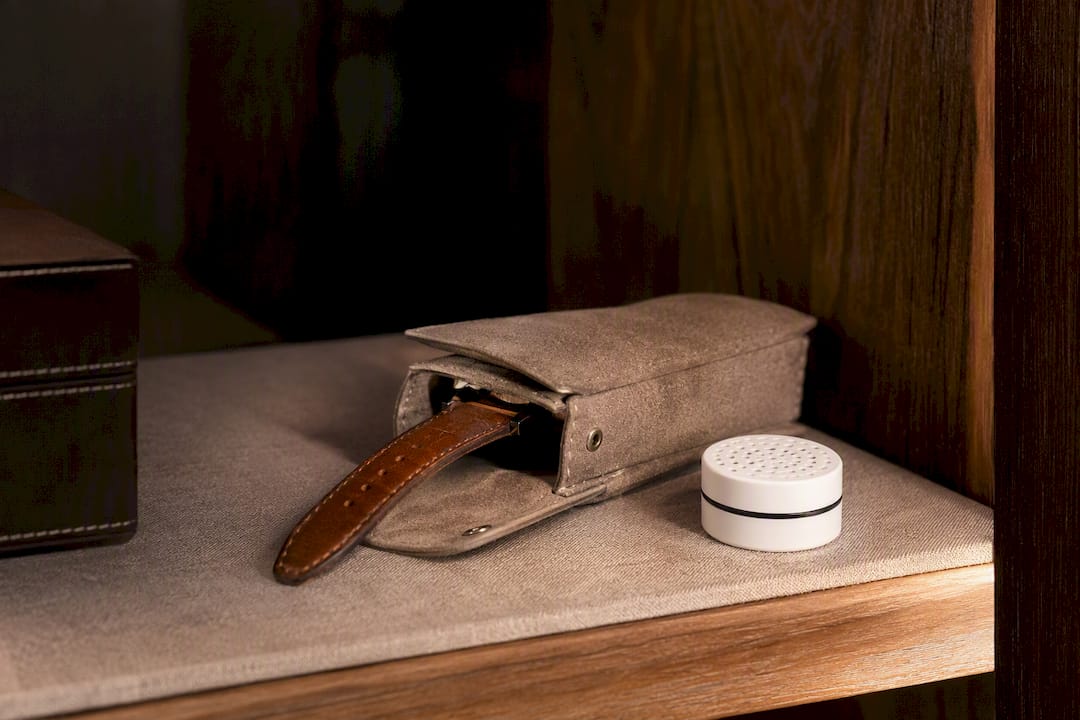
A dedicated watch box or a soft pouch beats a drawer for daily storage, since loose storage invites dust and scratches from other objects. If you’re storing an automatic Audemars Piguet long-term without wearing it, a watch winder is optional but not necessary. What actually matters more is keeping it somewhere with stable temperature and humidity, away from direct sunlight, radiators, or bathroom cabinets where steam collects.
Avoid stacking watches directly on top of each other, and keep leather-strapped pieces away from any residual dampness, since leather absorbs moisture readily and can develop mold or warping faster than the case itself would show damage.
How Should You Care for Royal Oak Offshore or Code 11.59 Models?
Not every Audemars Piguet has the same cleaning profile, and treating an Offshore exactly like a classic Royal Oak, or a Code 11.59 like either one, misses real differences in materials and construction.
Royal Oak Offshore models frequently pair a steel, titanium, or ceramic case with a rubber strap, which actually simplifies strap care considerably since rubber tolerates a soap-and-water rinse the way leather never could. Ceramic Offshore cases resist scratching well but are brittle under sharp impact, so avoid dropping them onto hard surfaces during cleaning and skip any abrasive pad entirely.
Code 11.59 models introduce a more complex case construction, with an outer case ring, a middle case, and sometimes a distinct bezel in a contrasting material or finish. That layered design means more seams where grime and moisture can collect, so a slightly more careful pass with the peg-wood stick around the case joints is worth the extra minute. Some Code 11.59 references also use a sapphire-finished dial or open-worked construction, both of which reinforce the same rule as always: hands off the dial, soap and water only for the case and bracelet.
Titanium cases, found across several Offshore and Code 11.59 references, are lighter and more scratch-resistant than steel but show fine surface marks differently under light. Clean them the same conservative way, but be aware that titanium’s finish can look different after even a light polish, so the “when in doubt, don’t polish” rule applies here just as strongly as it does to steel.
What Tools Does Audemars Piguet Recommend to Avoid Warranty Issues?
Audemars Piguet’s own guidance sticks to a short, deliberately simple list: lukewarm water, a drop of pH-neutral soap, a soft-bristled brush, and a lint-free microfiber cloth for drying. That’s the entire manufacturer-approved home toolkit, and it’s worth taking seriously, because straying from it is one of the more overlooked ways owners can complicate a warranty claim.
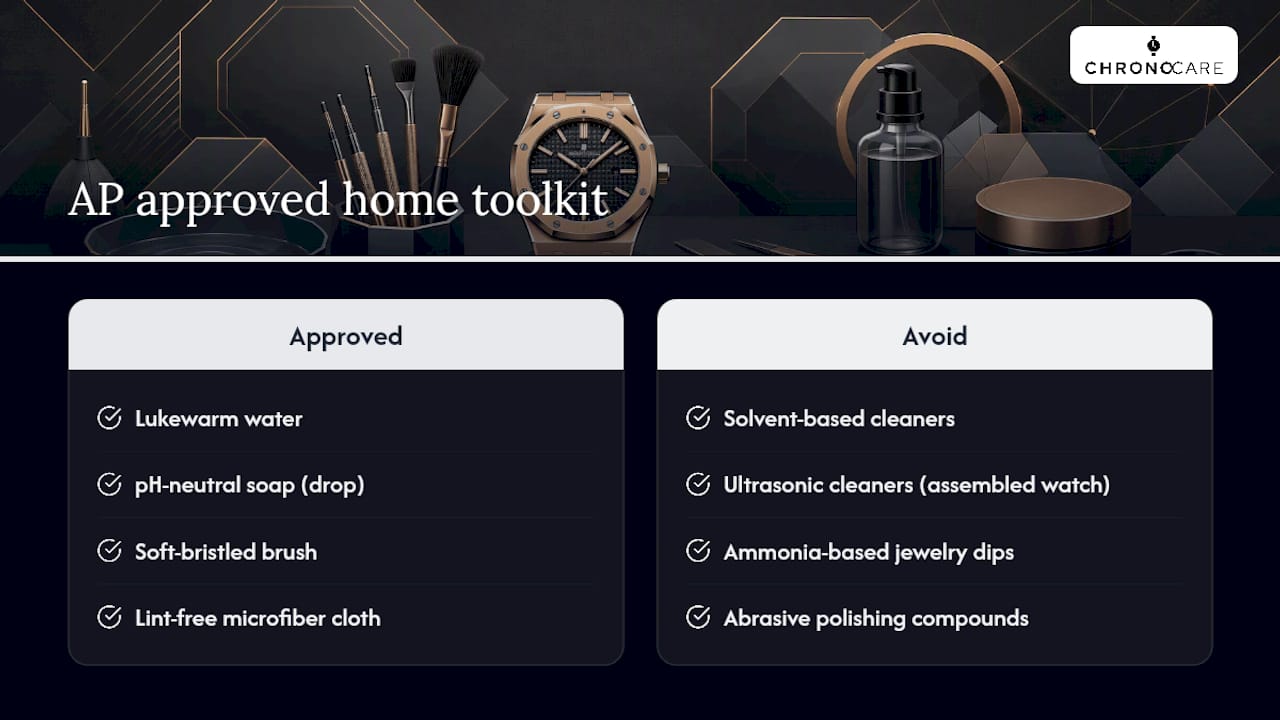
Solvent-based cleaners, ultrasonic cleaners used on an assembled watch, ammonia-based jewelry dips, and abrasive polishing compounds all fall outside that guidance. Using any of them at home doesn’t necessarily void a warranty outright, but if a seal fails or a finish gets damaged after using an unapproved product, a service center may reasonably attribute the damage to that product rather than to a manufacturing defect. That distinction matters when you’re trying to get a repair covered.
The safest approach is to stick to tools built specifically for luxury watch care rather than generic household cleaning products, which are often formulated with additives that are fine on kitchen counters and genuinely risky on precision-finished metal or gaskets. ChronoCare’s collector-focused cleaning guide walks through a toolkit built around that same principle: mild, purpose-formulated products paired with soft tools, nothing that improvises with what happens to be under the sink. Curious owners who want to understand why ultrasonic cleaning is off-limits at home specifically, rather than just being told not to do it, can read more in ChronoCare’s breakdown of ultrasonic cleaning for luxury watches.
Minimal Intervention Wins Over Time
The owners who keep their Audemars Piguet looking sharp decades from now aren’t the ones cleaning obsessively or polishing at the first scratch. They’re the ones running a light, boring routine consistently and leaving the case alone otherwise.
Wipe the watch down after wear, especially after a sweaty day or heavy physical work, and let the bracelet actually get its two-minute clean every few weeks rather than waiting for visible grime. Skip wearing it during activities guaranteed to soak it in sweat if you can help it. Get an annual once-over from a qualified service point, even if nothing seems wrong, and keep a simple record of every service and polish. That paper trail does more for resale value than a shiny case ever will, because buyers are increasingly wary of watches with an undocumented, over-polished past.
— Raymond Jenkins
Which ChronoCare Kit Fits Your Cleaning Needs?
Most of what damages an Audemars Piguet at home comes from the products people improvise with, not the act of cleaning itself. Dish soap with fragrance additives, old toothbrushes with stiff bristles, glass cleaner sprayed straight at the case. ChronoCare offers kits with formulated solutions designed for luxury metals and finishes rather than general household surfaces.
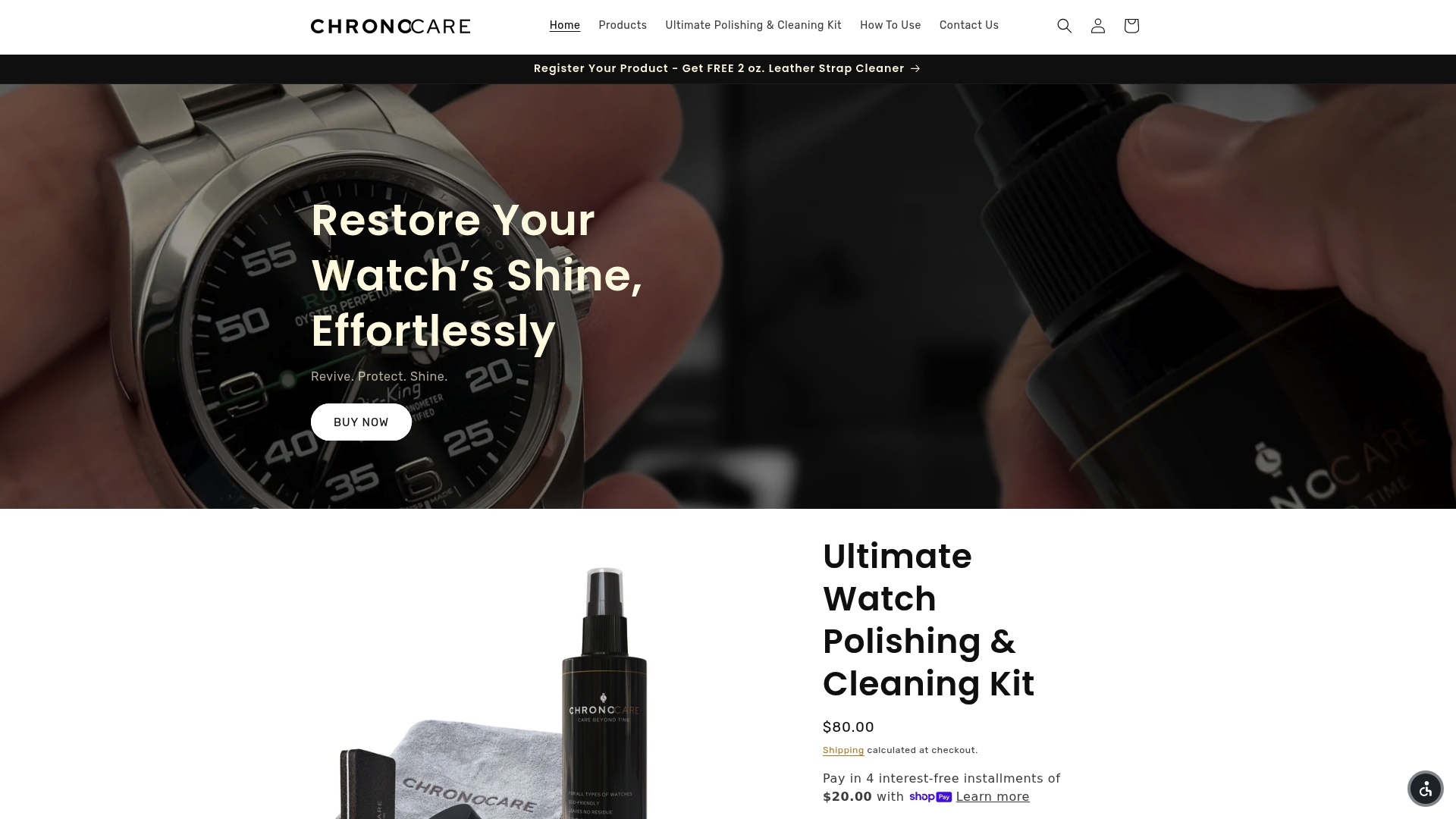
For everyday maintenance, the Ultimate Watch Cleaning Kit covers the routine work: bracelet grime, case wipe-downs, and the fresh-water rinse steps that keep an Audemars Piguet in good shape between services. If your watch has light surface scratches and you want a conservative touch-up beyond basic cleaning, the Ultimate Watch Polishing & Cleaning Kit pairs a polishing cream with the same soft tools, built for careful, limited use rather than repeated heavy polishing.
Both kits come with guided instructions to assist with proper use. Check the product pages to see which one matches your watch’s current condition, and start with the cleaning kit if you’re unsure. It’s the safer first step for any Audemars Piguet still in solid condition.
Where to Verify This Guidance
For anything beyond routine home cleaning, go straight to the source rather than a forum thread. Audemars Piguet’s own care tips page covers the manufacturer’s exact cleaning recommendations, and its service overview explains what a full professional service actually includes and how the brand approaches polishing limits.
For independent perspective, Hodinkee’s guide to cleaning a watch offers a practical, tool-by-tool breakdown that applies across most water-resistant sport watches, and Pursuitist’s piece on maintaining a luxury watch covers water-resistance testing and seal aging in more depth than most owners ever think to ask about.
Sources
- Audemars Piguet | Customer Service
- How To Clean Your Watch - Hodinkee
- How to Clean and Maintain a Luxury Watch - Pursuitist