

Collectors: Keep Factory Geometry When Choosing Cleaning vs Polishing
Cleaning removes grime; polishing removes metal. That single distinction should drive every maintenance decision you make. Clean your watch often, since it’s low risk and preserves both function and finish, but polish rarely and only with clear intent, because every polishing pass strips a thin layer of case or bracelet material that never comes back.
TL;DR:
- Polishing permanently removes a thin layer of metal, which can soften edges and alter the watch’s original finish, especially on vintage pieces.
- Home polishing with cloths or compounds risks uneven results and potential shape distortion unless done with expert judgment and minimal material removal.
- Regular cleaning of cases, bracelets, and crystals prevents grime buildup without compromising the case geometry or finish transitions.
- Frequent polishing for aesthetic reasons can devalue collectible watches by erasing design details and reducing collector appeal.
- Routine water-resistant watches benefit from biweekly cleaning, while full professional servicing is recommended every five to seven years to maintain condition and water resistance.
Table of Contents
- Watch Cleaning vs Polishing: What’s the Real Difference?
- What Actually Happens When You Polish a Watch
- When Should You Clean, and When Should You Polish?
- How to Clean Your Watch Safely at Home
- How Polishing Affects Resale Value and Collector Appeal
- How Often Should You Clean and Service Your Watch?
- Expert Viewpoint: Raymond Jenkins on Cleaning vs Polishing
- An Owner’s Take on Preservation vs Restoration
- The ChronoCare Approach to Safe Watch Care at Home
- Sources
Watch Cleaning vs Polishing: What’s the Real Difference?
Cleaning and polishing solve different problems, and mixing them up is how collectors accidentally devalue a piece worth preserving. Cleaning is subtractive in the harmless sense: it lifts oils, sweat, salt residue, and everyday grime off the surface without touching the metal underneath. Polishing is subtractive in a permanent sense: it physically abrades a microscopic layer of metal to erase scratches and restore shine.
That difference matters more on luxury pieces because cases and bracelets are machined to specific tolerances, chamfers, and finish transitions that a factory spent real effort creating. Cleaning leaves that geometry untouched. Polishing reshapes it, even when done well.
For routine care, cleaning safely covers:
- Metal cases and bracelets using a soft-bristle brush and mild soap
- Crystals, which just need a lint-free wipe to avoid smudge buildup
- Detached bracelet links, which tolerate an ultrasonic bath when removed from the head
Leather straps, anti-reflective coatings, and plated surfaces need gentler handling; see tips on how to clean plated jewelry without dulling it. Leather can’t get soaked, AR coatings scratch under abrasive cloths, and plated cases wear through their thin gold or rhodium layer faster than solid metal does. A bracelet link cleaning checklist helps you spot trapped grime in tight link gaps without forcing tools where they don’t belong.
What Actually Happens When You Polish a Watch

Polishing works by removing a thin layer of metal until a scratch, ding, or dull patch disappears along with the surrounding surface. It’s not magic, and it’s not reversible. The case simply gets a little smaller and a little softer at the edges every time it happens.
There are three common approaches, and they carry very different levels of risk:
- Hand polishing with a cloth uses mild abrasives and removes metal slowly, which limits damage but can still create uneven reflection if you overwork one spot.
- Polishing compounds cut faster and are common for spot-treating deeper scratches, but they demand a steady hand and good judgment about when to stop.
- Wheel refinishing, done by a professional, uses staged abrasive grits to blend scratches evenly across a surface. This is where most damage happens in amateur hands, because a buffing wheel doesn’t know the difference between a brushed zone and a polished one.
That last point is the one most owners miss. A brushed lug or bezel has a directional grain that a polishing wheel erases in seconds, permanently flattening a finish contrast the manufacturer built into the design on purpose.
When Should You Clean, and When Should You Polish?
Run through this checklist before you touch anything abrasive:
- What’s the watch’s job? A daily beater tool watch tolerates more cosmetic wear than a collectible you plan to sell or pass down.
- How deep is the damage? Surface haze and light hairlines respond to cleaning and a light cloth pass. Deep gouges that catch a fingernail usually need a professional’s judgment, not a home fix.
- How complex is the finish? A single brushed surface is more forgiving than a case with alternating brushed and polished zones, where any mistake is visible from across the room.
- Has it been polished before? Cases that have already lost material to prior polishing have less to give before edges round off and proportions shift.
Clean for grime. Polish only when there’s a genuine cosmetic need, and treat it as an occasional event tied to a full service rather than a routine habit. Before any material removal, take a few clear photos of the case edges and finish transitions. That record is the only way to know later whether a “light touch-up” actually stayed light.
How to Clean Your Watch Safely at Home
Before any water touches your watch, confirm the crown is pushed in or screwed down, and treat any watch of unknown or aging water resistance as if it isn’t water resistant at all, since gaskets degrade over years even on a watch rated for depth when new.
- Remove the strap or bracelet if it detaches easily, which gives you room to work without risking the crown or crystal seal.
- Wet a soft-bristle toothbrush with lukewarm water and a drop of mild, pH-neutral dish soap, then scrub the case and bracelet gently, focusing on lug gaps and clasp mechanisms.
- Rinse briefly under a light stream, avoiding pressure near the crown, and dry immediately with a microfiber cloth.
- Wipe the crystal separately with a dry microfiber cloth. Never use a shirt hem or paper towel, both of which carry enough grit to leave fine scratches.
- For detached metal bracelets only, a short ultrasonic bath lifts grime from between links that a brush can’t reach. Keep the watch head out of the ultrasonic entirely, since the vibrations can loosen hands or dial markers.
Leather and fabric straps get a dry brush and a barely damp cloth, never a soak. Rubber straps tolerate the same soap-and-water routine as the case. WatchCrunch recommends monthly cleaning for water-resistant sports watches worn daily, with a simple dry wipe for dress watches that see less exposure.
Pro Tip: Skip solvents, ammonia-based glass cleaners, and hot water entirely. Heat and harsh chemicals can degrade gaskets and dull anti-reflective coatings faster than years of normal wear ever would.
How Polishing Affects Resale Value and Collector Appeal
Every polishing pass takes metal off permanently, and repeated sessions add up in ways that are easy to underestimate. A case that’s been through several rounds of polishing over the years often shows softened chamfers, blurred lug lines, and a case shape that no longer quite matches the manufacturer’s original specification. Buzzufy’s guide to watch polishing puts it plainly: polishing removes microscopic layers of metal, and doing it repeatedly changes a watch’s geometry and its desirability to collectors.
This hits vintage pieces hardest. Collectors specifically hunt for watches with sharp, unpolished case edges because that sharpness is direct evidence the watch hasn’t been reshaped since it left the factory. A “well-preserved” vintage piece with soft, rounded edges tells buyers the opposite story, even if the dial and movement are pristine.
If you do decide to have a case professionally refinished, ask for three specific things:
- Minimal material removal, stopping at the point the scratch disappears rather than chasing a mirror finish
- Preservation of the original contrast between brushed and polished zones, not a uniform shine across the whole case
- A written or photographed record of what was done, so future buyers know the watch’s polishing history
How Often Should You Clean and Service Your Watch?
A quick microfiber wipe after each wear keeps salt and skin oils from settling into gaps. Water-resistant daily wearers benefit from a full wet clean roughly every two to four weeks, following the routine already outlined.
Full mechanical servicing is a different timeline entirely. Most watchmakers recommend a complete service every five to seven years, which includes ultrasonic cleaning of internal components and a gasket inspection to confirm water resistance hasn’t quietly lapsed. If a case ever needs polishing, that service appointment is the logical moment, since seals get refreshed at the same time material gets removed.
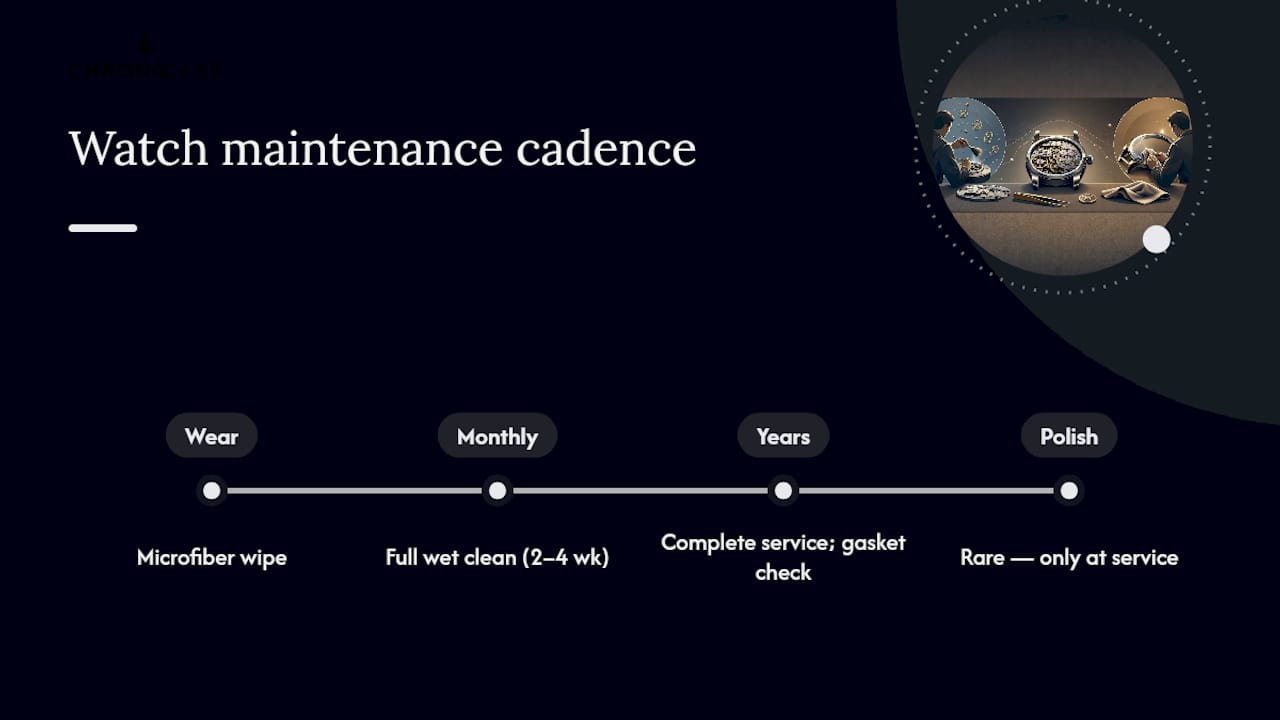
Polishing outside of a service visit should be rare. Restraint, not routine, is the right default.
Expert Viewpoint: Raymond Jenkins on Cleaning vs Polishing
Raymond Jenkins puts the core issue in blunt terms: polishing isn’t cleaning with extra steps, it’s reshaping.
For routine upkeep, a formulated cleaning spray and microfiber set handles the grime that actually threatens a finish. When light cosmetic work is warranted, a cautious cloth-based approach beats aggressive buffing every time. Clean first, reassess in good light, and only then consider whether professional polishing is worth the trade-off.
An Owner’s Take on Preservation vs Restoration
If a watch is a collectible or has resale value on the table, preservation wins. Minimal polishing, clear documentation, and a professional’s hand when geometry is at stake will protect that value far better than a home buffing session ever could. Daily wearers earn more leeway; a few honest scratches are part of the story. Base the decision on the watch’s role, not on how shiny it looked the day you bought it.
— Raymond Jenkins
The ChronoCare Approach to Safe Watch Care at Home
Most of what threatens a watch’s finish isn’t dramatic. It’s months of skipped cleaning that leave salt and grit sitting against metal until a light touch-up starts to feel necessary. Specialized watch care kits are designed to prevent polishing from becoming necessary.
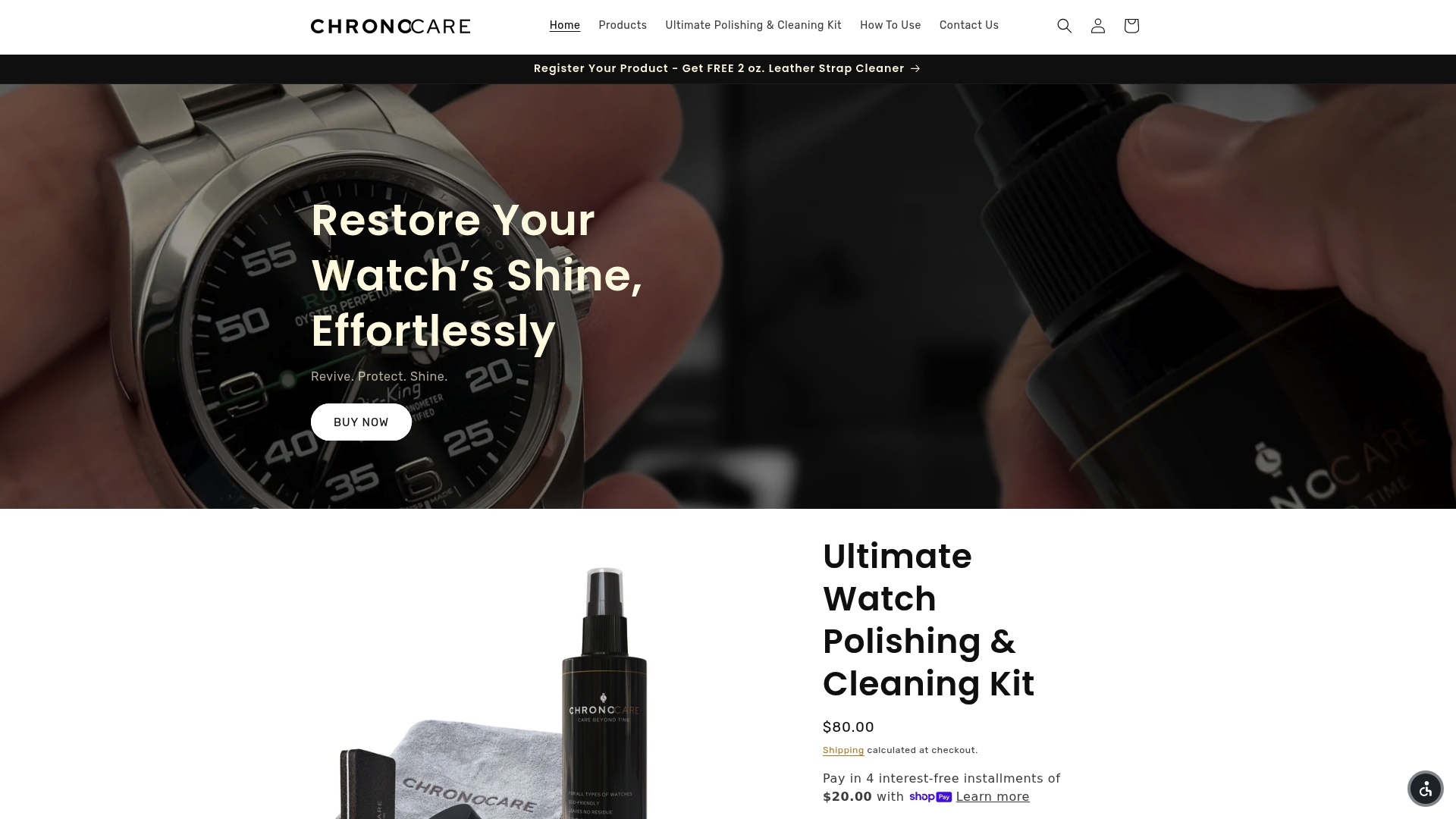
For everyday upkeep, the Ultimate Watch Cleaning Kit pairs safe solutions for cases, bracelets, and leather straps so you can handle a proper cleaning without guessing which product touches which surface. If a piece genuinely needs light cosmetic attention, the Ultimate Watch Polishing & Cleaning Kit gives you a controlled way to restore shine without reaching for aggressive compounds. Deep gouges or finish restoration on a valuable collectible still belong with a professional, and our guide to polishing after service walks through where that line sits. Order the kit that matches your watch’s actual needs and start with the gentlest option first.
Sources
- Watch cleaning day: how to (WatchCrunch)
- How to clean a watch (WatchPolice)
- Watch polishing 101: restore shine without ruining edges (Buzzufy)
- How to service your watch: maintenance guide (The Watchology)