

Watch Provenance: Why It Matters to Value and Trust
Provenance is a watch’s documented history of ownership, service, and originality, and it is often the single factor that turns a watch from sellable to desirable. A well-documented watch carries less risk for the buyer, which usually translates directly into a higher price and a faster sale. A watch with no history behind it is a harder sell even if it is genuine, because the buyer has to take your word for it.
Three things happen when provenance is solid:
- Buyers trust it faster. Matching papers, receipts, and service records answer the questions a suspicious buyer would otherwise have to investigate themselves.
- It sells for more, and sells sooner. A documented watch removes friction from the negotiation and often clears the market quicker than an identical piece with no paper trail.
Two things separate a well-provenanced watch from a weak one: does the paperwork match the watch (same serial, consistent dates, no gaps), and can an independent source, like a manufacturer archive extract, confirm the story? If both check out, you’re holding something collectors will fight over.
Key Takeaways
Provenance works because it converts an unverifiable claim about a watch’s history into evidence a buyer, insurer, or specialist can actually check.
| Point | Details |
|---|---|
| Provenance drives price | A full set of box, papers, and receipt can add 10 to 30 percent to resale value on many luxury watches. |
| Documentation hierarchy matters | Receipts rank above warranty cards, which rank above box and booklets alone. |
| Verify before you buy | Match serials visually, request an archive extract, then get an independent watchmaker exam costing roughly $150 to $500. |
| Marriages and forged papers are the biggest traps | Mismatched aging between case and dial, or receipts dated before a model existed, are disqualifying red flags. |
| Build the habit early | Digitize receipts and photograph serials now rather than reconstructing history at sale time. |
| Care products support preservation | ChronoCare’s polishing cream and leather strap cleaner help maintain appearance without the over-polishing that erases originality. |
Table of Contents
- What Is Watch Provenance, Exactly?
- How Watch Provenance Affects Value
- Which Documents Actually Prove Provenance?
- How Do You Verify a Watch’s Provenance?
- Common Provenance Problems to Watch For
- How to Preserve and Build Your Watch’s Provenance
- Provenance and Your Watch Insurance
- Does Provenance Matter More for Some Brands Than Others?
- Why Provenance Is the Habit Every Collector Should Build Now
- Caring for Your Watch Without Compromising Its History
- Frequently Asked Questions
- Sources
What Is Watch Provenance, Exactly?
Watch provenance is the sum of everything that proves who owned a watch, how it was serviced, and whether it still has its original parts. It is not a single document. It’s a body of evidence, and the strength of that evidence is what auction houses and private buyers are really pricing when they look at “condition and history.”
Here’s what actually counts as provenance, roughly in order of how much weight each piece carries:
- Original box and papers. The warranty card, instruction booklets, and outer box, ideally all matching the reference and serial number on the watch itself.
- Original sales receipt. A dated, itemized receipt from an authorized dealer is often stronger evidence than the warranty card alone, since it ties a specific person and date to a specific watch.
- Service records. Invoices from an authorized service center or a documented independent watchmaker, showing what was done and when.
- Manufacturer archive extracts. A letter from the brand confirming original configuration, shipping date, and sometimes original retailer.
- Photographs. Dated images showing the watch over time, ideally including the movement and case back.
- Auction or dealer records. Prior sale listings or catalog entries that establish a public chain of ownership.
Physical originality matters just as much as paperwork. A watch with pristine box and papers but a redone dial or swapped hands is not fully provenanced. It’s contradicted. Buyers who know what they’re looking at will treat mismatched paperwork and physical evidence as a bigger problem than missing paperwork alone.
Family stories don’t count as provenance on their own. “My grandfather bought this in 1965” is a nice detail, but it needs a receipt, a service record, or an archive extract behind it before a buyer or an insurer will treat it as fact. Anecdote without documentation is marketing, not proof.
How Watch Provenance Affects Value
Auction houses consistently point to rarity, condition, and provenance as the three factors that move a watch’s price at auction, and provenance is the one collectors have the most control over improving. Rarity is fixed by the factory. Condition can be helped but not manufactured. Provenance, though, is something you build and protect through ordinary diligence.
The mechanism is simple: provenance lowers the buyer’s due diligence cost. Without documentation, a buyer has to assume some risk that the watch has been altered, that parts have been swapped, or that the seller isn’t being straight with them. That risk gets priced in as a discount. Remove the risk with solid paperwork, and the discount disappears, sometimes replaced by a premium.
Market sources put real numbers on this. A full set, meaning original box, warranty card, and receipt, commonly commands a premium of roughly 10 to 30 percent on many luxury watches, with rare vintage references sometimes seeing even larger gaps between full-set examples and watch-only examples. That range isn’t uniform across every model, and the more collectible the reference, the more that premium tends to widen.
Statistic Callout: A full set of box, papers, and receipt can add 10 to 30 percent to a luxury watch’s resale price compared to an identical watch sold without them, according to Fortuna’s auction research.
Provenance also does something a spec sheet never can: it gives a watch a story. Auction specialists describe this as the “human story” behind a piece, and it’s not just marketing language from the auction houses. The most famous example remains Paul Newman’s own Rolex Daytona, where documented ownership by the actor himself pushed the hammer price into territory that had nothing to do with the watch’s mechanical rarity alone. Buzz Aldrin’s Speedmaster, worn on the Apollo 11 mission and later authenticated through NASA records and personal documentation, sold on the strength of that traceable history as much as the watch itself.
You don’t need a celebrity name attached to your watch to benefit from this effect. A documented single-owner example, even for someone nobody’s heard of, can be genuinely compelling to a collector who values a coherent, verifiable story over an anonymous piece with an identical spec sheet. What matters is that the story can be checked.
A few things that consistently move the needle:
- Full, matching documentation from the original purchase date forward
- A verifiable single-owner or short-chain ownership history
- Manufacturer service records rather than gaps or unexplained third-party work
- Photographic evidence showing consistent wear and originality over time
Which Documents Actually Prove Provenance?
Not all paperwork carries the same weight, and knowing the hierarchy saves you from over- or under-valuing what you have.
The original sales receipt sits at the top. It ties a name, a date, and a specific serial number together in a way that’s hard to fake convincingly and easy for a buyer to verify against the watch itself. Next comes the stamped warranty card, which most brands issued through authorized dealers until fairly recently, showing the reference and case number along with a purchase date. Box and booklets rank lower on their own because they’re the easiest elements to swap between watches, but combined with the card and receipt, they complete the picture buyers are looking for.
Manufacturer archive extracts fill gaps when original paperwork is lost or incomplete. Most major brands maintain internal production records and will issue a written extract confirming a watch’s original configuration, its shipping date, and sometimes its original retailer, for a fee and a research window that typically runs several weeks. These extracts don’t replace an original receipt, but they go a long way toward recreating a credible history when papers were lost decades ago, and their absence doesn’t automatically point to a fake.
Service records need a closer read than most owners give them. A stack of invoices from an authorized service center is reassuring. It usually means the watch has been kept within spec using correct parts. A stack of invoices from an unknown independent watchmaker, especially with vague descriptions like “cleaned and repaired,” deserves more scrutiny, because that’s exactly the kind of paperwork where original parts sometimes quietly get swapped for aftermarket substitutes. Reviewing what your service documentation actually says about parts and originality is worth doing before you assume a thick service file automatically helps your case.
Once you know what you have, digitize it immediately:
- Scan every receipt, warranty card, and service invoice at high resolution
- Photograph the watch’s case back, movement, and dial with the reference and serial numbers clearly visible
- Store digital copies in at least two separate locations, including one offsite or cloud-based backup
- Keep physical originals separate from the watch itself, ideally in a safe deposit box
Pro Tip: Photograph your serial and reference numbers now, even if you never plan to sell. A missing or damaged case back years from now can turn an easy authentication into an expensive dispute, and a timestamped photo settles the question in seconds.
How Do You Verify a Watch’s Provenance?
Verification follows a logical sequence, and skipping steps is how buyers end up overpaying for a watch that doesn’t hold up.
- Check the reference and serial numbers visually. Confirm they match across the case, movement, and any accompanying papers. A mismatch here ends the conversation before it starts.
- Request a manufacturer archive extract. Provide the brand with the serial number and reference, and expect a written confirmation of original configuration and shipping details within a few weeks, depending on the brand’s archive backlog.
- Commission an independent watchmaker inspection. A competent watchmaker checks the caliber against factory specifications, inspects the movement for replaced parts, examines dial originality under magnification, and assesses whether the case has been over-polished or refinished.
- Escalate to auction-house or brand authentication for high-value pieces. Above a certain price point, get a specialist opinion from an established house before you commit.
A structured authentication workflow like this one, moving from visual checks to archive research to hands-on inspection, catches problems that a casual look never will.
| Verification step | What it checks | Typical cost range |
|---|---|---|
| Visual serial/reference match | Consistency between case, movement, and papers | No cost |
| Manufacturer archive extract | Original configuration, shipping date, retailer | Varies by brand, several weeks’ wait |
| Independent watchmaker exam | Caliber, movement originality, dial, case finish | $150 to $500 range applies to mid-tier luxury watches |
| Auction-house specialist review | Full authentication for high-value or contested pieces | Varies, often free with consignment |
That $150 to $500 range applies to mid-tier luxury watches. Rarer or more complicated pieces, and anything heading to a major auction house, usually cost more to authenticate properly, and it’s money worth spending before a purchase rather than after a dispute.
Common Provenance Problems to Watch For
The most damaging problem in the vintage market is the “marriage,” a watch assembled from parts that didn’t originally belong together, most often a case from one watch fitted with a dial or movement from another. A married watch can look completely correct at a glance while carrying none of the value a genuinely all-original example would command. The tell is usually inconsistent aging: a dial that looks decades newer than the case, or a movement whose wear patterns don’t match the case’s own signs of use.
Forged or tampered paperwork follows a similar logic. Watch for warranty cards with stamps that don’t match known dealer formats for that era, receipts that are suspiciously pristine for their supposed age, or dates that don’t align with when a reference was actually in production. A receipt for a watch model dated before that model existed is not a minor clerical error. It’s disqualifying.
Physical red flags to check before you trust any listing:
- Over-polished cases with softened edges, rounded lugs, or lost bevel lines
- Dial text that looks too crisp or too clean relative to the watch’s claimed age
- Replacement hands that don’t match the original style or luminous material
- Case backs with mismatched screw wear, suggesting the watch has been opened more than the service history admits
Auction catalog language rewards close reading. Phrases like “believed to be original” or “period correct” are hedges, not guarantees, and they usually mean the specialist couldn’t fully confirm originality. When a private seller can’t produce a receipt, warranty card, or service history, ask directly for whatever documentation they do have, and treat vague answers as information in themselves.
How to Preserve and Build Your Watch’s Provenance
Provenance isn’t just something you inherit. Most of it is something you build through unglamorous, consistent habits.
Start with storage. Keep the box and papers together but store them separately from the watch itself, so a single theft or accident doesn’t destroy both the asset and its proof. Digitize every receipt and service invoice as you receive them rather than waiting until you’re ready to sell, when recordkeeping gaps become expensive to fix.
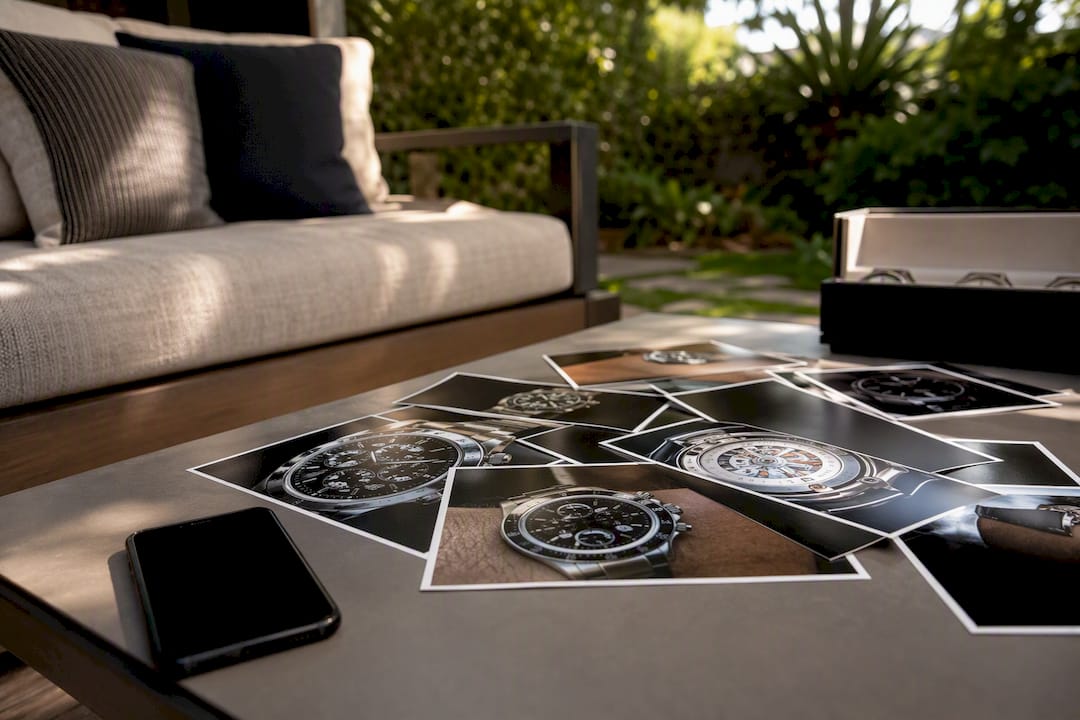
Photograph the watch regularly, not just once. Dated images of the case, movement, and serial numbers create a timeline that shows the watch hasn’t been swapped, altered, or damaged between owners. This matters more than most collectors realize until they’re the ones trying to prove a watch is the same one photographed in an old family album.
If a part ever needs replacing, keep the original component if it’s physically possible to do so, and make sure the service invoice states plainly what was changed and why. A watchmaker who swaps a crystal or a crown without documenting it has quietly reduced your watch’s provenance, even if the repair itself was necessary and well done.
Surface care deserves the same discipline. The instinct to buff out a scratch yourself is understandable, but aggressive polishing is exactly what erases the sharp case edges and original finish that specialists check for when assessing originality. A careful, guided approach to cleaning and restoring shine protects the watch’s appearance without stripping away the case geometry that took decades to develop naturally.
- Store box and papers separately from the watch, in secure locations
- Digitize receipts and invoices as soon as you receive them, not years later
- Photograph the case, movement, and serial numbers on a regular schedule
- Keep original parts when replacements are unavoidable, and document every swap in writing
Pro Tip: Before you touch a scratch yourself, check whether it’s cosmetic or structural. Light surface marks can often be addressed gently at home, but anything near the case edges or lugs is where amateur polishing does the most permanent damage to a watch’s originality.
Provenance and Your Watch Insurance
Insurers price a policy against the value they can verify, and a documented watch is simply easier to insure at its real market worth. When you submit a watch for coverage, a full paper trail, receipt, warranty card, and any manufacturer archive extract, gives the insurer a defensible basis for the appraised value rather than a guess based on comparable listings alone.
Claims are where the gap really shows. If a watch is lost, stolen, or damaged, the insurer wants proof that the watch you’re claiming for is the one they insured, and the value you’re claiming matches what a similar documented example would fetch on the open market. Owners who can produce dated photographs of serial numbers, original purchase receipts, and service records tend to move through claims faster and with less dispute over valuation.
Owners with incomplete documentation aren’t necessarily denied coverage, but they often face lower appraised values or more conservative payout terms, since the insurer is pricing in the same uncertainty a buyer would. This is one more reason the digitization habits described earlier aren’t just about resale. They directly affect what happens if something goes wrong.
Does Provenance Matter More for Some Brands Than Others?
Provenance carries different weight depending on the brand, the model, and how deep the collector market runs for that particular reference.
For Rolex, Patek Philippe, and Omega vintage references, especially anything tied to a well-known model line like the Daytona, Nautilus, or Speedmaster, provenance can swing value dramatically because the collector base is large, informed, and actively rewards documented history. These are the markets where a full set commonly pushes toward the higher end of that 10 to 30 percent premium range, and where celebrity or documented single-owner examples can multiply value many times over.
For newer luxury watches still under original manufacturer warranty, provenance matters less in dollar terms simply because authenticity risk is lower and the paper trail is recent and easy to verify. A three-year-old watch with a receipt from an authorized dealer doesn’t need an archive extract to prove its story.
Independent and boutique brands occupy a middle ground. Collector interest is smaller and more specialized, so documented history matters enormously to the buyers who care, even if it moves the needle less in absolute dollars than it would on a blue-chip vintage Rolex. Knowing which category your watch falls into helps you calibrate how much effort to put into building and preserving its paper trail.
Why Provenance Is the Habit Every Collector Should Build Now
The collectors who get burned aren’t usually the ones who bought a fake outright. They’re the ones who bought something genuine, never built a paper trail, and then discovered years later that “trust me, it’s original” doesn’t hold up when it’s time to sell or insure the watch.
What people underestimate about provenance is that it’s cumulative and it’s cheap to build if you start early. A folder of scanned receipts and a few timestamped photographs cost nothing and take twenty minutes. Waiting until a sale is imminent to reconstruct that history, chasing down an archive extract, hunting for an old service invoice, means paying in both time and negotiating leverage, because a buyer can smell a rushed paper trail from across the table.
The habit worth adopting today is simple: open a folder, digital or physical, and start dropping in every receipt, service record, and dated photo the moment you get it. Don’t wait until the watch feels “important enough” to document. By the time you know a watch is worth documenting carefully, you’ve usually already lost a few years of the record.
Caring for Your Watch Without Compromising Its History
Preserving provenance isn’t only about paperwork. It’s also about resisting the urge to “fix” small imperfections in ways that quietly erase originality. The scratch you’re tempted to buff out yourself with an abrasive pad is exactly the kind of intervention that leads to over-polished cases and softened edges, the same red flags specialists look for when they’re deciding whether a watch has been altered.
ChronoCare formulates its watch polishing cream to lift light surface scratches and restore shine without the aggressive abrasion that reshapes case edges and lug lines over time. Used correctly, it’s a gentler alternative to the DIY buffing that causes lasting damage, and it works alongside professional servicing rather than replacing it. For leather straps that carry their own wear history, the leather strap cleaner spray keeps material supple and clean without stripping the patina that shows a watch has been worn and loved rather than sitting untouched.
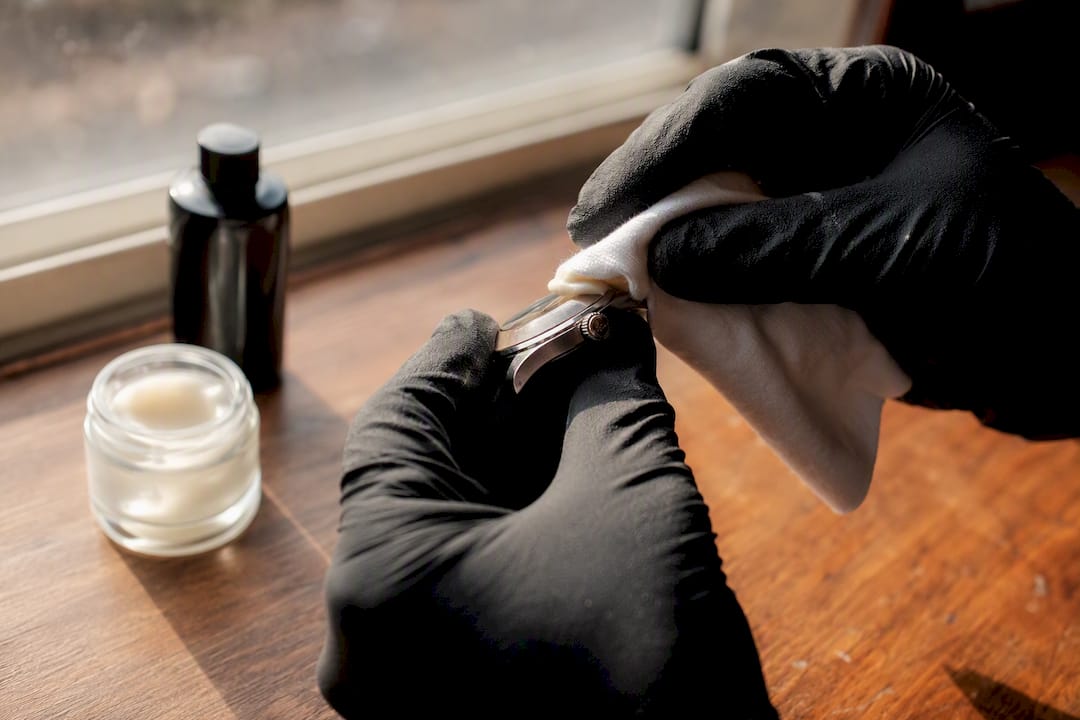
Neither product authenticates a watch or substitutes for a manufacturer service record. What they do is help you maintain a watch’s appearance between professional visits, so you’re never tempted to reach for a home remedy that could cost you originality points down the road. If you’re building out a full preservation routine, ChronoCare’s maintenance checklist for collectors is a practical place to start. Pick up the polishing cream or strap cleaner and add a documented, careful care routine to the provenance habits you’re already building.
Frequently Asked Questions
What is watch provenance importance in simple terms?
Watch provenance importance comes down to risk reduction. A documented history proves a watch is genuine and unaltered, which lets buyers pay full price with confidence instead of discounting for uncertainty.
How to verify watch provenance before buying?
Match the serial and reference numbers visually, request a manufacturer archive extract, and commission an independent watchmaker inspection that checks the caliber, movement, and dial originality before you commit to a purchase.
What documents matter most for watch authenticity value?
The original sales receipt carries the most weight, followed by a stamped warranty card, then box and booklets. Service records and manufacturer archive extracts fill gaps when original papers are missing.
Why does watch provenance matter for insurance?
Insurers price coverage against verifiable value. A documented watch, backed by receipts, service records, and photographs, tends to get a more accurate appraisal and moves through claims faster than one with no paper trail.
Can a watch still be valuable without full provenance?
Yes. Missing papers raise the authentication burden but don’t automatically indicate a fake. A coherent physical story and a manufacturer archive extract can recover much of the market confidence a full paper trail would provide.
Does provenance matter equally across all watch brands?
No. Provenance carries more weight for deep collector markets like vintage Rolex, Patek Philippe, and Omega, where documented history can swing value dramatically, compared to newer watches still under manufacturer warranty.
Sources
Phillips’ article on provenance explains how auction specialists weigh rarity, condition, and history together when pricing a watch. Fortuna’s guide to box, papers, and provenance breaks down full-set premiums and how archive extracts recreate lost history. Lyon & Turnbull’s perspective on why provenance matters covers the human-interest side of documented ownership, including cases without famous names attached. For authentication mechanics, Subdial’s authentication workflow guide lays out the visual, archival, and hands-on steps worth following before any high-value purchase. Manufacturer archive departments, reachable directly through most major brands’ customer service channels, remain the most reliable source for confirming a specific watch’s original configuration.
- Provenance and Why it Matters — Phillips
- Box, Papers & Provenance — FORTUNA
- Subdial
- Why watch provenance matters — Lyon & Turnbull