

Why Showroom Watch Presentation Matters for Collectors
Showroom-level presentation matters because it protects a watch’s market value, signals professional service history, and reduces long-term material wear — not merely because it looks good under a display light. A timepiece that arrives clean, geometrically intact, and accompanied by documented service history commands buyer confidence that no amount of surface shine alone can manufacture. ChronoCare, the Mostra Observatory’s workshop studies, and guides published by Pursuitist all point to the same conclusion: the physical condition of a watch, and the care taken to maintain it without destroying original material, is one of the most consequential decisions a collector or retailer makes.
- Resale value: Preserved geometry and correct finishes consistently attract collector premiums on the secondary market.
- Mechanical longevity: Perspiration salts and abrasive grime trapped between bracelet links accelerate wear on metal surfaces and gaskets.
- Buyer trust: Documented cleaning and service history tells a buyer far more about a watch’s integrity than a polished case ever could.
Key Takeaways
Showroom-quality presentation protects collector value, reduces long-term wear, and builds buyer trust — but only when it is achieved through conservative cleaning and honest documentation rather than aggressive polishing.
| Point | Details |
|---|---|
| Clean, don’t polish by default | Routine non-abrasive cleaning preserves geometry; polishing removes metal and can erase collector value permanently. |
| Know your red flags | Loose crown, lifted crystal, gaps at caseback, or uncertain water resistance all require professional service, not home care. |
| Document every intervention | Keep invoices, log permitted work, and request returned parts to build a provenance record buyers and auction houses trust. |
| Match intervention to the watch | Use the Functionality Test: daily-wear modern watches tolerate light polishing; vintage and high-value rarities do not. |
| ChronoCare kits | The Ultimate Watch Cleaning Kit, Polishing & Cleaning Kit, and Watch Polishing Cream cover the full conservation-first workflow for modern luxury timepieces. |
Table of Contents
- Why does watch presentation affect value and longevity?
- Cleaning, polishing, and restoration: what’s the real difference?
- Safe home care: a checklist for daily and periodic cleaning
- When should you call a watchmaker?
- How to decide between conservation and restoration
- Which products meet professional-grade preservation standards?
- How often should you clean and service a watch?
- How to document condition and present a watch honestly
- The case for conservation over cosmetics
- ChronoCare kits built for conservation-first care
- Sources
Why does watch presentation affect value and longevity?
Condition shapes price in the luxury watch market in ways that go well beyond cosmetics. Proper cleaning prevents long-term damage and directly influences what a piece realizes at resale. A watch that has been maintained without aggressive intervention holds its collector premium; one that has been over-polished often loses it permanently.
The mechanical argument is just as direct. Perspiration, skin oils, and fine grit accumulate between bracelet links, around crown tubes, and along case edges. Left in place, these act as a slow abrasive on gaskets and metal surfaces, shortening the interval before a full service becomes unavoidable.
The psychology of presentation is subtler but equally powerful. Collectors and buyers assess dials, service history, correct parts, and technical checks like water resistance — visual shine alone tells them almost nothing about true condition or service quality. A bright case can actually raise suspicion rather than confidence.
The Mostra Observatory’s study of 100 pre-owned watches found that many examples showed evidence of polishing, yet a bright case did not reliably indicate preserved geometry or higher quality. Diagnostic inspection was required in every case to assess true condition.
Cleaning, polishing, and restoration: what’s the real difference?
These three terms get used interchangeably, and that confusion causes real, irreversible damage.
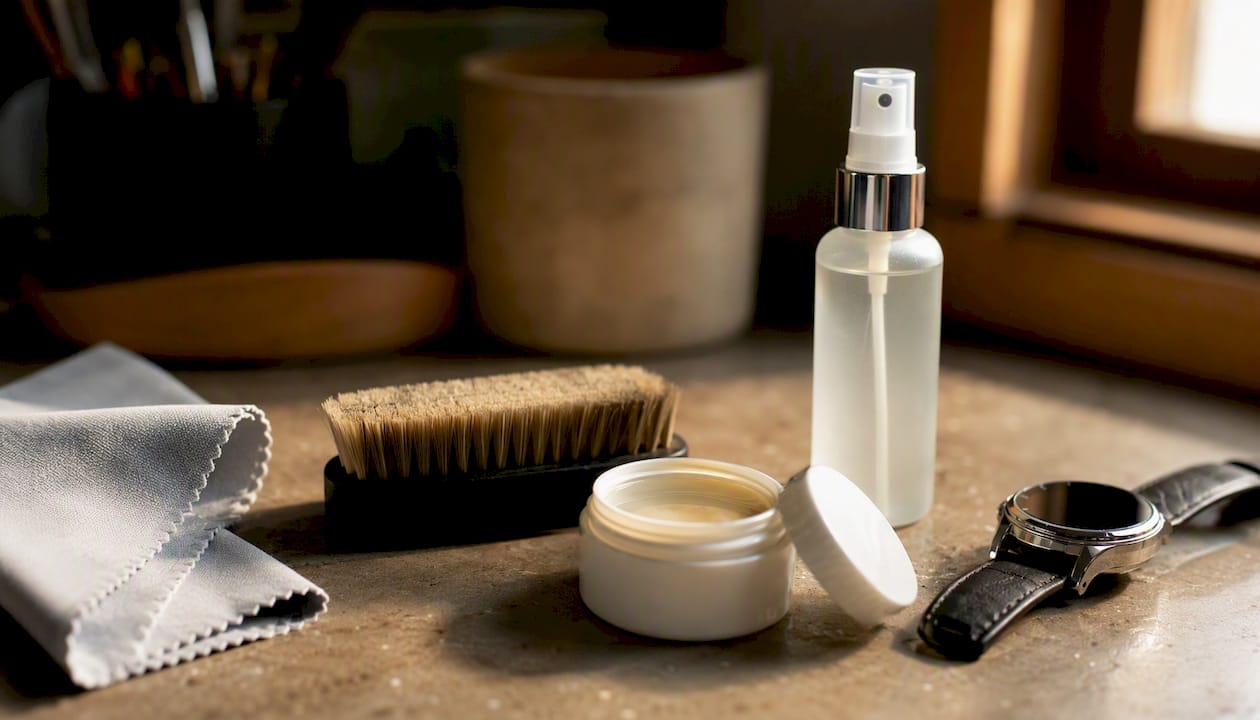
Routine cleaning is non-abrasive and surface-level. A microfiber wipe, a soft brush with mild soap on water-safe cases, and a careful rinse remove contamination without touching the metal itself. It is fully reversible because nothing is removed.
Polishing is subtractive. Every pass removes a thin layer of metal, softening bevels, rounding edges, and gradually altering the case’s original silhouette. Aggressive polishing is a documented cause of lost collector value because it erases the crisp geometry buyers prioritize over surface shine. Polishing removes metal and changes a watch’s silhouette; it should be a considered choice tied to the watch’s purpose and value, not a reflexive response to a scratch.
Full restoration goes further still, sometimes involving replacement of dials, hands, or crystals. Replaced original parts reduce provenance and, for collector-grade pieces, can cut realized price significantly.
- Cleaning: reversible, no material loss, always appropriate.
- Light polishing: subtractive, acceptable on modern daily-wear pieces with owner consent, never on vintage or high-value collector watches.
- Restoration: invasive, requires explicit written scope, and should preserve original parts wherever possible.
Pro Tip: Before any service, ask the watchmaker to confirm in writing whether polishing is included. A phrase like “case cleaning only, no polishing without separate approval” costs nothing and protects the watch’s geometry.
Safe home care: a checklist for daily and periodic cleaning
The ChronoCare showroom cleaning checklist outlines a non-abrasive baseline that works equally well at a retail bench or at home.
Daily/after-wear:
- Wipe the case and bracelet with a clean, dry microfiber cloth.
- Remove perspiration from leather straps immediately; moisture degrades stitching and dye.
- Inspect the crown for looseness and the crystal for lifted edges.
Periodic cleaning (water-safe modern watches only):
- Lukewarm water, a small amount of mild soap, and a very soft brush on the case and bracelet.
- Rinse thoroughly; dry with a lint-free cloth.
- Avoid ultrasonic cleaning with the watch head attached, steam, hot water, solvents, and abrasive polishing cloths.
| Watch type | Allowed home actions | Red flags — stop immediately |
|---|---|---|
| Water-resistant modern | Microfiber wipe, mild soap + soft brush, rinse | Loose crown, lifted crystal, any gap at caseback |
| Vintage (any era) | Dry microfiber wipe only | Any moisture near crown or crystal |
| Gem-set quartz | Dry microfiber wipe; avoid brush near settings | Loose stones, any rattling |
When you hit a red flag in that table, stop and book a professional service.
When should you call a watchmaker?
Home care has a clear boundary. Cross it and you risk turning a maintenance task into a costly repair.
Book professional service when you notice:
- A crown that feels loose, gritty, or fails to click into position.
- A crystal that is lifted, cracked, or shows a gap at the bezel.
- Visible gaps at the caseback or between case sections.
- Loose stones or a rattling sound from inside the case.
- Uncertain water resistance on a watch worn near water.
- Irregular timekeeping, a rotor that catches, or any movement noise.
What to request in writing before you hand the watch over:
- Full scope of work, with polishing listed as a separate, opt-in item.
- Return of all replaced parts (gaskets, crystals, hands).
- Pressure and water-resistance test results on paper.
- Before-and-after photographs of the case and dial.
Pro Tip: Photograph the watch yourself before drop-off, under side lighting that reveals bevel geometry. Those images become part of the provenance record and give you a baseline if a dispute arises.
How to decide between conservation and restoration
The Functionality Test is a simple three-variable check: expected use × rarity and value × current condition = recommended intervention level.
- Modern daily-wear sports watch, common reference, light surface scratches: light cleaning, owner-approved spot polishing on brushed surfaces only.
- Common vintage piece in working order, minor patina: cleaning only; patina is part of the value, not a defect.
- High-value collector rarity, original dial and hands: cleaning only, no polishing under any circumstances; conservation-first philosophy advises preserving original material and documenting every intervention.
Pro Tip: When a client pushes for a “factory-new” finish on a vintage piece, show them the Mostra data. A bright case that has lost its original bevel geometry is worth less, not more, to a serious buyer.
Which products meet professional-grade preservation standards?
Professional care requires the right product categories matched to the right finishes.
Product categories to stock:
- Microfiber cloths (lint-free, non-abrasive weave).
- Mild watch-cleaning sprays formulated for metal and crystal surfaces.
- Soft-bristle brushes sized for bracelet links and crown tubes.
- Non-abrasive polishing creams for light scratch removal on modern pieces.
- Leather strap cleaners and conditioners with pH-neutral chemistry.
- Matte-finish renewal sponges for brushed-surface restoration.
Selection criteria: non-abrasive chemistry, pH neutrality for leather, finish-preserving application methods, and verified compatibility with common luxury alloys and coatings.
ChronoCare’s three core products map directly to these needs. The Ultimate Watch Cleaning Kit covers routine, non-abrasive cleaning for modern luxury watches. The Ultimate Watch Polishing & Cleaning Kit adds a controlled, finish-preserving polish step for modern pieces where light surface refreshing is appropriate. The Watch Polishing Cream targets light scratch removal with a test-first protocol built into its guidance.
Pro Tip: Before applying any polishing cream to a visible surface, test it on a hidden area — the inner lug, the caseback edge — and photograph the result. If the finish changes in a way you didn’t intend, you’ve learned that on a surface no buyer will ever see.
How often should you clean and service a watch?
| Watch category | Cleaning frequency | Service interval | Approximate cost range |
|---|---|---|---|
| Daily-wear modern | Daily wipe; quarterly light clean | Annual inspection; full service every 3–5 years | $300–$800 for standard movement service |
| Collector-worn vintage | Dry wipe after each wear | Annual inspection; full service every 5–7 years | $500–$2,000+ depending on movement complexity |
| Infrequently worn dress | Monthly dry wipe | Full service periodically or before sale | $300–$1,500 depending on complications |
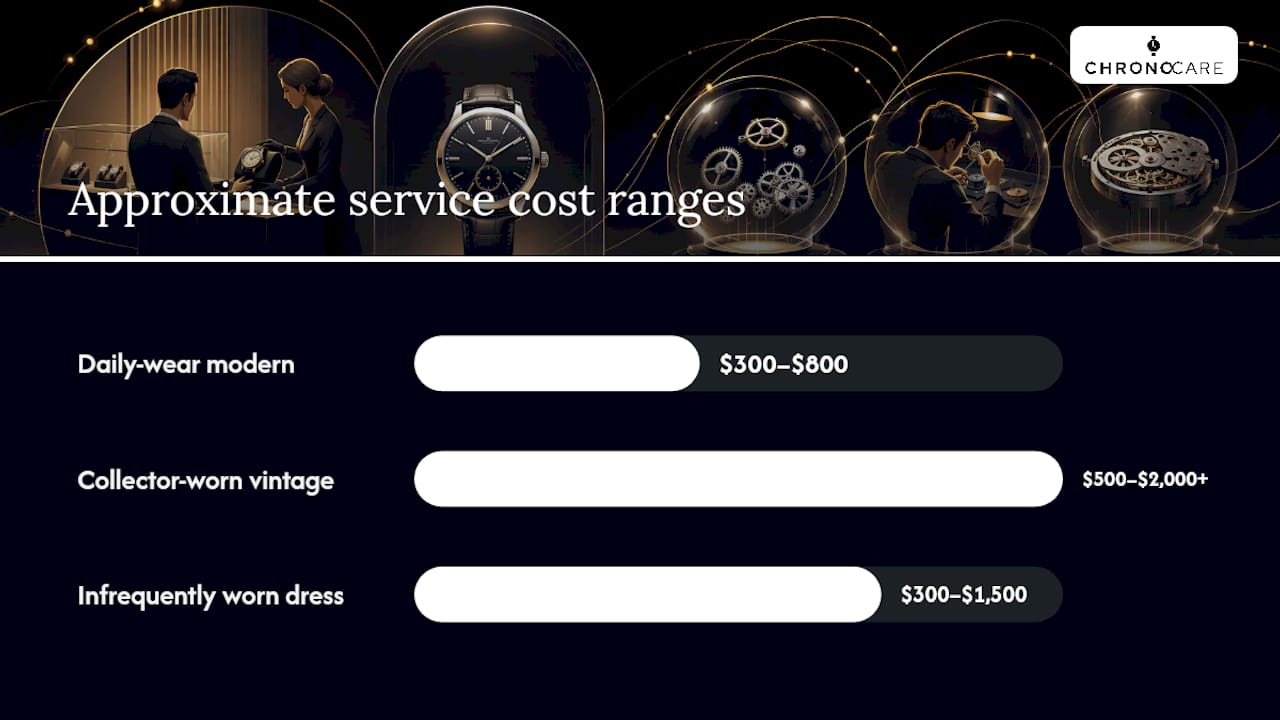
Variables that shift cost upward: precious-metal cases, gem settings, high-complication movements, and requests for provenance documentation or returned parts. Budget for those explicitly when commissioning service on anything above entry-level.
How to document condition and present a watch honestly
Clean presentation and transparent documentation work together. A watch that looks good and comes with a clear paper trail sells faster and at a higher price than one that merely looks good.
Photo and video checklist:
- Four-corner case shots plus a straight-on dial image.
- Side-lighting shots that reveal bevel geometry and any rounding from prior polishing.
- Short video panning across the case under a single light source to capture reflections.
- Macro shots of the dial, lume plots, and serial number.
Recordkeeping:
- Keep every invoice; note exactly what cleaning or polishing was permitted and performed.
- Request returned replaced parts and store them with the watch.
- Log water-resistance test results by date.
Workshops recommend photographing condition before service and requesting return of replaced parts to maintain provenance and buyer trust. Evaluating condition requires attention to dial truth, service history, and correct parts — a clean watch with a complete paper trail satisfies every point on that checklist.
Pro Tip: Build a “watch health record” that separates cosmetic work (cleaning, polishing) from technical servicing (movement overhaul, water-resistance testing). Future buyers and auction specialists will read it as a sign of serious ownership.
The case for conservation over cosmetics
The industry is shifting away from the factory-new obsession, and for good reason. Documentation and stability now outrank aggressive cosmetic renewal in the eyes of serious collectors and auction specialists. A watch that has been cleaned carefully, never over-polished, and accompanied by a complete service record is a stronger asset than one that looks freshly buffed but carries no history.
The temptation to polish is understandable. A bright case is immediately appealing. But the Mostra Observatory’s findings make the cost concrete: shine does not equal preserved geometry, and preserved geometry is what buyers actually pay for.
ChronoCare kits built for conservation-first care
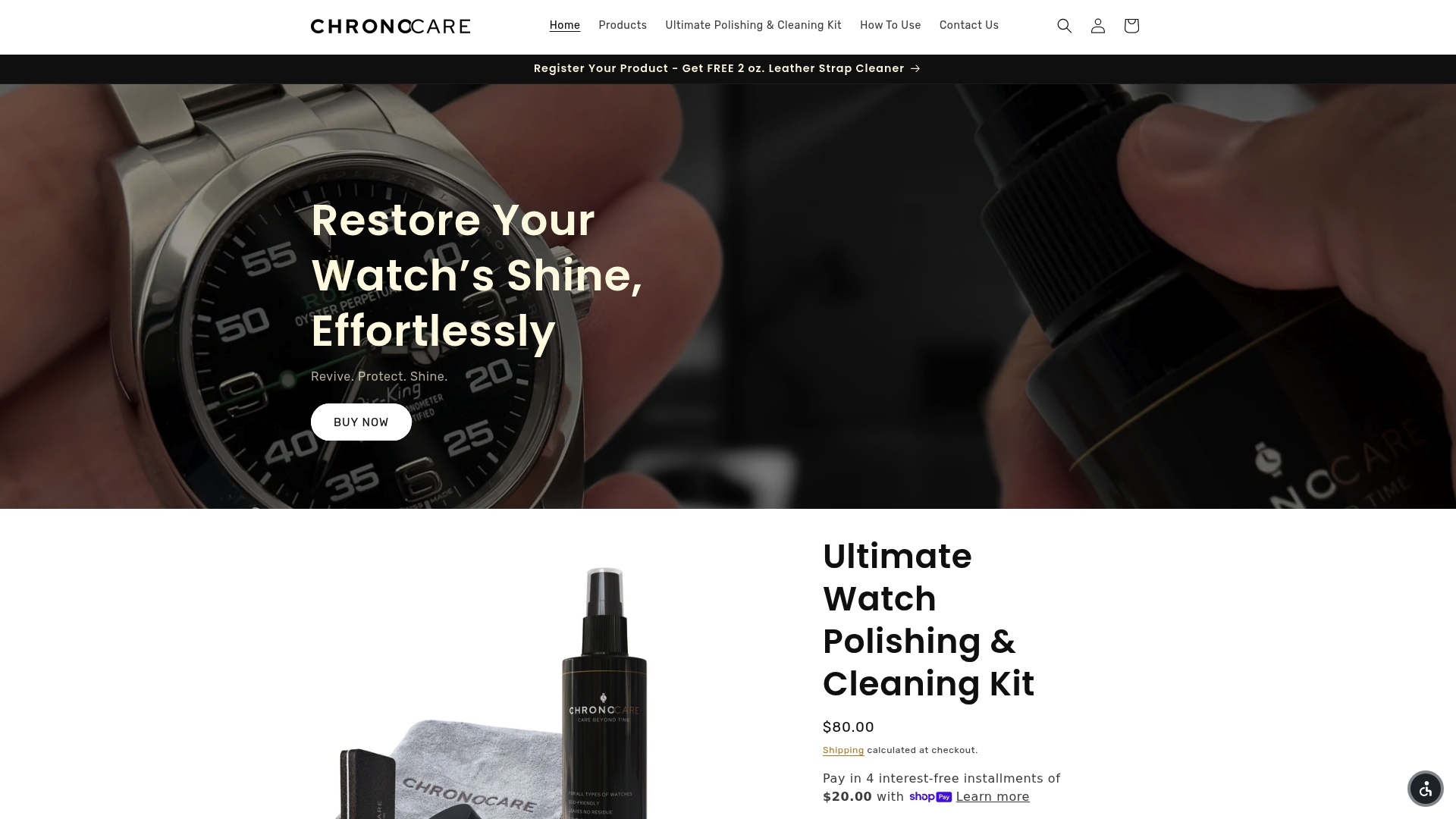
ChronoCare’s product line is built around one principle: improve presentation without destroying original material. The Ultimate Watch Cleaning Kit handles routine non-abrasive care for modern luxury pieces. The Ultimate Watch Polishing & Cleaning Kit adds a controlled polish step for modern watches where light surface refreshing has been approved. The Watch Polishing Cream removes light scratches with a test-first protocol that keeps you in control of the result.
All three are formulated in the US for compatibility with common luxury finishes, and each comes with guided use instructions that reinforce the documentation habits this guide recommends. Browse the full range at Shopchronocare and start with the kit that matches your current workflow.
Sources
- How to Clean and Maintain a Luxury Watch
- Assessing the condition of luxury watches: polishing, bracelet stretch, dial, lume, and service history - Expertyco
- 100 Pre-Owned Watches Inspected: The Mostra Workshop Study
- Collectors guide to watch condition - Sotheby’s