

Watch Bezel Scratch Prevention Methods That Actually Work
The single most effective thing you can do right now is apply a protective barrier, either a TPU film or a fitted bezel bumper, and build a few mindful daily habits around how you handle and store your watch. Prevention beats restoration every time, especially for collector pieces where repeated polishing removes metal and softens the factory lines that give a luxury watch its value.
Quick TL;DR checklist:
- Remove your watch before heavy manual work, yard work, or gym sessions
- Wipe the bezel with a microfiber cloth after every wear to clear abrasive dust and skin oils
- Apply a model-specific TPU film or a fitted bumper for high-contact daily wear
- Store in a padded watch box or roll, never loose in a drawer
- Rotate watches regularly so no single piece takes all the daily abuse
Pro Tip: Restoration removes material. Every polishing session is a one-way door. A TPU film protects a luxury bezel indefinitely; a professional refinish costs significantly more and still removes metal. Prevention is the only strategy that preserves factory finish and resale value.
Table of Contents
- What are the best watch bezel scratch prevention methods?
- What bezel materials can you safely polish at home?
- How do you safely remove light swirl marks from a metal bezel?
- Daily habits and storage routines that prevent long-term bezel wear
- When should you stop DIY and see a professional?
- Quick do’s and don’ts for every watch owner
- How ChronoCare products fit into a prevention-first plan
- Key Takeaways
- The case for leaving the factory finish alone
- ChronoCare makes watch maintenance straightforward
- Useful sources for further reading
What are the best watch bezel scratch prevention methods?
Protective accessories fall into three practical categories: TPU films, bezel bumpers, and adhesive rings. Each solves a slightly different problem.
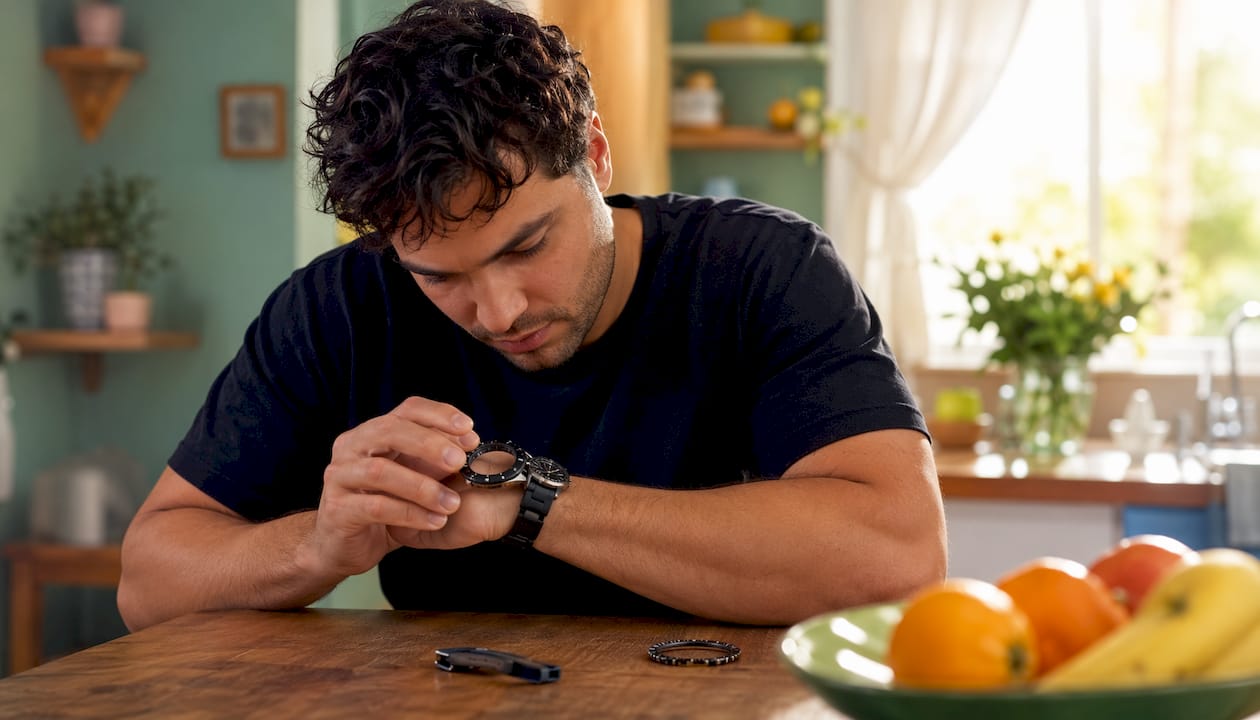
TPU self-healing films are the gold standard for micro-abrasion protection. High-quality TPU films are flexible, nearly invisible, and have a surface that can recover from light contact marks on its own. Model-specific, laser-cut versions conform precisely to the bezel geometry; universal films leave gaps or overlap the crystal. For a Rolex Submariner or a Datejust, a model-specific cut is worth the extra few dollars.

Bezel bumpers are silicone or rubber rings that wrap the bezel edge. They absorb impact rather than surface friction, which makes them better for active wear, diving, or any situation where the watch might knock against a hard edge. They are bulkier than films and slightly alter the watch’s profile, but for a tool watch worn hard, that tradeoff is reasonable.
Adhesive rings and tape are the budget option. They work for short-term protection during a specific task, but the adhesive can leave residue and they rarely conform as cleanly as a precision film.
| Protection Type | Best For | Cost Range | Lifespan | Notes |
|---|---|---|---|---|
| TPU film (model-specific) | Daily wear, micro-abrasion | $15–$75 | 6 months | Nearly invisible; self-healing surface |
| TPU film (universal) | Budget protection | $8–$12 | 3 months | May not fit perfectly |
| Bezel bumper (silicone) | Active/tool wear, impact | $10–$75 | 12 months | Adds slight bulk |
| Adhesive ring | Short-term task protection | $5–$8 | Days to weeks | Residue risk |
| Temporary tape | One-off tasks | Under $5 | Hours | Remove promptly |
Before applying any adhesive-backed film or ring, the surface must be perfectly clean and oil-free. Isopropyl alcohol works well for most modern bezels, but skip it on vintage pieces or any bezel with a delicate coating where alcohol can harm gaskets or finishes.
Pro Tip: For a collector piece you wear occasionally, a model-specific TPU film is the right call. For a daily-driver tool watch that takes real knocks, pair a bumper with a film underneath for layered protection.
What bezel materials can you safely polish at home?
Not all bezels respond to DIY the same way. Getting this wrong means permanent damage, so know your material before you touch anything.
| Material | Can You Apply Film? | Safe to DIY Polish? | Notes |
|---|---|---|---|
| Stainless steel (polished) | Yes | Yes, with care | Circular motion for mirror finish |
| Stainless steel (brushed/satin) | Yes | Yes, directional only | Wrong direction destroys factory grain |
| Titanium | Yes | Yes, with care | Softer than steel; use light pressure |
| Gold (solid) | Yes | Light only | Soft metal; scratches and removes easily |
| Gold-plated | Yes | No | Plating is thin; polishing removes it |
| PVD/DLC coated | Yes | No | Coating cannot be repaired once damaged |
| Ceramic | Yes | No | Chip-prone; requires professional replacement |
| Anodized aluminum | Yes | No | Anodizing is surface-deep; polishing removes it |
| Acrylic | Yes | Light only | Specialized plastic polish only |
The two rules that technicians repeat most often: never use circular motion on a brushed finish, and never attempt any abrasive on a coated or ceramic bezel. Brushed finishes require strictly directional polishing to match the factory grain. Go across the grain even once and you have created a visible flaw that costs real money to correct professionally.
For PVD and DLC coatings, the coating itself is the finish. Once you abrade through it, there is no DIY fix. The only options are professional recoating (expensive, not always available) or living with the damage.
Key material rules at a glance:
- Stainless steel and titanium: DIY polishing is possible with the right technique
- Ceramic: scratch-resistant but chip-prone; leave it to a professional
- Gold-plated, PVD, DLC, anodized: protective film is your only safe DIY option
- Solid gold: handle with extreme care; it scratches and removes faster than steel
How do you safely remove light swirl marks from a metal bezel?
Start with the fingernail test. Run your nail across the scratch. If it catches, the scratch is too deep for safe DIY and you need a professional. If your nail glides over it, you are dealing with a surface swirl that may respond to careful polishing.
Tools you actually need:
- Microfiber cloths (multiple, clean)
- A polishing cloth like Cape Cod or a similar metal-specific product
- Masking tape to protect the crystal and case
- Adequate lighting to check progress
Tools to avoid:
- Toothpaste (inconsistent grit, unpredictable results)
- Household metal polishes like Brasso (too aggressive for watch bezels)
- High-speed rotary tools unless you have professional training
- Any abrasive not specifically rated for watch use
Step-by-step for a polished (mirror) stainless steel bezel:
- Mask the crystal and adjacent case surfaces with painter’s tape.
- Clean the bezel with a microfiber cloth to remove all dust and oils.
- Apply a small amount of polishing cream to a clean microfiber cloth, not directly to the bezel.
- Work in small, circular motions with very light pressure.
- Check progress every 20–30 seconds. Stop as soon as the swirl is gone.
- Wipe clean with a fresh microfiber cloth and inspect under good light.
Step-by-step for a brushed (satin) stainless steel bezel:
- Mask the crystal and case.
- Identify the direction of the factory grain before touching anything.
- Apply polishing cloth or cream to a microfiber cloth.
- Work only in the direction of the grain, never across it or in circles.
- Use minimal pressure and short strokes.
- Check frequently. Stop the moment the swirl is reduced.
Warning: Polishing is subtractive. Each session removes a microscopic layer of metal, and over time this rounds edges and softens the factory bevels that define a luxury watch’s look. Do this sparingly, and never on a piece you plan to sell.
For DIY restoration on metal surfaces, the most common errors repair technicians see are excessive pressure, wrong abrasive choice, and ignoring finish direction. These three mistakes account for the majority of permanent bezel damage that arrives at service centers.
Pro Tip: Practice on a cheap stainless steel watch from a thrift store before touching anything valuable. The technique feels different than it reads, and a $10 practice piece is a much better teacher than a $3,000 mistake.
Daily habits and storage routines that prevent long-term bezel wear
The most effective daily prevention is also the simplest: remove the watch before tasks that put it at risk, and wipe it down after every wear.
Skin oils and environmental dust are more damaging than most collectors realize. Dust particles act as a fine abrasive every time your sleeve moves across the bezel. A 10-second wipe with a microfiber cloth after you take the watch off removes that abrasive before it has a chance to work. For fingerprint removal and daily cleaning, a watch-safe cleaning spray applied to a microfiber cloth handles both oils and fine particles without risking the finish.
Daily habits worth building:
- Remove the watch before heavy manual tasks, cooking, gardening, or gym work
- Keep the watch away from keys, coins, and other metal objects in pockets or on desks
- Wipe the bezel with a clean microfiber cloth after every wear
- Swap to a beater watch for high-risk activities if you own multiples
Storage and travel:
- Use a padded watch box or leather watch roll for daily and travel storage; never store watches loose together
- For long-term storage, individual soft pouches inside a box prevent contact between pieces
- Keep stored watches away from direct sunlight and humidity extremes, which can degrade adhesive films and rubber bumpers over time
Cleaning frequency for regular wearers: a microfiber wipe after every wear, a more thorough clean with a watch-safe spray once a week, and a full inspection of any applied film or bumper monthly. Catching a lifting film edge early prevents the edge from snagging and peeling in a way that could scratch the bezel itself.
Pro Tip: Rotating through two or three watches instead of wearing one daily cuts the accumulated micro-abrasion on any single piece roughly in half. It also gives you a natural inspection interval every time you switch.
When should you stop DIY and see a professional?
Some damage is simply beyond what careful home polishing can address, and attempting it makes things worse.
Go to a professional when:
- The fingernail test catches in the scratch
- The bezel is ceramic, PVD-coated, DLC-coated, or gold-plated
- You see chipping, not just surface marks
- The bezel geometry looks distorted or the insert has shifted
- The piece is vintage, collectible, or has significant resale value
- You have already polished the piece multiple times and the lines are softening
Service options and what they involve:
- Light refinishing: A watchmaker re-polishes or re-brushes the bezel surface to match the factory finish. Works on stainless steel and titanium. Typical U.S. cost: $75–$200, turnaround 1–3 weeks.
- Bezel insert replacement: For dive watches with a separate rotating insert (aluminum, ceramic, or enamel), the insert is replaced rather than refinished. Cost varies widely by brand and insert material, typically $50–$300 for the part plus labor.
- Full bezel replacement: For deep gouges or structural damage, the entire bezel unit is replaced. Factory service from brands like Rolex or Omega can run $300–$800 or more and may take 4–8 weeks.
When you bring a watch in for service, bring photos of the damage and any service history you have. For deep scratch removal on collector pieces, a watchmaker who understands resale value will recommend the least-invasive option rather than a full refinish that removes more metal than necessary.
A watchmaker who pushes for a full polish on a lightly scratched vintage piece is not doing you a favor. Patina and honest wear often add character and preserve value on pre-owned luxury watches.
Quick do’s and don’ts for every watch owner
Do:
- Mask the crystal and case with painter’s tape before any polishing attempt
- Use a clean microfiber cloth for daily wiping
- Store watches in a padded box or roll, individually separated
- Apply a TPU film or bumper before high-risk wear
- Follow the directional grain on brushed finishes, always
Don’t:
- Use toothpaste, Brasso, or household metal cleaners on watch bezels
- Attempt rotary tools on coated, ceramic, or gold bezels
- Polish in circular motion on a brushed satin finish
- Ignore a lifting film edge; replace it before it causes damage
- Wear a valuable watch for desk work without considering the risk
Pro Tip: “Desk diving” is the watch community’s term for the scratches that happen during ordinary office work: catching the bezel on a desk edge, doorframe, or keyboard. It accounts for a surprising share of daily micro-abrasion. A bezel bumper or TPU film is cheap insurance against common daily contact damage.
Environmental factors matter too. High humidity accelerates corrosion on unprotected metal edges. Fine dust from construction or woodworking is especially abrasive. Temperature swings can cause adhesive films to lift at the edges. Store and wear accordingly.
How ChronoCare products fit into a prevention-first plan
ChronoCare’s product line is built around the same prevention-first logic this article is grounded in. The cleaning and polishing kits are designed for collector-grade maintenance, not aggressive material removal.
Where each product fits:
- ChronoCare cleaning spray and microfiber kit: Use after every wear or weekly for regular wearers. Safe on most modern bezels including stainless steel, titanium, and ceramic. Removes oils, dust, and surface residue without abrasion.
- ChronoCare polishing cream: For light swirl removal on metal bezels only. Follow the directional rules for brushed finishes. Use sparingly, not as a routine, and never on coated, ceramic, or gold-plated surfaces.
- ChronoCare matte finish renewal sponge: Designed for matte and brushed surfaces where standard polishing creams would alter the finish. Restores the surface texture rather than adding shine.
Usage limits to respect:
- Do not use polishing cream more than a few times per year on any single piece
- Always mask the crystal before applying any cream or polish
- Stop immediately if you see the finish changing in a way you did not intend
- For PVD, DLC, ceramic, or vintage pieces, stick to the cleaning spray only
When the damage is beyond what a polishing cream can address safely, ChronoCare’s guidance is consistent with every watchmaker’s: stop and consult a professional. The kits are designed to maintain and lightly restore, not to replace professional refinishing.
Pro Tip: Use ChronoCare’s cleaning spray as your weekly maintenance step and reserve the polishing cream for twice-yearly light touch-ups on metal bezels. That rhythm keeps the finish looking sharp without the cumulative metal removal that degrades factory lines over time.
Key Takeaways
Applying a protective barrier before damage occurs is the single most effective watch bezel scratch prevention method, and it costs far less than any professional repair.
| Point | Details |
|---|---|
| Protect before damage occurs | A TPU film or bezel bumper prevents micro-abrasions that accumulate into visible wear over time. |
| Test scratch depth before DIY | Run a fingernail across the mark; if it catches, stop and see a professional. |
| Know your material | Stainless steel and titanium can be carefully polished at home; ceramic, PVD, DLC, and gold-plated bezels cannot. |
| Store and wipe consistently | A microfiber wipe after every wear and padded storage remove the abrasives that cause long-term bezel wear. |
| ChronoCare for maintenance | ChronoCare cleaning sprays and polishing creams support a prevention-first routine for metal bezels, used sparingly and with proper masking. |
The case for leaving the factory finish alone
Most watch owners think about scratch prevention only after the first mark appears. By then, the conversation has already shifted from prevention to damage control, and that shift is costly.
What gets overlooked is how much of a watch’s character lives in its factory finish. The crisp bevel between a polished flank and a brushed top surface on a steel sports watch is not just aesthetic. It is a precision detail that took a skilled finisher time to create, and it is irreversible once it is rounded by polishing. A watch with honest wear and an intact factory finish is almost always worth more to a serious collector than one that has been polished smooth.
The conventional wisdom in enthusiast circles is that a good polish “refreshes” a watch. That is true for surface swirls on a bezel you plan to wear hard and never sell. For anything with collector value, the opposite is closer to the truth. The watch collecting best practices that experienced collectors follow consistently prioritize preservation over cosmetic correction.
The habit change that matters most is not learning to polish better. It is deciding to protect the finish before it needs polishing at all. A $20 TPU film applied the day you buy a watch is a decision you will never regret. A polishing session you did not need to do is one you cannot undo.
ChronoCare makes watch maintenance straightforward
Keeping a luxury bezel in factory condition does not require a professional service visit every few months. ChronoCare’s cleaning and polishing kits give collectors a practical, at-home maintenance routine that handles the daily and weekly upkeep without risking the finish.
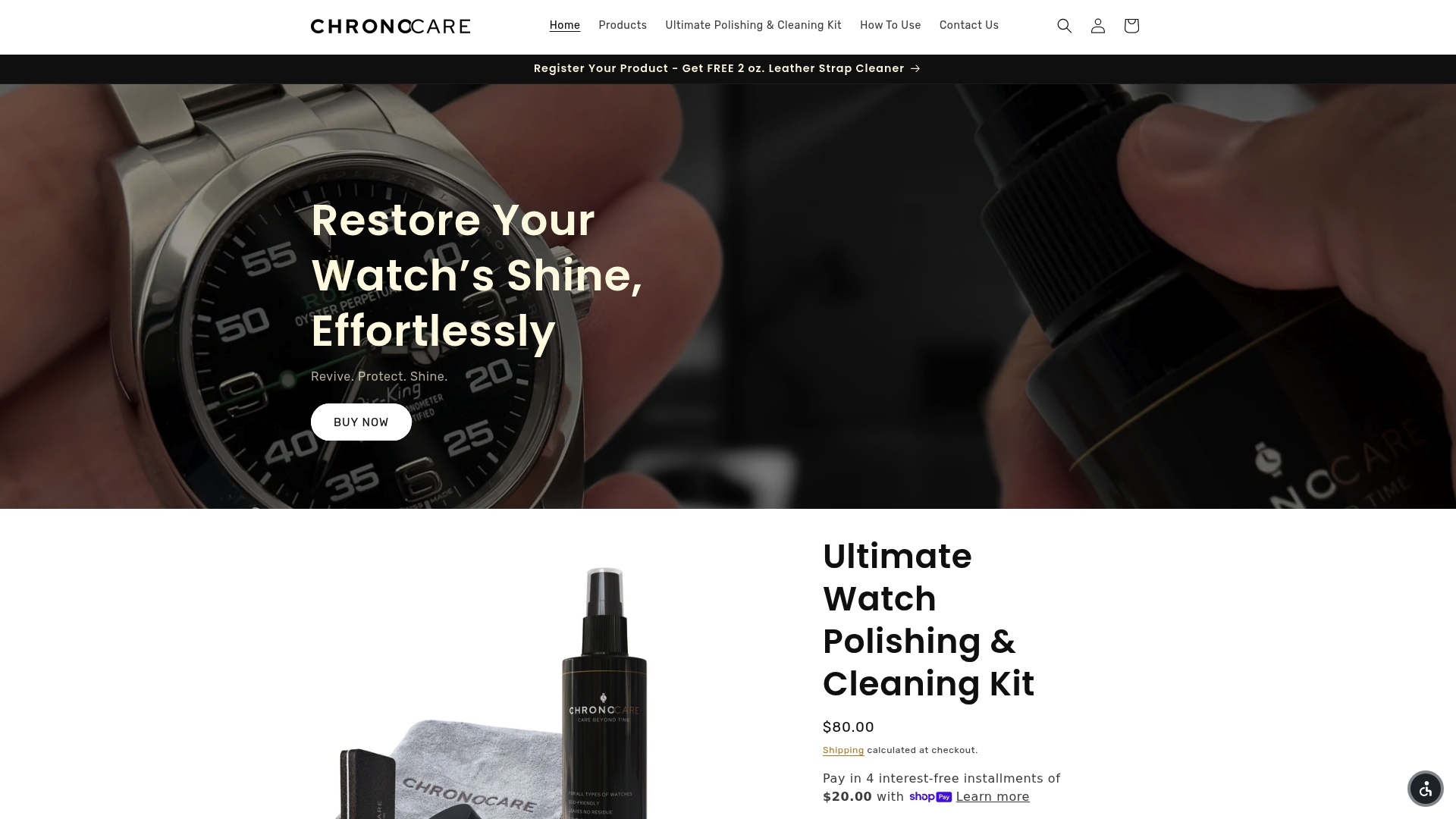
The Ultimate Watch Cleaning Kit covers the weekly cleaning routine: a watch-safe spray and microfiber cloth combination that removes oils, dust, and surface residue from metal, ceramic, and coated bezels without any abrasion. For collectors who want the option to address light swirl marks on metal bezels, the Ultimate Watch Polishing & Cleaning Kit adds a polishing cream formulated for controlled, low-removal use. Both kits ship with usage guidance so you know exactly when to use each product and when to stop. Check the ChronoCare product pages for the kit that fits your collection, or reach out directly with questions about your specific watch.
Useful sources for further reading
- How to Remove Watch Scratches: 5 Safe Ways to Fix It Without Making It Worse — The Pristine Vault: Covers the fingernail depth test, DIY limits by material, and the most common technician-observed mistakes.
- How to Fix a Scratched Rolex Bezel — WPB Watch Co.: Explains why polishing is subtractive and why prevention preserves collector value better than repeated refinishing.
- How to Protect Luxury Watches from Scratches — FINEWATCHCARE: Detailed guidance on directional brushing, finish types, and the risks of circular polishing on satin surfaces.
- Best Watch Protection Film for Rolex & Luxury Watches — FINX: Compares TPU film types, explains self-healing properties, and covers model-specific vs universal fit.
- What Is a Self-Healing Watch Protection Film & How Does It Work — Watchskins: Technical explanation of how TPU self-healing films work and their installation requirements.
- Best watch bezel protectors — DownHomeFavorites: Practical guide to adhesive rings, films, and bumpers with installation prep notes.
- Best practice for bezel insert protection — Watchuseek forum: Community-sourced daily habits and storage tips from experienced collectors.
- How to Remove Watch Scratches: DIY Solutions That Actually Work — HandWatch: Covers everyday risk behaviors including desk diving and common contact sources.
- DIY Watch Restoration: Common Mistakes to Avoid — ChronoCare: ChronoCare’s guide to safe DIY limits and the errors that lead to permanent damage.
- How to Dry Polish a Watch Case Without Losing Value — ChronoCare: Low-risk polishing technique guidance with a focus on preserving factory lines.
- Best Practices for Keeping Your Watch Dust Free — ChronoCare: Storage and dust-management techniques that directly support daily bezel protection routines.